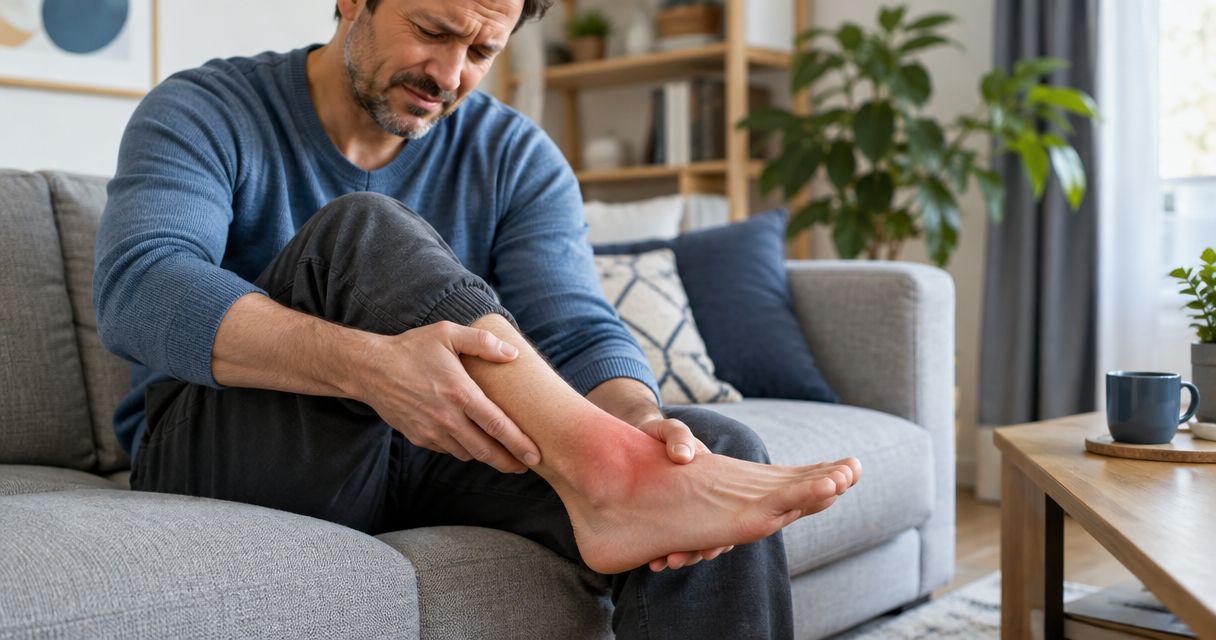

Yes, you can get gout in more than one joint at once, including joints in both feet, the ankles, knees, hands, or elbows. Multiple painful joints do not prove that gout is the cause: joint infections and other forms of arthritis can look similar. This 2026 guide explains how the pattern affects your next steps and when you need urgent care.
- Can you get gout in more than one joint at once? Yes; gout can inflame several joints during one flare.
- A hot, swollen joint needs assessment, especially with fever, illness, or a new pattern of pain.
- Joint fluid testing can help distinguish gout crystals from infection; a blood urate result alone cannot confirm gout.
- Achilles Foot and Ankle Center provides foot and ankle evaluations; urgent warning signs need immediate medical care.
Why this matters
Do not dismiss gout because more than one joint hurts—and do not assume every swollen joint is gout. The distinction matters because the right treatment depends on the cause, not simply the location of the pain.
For non-emergency foot or ankle symptoms, you can contact Achilles Foot and Ankle Center about an evaluation. For patients in Mechanicsville and West End, the immediate decision is the same: new hot, swollen joints deserve assessment rather than repeated self-treatment. In 2026, an online symptom checklist still cannot replace that examination.
Can you get gout in more than one joint at once?
Yes. Gout can affect a single joint or several joints during the same episode. Clinicians describe the pattern by counting the joints involved, but that count does not establish the diagnosis.
| Pattern | Number of affected joints | What the description tells you | What it does not tell you |
|---|---|---|---|
| Monoarticular | 1 joint | Inflammation is limited to one joint | Whether gout, infection, or another condition caused it |
| Oligoarticular | 2–4 joints | A few joints are involved | Whether every painful area has the same cause |
| Polyarticular | 5 or more joints | Many joints are involved | Whether the condition is gout or another inflammatory arthritis |
People sometimes use “polyarticular gout” loosely to mean gout in multiple joints. More precise counting helps your clinician document the pattern, but you do not need to know the terminology before seeking care.
A flare can involve several joints together, or another joint can begin hurting before the first settles. Tell your clinician which joint hurt first and whether the symptoms overlapped.
Single-joint gout: 1 joint
Gout commonly affects the joint at the base of the big toe, but it is not limited to that location. An ankle or knee can also be the site of a flare.
A familiar location can help your clinician recognize a pattern. It cannot safely rule out infection, especially when the symptoms differ from previous episodes.
Oligoarticular gout: 2–4 joints
Gout affecting 2–4 joints can make ordinary tasks difficult even when the affected area seems small. A painful toe and ankle, for example, can both interfere with standing and walking.
Describe each location separately. Pain across the top of your foot is not necessarily inflammation in several distinct joints; tendons, skin, and other tissues can also hurt.
Polyarticular gout: 5 or more joints
Gout involving 5 or more joints can resemble other inflammatory conditions. A clinician will consider the timing, examination findings, medical history, and appropriate tests together.
This pattern can occur with longstanding gout, particularly when urate crystal deposits remain uncontrolled. Several swollen joints are a reason to reassess the diagnosis and treatment plan, not simply increase pain medicine yourself.
Why the number of affected joints varies
Gout develops when urate crystals collect in and around joints and trigger inflammation. More than one joint can contain crystals, so a flare does not have to stay confined to the big toe.
Factors that help explain different patterns include:
- Duration of gout: Longstanding disease gives crystal deposits more time to accumulate in different locations.
- Urate control: Persistently elevated blood urate supports continued crystal formation and deposition.
- Kidney function: The kidneys help remove urate; impaired kidney function can make urate harder to control.
- Medication effects: Some medicines, including certain diuretics, affect urate levels. Review them with your prescriber rather than stopping them yourself.
- Changes in urate-lowering treatment: Flares can occur when treatment begins or changes, which is why clinicians sometimes prescribe flare-prevention medicine alongside it.
These factors guide an assessment; they do not predict exactly which joint will hurt next. A flare involving several joints is also not proof that you caused it through a particular meal or drink.
When do swollen joints need urgent medical attention?
Seek same-day medical assessment for a newly hot, swollen joint, especially if the cause is uncertain. Fever, chills, feeling seriously unwell, spreading redness, or rapidly worsening symptoms make prompt assessment particularly important.
Seek emergency care if you are severely ill, confused, faint, or have rapidly worsening symptoms with signs of infection. Do not wait for a routine podiatry appointment in those circumstances.
A joint infection can damage a joint and requires urgent treatment. Gout and infection can also occur together, so a previous gout diagnosis does not make a new episode automatically safe to treat at home.
Tell the clinician about diabetes, reduced immune function, a nearby wound, recent surgery, injections, or a joint replacement. The absence of fever does not reliably exclude infection.
How do clinicians confirm gout in several joints?
The diagnostic approach in 2026 combines your symptom history, an examination, and testing selected for your situation. Not everyone needs every test, and an X-ray alone does not establish an acute gout diagnosis.
Symptom history
Explain how quickly the pain developed, which joints are swollen, and whether this resembles earlier episodes. Bring your medication list and mention kidney disease, previous gout testing, injuries, wounds, and recent illnesses.
Photographs can help document visible swelling that changes before your appointment. They supplement the examination; they do not confirm what is happening inside a joint.
Joint fluid testing
A clinician can remove a small sample of joint fluid with a needle and examine it for urate crystals. When infection is a concern, the fluid can also be tested for bacteria.
Finding crystals supports gout, but it does not automatically exclude a simultaneous infection. Sampling decisions depend on which joints are involved and what the examination shows.
Blood tests
A blood urate test helps assess urate levels, but the result needs context. Urate can fall during a flare, and an elevated result does not by itself prove that gout caused your current pain.
Your clinician may repeat testing after the flare settles. Kidney function and other blood tests can also help guide medication choices safely.
Imaging
Ultrasound or specialized imaging can support a gout diagnosis in selected situations. Standard X-rays can help assess joint damage or another cause of pain, but early gout may not produce obvious X-ray changes.
The useful question is not simply whether a test is available—it is whether the result will change your care.
What should you do while waiting for an assessment?
If you already have a confirmed diagnosis and a written flare plan, follow that plan while checking for new warning signs. If this is your first episode, or the pattern has changed, ask for medical advice rather than assuming it is another routine flare.
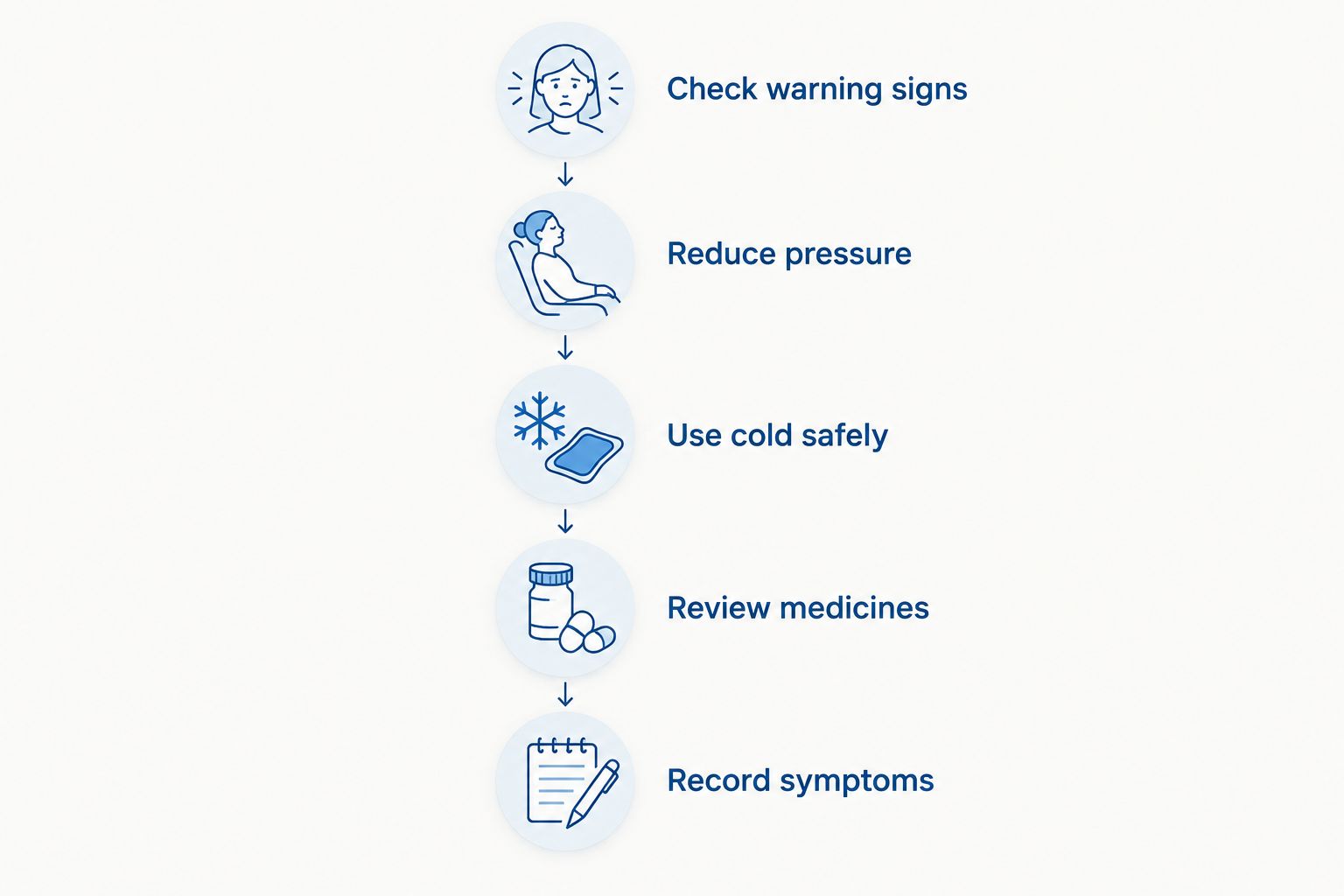
- Check warning signs. Look for fever, spreading redness, a wound, severe illness, or rapidly worsening symptoms.
- Reduce pressure. Rest painful joints and avoid forcing yourself through a walk or workout.
- Use cold safely. Place a wrapped cold pack over the painful area rather than ice directly on your skin. Ask for advice first if you have reduced sensation or poor circulation.
- Review medicines. Follow your prescribed plan and check with a clinician or pharmacist before adding nonprescription pain relief.
- Record symptoms. Note the affected joints, when symptoms began, and what medicines you have taken.
These steps support comfort and communication; they do not treat a joint infection or establish a diagnosis. Avoid tight footwear or anything that presses directly on a swollen toe or ankle.
How is gout in multiple joints treated?
Gout care in 2026 has two separate goals: settle the current inflammation and, when indicated, reduce urate crystal deposits over time. A medicine that eases today's pain does not necessarily prevent future flares.
The best choice depends on kidney function, other conditions, current medicines, and the extent of inflammation. Several painful joints can change which treatment approach is practical.
| Treatment approach | Best for | Main benefit | Important limitation |
|---|---|---|---|
| Anti-inflammatory medicines | Treating an active flare when medically appropriate | Reduce inflammation and pain | Kidney disease, stomach problems, interactions, or other risks can limit use |
| Corticosteroids | Treating a flare when selected by a clinician | Can address inflammation when other options are unsuitable | Can affect blood sugar and are inappropriate for untreated joint infection |
| Urate-lowering treatment | Preventing further crystal buildup when indicated | Addresses the underlying urate problem | Needs monitoring and does not replace acute flare treatment |
| Pressure reduction and supportive footwear | Making movement more manageable during recovery | Reduce contact and loading on tender areas | Do not remove urate crystals or replace medical treatment |
Anti-inflammatory options include colchicine and nonsteroidal anti-inflammatory drugs. Do not combine medicines or borrow someone else's prescription; suitability and dosing depend on your medical circumstances.
If you already take prescribed urate-lowering medicine, do not stop it because a flare starts unless your prescriber tells you to. Recurrent or multi-joint flares warrant a review of the longer-term plan, sometimes with primary care or rheumatology involvement.
Can gout affect both feet at the same time?
Yes, gout can affect joints in both feet at the same time. It can also involve a foot and a joint elsewhere, such as a knee or hand.
However, swelling in both feet is not always joint inflammation. Fluid retention, circulation problems, and other conditions can produce a different pattern that needs its own assessment.
Does gout spread from one joint to another?
Gout does not spread between joints like an infection. Urate crystals can already be present at multiple sites, and inflammation can become noticeable in different joints during overlapping episodes.
Tell your clinician when each new area became painful. A changing pattern matters, especially when it differs from your previous confirmed flares.
Should you see a podiatrist or another clinician?
Achilles Foot and Ankle Center is appropriate for patients who need a foot or ankle evaluation when gout is suspected. An examination can help distinguish joint pain from other foot problems and guide the next step; symptoms involving several body regions may also need primary care or rheumatology assessment.
When arranging care, say whether this is a first episode, which joints hurt, and whether you have fever or a wound. That information helps the clinical team determine the appropriate urgency rather than treating the request as a routine pain visit.
Arrange a foot and ankle evaluation
Describe your swollen joints and symptoms so the team can help you identify the appropriate next step.
FAQ
Can my first gout attack affect more than one joint?
Yes, a first gout attack can involve more than one joint, although gout often begins in a single joint. A first episode needs assessment because infection and other inflammatory conditions can look similar.
Can gout affect my ankle and big toe together?
Yes, gout can affect your ankle and big toe during the same flare. An examination helps determine whether both painful areas involve joints or whether another tissue is contributing.
Does pain in several joints mean my gout is severe?
Pain in several joints does not establish gout severity by itself. It does warrant a review of the diagnosis, urate control, joint damage, and how symptoms affect your daily activities.
Can a normal uric acid blood test rule out gout?
No, a normal uric acid result during a flare does not rule out gout. Your clinician may repeat the test after symptoms settle or use joint fluid testing when appropriate.
Should I stop my allopurinol during a gout flare?
Do not stop prescribed allopurinol during a flare unless your prescriber tells you to. Contact the prescribing clinician about flare treatment and any suspected medication reaction.
Can I walk on my foot during a gout flare?
Reduce walking that increases pain during a gout flare rather than pushing through it. New inability to bear weight, rapidly worsening symptoms, or an uncertain diagnosis needs prompt assessment.
Can I have gout and a joint infection together?
Yes, gout and a joint infection can occur together. Fever, severe illness, spreading redness, or an unusually painful hot joint requires urgent assessment, even if you have had gout before.
One last thing
For your 2026 care plan, record the pattern, not just the pain score: which joint started first, which joints became swollen, and whether you could bear weight. That short history helps Achilles Foot and Ankle Center assess foot and ankle symptoms and identify when broader medical care is needed.
The most useful next move is not proving at home that several painful joints are gout. It is getting the cause checked and leaving with clear instructions for this episode and the next.
Related guides
- Best shoes for gout flare-ups
- Over-the-counter gout pain relief products
- Foot X-ray to diagnosis: the podiatry workflow