Your toenail fungus laser treatment cost in 2026 depends on the treatment plan: request a written total for the proposed course, not just a single-session quote. Ask whether the examination, nail testing, nail thinning, and follow-up visits are included, and do not assume your insurance covers laser treatment.
- Compare fungus toenail laser treatment cost by the full treatment plan, not the session alone.
- Laser treatment does not guarantee fungal clearance; ask how your clinician will measure success.
- Achilles Foot and Ankle Center provides toenail care for patients who need a diagnosis before choosing treatment.
- Confirm insurance benefits and separate charges before agreeing to treatment.
Why this matters
A yellow, thick, or crumbly toenail does not automatically mean you have a fungal infection. Nail injuries, psoriasis, and other conditions can look similar, so paying for treatment before confirming the cause can send you in the wrong direction.
Start by comparing the main toenail fungus treatments, then ask which option fits your diagnosis, medical history, and goals. The first decision is whether you need antifungal treatment—not which laser package to buy.
How much does toenail fungus laser treatment cost in 2026?
The useful figure is your expected out-of-pocket total for the recommended course. A session quote alone does not tell you what you will spend if the plan also involves testing, additional visits, or medication.
Request an estimate that separates the following items. These are questions to ask, not charges that every practice applies.
| Part of the treatment plan | What to ask before agreeing | Why it matters |
|---|---|---|
| Initial examination | Is the nail evaluation included or billed separately? | The visit establishes what is causing the nail changes. |
| Nail testing | Is a sample recommended, and is laboratory billing separate? | Testing can help distinguish fungus from other nail problems. |
| Laser sessions | Does the estimate cover a session or the proposed course? | You need the scope of treatment to compare quotes. |
| Nail thinning | Is thinning thick nails included when needed? | This addresses nail thickness but does not by itself establish fungal clearance. |
| Follow-up care | Which reassessments are included? | Follow-up helps assess new nail growth and the next step. |
| Additional treatment | Are medicines or later sessions outside the estimate? | A combination plan needs a combined estimate. |
For a 2026 comparison, ask each practice to describe the same scope: which nails, the proposed schedule, the treatment goal, and what happens if improvement is limited. A lower session quote is not necessarily a lower total when the included services differ.
What should the written estimate explain?
The estimate should make clear what you are agreeing to now and what requires a separate decision later. Ask whether the plan has a defined reassessment point rather than an open-ended series of visits.
Keep financial and clinical questions separate. The estimate explains your payment responsibility; the treatment discussion explains expected benefits, limitations, and alternatives. You need both before making a decision.
Why toenail fungus laser treatment estimates vary
Treatment estimates reflect the proposed services, not simply the appearance of the nail. Ask the practice to explain these factors rather than assuming that a thicker nail automatically needs more laser sessions.
- Diagnostic work: An examination and any recommended laboratory testing are distinct from the laser procedure itself.
- Treatment scope: Confirm whether the estimate covers named nails, a foot, or another clearly defined treatment area.
- Session plan: Ask how many visits are proposed and what findings would justify changing that plan.
- Supporting care: Nail thinning or prescribed medicine should be identified separately when part of the recommendation.
- Follow-up arrangements: Clarify whether progress checks and any additional treatment fall inside or outside the estimate.
- Insurance benefits: Coverage for an evaluation does not establish coverage for laser treatment or other services.
Compare like-for-like treatment plans, not isolated appointment charges. If an estimate leaves any of these points unclear, ask for clarification before consenting.
Is laser treatment the right option for your toenails?
Laser treatment is not a guaranteed cure for toenail fungus. Some devices have clearance for a temporary increase in clear nail, which is different from proving that an infection has been eliminated.
Ask what the proposed device is cleared to do and what evidence supports the recommended use. The distinction matters: a better-looking nail, less discomfort, and fungal clearance are different outcomes.
| Option | Best for | Potential benefit | Important limitation |
|---|---|---|---|
| Laser treatment | Patients considering a procedure after discussing its evidence and alternatives | Some devices are cleared for temporary improvement in clear nail | Cosmetic improvement does not establish fungal clearance; results are not guaranteed |
| Oral antifungal treatment | Eligible patients whose confirmed infection warrants systemic treatment | Treats the infection through medicine taken by mouth | Requires a prescription and review of liver health, interactions, and other risks |
| Prescription topical treatment | Selected infections appropriate for medicine applied to the nail | Avoids taking an oral antifungal | Requires prolonged, consistent use and is not appropriate for every infection |
| Nail thinning, also called debridement | Patients whose thick nails cause pressure or are difficult to manage | Reduces nail thickness and can support other care | Does not reliably clear a fungal infection on its own |
A clinician should explain why an option fits your nail findings rather than present laser as the automatic next step after an over-the-counter product fails. Failure can reflect the wrong diagnosis, unsuitable treatment, or difficulty reaching infection within the nail.
When is laser treatment less straightforward?
Laser deserves a more careful discussion when your main goal is confirmed fungal clearance rather than appearance alone. Ask how the clinician will assess that goal and what alternatives have stronger evidence for your situation.
Also discuss diabetes, reduced circulation, reduced sensation, and any open skin. These conditions change the safety assessment for foot care; they are not reasons to choose a procedure without an examination.
What should happen before you commit to treatment?
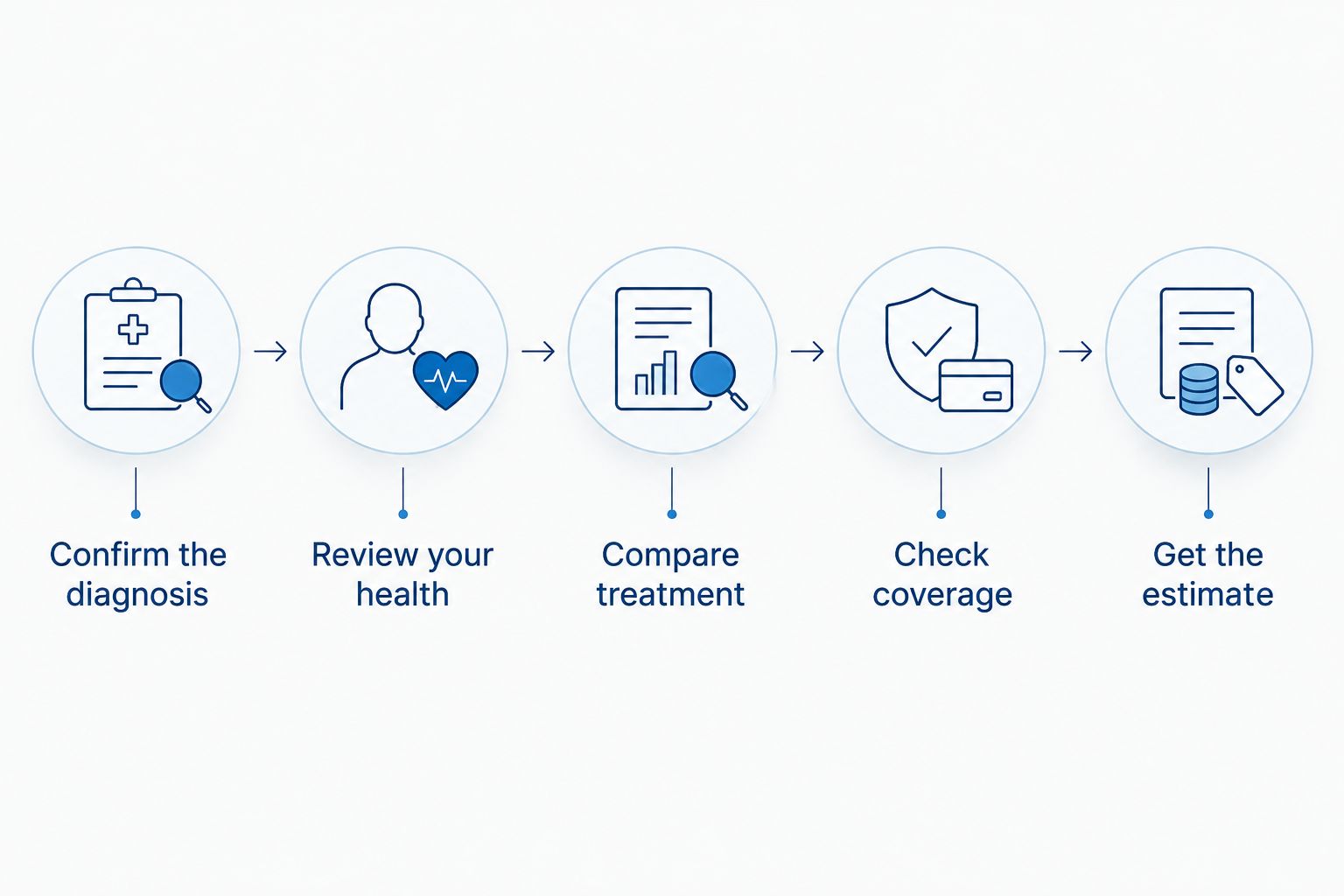
A useful treatment discussion follows a clinical sequence. Confirm the cause, compare appropriate options, and then review the financial commitment.
- Confirm the diagnosis. Describe when the nail changed, whether it hurts, and whether other nails or nearby skin are affected. The clinician can decide whether a nail clipping or scraping is needed.
- Review your health. Bring your medication list and mention diabetes, circulation problems, reduced sensation, liver conditions, and previous treatment reactions.
- Compare treatment. Discuss the likely benefits and limitations of laser, prescription medicine, and supportive nail care as appropriate to your findings.
- Check coverage. Ask the practice for the proposed services and billing information, then confirm relevant benefits with your insurer.
- Get the estimate. Request the expected treatment scope, included services, exclusions, and reassessment plan in writing.
Bring the names of products you have already used and explain how consistently you used them. Photos showing how the nail has changed can also help you describe its history, although a photo cannot replace the examination or any necessary testing.
Avoid trimming the nail aggressively to make it look better before your appointment. If testing is planned, ask the practice whether you should change your nail-care routine beforehand.
Does insurance cover toenail fungus laser treatment?
Do not assume that insurance covers laser treatment because the nail condition is medical. Coverage depends on your plan and the specific service, and an examination, laboratory test, prescription, and procedure can have different coverage rules.
For treatment planned in 2026, confirm your current benefits rather than relying on a previous visit or an older explanation of benefits. Ask the insurer about exclusions, referral requirements, prior authorization, and your payment responsibility for the proposed services.
A practice's participation in your insurance network does not mean every service is covered. Likewise, authorization is not the same as a guarantee of payment; ask your insurer to explain the conditions that apply.
What should you ask the billing team?
Ask which services the practice expects to submit to insurance and which would be your responsibility directly. Request the information you need to verify benefits without assuming that a general statement about insurance answers the procedure-specific question.
Keep a copy of the written estimate and any insurer response. If the treatment plan changes, ask whether the estimate needs updating before the next procedure.
How long does it take to see a clearer toenail?
A toenail can take 12 to 18 months to grow out fully, so appearance changes lag behind treatment. The existing damaged portion does not immediately become a normal nail after a procedure or medication course.
Treatment duration and nail regrowth are separate timelines. A commonly prescribed oral terbinafine course for toenail fungus lasts 12 weeks, while some prescription topical treatments require 48 weeks of daily application; these are examples, not instructions for your own care.
Your prescription and follow-up schedule must come from your clinician. Do not shorten treatment because the nail begins looking better or extend a medicine without discussing it.
For a plan started in 2026, ask what progress should look like at reassessment and how the clinician will distinguish clearer new growth from persistent infection. Photographs taken under similar conditions can help document appearance, but appearance alone does not always establish fungal clearance.
When should you seek an evaluation instead of shopping around?
Arrange an examination if the nail hurts, presses against your shoes, keeps thickening, or remains abnormal despite treatment. A painful nail can also be ingrown or affected by another condition that requires a different approach.
Seek prompt medical attention for spreading redness, warmth, swelling, drainage, an open sore, or worsening pain. Fever or rapidly worsening symptoms need urgent assessment rather than a routine cosmetic-treatment discussion.
If you have diabetes, reduced sensation, or poor circulation, contact your clinician promptly about a new nail injury or skin break. Avoid digging under the nail or using sharp tools to remove thickened material yourself.
For patients in Mechanicsville and West End, the next step is the same: an appropriate foot evaluation before choosing treatment. Achilles Foot and Ankle Center provides toenail care for patients who need a diagnosis before choosing treatment.
You can start with Achilles Foot and Ankle Center to discuss evaluation for persistent nail changes. An evaluation is the place to ask which treatments fit your findings; it does not commit you to laser treatment.
Get your toenail changes evaluated
Discuss persistent thickening, discoloration, or discomfort before choosing a treatment.
Questions to bring to your appointment
Write down your main goal before the visit. Relief from shoe pressure, improvement in appearance, and treatment of confirmed fungus are related, but they are not interchangeable measures of success.
Use these questions to keep the conversation focused:
- What findings suggest fungus rather than another nail condition?
- Would a nail sample change the treatment recommendation?
- What is the intended outcome of the proposed laser treatment?
- Which alternatives fit my health history, and what are their limitations?
- What is included in the written estimate, and what requires a separate decision?
- What would make you stop, change, or repeat treatment?
A clear explanation should connect the diagnosis, treatment choice, and reassessment plan. You should leave knowing what the clinician recommends and why—not simply how to purchase a series of sessions.
FAQ
How do I compare fungus toenail laser treatment cost between practices?
Compare written estimates for the full proposed treatment course, not just a session. Check the treatment area, examination, testing, follow-up, and any separately billed services.
Is laser treatment guaranteed to cure toenail fungus?
No, laser treatment does not guarantee a cure. Some devices are cleared for temporary improvement in clear nail, which is different from confirmed fungal clearance.
Will my insurance pay for toenail fungus laser treatment?
You must confirm coverage for the specific proposed service with your insurer. Coverage for an office visit or laboratory test does not establish coverage for laser treatment.
Do I need a test before treating a thick yellow toenail?
A clinician can determine whether testing is appropriate before treatment. Injuries, psoriasis, and other nail conditions can resemble fungus, so appearance alone does not always establish the diagnosis.
How soon will my toenail look normal after treatment?
A toenail can take 12 to 18 months to grow out fully. Treatment does not immediately replace the existing damaged nail, and normal appearance is not guaranteed.
Is laser better than antifungal tablets?
Laser is not automatically better than oral antifungal treatment. The appropriate choice depends on the confirmed diagnosis, treatment goal, medical history, and the benefits and risks of each option.
Can I wait to get a fungal toenail checked if I have diabetes?
Arrange an evaluation rather than relying on self-treatment if you have diabetes and new nail changes. Seek prompt attention for redness, drainage, an open sore, or other signs of infection.
One last thing
Before agreeing to treatment in 2026, ask: “What finding would make you recommend something other than laser?” The answer helps you understand whether the recommendation follows your diagnosis and goals rather than treating every abnormal nail the same way.
Keep that clinical question alongside the written estimate. A clear plan explains both what you are paying for and how you will decide whether treatment is helping.
Related guides
- Toenail fungus: from over-the-counter treatment failure to laser evaluation
- Is it safe to cut out an ingrown toenail at home?
- Diabetic foot care for seniors