The best diabetic inserts for shoes depend on how much risk your feet carry. If you have a past ulcer, a foot deformity, or significant nerve damage, custom orthotics prescribed by a podiatrist are the safest choice. If your symptoms are mild and you have never had a wound, a cushioned over-the-counter insole in extra-depth shoes is a sensible start. Heat-moldable inserts sit in the middle, and Medicare may cover therapeutic inserts if you qualify.
Sensitive feet make this decision harder. Neuropathy can hide a blister or a pressure spot until it becomes a wound, and a generic gel insole from a pharmacy shelf was never built for that. This guide ranks four types of diabetic insoles for shoes, explains which features separate real protection from marketing, and shows how coverage works.
We are a podiatry practice serving the Richmond area, and we fit diabetic footwear and orthotics for patients. Treat what follows as general guidance. It does not replace a foot exam.
What to look for in diabetic inserts for shoes
Good diabetic insoles do three jobs: they spread pressure, they cut friction, and they fit your shoe without crowding your foot. Check every insert against those three jobs before you consider price or brand.
Features that matter
Pressure relief comes first, because ulcers form where load concentrates, usually under the heel, the ball of the foot, and bony prominences. The table below shows what each feature does and what to check on the product.
| Feature | Why it matters | What to check |
|---|---|---|
| Pressure redistribution | Moves load off the heel, forefoot and bony spots | Soft foam or gel that keeps its shape under your weight |
| Shock absorption | Reduces repeated impact you may not feel | Materials such as Poron, EVA or memory foam |
| Arch and heel support | Keeps the foot aligned so it rubs less | Contoured arch and a deep heel cup |
| Low-friction cover | Prevents blisters and sores | Smooth top layer with minimal or no stitching |
| Moisture control | Dry skin resists fungal infection | Wicking or antimicrobial top fabric |
An insert that feels soft in the store but flattens by lunchtime is not protecting anything.
Fit and shoe compatibility
Diabetic inserts are thicker than standard insoles, so they belong in extra-depth shoes. Remove the factory insole first. Then check that the new insert lies flat, your heel does not slip, and you still have about a thumb’s width between your longest toe and the front of the shoe.
Do diabetic insoles work? They reduce pressure and friction, and offloading devices are a common tool for preventing ulcers. They do not replace daily foot checks or proper shoes. If you cannot feel your feet well, look at them every day.
1. Custom diabetic orthotics
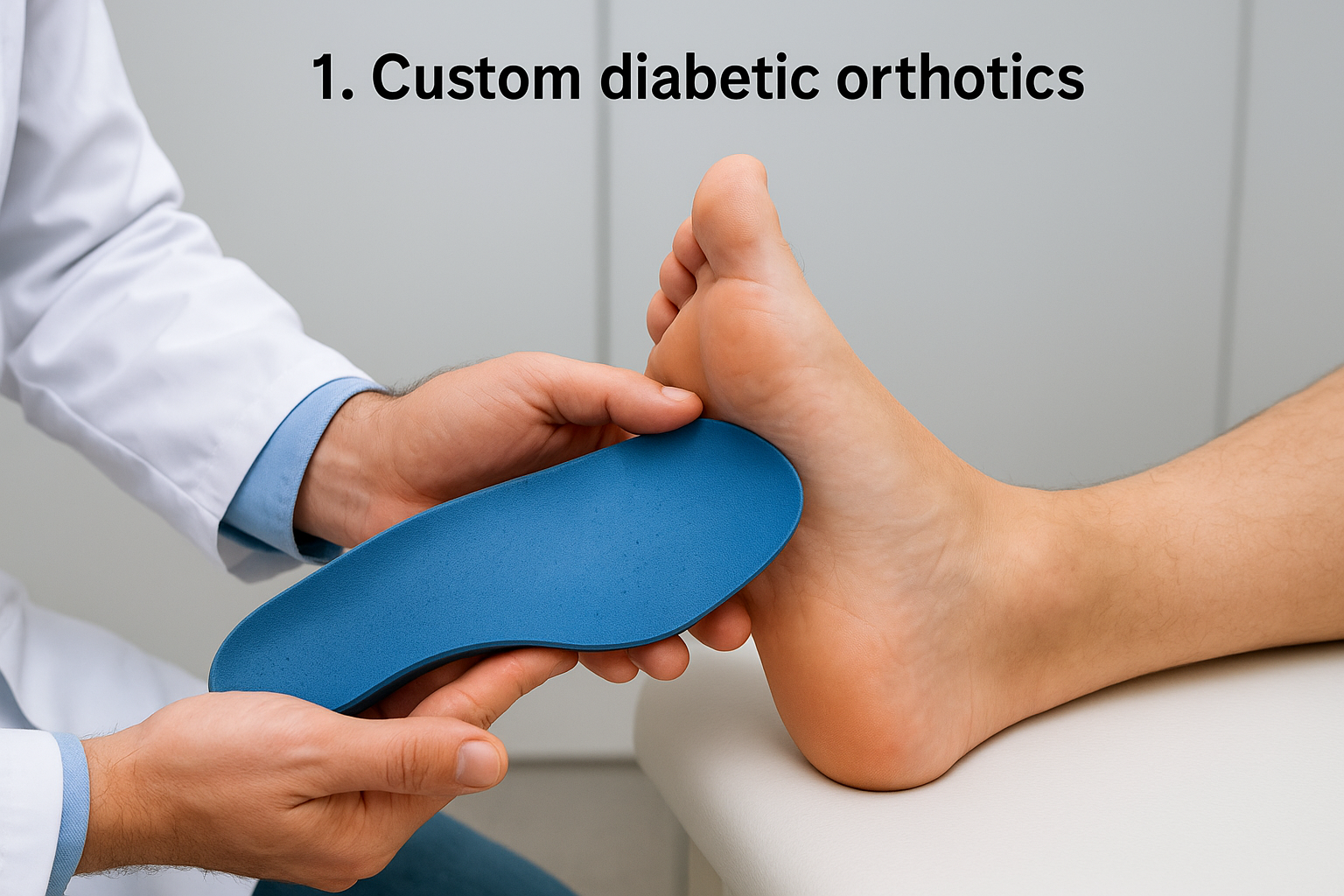
Custom orthotics are the strongest option for high-risk feet. They are prescription devices designed around your foot structure to improve support, comfort, balance, and pressure distribution.
How it works
At Achilles Foot and Ankle Center, a state-of-the-art 3D imaging system captures your foot’s shape. Your podiatrist then specifies a device built for your contours and trouble spots, rather than for an average foot.
- Matches your exact arch, width, and pressure points
- Can make room for deformities such as bunions or hammertoes
- Uses materials chosen for your condition, not a single stock design
If you have ever had a foot ulcer, skip the shelf and start with a custom device.
Who it suits and what it costs
Choose this option if you have a history of ulcers, severe neuropathy, a structural deformity, or pain that over-the-counter inserts have not solved. Podiatrists generally recommend prescription devices for exactly these cases.
Custom devices cost more than off-the-shelf inserts because of the imaging, design, and manufacturing involved. Insurance may cover them when they are medically necessary. Call us with your plan details and we will tell you what to expect.
2. Medicare-covered therapeutic inserts
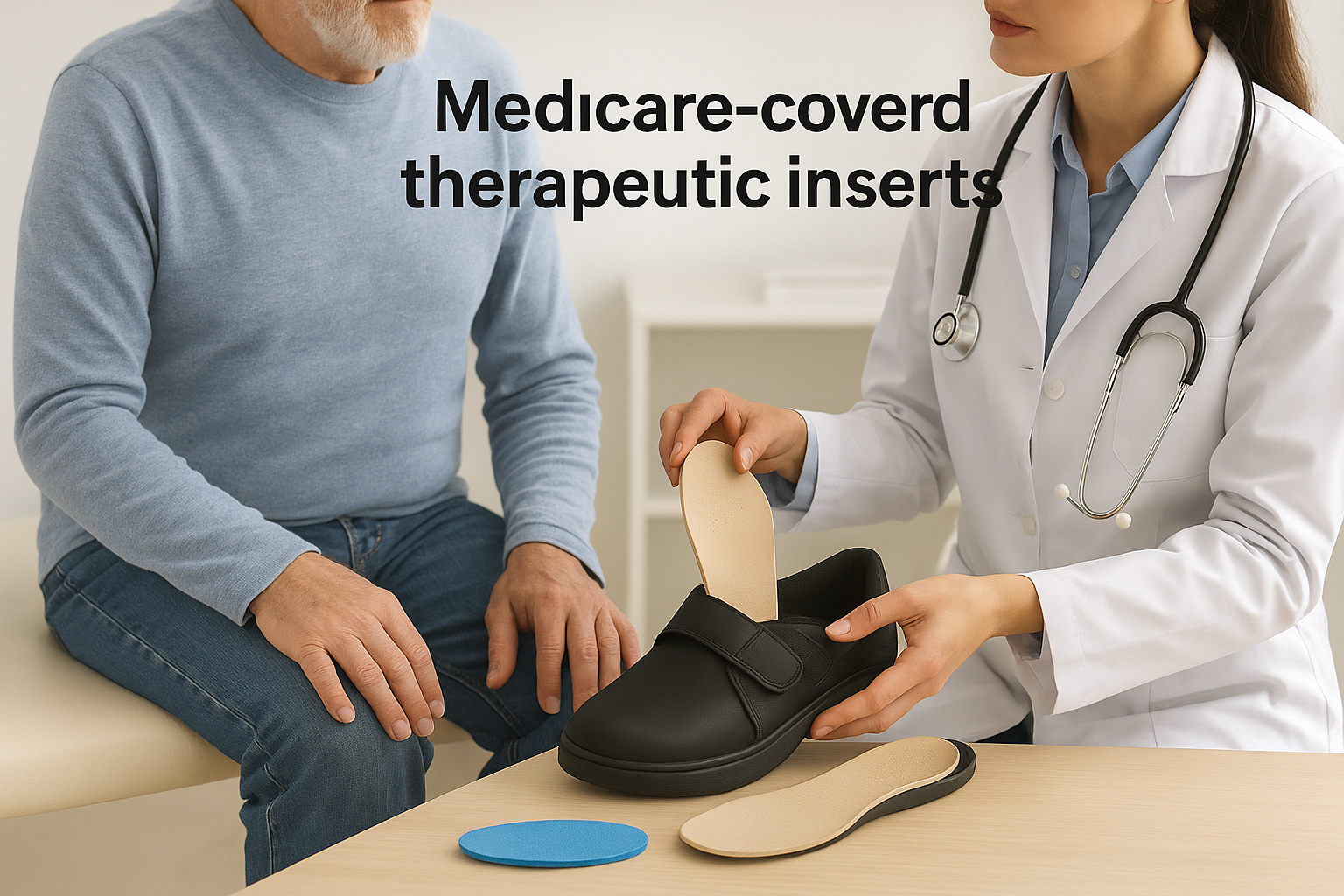
Medicare Part B can pay for therapeutic shoes and inserts if you have diabetes and meet specific conditions. This is the cheapest route to professionally fitted inserts for many eligible patients.
How it works
Our Diabetic Shoe Program offers therapeutic footwear for eligible patients who need added protection, accommodation, and support. Coverage is 80 percent of the cost of one pair of shoes and three pairs of inserts per year, and secondary insurance may cover the remaining costs totally. Medicare’s own page describes the benefit.
Expect to need these:
- Diabetes plus a qualifying foot problem, such as a past ulcer, amputation, nerve damage with calluses, a deformity, or poor circulation
- Certification from the doctor who manages your diabetes
- A supplier enrolled in Medicare
Ask about Medicare before you buy inserts yourself, because you may be entitled to three pairs a year.
Who it suits and what it costs
This fits anyone with diabetes and a qualifying foot condition who has Original Medicare. Medicare Advantage plans can have their own rules, so check yours.
Here is an illustration only. If the approved amount for one year’s shoes and inserts were $400, Medicare would pay 80 percent, or $320, once your Part B deductible is met. You would owe $80 unless a secondary plan picks it up.
3. Heat-moldable semi-custom inserts
Heat-moldable inserts are the middle option. They conform to your foot after heating, which gives a more personal fit than a flat prefabricated insole without a full prescription process.
How it works
The insert is made of a thermoplastic such as EVA. It is warmed in an oven or with a heat gun until pliable, placed in your shoe, and you stand on it while it cools and sets around your foot. Some designs can be reheated and reshaped if your feet change.
If you have neuropathy, have a clinician do the molding. You may not feel material that is too hot, and burns on numb feet heal slowly.
Never heat-mold an insert at home if you cannot reliably feel temperature in your feet.
Who it suits and what it costs
These suit people with low to moderate risk who need more specific support than a standard insole but do not need a prescription device. They are not the right choice after an ulcer.
Pricing generally sits between over-the-counter insoles and custom orthotics. Because you can adjust them, they can last through changes in your feet, but check for compression and cracks as you would with any insert.
4. Cushioned over-the-counter insoles
Cushioned prefabricated insoles are the budget starting point. They come in standard sizes, with foam or gel layers that absorb shock and soften pressure.
How it works
Products such as the Spenco RX Diabetic Plus aim to reduce pressure points, minimize friction, and add cushioning where sensitive feet need it. The PediFix Diabetic Defense is designed to relieve pain and help prevent calluses and damage to fragile skin. Choose a product labeled for diabetic feet rather than a generic memory foam pad.
Check the top cover, the thickness, and whether it fits your shoe with room to spare.
A diabetic-labeled insole beats a generic gel pad, but it is still a starting point, not a prescription.
Who it suits and what it costs
This works for low-risk feet: you feel normally or only slightly less, you have no ulcer history, and you have no significant deformity. It also suits anyone waiting on a custom device.
These cost the least and are easy to find online or in stores. Plan to replace cushioned inserts every six to twelve months with daily wear, sooner if the foam stays flat or the cover cracks.
Pick the insert that matches your risk
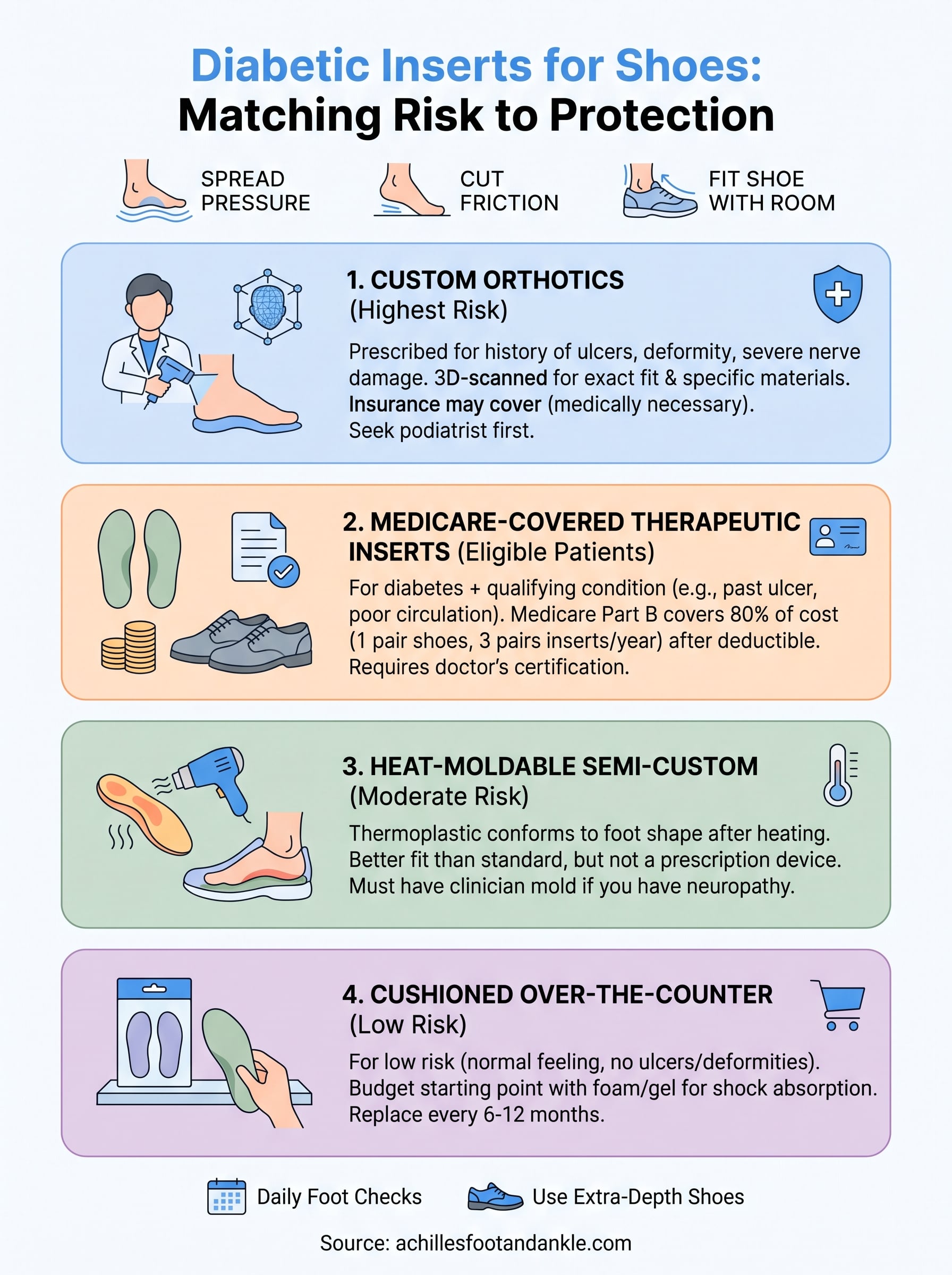
Match the insert to your foot risk. Custom orthotics protect the highest-risk feet, Medicare-covered therapeutic inserts make professional fitting affordable for eligible patients, heat-moldable inserts add personalization, and cushioned insoles suit low-risk feet. Whichever you choose, use extra-depth shoes and check your feet daily.
If you are unsure where your feet fall, have a podiatrist examine them. We see patients at our Mechanicsville and West End offices, and you can book a same-day appointment to get fitted for the right inserts.