Neuropathy treatment often takes several weeks to improve burning or shooting pain, while recovery from a treatable nerve injury can take months or longer. Some nerve damage does not fully reverse, so treatment also focuses on protecting your feet and preserving function—not just making symptoms disappear.
- How long does neuropathy treatment take to work? Pain relief often takes weeks; nerve recovery takes longer.
- Less burning does not prove that numbness or protective sensation has improved.
- Achilles Foot and Ankle Center offers foot neuropathy evaluation for patients needing diagnosis, treatment, and foot protection.
- New weakness, an open wound, or signs of infection need prompt evaluation rather than a longer treatment trial.
Why this matters
Waiting for improvement feels different when you know what treatment is supposed to change. A medicine that reduces nighttime burning has a different job from treating a vitamin deficiency or relieving pressure on a nerve.
Pain relief and nerve recovery are separate goals. Your 2026 treatment plan should identify both the symptom you want to improve and the cause that needs attention. Understanding whether neuropathy in feet is reversible helps you set expectations without assuming that persistent numbness means every part of treatment has failed.
How long does neuropathy treatment take to work?
Neuropathy treatment works on different timelines because treatments do different things. Medicines for nerve pain often need several weeks and gradual dose adjustments before you and your prescriber can judge their benefit. Treating an underlying cause follows a separate course, and damaged nerves do not recover as quickly as pain signals can change.
Use this comparison to understand what you are waiting for. These are treatment categories, not interchangeable options or a schedule for changing treatment yourself.
| Treatment approach | Best for | What improvement looks like | Main limitation |
|---|---|---|---|
| Nerve-pain medicine | Reducing burning, shooting pain, or disrupted sleep | Less pain or fewer nighttime awakenings after an appropriate trial | Pain relief does not establish nerve repair; side effects can limit use |
| Treating an underlying cause | Addressing a confirmed contributor, such as deficiency or diabetes | Better control of the cause, with possible stabilization or symptom improvement | Existing nerve damage can persist |
| Relieving nerve compression | A confirmed trapped or compressed nerve | Improvement in symptoms linked to that nerve | Recovery depends on the severity and duration of injury |
| Protective foot care | Preventing unnoticed pressure injuries when sensation is reduced | Fewer pressure problems and earlier recognition of skin damage | Protection does not restore sensation |
Ask your clinician when to review the specific treatment you receive. There is no single waiting period that applies to every medicine, cause, or pattern of nerve damage.
Nerve-pain medicines: judge relief after an appropriate trial
Some nerve-pain medicines require gradual dose increases to balance benefit against side effects. The first prescribed dose is not always the dose your clinician intends to assess over time.
Follow the prescribed schedule rather than increasing treatment yourself. Tell your prescriber about dizziness, sleepiness, swelling, or other new symptoms. A treatment that reduces pain but leaves you unsteady needs review, especially when numb feet already affect balance.
Do not stop a prescription abruptly unless your clinician tells you to. Some medicines need a planned reduction rather than a sudden stop.
Treating the cause: improvement depends on what is reversible
A confirmed vitamin deficiency, diabetes-related nerve injury, and nerve compression require different plans. Correcting the cause can help prevent further injury, but it does not promise that established damage will disappear.
With diabetic neuropathy, managing blood glucose supports long-term care rather than acting as immediate pain relief. With a deficiency, treatment should address the confirmed deficiency and its cause—not rely on an untested supplement combination.
Protective foot care: start before sensation improves
Foot protection matters from the beginning of treatment. If numbness hides a blister, pressure spot, or cut, waiting for feeling to return leaves the skin unprotected.
Supportive, properly fitting footwear and regular skin checks serve a different purpose from pain medicine. They help you notice and reduce injury risks, even when numbness remains unchanged. Do not use less pain as permission to walk barefoot or ignore a sore spot.
Why neuropathy treatment time varies
The most useful timeline is tied to a diagnosis, not the word neuropathy alone. These factors explain why another person's response does not predict yours:
- Underlying cause: Diabetes, nerve compression, vitamin deficiency, and medication-related injury need different treatment decisions.
- Duration of symptoms: Long-standing nerve injury can be harder to reverse than a recently identified, treatable problem.
- Extent of nerve damage: Pain, numbness, weakness, and balance changes reflect different effects on nerve function.
- Treatment schedule: A medicine that requires gradual dose adjustment cannot be judged in the same way as a treatment already at its intended dose.
- Ongoing contributors: Continued pressure on a nerve or an untreated underlying condition can interfere with improvement.
- Treatment tolerance: Side effects can prevent you from continuing an otherwise useful medicine or reaching the planned dose.
For a neuropathy review in 2026, bring the actual names and doses of your medicines and supplements. Include when you started them and what changed afterward. That information is more useful than saying you have tried everything.
How can you tell whether treatment is working?
Choose clear measures before deciding a treatment has helped or failed. Pain intensity matters, but sleep, walking comfort, balance, and skin condition also belong in the discussion.
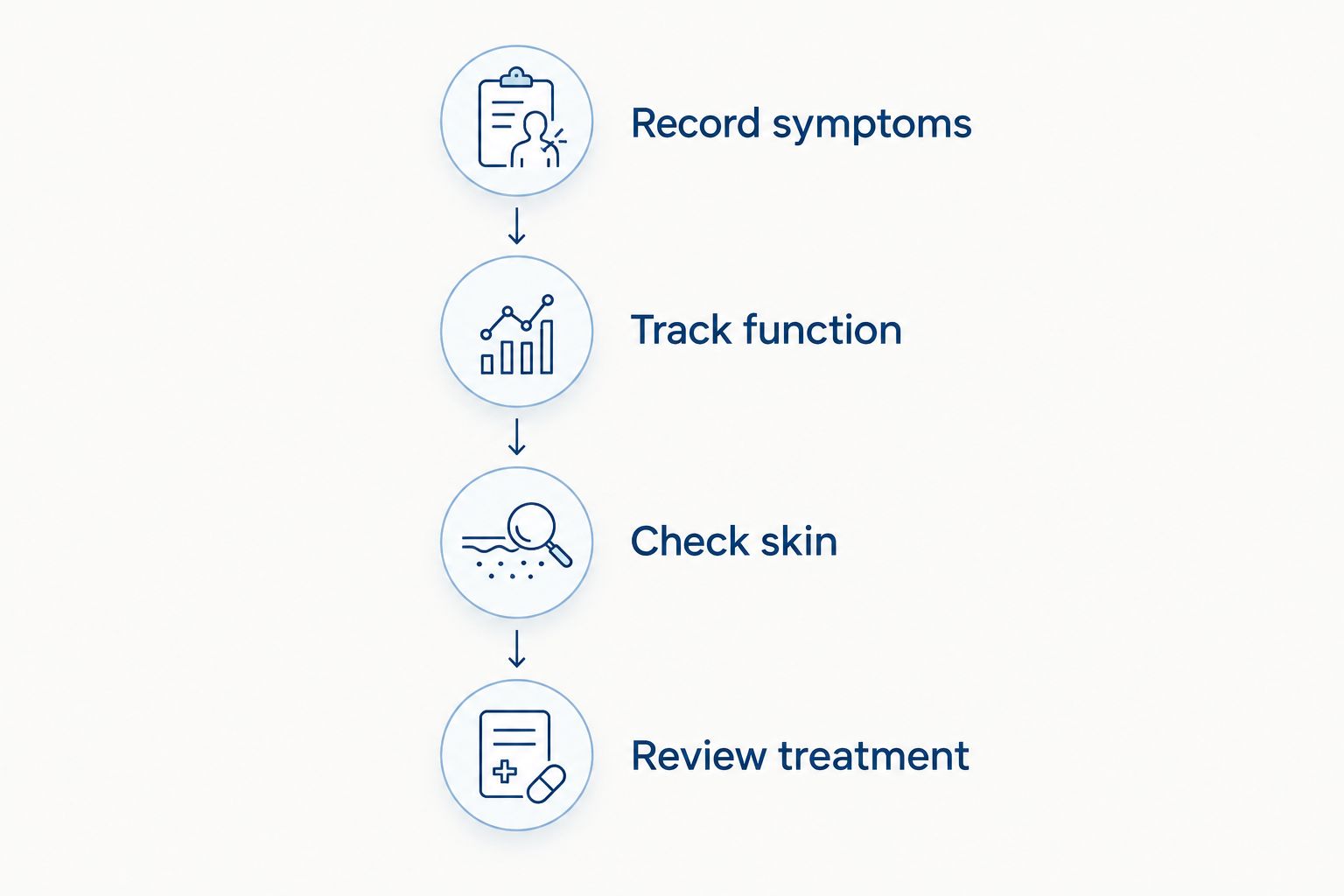
Use this sequence to prepare for your follow-up:
- Record symptoms. Note where burning, tingling, numbness, or shooting pain occurs and whether it interrupts sleep or activity.
- Track function. Describe changes in walking, standing, balance, and the activities you have stopped doing.
- Check skin. Look for blisters, cracks, redness, drainage, and areas rubbed by shoes. Use a mirror or ask for help if you cannot see the soles.
- Review treatment. Bring your observations, medication schedule, and side effects to the clinician managing your care.
Keep the observations simple enough to repeat. A brief note about sleeping through the night or stopping a walk because of burning gives your clinician something concrete to compare.
Do not test improvement by touching your feet with hot objects, sharp objects, or very cold items. Reduced sensation makes those experiments unsafe. A clinical examination is the right place to assess protective sensation.
Does less burning mean your nerves are healing?
Less burning means the pain is improving; it does not prove the nerves have recovered. Nerve-pain medicines can reduce uncomfortable signals while numbness remains.
This distinction matters when you return to activity. Feeling more comfortable does not remove the need for protective footwear, skin checks, or care for pressure points. A painless wound still needs attention.
Ask your clinician what finding would indicate a change in nerve function. Your symptom report and the foot examination answer related but different questions.
What should you do if treatment is not helping?
If you have reached the review point set by your prescriber without meaningful benefit, arrange a reassessment. Do not extend an ineffective treatment indefinitely or add supplements simply because the original plan has been disappointing.
At your 2026 follow-up, separate these questions:
- Was the diagnosis confirmed, or does the symptom pattern need another look?
- Have you followed the intended dose and schedule?
- Is the treatment helping sleep or activity even if numbness persists?
- Are side effects outweighing the benefit?
- Does a new symptom suggest a different or additional problem?
Heel pain, joint pain, circulation problems, and nerve pain can overlap. A changed pattern deserves examination rather than an automatic increase in nerve-pain medication.
Achilles Foot and Ankle Center is a fit for Richmond-area patients who need foot neuropathy evaluation and ongoing foot protection. A podiatry visit addresses the foot and ankle; some underlying causes also require care from your primary care clinician, diabetes clinician, or neurologist.
Patients in Mechanicsville and West End can seek foot and ankle evaluation through Achilles Foot and Ankle Center. Bring your treatment history and explain what you most want to improve, whether that is nighttime burning, walking confidence, or concern about unnoticed injuries.
Get your foot symptoms evaluated
Discuss persistent burning, numbness, or changes in foot comfort and function.
When should you seek care instead of waiting?
Do not wait for a neuropathy medicine to work if your foot develops a wound, spreading redness, warmth, drainage, or increasing swelling. Seek prompt medical assessment, especially if you have diabetes or reduced sensation. Fever or feeling unwell alongside a foot wound needs urgent attention.
A newly hot, red, swollen foot needs prompt assessment even when it barely hurts. Neuropathy can reduce the pain that would otherwise warn you about an injury or serious foot problem.
New foot weakness, difficulty lifting the front of your foot, or rapidly worsening numbness also needs prompt evaluation. Sudden weakness accompanied by facial drooping or difficulty speaking is an emergency, not a routine neuropathy follow-up.
What should your follow-up plan include?
Your 2026 plan should name the treatment goal, the review point, and the symptoms that require earlier contact. Ask for instructions you can follow at home rather than leaving with only a prescription.
For foot neuropathy care, Achilles Foot and Ankle Center offers evaluation and treatment, while ongoing monitoring also depends on what you report between visits. Tell the practice about skin changes, new weakness, or a meaningful change in walking rather than saving every concern for a scheduled appointment.
Before you leave, confirm who manages medication adjustments and who to contact about wounds. Coordinating these roles helps keep symptom treatment separate from urgent foot care.
FAQ
How long does neuropathy treatment take to work?
Neuropathy treatment often takes several weeks to improve nerve pain, while recovery from a treatable nerve injury can take months or longer. Your clinician should set a review point for the specific treatment and cause.
Can neuropathy treatment work if my feet are still numb?
Yes, neuropathy treatment can reduce pain or help prevent further injury while numbness persists. Persistent numbness still requires protective footwear and regular foot checks.
Should I stop my nerve-pain medicine if it is not helping yet?
Do not stop or change prescribed nerve-pain medicine without instructions from your prescriber. Ask whether you have completed the intended trial and whether stopping requires a gradual dose reduction.
Does diabetic neuropathy improve as soon as blood sugar improves?
Diabetic neuropathy does not reliably improve as soon as blood glucose improves. Glucose management supports long-term care, but existing nerve damage and pain can persist.
Will supplements make neuropathy treatment work faster?
Supplements are not a reliable shortcut for neuropathy recovery. Treat a confirmed deficiency with clinical guidance; excessive vitamin B6 can itself damage nerves.
Is walking good for neuropathy in my feet?
Walking can support activity and general health when it is appropriate for your foot condition. Ask for guidance if you have a wound, significant balance problems, or a hot, swollen foot, and inspect your feet after activity.
When should I get foot neuropathy checked instead of waiting?
Get foot neuropathy evaluated when symptoms persist, worsen, disturb sleep, or affect walking. New weakness, an open wound, or a red, hot, swollen foot requires prompt assessment rather than waiting for treatment to take effect.
One last thing
Make foot protection part of your 2026 routine even when treatment starts helping. The surprising point is that a quieter foot is not necessarily a safer foot: pain can improve while protective sensation remains reduced.
Judge progress by comfort, function, and foot safety together. That gives you and your clinician a more useful picture than asking only whether the tingling has stopped.
Related guides
- Can neuropathy in feet be treated without medication?
- Coordinating diabetic foot exams and endocrinologist visits
- Can a foot wound get infected quickly?