

Neuropathy in your feet is sometimes reversible when the cause is treatable, such as vitamin B12 deficiency or pressure on a nerve, but recovery depends on the extent of nerve damage. Long-standing diabetic nerve damage often does not fully reverse, and pain relief does not prove that nerves have healed. The next step is an evaluation that identifies the cause, checks foot safety, and separates symptom control from possible recovery.
- Is neuropathy in feet reversible? Sometimes; treating the cause offers the best chance of improvement, without guaranteeing nerve recovery.
- Diabetic peripheral neuropathy often does not fully reverse; blood sugar management and foot protection remain essential.
- Vitamin B12 deficiency and nerve compression need targeted treatment, not an automatic supplement or footwear purchase.
- Achilles Foot and Ankle Center offers foot and ankle care, including evaluation of nerve pain and diabetic foot concerns.
Is neuropathy in feet reversible?
Some causes of foot neuropathy are treatable, but treating the cause and reversing existing damage are different outcomes. Your clinician needs to establish which problem is present before discussing recovery.
The distinction matters especially with diabetes. Our guide to whether diabetic neuropathy can be reversed addresses that specific situation; not every case of tingling or burning feet has the same cause.
| Cause or situation | Potential for improvement | Best for: next step | Benefit and limitation |
|---|---|---|---|
| Vitamin B12 deficiency | Correcting a deficiency can improve nerve symptoms; established damage can persist | People with confirmed deficiency or relevant risk factors: clinician-directed replacement | Treats a cause, but recovery is not assured |
| Pressure on a nerve | Relieving compression can improve symptoms; severe or prolonged injury can leave deficits | People with a localized pattern: assessment of the compression | Targets the affected nerve, but treatment depends on its location and severity |
| Diabetic peripheral neuropathy | Management can help prevent or slow progression; established nerve damage often remains | People with diabetes: coordinated diabetes and foot care | Addresses ongoing risk, but does not promise restored sensation |
| Medication-related neuropathy | Improvement depends on the medication and extent of injury | People with symptoms during treatment: review with the prescriber | Allows treatment decisions, but stopping medication yourself is unsafe |
| Neuropathy without an identified cause | Symptoms can be managed even when reversal is uncertain | People with unexplained symptoms: evaluation and follow-up | Supports comfort and safety, but does not establish a reversible cause |
This is a decision guide for 2026, not a way to diagnose yourself. Several conditions can coexist, so finding diabetes or a vitamin deficiency does not automatically explain every symptom.
Why this matters
Burning, tingling, numbness, and electric-shock sensations can interfere with sleep and walking. Reduced sensation also makes it easier to miss a blister, burn, or shoe rubbing against your skin.
A foot that hurts less is not necessarily a foot that feels normally. Pain treatment can improve comfort while protective sensation remains reduced, so daily skin checks still matter.
You also need to distinguish nerve symptoms from circulation problems, joint pain, and other causes of foot discomfort. An examination helps avoid treating the wrong problem while a wound or progressive weakness goes unnoticed.
Vitamin B12 deficiency: treat the confirmed deficiency
Vitamin B12 deficiency can damage nerves. When it explains your symptoms, replacement addresses the underlying problem rather than simply reducing pain.
Earlier treatment gives you a better opportunity to limit further injury, but symptoms do not always disappear completely. Your clinician should also investigate why the deficiency developed, including dietary intake, absorption problems, or medication effects.
Best for: people whose history and testing support a deficiency. Taking a supplement without an assessment can delay identification of another cause, and extra vitamins are not automatically helpful.
High vitamin B6 intake can itself cause neuropathy. Bring supplement containers or photographs of their labels to your appointment, including products sold for energy or nerve support.
Nerve compression: identify where the pressure occurs
Pressure on a nerve can cause burning, tingling, or numbness in part of a foot. Symptoms arising from a nerve near the ankle require a different evaluation from symptoms caused by a nerve problem in the back.
Treatment depends on the site and cause. Changes to footwear or activity, rehabilitation, or other treatment can be appropriate, while some cases require a surgical assessment.
Best for: people with a localized symptom pattern or symptoms linked to particular positions or activities. The limitation is that relieving pressure does not guarantee recovery after substantial nerve injury.
Do not assume a tight shoe explains persistent numbness. Tell your clinician exactly where the sensation starts, where it travels, and whether weakness accompanies it.
Diabetic neuropathy: protect function and prevent injury
Diabetic peripheral neuropathy commonly affects sensation in the feet. Managing blood glucose and other health risks is central to limiting further injury, but established nerve damage often does not fully reverse.
Your treatment plan can still make a meaningful difference. Pain management, appropriate footwear, skin care, and prompt treatment of wounds address different consequences of neuropathy.
Best for: people with diabetes who have burning, numbness, altered balance, or reduced awareness of foot injuries. The limitation is that improved glucose readings or reduced pain do not confirm restored nerve function.
For a 2026 care review, ask your diabetes clinician and foot-care clinician to distinguish these goals: managing diabetes, controlling symptoms, and protecting your feet. Each needs attention even when another is improving.
Why neuropathy recovery varies
Recovery depends on the nerve problem, not just how uncomfortable your feet feel. These factors shape the treatment discussion:
- Underlying cause: correcting a deficiency differs from managing long-standing diabetic nerve damage.
- Duration: prolonged injury can leave deficits even after the trigger is treated.
- Extent of damage: mild nerve dysfunction and substantial nerve injury do not have the same outlook.
- Continued exposure: ongoing compression, alcohol exposure, or a causative medication can affect progress; medication decisions belong with the prescriber.
- Other health conditions: kidney disease, circulation problems, and nutritional issues can affect care needs.
- Treatment response: follow-up establishes whether sensation, strength, walking, or pain is actually changing.
Ask what improvement would look like in your case. Less burning, steadier walking, and return of sensation are different outcomes; improvement in one does not establish improvement in all.
What happens during an evaluation in 2026?
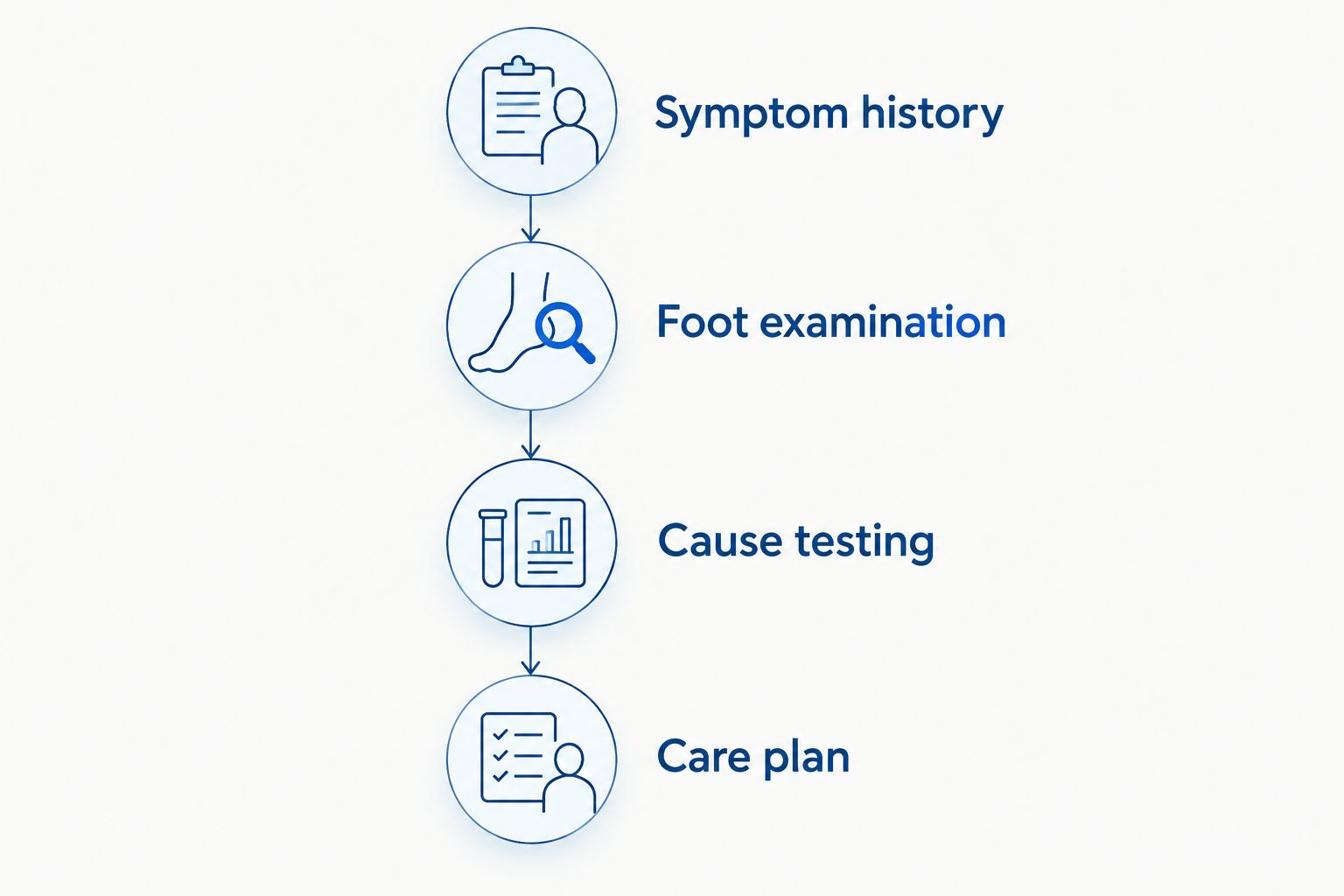
An evaluation starts with your symptom pattern and medical history, not an automatic scan or supplement recommendation. Bring a medication list, supplement details, and any previous relevant test results.
- Symptom history: describe when symptoms began, whether they affect both feet, and whether you have weakness, back pain, or balance changes.
- Foot examination: your clinician checks skin, wounds, footwear pressure, circulation, strength, and sensation. A 10-gram monofilament is one established tool for assessing protective sensation.
- Cause testing: blood tests can investigate concerns such as diabetes, vitamin deficiency, or kidney problems, depending on your history and examination.
- Care plan: findings determine treatment, follow-up, and whether primary care, endocrinology, neurology, or another specialist should be involved.
Nerve-conduction studies and other specialized tests are useful in selected cases, not automatically for everyone. Some tests assess particular nerve fibers, so a normal result does not exclude every form of neuropathy.
Achilles Foot and Ankle Center is appropriate for Richmond-area patients seeking podiatry evaluation of foot nerve pain or diabetic foot concerns. For patients in Mechanicsville and the West End, an examination can establish foot-care needs and whether additional medical evaluation is appropriate.
You can start with Achilles Foot and Ankle Center to explore the practice's foot and ankle care. An appointment is an opportunity to investigate symptoms, not a promise that nerve damage will reverse.
Get your foot symptoms evaluated
Discuss numbness, burning, skin changes, and the next steps for protecting your feet.
What can you do safely while awaiting an appointment?
Protect numb feet rather than testing how much they can tolerate. Reduced sensation can hide damage from heat, friction, or a small object inside a shoe.
Use this practical checklist in 2026:
- Complete 1 foot check per day, looking for blisters, cracks, redness, drainage, or swelling.
- Inspect 2 feet per check, including the soles and spaces between toes; use a mirror or ask for help if needed.
- Wear well-fitting shoes and socks, and check inside shoes before putting them on.
- Avoid heating pads, hot-water bottles, and direct heat on numb skin.
- Avoid walking barefoot, including indoors, when sensation is reduced.
- Do not cut corns or calluses yourself or use acid-based removers on an at-risk foot.
Keep activity comfortable and safe. New weakness, an open wound, or a hot, swollen foot changes the plan and needs assessment rather than a new exercise routine.
When should you seek urgent care?
Get emergency help for sudden weakness or numbness with facial drooping, speech difficulty, or other stroke symptoms. New leg weakness with loss of bladder or bowel control or numbness around the groin also requires emergency assessment.
Seek urgent evaluation for rapidly worsening weakness or numbness. A suddenly cold, pale, or severely painful foot also needs immediate attention because circulation problems require a different response from routine neuropathy care.
If you have diabetes or reduced sensation, contact a clinician promptly for a new wound, drainage, spreading redness, or unexplained warmth and swelling. A hot, swollen foot can be serious even when it barely hurts; fever or feeling unwell increases urgency.
Does less burning mean my nerves are healing?
Less burning means your symptoms have improved, but it does not establish nerve recovery. Medicines that reduce nerve pain can help you sleep or walk more comfortably without restoring sensation.
Track function as well as comfort. Tell your clinician whether you notice new numb areas, balance problems, weakness, or skin injuries, even if your pain score is lower.
How long does neuropathy take to improve?
There is no single recovery timeline for foot neuropathy. Improvement depends on the cause, the extent of injury, and whether the damaging process has stopped; some deficits remain permanent.
For your 2026 treatment plan, ask when to reassess and which changes should trigger an earlier visit. A specific follow-up plan is more useful than a promised recovery date.
Can shoes, creams, or supplements reverse neuropathy?
Shoes, creams, and supplements do not provide a general cure for neuropathy. Shoes can reduce pressure and protect skin, while selected topical treatments can reduce pain; neither effect proves nerve repair.
A supplement has a targeted role when a clinician identifies an appropriate indication, such as a confirmed deficiency. Avoid products promising nerve regeneration without a diagnosis-specific explanation and credible supporting evidence.
FAQ
Is neuropathy in feet reversible if I treat it early?
Some causes of foot neuropathy improve with early treatment, but early treatment does not guarantee reversal. The cause and extent of nerve injury determine the outlook.
Can diabetic neuropathy go away when blood sugar improves?
Improved blood sugar does not reliably reverse established diabetic nerve damage. Diabetes management remains essential to help prevent or slow further injury and protect your overall health.
Can I have neuropathy without diabetes?
Yes, neuropathy can occur without diabetes. Vitamin deficiencies, nerve compression, certain medications, alcohol exposure, kidney disease, and other conditions can cause nerve symptoms.
What is the best treatment for numb feet?
The best treatment for numb feet targets the cause and protects skin that has lost sensation. An examination is needed before choosing treatment because numbness has several possible explanations.
Should I take vitamin B12 for tingling feet?
Vitamin B12 treatment is appropriate when deficiency or another clinical indication is identified. Tingling alone does not establish a deficiency, so discuss testing and your supplement use with a clinician.
Can walking help neuropathy in my feet?
Appropriate activity can support strength, balance, and diabetes management, but walking does not establish nerve recovery. Get individualized advice if you have a wound, marked numbness, weakness, or balance problems.
Who should I see for burning or numb feet?
A primary care clinician or podiatrist can begin evaluating burning or numb feet. Achilles Foot and Ankle Center provides foot and ankle care, including nerve pain and diabetic foot concerns; findings determine whether another specialist is needed.
One last thing
Protective sensation matters even when pain disappears. At your next visit, ask whether you can reliably feel pressure and injury, not only whether treatment can reduce burning.
That question shifts the discussion from comfort alone to comfort, walking, and skin safety. You do not need a guaranteed reversal to benefit from a clear diagnosis and a practical foot-care plan.
Related guides
- Diabetic foot exams and endocrinologist visits
- How often should diabetics check their feet?
- Can a foot wound get infected quickly?