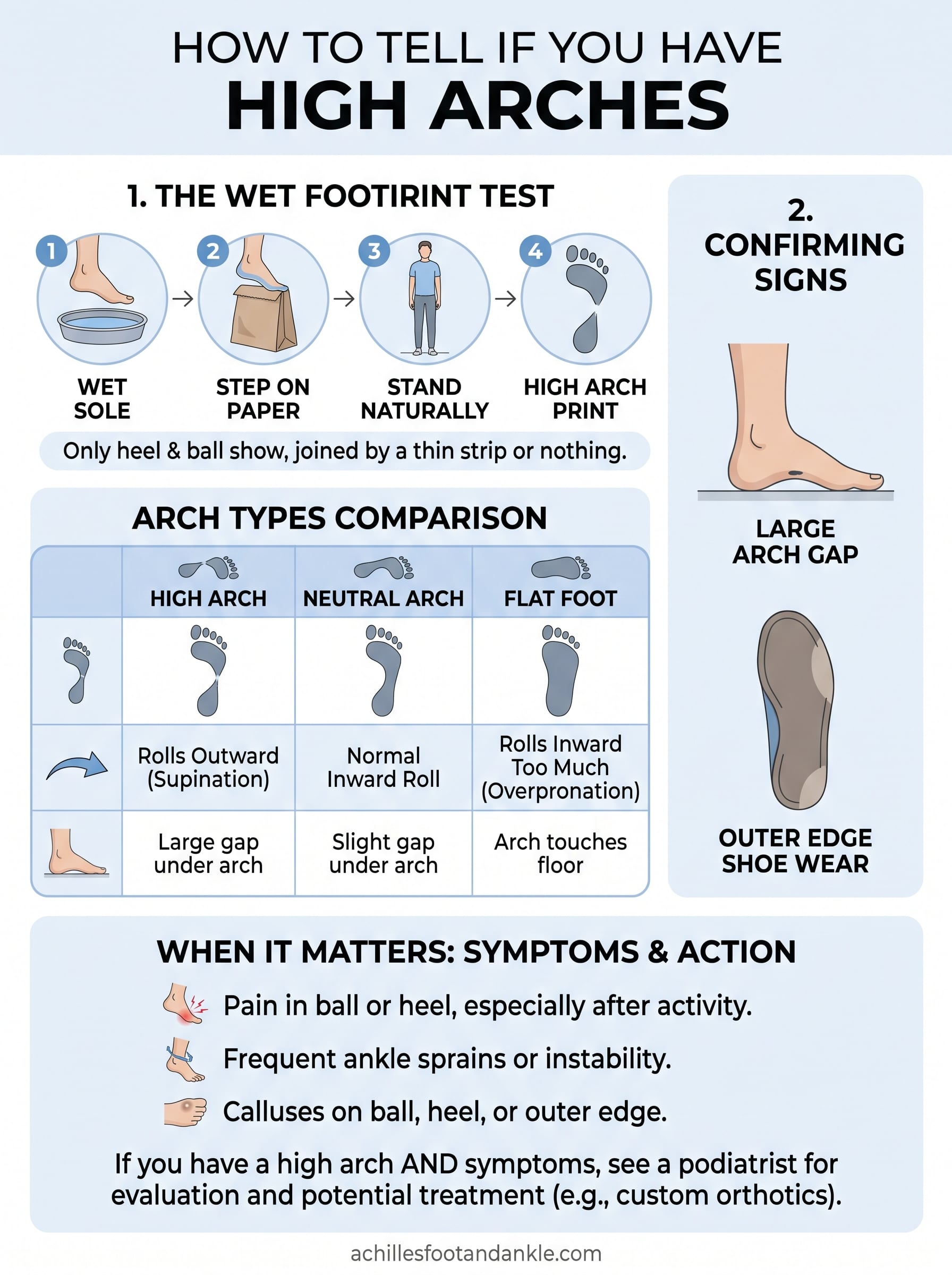
A high arch is an arch on the inside of your foot that sits well above the ground, so your heel and the ball of your foot carry most of your weight. This guide shows how to tell if you have high arches in about two minutes. Wet your feet, step onto dry paper, and look at the print. If only the heel and the ball show, joined by a thin strip or by nothing at all, your arches are high.
The footprint is only the first check. You will also learn which visible signs and shoe wear patterns confirm the result, how high arches compare with neutral arches and flat feet, and which symptoms mean the shape is causing trouble.
At Achilles Foot & Ankle in the Richmond area, we treat heel, arch, and ball of foot pain. Treat the home tests below as a useful first look, not a diagnosis.
Why your arch height matters
Your arch height decides how your foot absorbs shock and spreads load, so it shapes which aches you are most likely to get. Knowing yours helps you pick better shoes, spot trouble early, and tell a harmless quirk from a real problem.
What a high arch does to the way you move
A healthy arch flexes like a spring when your foot lands, then stiffens to push you forward. A high arch is stiffer and touches the ground less. That means less shock absorption and more pressure under the heel and the ball of the foot. High-arched feet also tend to roll outward, called supination, which makes ankle sprains more likely.
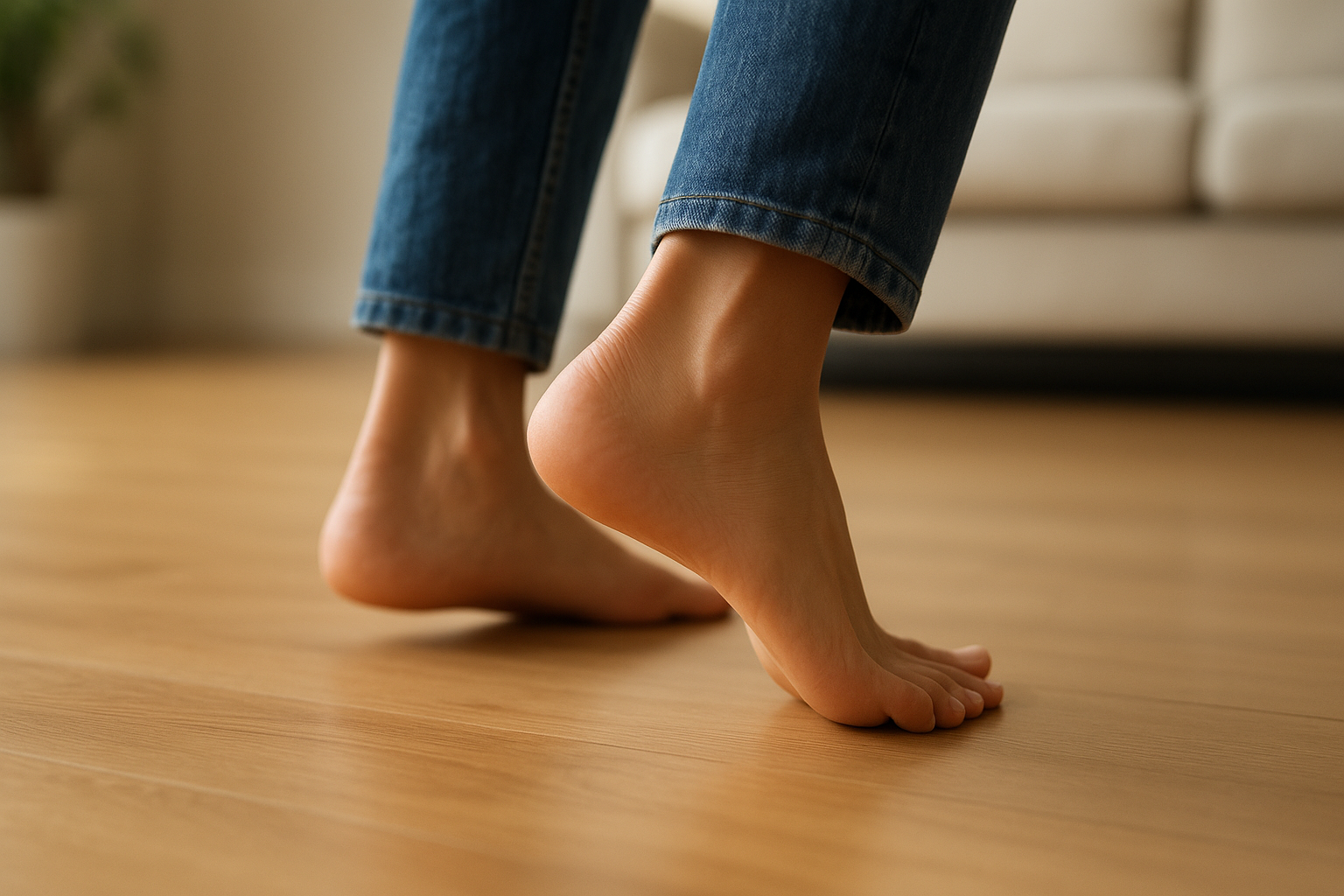
High arches are not automatically a problem. Many people have them and never feel pain. They start to matter when you notice sore feet, repeated sprains, or stubborn calluses.
A high arch is not good or bad on its own, but it shows you where your feet will take the most strain.
Where high arches come from
Most high arches are inherited, so look at your parents and siblings. Arches also form during childhood, which is why a toddler’s foot looks flat and that is normal. No ethnicity reliably predicts arch height, so test your own feet instead of guessing.
A neurological cause is less common but important. Conditions such as Charcot-Marie-Tooth disease, cerebral palsy, and spina bifida are linked to high arches. If your arches rose in adulthood, or only one foot changed, get it checked rather than assume it is genetics.
How to tell if you have high arches at home
The wet footprint test is the simplest way to tell if you have high arches, and you can back it up with a few visible signs and your shoe wear. You need only water, a shallow pan, and a surface that shows a print.
The wet footprint test
- Pour a little water into a shallow pan.
- Wet the sole of one foot.
- Step onto dry cardboard, a brown paper bag, or concrete, and stand naturally with your weight even.
- Step off and study the print, then repeat with the other foot.
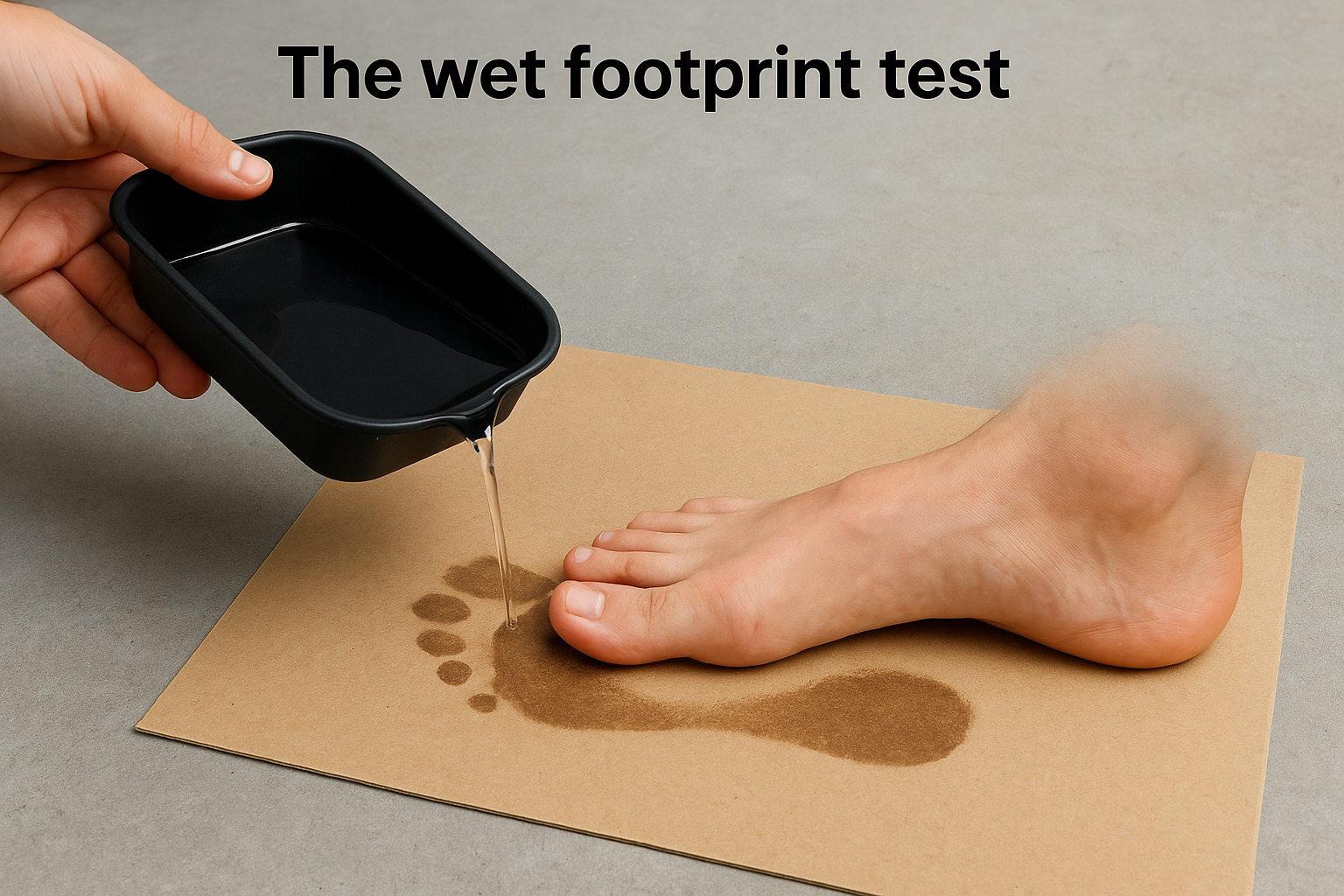
Stand relaxed and put your full weight on the foot. Pressing harder or leaning back changes the print and can fool you. Test both feet, because one foot can differ from the other.
If the print shows only your heel and the ball of your foot, with a thin strip or no connection between them, you have high arches.
Visible signs and shoe wear
Water is not the only clue. Stand barefoot on a hard floor and look at your foot from the side. With high arches, you will see a large gap between the inner edge of your foot and the floor, and the arch curves up like a bridge. From the front, your toes may curl or look clawed.
Your shoes tell the story too. Check the soles of a pair you wear often. Wear along the outer edges points to high arches and outward rolling. Look at your skin as well. Calluses under the ball of the foot, under the heel, or along the outer edge come from pressure concentrated in a small area.
High arches vs neutral arches and flat feet
You can tell the three arch types apart by how much of your midfoot appears in the wet print and how your foot behaves when you stand and walk. This table puts the clues side by side.
What each arch type looks like
| Arch type | Wet footprint | Standing look | Common foot motion | Shoe wear |
|---|---|---|---|---|
| High | Heel and ball, joined by a thin strip or not at all | Large gap under the arch | Rolls outward (supination) | Outer edges |
| Neutral | About half of the midfoot shows, with a clear curve | Slight gap under the arch | Rolls inward a normal amount | Even wear |
| Flat | Most or all of the sole shows | Arch touches or nearly touches the floor | Rolls inward too much (overpronation) | Inner edges |
Neutral is the most common type. If your print sits between two rows, you are probably between two types, which is common.
When your print falls in between
A thin but complete band across the midfoot usually means a high-normal arch, and it deserves a second look. Repeat the test, then check your shoe wear and calluses. If both point toward the outside of the foot, treat it as a high arch.
If your print looks flat, sit down and look at your foot. When an arch reappears when you sit or when you rise onto your toes, your flat foot is flexible. If the arch never appears, it is rigid, and that is worth showing to a podiatrist, particularly if it hurts.
Symptoms of high arches and when to get checked
Symptoms of high arches usually come from pressure on the heel and the ball of the foot, plus a foot that is less stable than it should be. A positive home test with no symptoms needs no treatment, but symptoms are a reason to get examined.
Symptoms that point to a problem
- Pain in the ball of the foot or the heel, especially after standing or exercise
- Frequent ankle sprains or a feeling that your ankle gives way
- Calluses or corns under the heel, the ball, or the outer edge
- Claw toes or hammertoes
- Tight calves, a stiff arch, or shoes that never seem to fit well
Feet that feel fatigued after a short walk are common too. The pattern matters more than any single sign.
Pain, repeated sprains, or calluses turn a high arch from a trait into something worth treating.
What a podiatrist checks
See a podiatrist if the symptoms above persist, your arch shape changed, or you notice numbness or weakness. A visit usually includes a physical exam of your arch flexibility, a look at how you walk, and imaging when needed. Our office can do x-rays and ultrasound on site.
Treatment often starts with simple steps. Cushioned shoes for high arches with room in the toe box help, and so can supportive insoles. If you need more, custom orthotics are designed around your foot structure, using a 3D imaging system at our practice, to improve support and spread pressure more evenly. If your pain sits under the toes, our care for ball of foot pain covers causes such as metatarsalgia and Morton’s neuroma.
Your next step after the arch test
Wet your feet, read the print, and confirm it with your shoe wear and the visible signs. A heel and ball with little or nothing between them mean high arches, half a midfoot means neutral, and a full sole means flat. High arches are only a problem when they hurt, cause sprains, or build calluses.
If your test points to high arches and your feet hurt, get a professional opinion. You can book a same-day appointment with our foot and ankle team in the Richmond area.