
Nurses’ foot care is a routine of shoe selection, skin checks, and symptom management aimed at keeping you comfortable and identifying problems that need treatment. This 2026 guide to foot care for nurses addresses repeated walking, prolonged standing, and enclosed footwear; start with shoes for standing all day at work that fit your feet and workplace requirements.
- Foot care for nurses starts with well-fitting work shoes, daily skin checks, and attention to recurring heel pain.
- Achilles Foot and Ankle Center suits Richmond-area nurses needing a foot or ankle evaluation.
- Compression stockings address swelling, not every cause of foot pain; circulation problems require individual guidance.
- Diabetes, reduced sensation, and open wounds change which home-care measures are safe.
Why foot care matters for nurses
Nursing combines standing in place with walking, turning, and helping patients move. Your shoes must accommodate these demands without squeezing your toes or allowing your heel to slide. A shoe that feels comfortable while seated still needs to fit when you stand and walk.
Heel pain, nail irritation, and damp skin require different responses. Buying another cushioned shoe does not establish why your heel hurts, and treating every discolored nail as fungus risks treating the wrong condition. Match the response to the symptom, not just the shift.
For your 2026 routine, distinguish ordinary fatigue from pain that repeatedly changes how you walk or work. This guide provides general education, not an individual diagnosis; diabetes, poor circulation, and reduced sensation require additional precautions.
Build a foot-care routine around your shifts
Check your feet before symptoms interrupt work
Start with a simple visual inspection rather than a new purchase. Look over the tops, soles, heels, nails, and spaces between your toes. Compare both feet, using a mirror if you cannot see the bottoms easily.
A blister, split in the skin, or inflamed nail edge deserves attention before another shift adds friction. Reduced sensation makes inspection especially important: a wound does not need to hurt to require care. Avoid cutting calluses or applying medicated corn removers if you have diabetes or poor circulation.
- Inspect both feet once daily, especially if you have diabetes or numbness.
- Check inside your shoes for folded liners, debris, and rough seams.
- Look for blisters, cracks, redness, drainage, and changes around the nails.
- Note whether a sore spot lines up with a shoe edge or seam.
- Seek prompt assessment for an open wound, particularly with diabetes.
Fit your work shoes to your standing feet
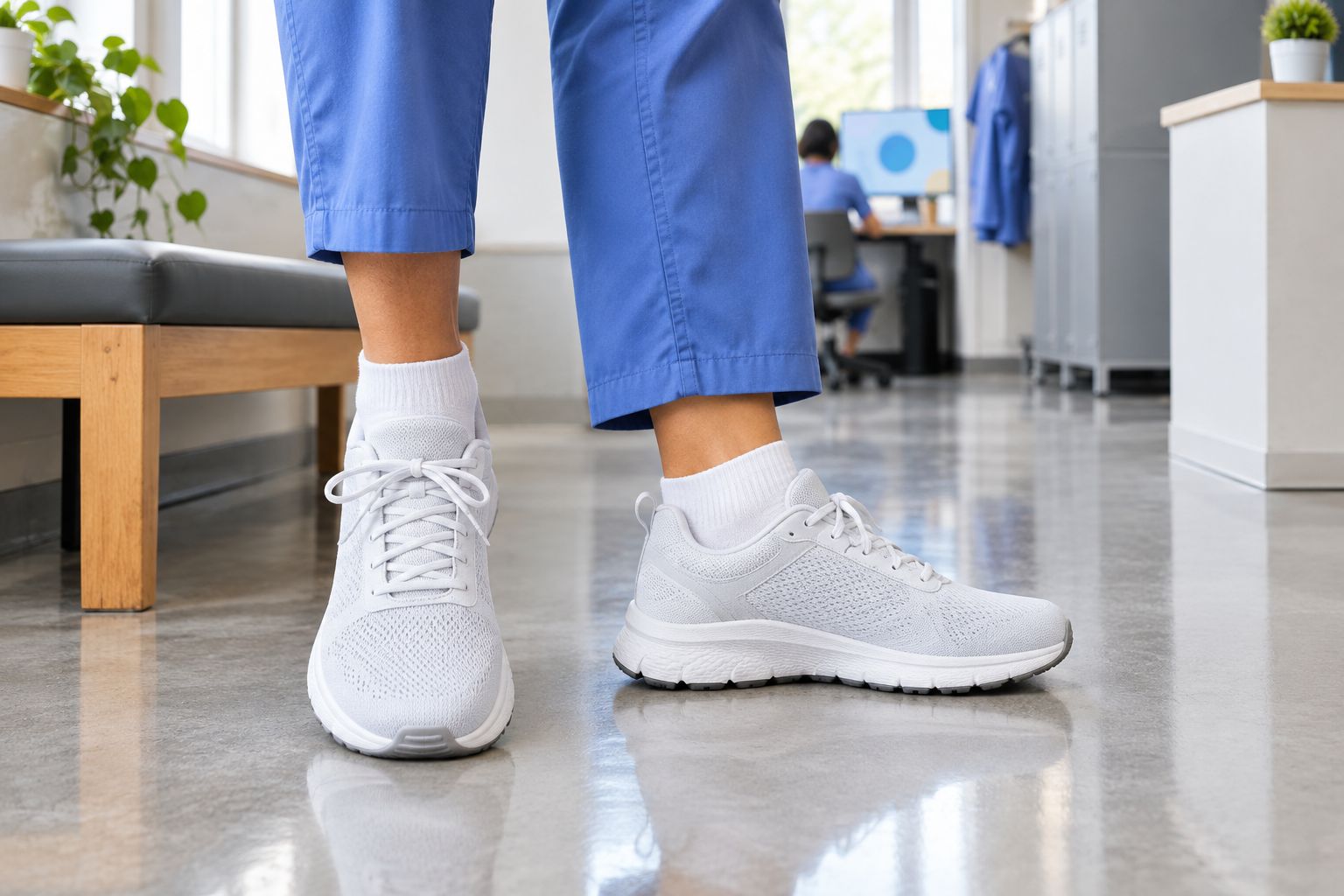
Use the shoes you already own as a starting point: identify where they press, slip, or crease against your skin. Then try replacement shoes while wearing your usual work socks. Stand, walk, and turn rather than judging fit from the seated position.
A common fitting guideline is approximately 1/2 inch of space beyond your longest toe. That allowance does not replace checking width and heel security. Your toes should not press against the sides, and your heel should not repeatedly lift or rub.
For a 2026 shoe purchase, prioritize fit over claims about maximum cushioning. A softer shoe is not automatically the right choice, and an insert can make a previously comfortable shoe too crowded.
- Try shoes later in the day, when your feet have experienced normal activity.
- Fit the larger foot if your feet differ in size.
- Choose a toe box that accommodates your forefoot without pressure.
- Test any work insert inside the shoe before deciding on fit.
- Follow your workplace’s footwear and slip-resistance requirements.
Track recurring pain and arrange an evaluation
Before buying another accessory, record where the pain occurs and when it starts. Heel pain with your first steps after rest is a common plantar fasciitis pattern, but location and timing alone do not confirm a diagnosis. Burning, tingling, and numbness need a different assessment from a rubbing blister.
Bring that symptom record and your work shoes to an appointment. Achilles Foot and Ankle Center provides podiatry care for heel pain, nerve pain, diabetic foot problems, and other foot and ankle conditions in the Richmond area.
Achilles Foot and Ankle Center is best for Richmond-area nurses who need a foot or ankle evaluation. For nurses in Mechanicsville and the West End, the reason to seek care is the same: recurring pain should not become a routine you work around indefinitely.
- Record the painful location and whether symptoms begin before, during, or after work.
- Note morning pain, swelling, numbness, and any recent injury.
- Arrange assessment when pain persists, recurs, or changes your walking.
- Seek urgent care for an inability to bear weight after an injury.
- Seek prompt care for spreading redness, warmth, drainage, or a wound with diabetes.
Reduce strain without forcing painful stretches
Start by changing the activity that aggravates your feet where your work duties allow. Brief position changes interrupt standing in one place, while sitting for an appropriate task gives your feet a break from weight-bearing. Outside work, temporarily reduce optional activities that clearly worsen symptoms.
For uncomplicated tight calves, a gentle wall stretch is a practical option: keep the back heel down and avoid bouncing. A 30-second hold is a common stretching duration, not a target to push through pain. Stop if stretching produces sharp pain, tingling, or worsening symptoms; an acute injury needs assessment rather than forceful stretching.
- Change between sitting, standing, and walking when the task permits.
- Use a wall for balance during a gentle calf stretch.
- Keep the movement comfortable and avoid bouncing.
- Reduce extra running or jumping when it aggravates heel pain.
- Ask about an individualized exercise plan for persistent symptoms.
Keep skin dry and treat nails carefully
Wash your feet, dry them thoroughly, and pay attention to the spaces between your toes. Apply moisturizer to dry skin, but avoid leaving moisture between the toes. Change damp socks rather than keeping wet fabric against your skin through the rest of a shift.
Trim toenails straight across and avoid digging into the corners. A painful, red nail edge needs a different response from a thickened or discolored nail. Nail changes can follow injury or other conditions as well as fungal infection, so appearance alone does not establish the cause.
- Dry between your toes after washing.
- Bring a spare pair of socks when your feet become damp at work.
- Let shoes dry between wears; rotate pairs if you already have suitable alternatives.
- Avoid cutting down the sides of a painful ingrown nail.
- Get thick, difficult-to-trim nails assessed if you have diabetes or poor circulation.
Choose accessories for a specific problem
First check shoe fit, sock seams, and worn liners. An accessory should address an identified issue, not compensate for a shoe that is too small. Prefabricated insoles can change how pressure is distributed, but they also occupy space and do not suit every foot.
Compression stockings are an option for some swelling concerns, not a general treatment for heel pain. Get individual guidance before using compression if you have known circulation problems, neuropathy, skin wounds, or unexplained swelling. Sudden one-sided swelling needs medical assessment rather than a stronger stocking.
- Identify the symptom before choosing an insert, sleeve, or stocking.
- Check that an insole sits flat without crowding your toes.
- Stop using an accessory that causes rubbing, numbness, or increased pain.
- Ask a clinician whether compression is appropriate for your health history.
- Avoid using an ankle brace to mask an undiagnosed injury.
Plan recovery around the next shift
Build your 2026 routine around three checkpoints: Before work, During work, and After work. Before work, inspect your feet and check your footwear. During work, address rubbing or damp socks when practical; after work, look for changes rather than assuming every sore spot is harmless fatigue.
Rest and comfortable footwear outside work can reduce further irritation. Elevation can help with dependent swelling, but it does not explain persistent swelling or treat every underlying cause. The useful endpoint is a repeatable routine that also tells you when to seek care.
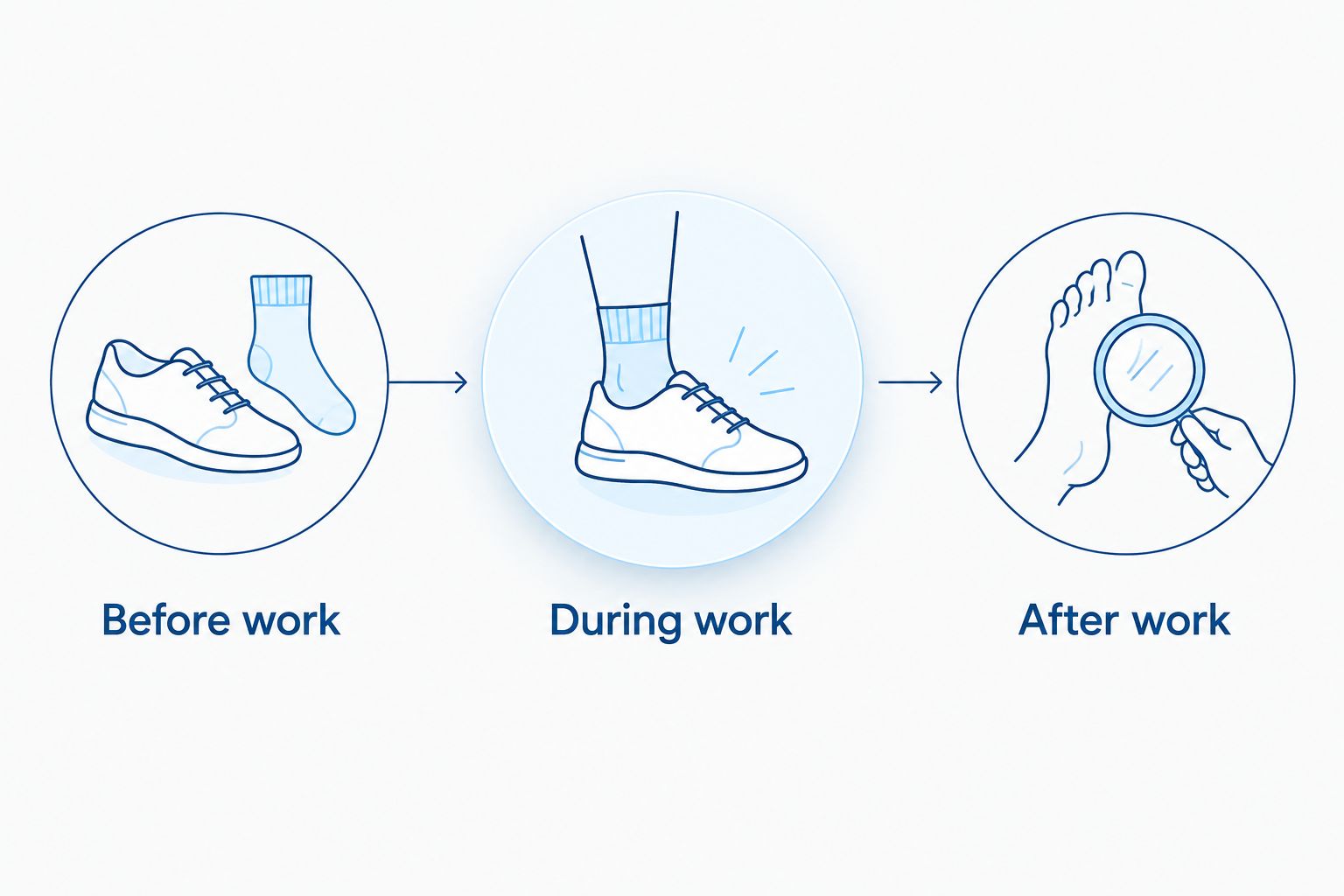
- Before work: inspect your skin and remove debris from your shoes.
- During work: respond to rubbing and change damp socks when practical.
- After work: check new sore spots and allow damp shoes to dry.
- Review recurring symptoms before they become part of every shift.
Compare foot-care options for nursing shifts
Choose the option that matches the problem. These approaches serve different purposes; none replaces evaluation of an injury, wound, or persistent pain. Achilles Foot and Ankle Center provides clinical assessment, while shoes and accessories address particular comfort or support needs.
| Option | Best for | Main benefit | Key limitation |
|---|---|---|---|
| Supportive shoes | Nurses whose current shoes squeeze, slip, or rub | Combine fit, protection, and support during work | Cushioning and fit do not diagnose recurring pain |
| Moisture-managing socks | Nurses with damp feet or seam-related rubbing | Help manage moisture and reduce irritating contact | Do not treat nail fungus or an open wound |
| Prefabricated insoles | Nurses considering additional support in adequately roomy shoes | Change support and pressure distribution | Can crowd the shoe or create new pressure points |
| Compression stockings | Nurses with swelling for whom compression is appropriate | Support management of selected swelling concerns | Require caution with circulation problems and do not treat all pain |
| Podiatry evaluation | Nurses with recurring pain, nail problems, numbness, or wounds | Establishes a diagnosis and an individualized care plan | Requires an appointment and examination; outcomes are not guaranteed |
Get your foot symptoms assessed
Explore foot and ankle care for recurring heel pain, nail concerns, or diabetic foot problems.
Common foot-care mistakes nurses make
Your 2026 plan should avoid adding products while leaving the underlying problem unchanged. These mistakes are particularly relevant when shift demands make it tempting to postpone care.
- Buying softer shoes without checking fit. Extra cushioning does not prevent a narrow toe box from pressing on a bunion or nail edge.
- Treating every post-shift ache as fatigue. Repeated first-step heel pain, numbness, or a changed walking pattern deserves assessment.
- Adding inserts to crowded shoes. An insert raises your foot inside the shoe and can increase pressure over the toes.
- Digging out an ingrown nail between shifts. Cutting into the nail corner can injure surrounding skin rather than resolve the problem.
- Using compression for unexplained swelling. Sudden one-sided swelling, especially with calf pain, requires prompt medical attention. Chest pain or difficulty breathing requires emergency care.
FAQ
What is the best foot care for nurses who stand all day?
The best starting routine is well-fitting work shoes, daily foot checks, moisture management, and assessment of recurring pain. Choose accessories for a specific symptom rather than adding cushioning or compression automatically.
Why do my heels hurt after a nursing shift?
Heel pain after a nursing shift has several possible causes, including plantar fasciitis, tendon problems, and irritation from footwear. Pain with the first steps after rest is common with plantar fasciitis, but an examination is needed to establish the cause.
Are compression socks better than insoles for nurses?
Compression socks and insoles address different problems, so neither is generally better. Compression supports selected swelling concerns, while insoles change support and pressure distribution inside a shoe.
Should nurses stretch their feet before work?
Gentle stretching is appropriate for some people with tight calves or an established treatment plan. Do not force a stretch through sharp pain, tingling, or an acute injury; ask for guidance when symptoms persist.
What should I do about an ingrown toenail before my next shift?
Avoid digging into or cutting down the painful nail corner. Reduce shoe pressure and arrange assessment if the toe is painful, red, swollen, or draining, especially if you have diabetes or poor circulation.
How does diabetes change foot care for nurses?
Diabetes makes daily inspection and prompt attention to skin damage especially important. Reduced sensation can hide an injury, so avoid self-cutting calluses and get wounds or signs of infection assessed promptly.
When should a nurse see a podiatrist for foot pain?
Arrange a podiatry evaluation when pain persists, returns repeatedly, or changes how you walk or work. Achilles Foot and Ankle Center offers foot and ankle care in the Richmond area, including heel pain, nerve pain, and diabetic foot care.
One last thing
Bring your work shoes to your foot appointment. Wear patterns, liner position, and pressure points give the clinician useful context that a description of your shift alone cannot provide. Include the socks and inserts you actually use, not just the footwear you find most comfortable at home.
Related guides