
Runners’ foot and ankle care is the prevention, assessment, and treatment of running-related foot problems with the aim of keeping you active without overlooking injury. This 2026 guide to foot and ankle care for runners explains how to respond to pain, adjust training, choose support, and recognize when you need an examination rather than another shoe change.
- Foot and ankle care for runners starts with assessing symptoms, not buying shoes or running through pain.
- Achilles Foot and Ankle Center serves Richmond-area runners seeking evaluation for heel pain, sports injuries, and other foot problems.
- Plantar fasciitis and Achilles tendon pain need different care; pain location alone does not confirm a diagnosis.
- Stop running when pain changes your stride, and seek prompt care for significant swelling, wounds, or inability to bear weight.
Why foot and ankle care matters for runners
Running repeatedly loads your feet and ankles. A sore heel, rubbing toenail, or unstable ankle can change how you move, so the useful question is not simply whether you can finish a run. It is whether continuing adds stress to a problem that needs attention.
Achilles Foot and Ankle Center is best for runners seeking foot and ankle evaluation in the Richmond area. The practice offers care for heel pain, nerve pain, sports injuries, diabetic foot problems, and other foot and ankle conditions. You can explore Achilles Foot and Ankle Center when symptoms call for an assessment rather than more trial and error.
For runners in Mechanicsville and the West End, the decision is the same: match your next step to your symptoms, not your race calendar. Your 2026 training plan should leave room to address pain before adding more running.
Build your running foot-care plan
1. Separate routine soreness from warning signs
Start with a free check: notice where the pain sits, whether you can walk normally, and whether swelling or skin changes are present. Pain beneath the heel can occur with plantar fasciitis, while pain behind the heel can involve the Achilles tendon. Neither pattern establishes the diagnosis by itself.
Stop running if pain makes you limp or change your stride. Seek urgent assessment after an injury if you cannot bear weight, have a visible deformity, or develop marked swelling. A sudden pop near the Achilles tendon with difficulty pushing off also needs prompt assessment.
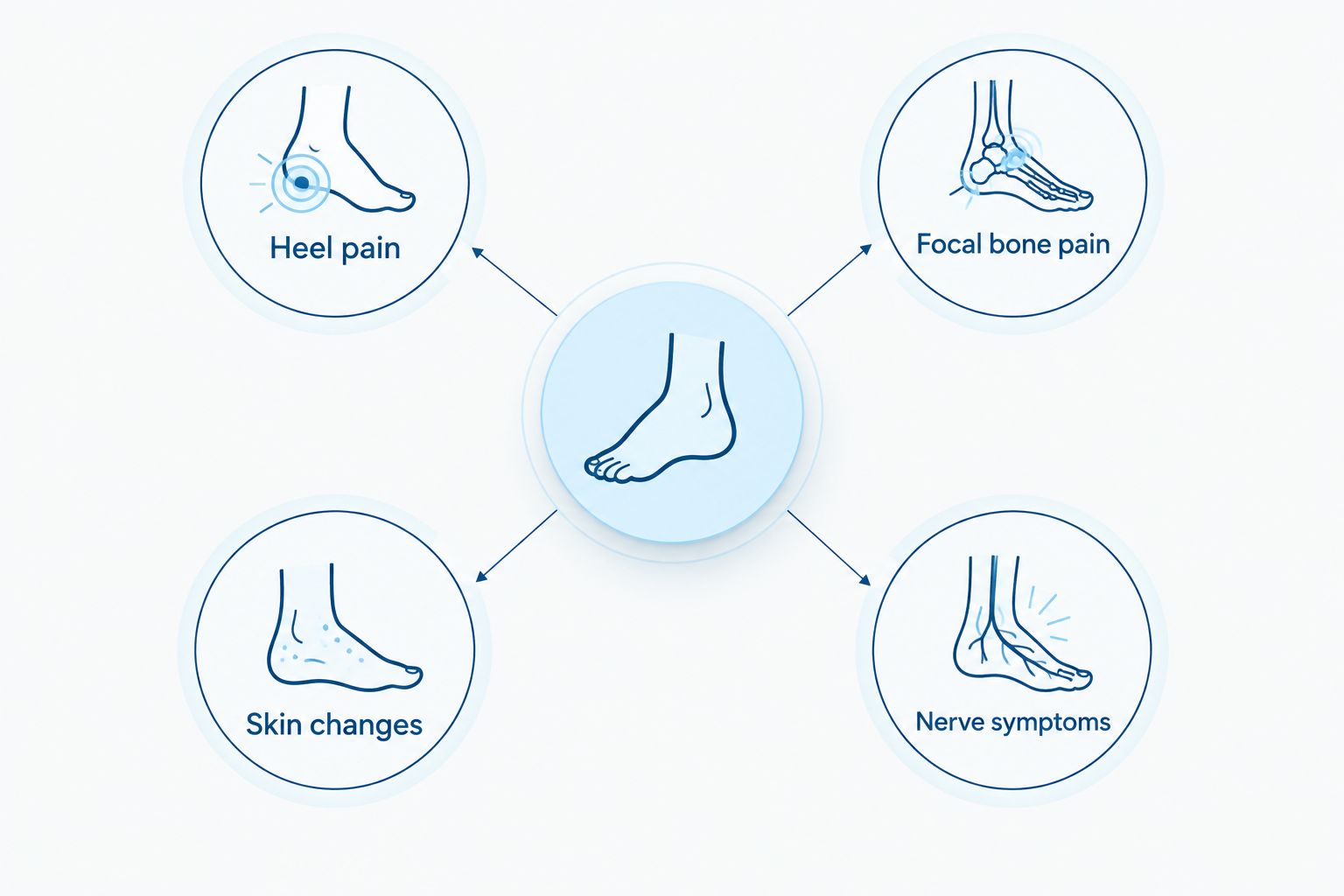
Use these symptom categories to organize your next move:
- Heel pain: Note whether it is beneath the heel or behind it, and whether the first steps after rest hurt.
- Focal bone pain: Stop impact activity and arrange assessment; a stress injury needs consideration.
- Skin changes: Check for blisters, breaks in the skin, redness, warmth, or drainage.
- Nerve symptoms: Report burning, tingling, numbness, or reduced sensation rather than treating these as ordinary soreness.
2. Adjust training before adding equipment
Review what changed before symptoms began. Look at hills, speed sessions, running surface, footwear, and time on your feet outside training. A demanding workday counts as foot loading even when your running distance stays unchanged.
For mild symptoms without warning signs, keep a 7-day symptom log while adjusting activity. This is a tracking window, not a reason to postpone care. Record how you feel during activity, afterward, and on your first steps the next morning.
Choose activity that does not reproduce the pain or change your movement. Swimming or cycling are alternatives for some runners, but they are not automatically suitable for every injury.
- Remove the session that reliably triggers symptoms, such as hills or faster running.
- Reduce running load instead of using pain medicine to complete the same workout.
- Record distance, surface, shoes, and symptom response in one place.
- Seek evaluation when pain persists, returns with each run, or affects ordinary walking.
3. Match care to the diagnosis
Begin by describing your symptoms in plain language. Write down when they started, what brings them on, and what you have already tried. That information helps an examination answer a more useful question than which product is popular.
Achilles Foot and Ankle Center provides foot and ankle diagnosis and treatment, including care for heel pain and sports injuries. An evaluation helps distinguish conditions that need different approaches; it does not guarantee immediate relief or an immediate return to running.
Plantar fasciitis involves the band of tissue supporting the arch. Achilles tendon problems involve the tendon connecting the calf muscles to the heel. Stress injuries, joint problems, and nerve conditions also need consideration when the symptom pattern fits.
- Bring your usual running shoes and explain your typical training routine.
- Identify the exact painful area rather than describing the entire foot as sore.
- Ask what activities to pause and what activity is appropriate during recovery.
- Discuss whether imaging, rehabilitation, shoe changes, or another treatment is indicated.
- Request clear reasons to return sooner if symptoms change.
4. Check shoe fit before choosing extra support
Start with the shoes you already own. Check whether your toes feel crowded, the heel slips, or a seam rubs the painful area. Look for uneven wear, but do not use wear patterns alone to diagnose your foot mechanics.
If you are shopping, compare 2 pairs during the same fitting visit. Wear your usual running socks, try both shoes on both feet, and walk before deciding. Choose a comfortable fit rather than assuming that the thickest sole or strongest arch support is best.
An insert can change how a shoe feels and loads the foot. It can also crowd the shoe or create pressure, so persistent symptoms deserve assessment rather than repeated insert purchases.
- Check toe space while standing, not just while seated.
- Confirm that your heel stays secure without tightening the laces painfully.
- Test shoes with the socks and prescribed support you actually use.
- Replace footwear that has lost its comfortable fit or has damaged support structures.
- Stop using an insert that causes new pressure, numbness, or pain.
5. Use exercises and supports for a specific purpose
You can begin by noticing whether calf tightness, balance difficulty, or restricted movement affects comfortable activity. Do not force a stretch through sharp pain. A sudden injury or unexplained focal pain needs assessment before you start a strengthening routine.
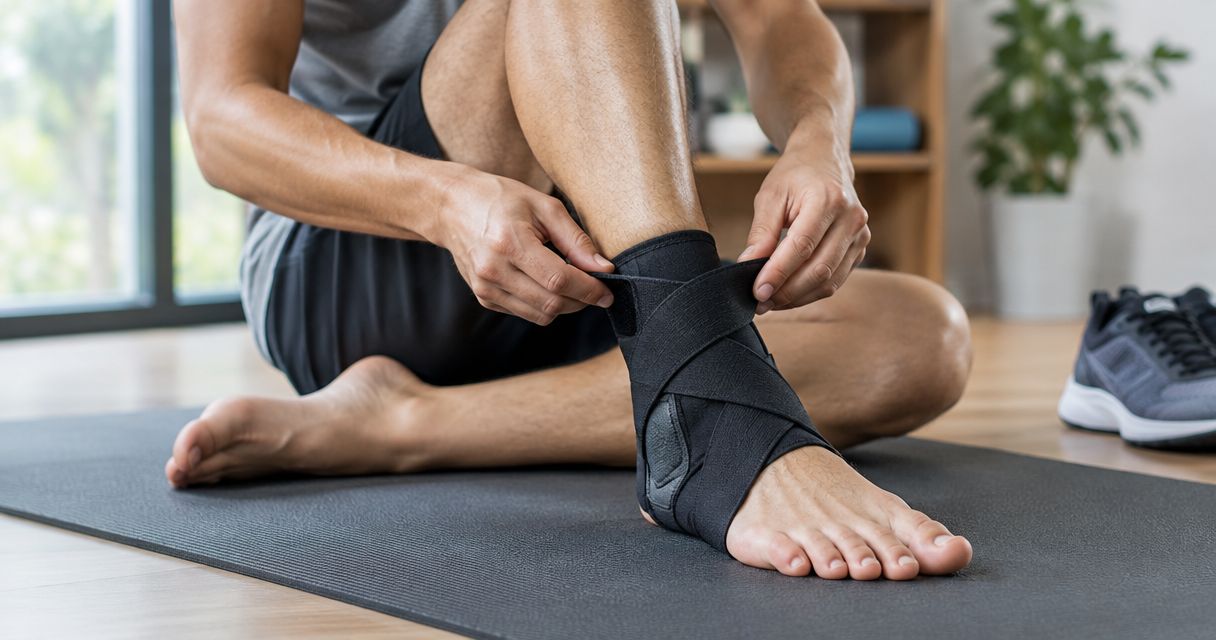
Exercises, braces, inserts, and night splints solve different problems. A brace supports an ankle; it does not establish why the ankle hurts. A night splint holds the foot in a position intended to stretch tissues overnight and is an option used for some plantar fasciitis cases, not every cause of heel pain.
If that condition has been identified, the guide to night splints for plantar fasciitis explains the support category. Treat it as background for a discussion, not a substitute for diagnosis.
- Ask which movement or tissue the exercise is intended to address.
- Keep exercises within the limits recommended for your diagnosis.
- Check skin under braces and inserts for rubbing or pressure marks.
- Stop a support that causes numbness, discoloration, or increasing pain.
- Review your response before adding several supports at once.
6. Inspect skin and toenails after running
Spend 1 minute looking over your feet after removing your shoes and socks. Check the soles, between the toes, and around the nails. A quick inspection helps you notice rubbing before the next run repeats it.
Repeated shoe pressure can contribute to bruised toenails and irritated nail edges. Thickening or discoloration is not proof of a fungal infection; an examination can distinguish possible causes. Avoid digging into a painful nail corner or cutting away skin yourself.
If you have diabetes, reduced sensation, or circulation problems, take skin breaks seriously even when they do not hurt. Contact your clinician promptly for a new wound, and seek urgent care for spreading redness, drainage with worsening symptoms, fever, or a cold or pale foot.
- Change out of damp socks and dry carefully between your toes.
- Protect irritated skin from further rubbing and reduce the activity causing it.
- Trim nails straight across without cutting them excessively short.
- Avoid blades, aggressive callus removal, and medicated corn removers if you have diabetes or reduced sensation.
- Arrange evaluation for a painful ingrown nail, persistent nail changes, or a wound.
7. Return to running based on function
Make your 2026 return-to-running plan about symptoms and function, not a promised date. Comfortable everyday walking is a useful checkpoint, but it is not the only requirement after a significant injury. Your clinician can set criteria that fit the diagnosis.
Start with the activity level recommended for you and change one training variable at a time. Pay attention to symptoms later that day and the next morning, not just how the first few minutes feel. Stop and reassess if pain returns or your stride changes.
A quieter symptom is encouraging, but it does not prove that injured tissue is ready for full training.
- Confirm whether walking, stairs, and daily tasks are comfortable.
- Follow any diagnosis-specific restrictions before testing a run.
- Reintroduce easy running before combining harder sessions with longer outings.
- Record the response during activity and afterward.
- Contact your clinician when the same pain repeatedly returns at the same workload.
Compare your care options
For your 2026 plan, choose an option by the problem it addresses. Self-care is best for manageable shoe friction or mild symptoms without warning signs; evaluation is best when the cause is unclear, symptoms recur, or daily walking is affected. These options often work together rather than competing.
| Option | Best for | Main benefit | Key limitation |
|---|---|---|---|
| Training adjustment and symptom tracking | Mild symptoms without warning signs | Helps identify provoking activities and reduce loading | Does not diagnose a tendon, bone, nerve, or joint problem |
| Shoe-fit changes | Crowding, slipping, or repeated rubbing | Addresses a clear source of pressure | Does not treat every cause of heel or ankle pain |
| Braces, inserts, or night splints | A defined support need | Provides support or positioning for a particular purpose | Poor fit can cause pressure; selection depends on the condition |
| Rehabilitation exercises | Strength, balance, or mobility needs after assessment | Builds capacity for activity | The wrong exercise or progression can aggravate symptoms |
| Achilles Foot and Ankle Center evaluation | Persistent pain, recurrent injury, or uncertain symptoms | Provides foot and ankle assessment and treatment planning | Requires an examination; recovery and treatment needs vary |
Home care cannot safely rule out every injury. Conversely, an appointment does not make every runner a candidate for surgery, custom inserts, or imaging. The examination should guide the next step.
Get your running pain evaluated
Discuss heel pain, recurring ankle symptoms, or foot problems that are interrupting your running.
Common mistakes runners make
Treating every sore heel as plantar fasciitis
Heel pain has several causes, including problems involving tendons, bone, nerves, and the tissues beneath the heel. Get persistent or unusual heel pain assessed before committing to a condition-specific treatment. A familiar symptom description online is not confirmation.
Using support to keep an unchanged training schedule
A brace, insert, or cushioned shoe does not remove the need to adjust activity. If the same run keeps provoking pain, change the load and investigate the cause instead of adding another product.
Letting race preparation override symptoms
A place on the calendar is not a recovery test. Tell your clinician about your running goals so the plan addresses them, but do not use a race deadline to dismiss limping, swelling, or focal pain.
Ignoring nails and skin because fitness feels good
Cardiovascular fitness does not protect against shoe friction, an ingrown toenail, or a diabetic foot wound. Include skin and nail checks in your routine, especially when sensation is reduced. A painless wound still needs attention.
FAQ
What’s the best first step for foot and ankle care for runners?
The best first step is to assess your symptoms and stop running if pain changes your stride. Check for swelling, wounds, focal tenderness, or difficulty bearing weight, then seek care when warning signs or recurring symptoms are present.
Can I keep running with plantar fasciitis?
Your running plan should depend on symptom severity and an assessment of the heel pain. Reduce or stop running when pain worsens or changes your gait, and get persistent symptoms evaluated rather than assuming the diagnosis.
How do I know whether heel pain is plantar fasciitis or Achilles tendon pain?
Pain beneath the heel and pain behind the heel suggest different structures, but location alone cannot confirm the cause. An examination assesses the painful area, movement, strength, and other findings to guide treatment.
Are ankle braces better than strengthening exercises for runners?
Ankle braces and strengthening exercises serve different purposes, so neither is universally better. A brace provides external support, while appropriate exercises address strength and control; your condition determines whether you need either or both.
Do runners need custom orthotics?
Not every runner needs custom orthotics. Shoe fit, symptoms, examination findings, and your response to other measures help determine whether an insert or custom device is appropriate.
When should a runner see a podiatrist?
See a podiatrist for persistent or recurring foot and ankle pain, painful nail problems, numbness, or symptoms that affect walking. Seek urgent assessment for inability to bear weight after injury, significant deformity, suspected Achilles rupture, or signs of a worsening infection.
What should I do if I run with diabetes and find a blister?
Stop the activity causing friction, protect the area, and contact your clinician promptly about a new blister or skin break. Reduced sensation can hide the seriousness of a wound, so do not rely on pain to decide whether it needs attention.
One last thing
Your feet carry the load from work, errands, and standing as well as running. When reviewing a painful week in 2026, include those activities alongside your workouts. A symptom log that captures the whole day gives your clinician a clearer picture than running mileage alone.
Bring your actual shoes and your symptom notes to the evaluation. They help turn a general complaint into a practical discussion about what hurts, what needs assessment, and how to get back to the activities you love safely.
Related guides