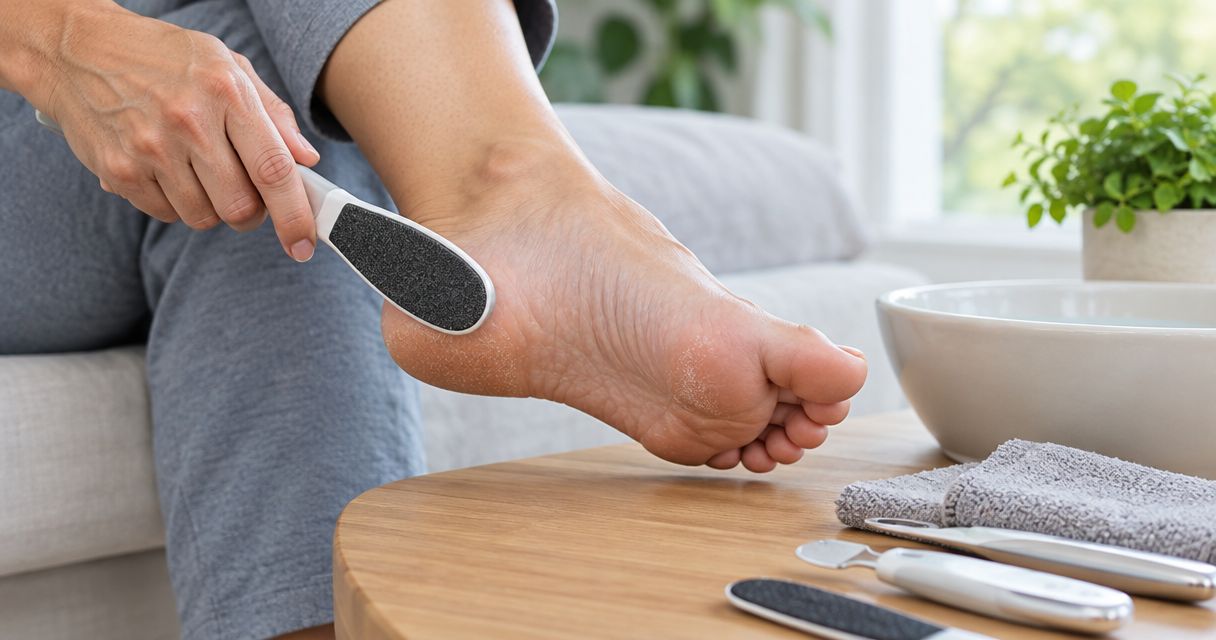
What causes athlete’s foot is a group of fungi called dermatophytes. They feed on keratin, the protein in the outer layer of your skin, and they grow best in warm, damp places like sweaty socks, closed shoes, and locker room floors. Athlete’s foot, or tinea pedis, is the itchy, scaly infection that follows when these fungi settle on your skin, usually between the toes.
Knowing the cause is more useful than it sounds. It tells you why the rash keeps coming back, why antibiotics will not touch it, and which habits to change. This article covers the fungi involved, how they spread, who is most at risk, a daily routine that cuts your odds, and when a rash needs a professional.
At Achilles Foot & Ankle Center, Dr. James B. Baldwin and the care team treat athlete’s foot for patients across the Greater Richmond area. Most people arrive asking the same thing: where did this come from? The answers below are the ones we give in the exam room.
Why the cause of athlete’s foot matters
The cause matters because it decides both your treatment and your prevention plan. This is a fungal infection, not a hygiene failure, so it responds to antifungal medicine and dry conditions, not to harsher scrubbing or antibiotics.
The fungi behind the infection
Athlete’s foot is caused by dermatophytes, fungi that live on the keratin in skin, hair, and nails. The species most often involved are Trichophyton rubrum, Trichophyton interdigitale, and Epidermophyton floccosum. The same group of fungi causes ringworm and jock itch, and the medical name tinea pedis simply means ringworm of the foot.
These organisms need warmth and moisture. A foot sealed in a closed shoe for a full day provides both. That is why the infection typically starts between the toes, where skin stays damp longest.
What the cause means for you
Once you know the cause, three practical points follow:
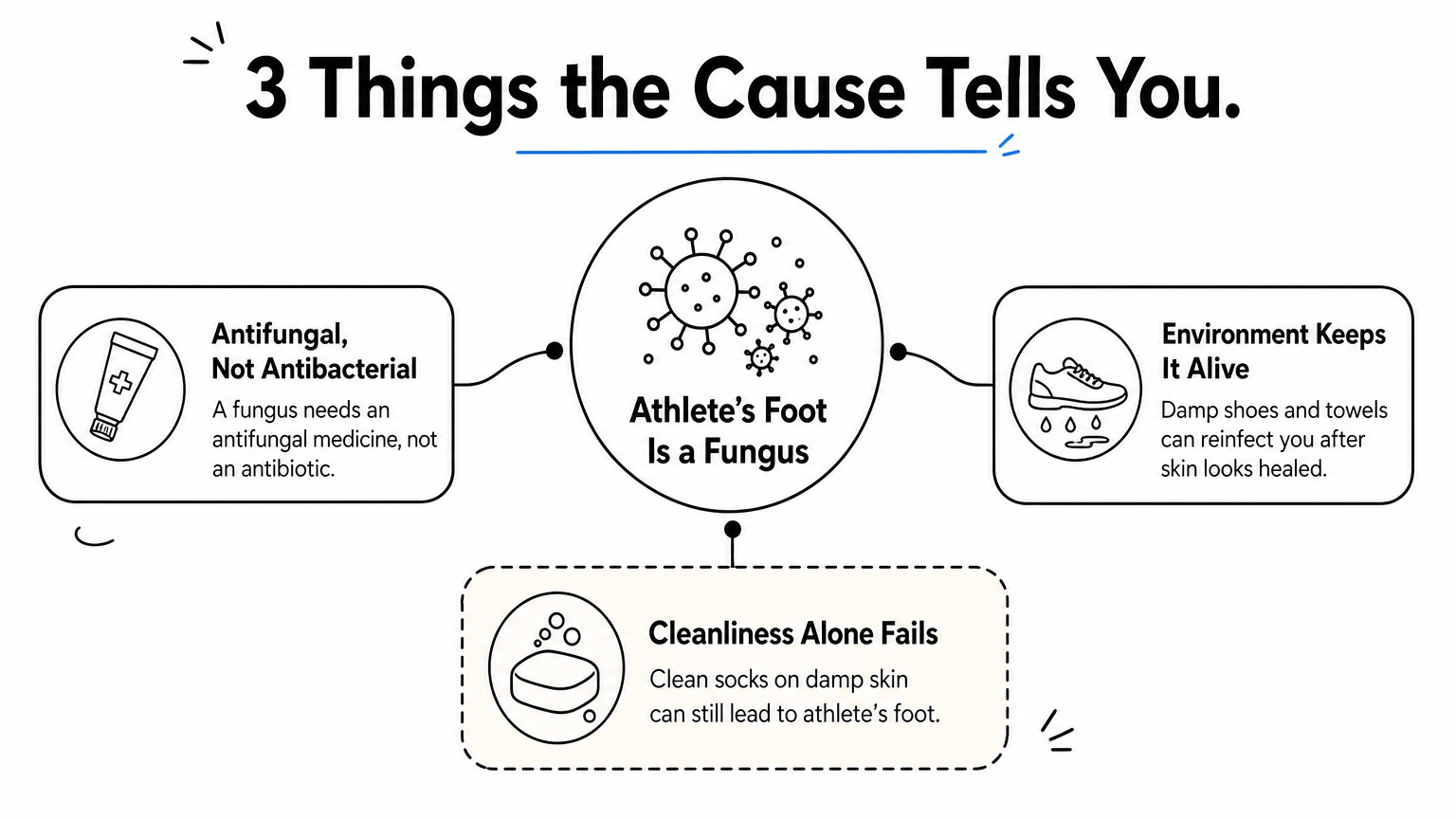
- Antibacterial products will not clear it. A fungus needs an antifungal medicine, not an antibiotic.
- Your environment keeps it alive. Damp shoes and towels can reinfect you after the skin looks healed.
- Cleanliness alone does not protect you. Someone who showers twice a day can still get athlete’s foot by pulling clean socks onto damp skin.
Athlete’s foot is a fungus that lives on damp skin, so you beat it by changing the environment as well as treating the skin.
How athlete’s foot spreads from person to person
Athlete’s foot spreads through skin-to-skin contact and through contact with surfaces that carry infected skin flakes. It is contagious for as long as the infection is active, and it travels easily on floors, towels, socks, and shoes.
Direct contact and shared surfaces
The fungus rides on tiny flakes of skin. Places where many people walk barefoot, such as locker rooms, public showers, pool decks, and saunas, collect those flakes on warm, wet floors. You pick them up with your bare feet, and the fungus gets a foothold if your skin stays damp afterward.
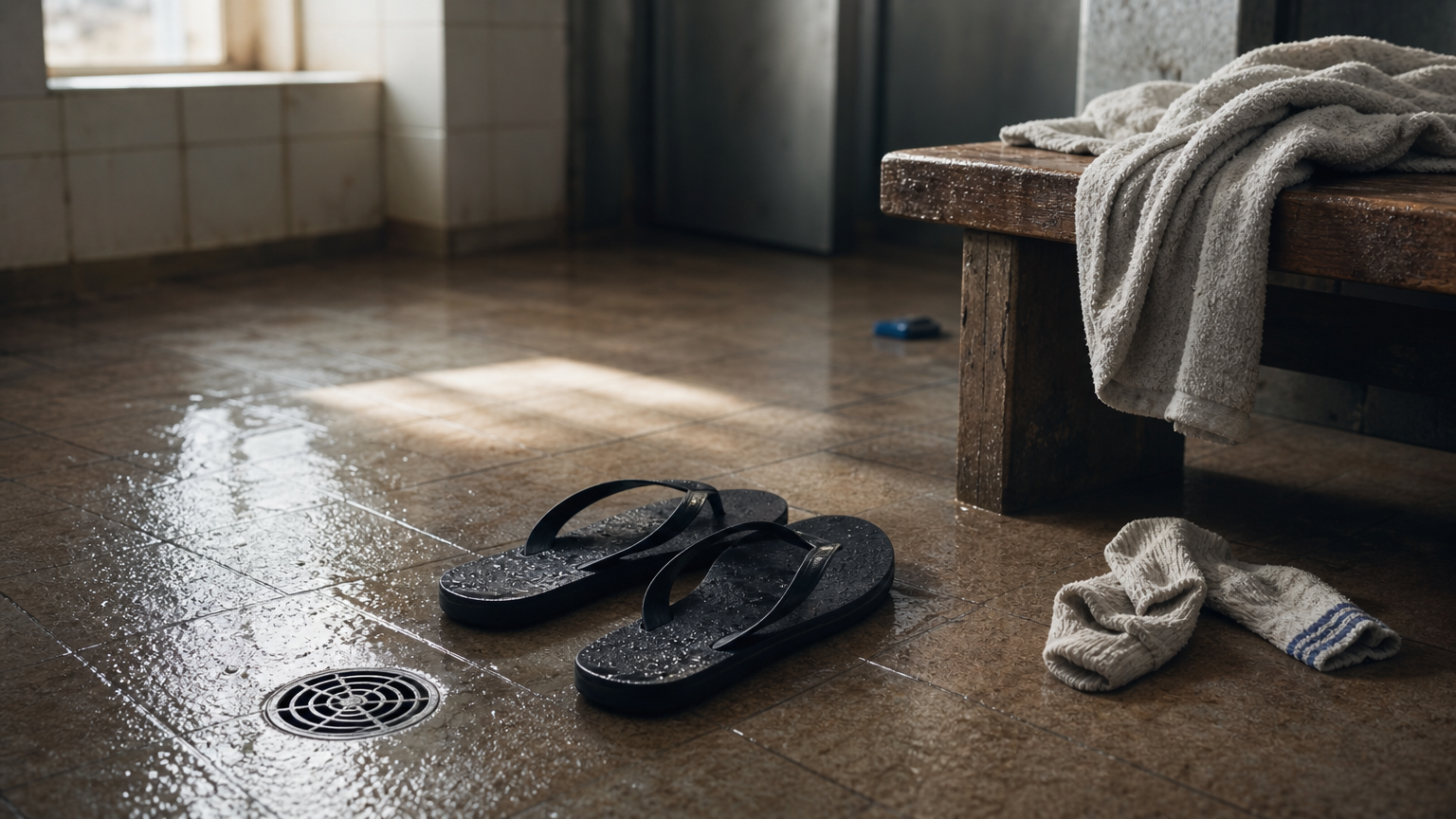
Shared items work the same way. Towels, socks, shoes, rugs, and bed linens from someone who has athlete’s foot can pass it on, including inside your own household. Sharing a shower floor with a family member who has a rash is enough exposure.
Why it can seem to appear out of nowhere
Many people say they got athlete’s foot randomly. Usually the exposure happened days or weeks earlier and went unnoticed, because symptoms lag behind the first contact. A gym floor, a hotel bathroom, or a towel at a friend’s house is a typical source.
The fungus also moves around your own body. Drying your feet and then the rest of you with the same towel can carry it to your groin, and scratching can carry it to your hands. It can reach the toenails too, where it is harder to treat.
You rarely catch athlete’s foot at the moment symptoms start. You catch it days earlier, on a damp surface you never thought about.
Habits and conditions that raise your risk
Your risk of athlete’s foot rises with anything that keeps your feet damp, exposes them to the fungus, or weakens your skin’s defenses. Some factors are habits you control, and some are health conditions you manage.
Everyday habits and exposures
The table below pairs each common risk factor with the reason it matters.
| Risk factor | Why it raises your risk |
|---|---|
| Closed, tight, or synthetic shoes worn all day | Traps heat and sweat around the toes |
| Heavy sweating | Keeps skin soft and damp, which the fungus favors |
| Walking barefoot in public showers, pools, or locker rooms | Direct contact with infected skin flakes |
| Sharing towels, shoes, rugs, or bedding | Passes the fungus from one person to the next |
| Wearing damp socks or the same shoes daily | Shoes never dry out between uses |
| A past case of athlete’s foot | Spores may remain in shoes, and the skin is more susceptible |
Here is how this stacks up in real life. Picture a runner who trains five days a week in the same synthetic shoes, rinses off in a gym shower barefoot, and shares a towel at home. That is four risk factors in one routine. Fixing any one of them lowers the odds, and fixing all of them lowers them a lot.
Health conditions and personal factors
Some people are more susceptible regardless of habits. Diabetes, obesity, a weakened immune system, and skin damage or wounds on the feet all raise the risk. Athlete’s foot is also more common in men and in people over 60.
These factors matter beyond getting the infection. If you have diabetes or a weakened immune system, a fungal rash can lead to more serious skin infections, so it deserves earlier attention.
The more hours your feet spend warm and damp, the more chances the fungus has to take hold.
How to break the cycle that causes athlete’s foot
You break the cycle by keeping your feet dry, avoiding bare contact with shared floors, and giving shoes time to dry out. A few steady habits do more than any single product.
A daily routine that keeps feet dry
Follow these steps each day:
- Wash your feet with warm, soapy water.
- Dry them completely, especially between the toes.
- Apply an antifungal or absorbent powder if your feet sweat heavily.
- Put on clean socks that absorb moisture, such as cotton or wool, or moisture-wicking synthetics. Change them whenever they get damp.
- Wear sandals or flip-flops in locker rooms, pool areas, saunas, and public showers.
- Put your socks on before your underwear, so any fungus on your feet does not travel to your groin.
Leave your feet bare at night when you can. Sleeping in socks traps warmth and moisture, which is exactly what the fungus wants.
What to do with shoes, socks, and towels
Rotate your shoes so each pair gets at least 24 hours to dry between wears. Clean them with a disinfecting spray or wipe, and sprinkle antifungal powder inside. Wash socks, towels, and bedding in hot water, and use a separate towel for your feet.
Do you need to throw your shoes away? Usually not. Cleaning and thorough drying is enough for most pairs. Replace them if they are worn out, stay damp for days, or the infection keeps returning despite good care.
Rotating your shoes costs nothing and removes the damp conditions the fungus depends on.
When athlete’s foot needs a podiatrist
Most mild cases clear with an over-the-counter antifungal, but you should see a podiatrist if the rash does not improve after two weeks, if you have diabetes, or if you see signs of a bacterial infection. Nothing cures athlete’s foot instantly, so be wary of one-day promises.
How to recognize it and how fast it clears
Athlete’s foot shows up in four common forms.
| Type | Where it appears | What you see |
|---|---|---|
| Toe web | Between the fourth and fifth toes | Peeling, cracking, color change |
| Moccasin | Soles, heels, and sides of the foot | Dry, thick, scaly skin |
| Vesicular | Usually the sole, but anywhere on the foot | Fluid-filled blisters |
| Ulcerative | Between the toes or on the sole | Open sores, the rarest type |
Antifungal creams, sprays, and powders containing clotrimazole, miconazole, tolnaftate, or terbinafine are the standard first step. With proper treatment, athlete’s foot usually clears in one to eight weeks. Keep applying the product for the full course, because stopping early lets it return.
When to book a visit
Athlete’s foot is rarely dangerous on its own. The risk is that cracked or blistered skin lets bacteria in, and people with diabetes or weakened immunity can develop a serious skin infection called cellulitis. Swelling, pus, or fever means you need care promptly.
Our team treats athlete’s foot and other skin and nail problems in the Richmond area. If the fungus has reached your toenails, treatment options include oral medication, topical medication, and the Tolcylen™ Nail System. People with diabetes should have a full foot checkup at least once a year. You can book online or by phone, and we try to make room for urgent issues, though same-day slots are not guaranteed.
If a rash survives two weeks of over-the-counter treatment, stop guessing and have it examined.
Cut off what feeds the fungus
Athlete’s foot comes from dermatophyte fungi that thrive on warm, damp skin. They spread through contact with infected people and contaminated floors, towels, socks, and shoes. Your risk climbs with sweaty feet, enclosed footwear, barefoot exposure in public spaces, and health conditions like diabetes.
The fix follows from the cause: treat the skin with an antifungal, then keep your feet and shoes dry so the fungus has nothing to live on. If your rash is not improving, keeps returning, or involves your nails, book a same-day appointment with our Richmond-area team and get a clear diagnosis.