Best overall: properly fitted, graduated knee-high compression socks. Best for wider calves: wide-calf graduated socks. Best for toe comfort: open-toe graduated socks. The best compression socks for pregnancy swelling in 2026 match your measurements and the compression level your pregnancy clinician recommends—not simply the tightest pair.
- The best compression socks for pregnancy swelling are graduated socks sized to your ankle and calf measurements.
- Choose wide-calf compression socks when standard sizing does not match your calf measurements.
- Ask your pregnancy clinician about compression strength; stronger pressure is not automatically better.
- Achilles Foot and Ankle Center evaluates foot and ankle concerns; sudden pregnancy swelling needs obstetric assessment.
Why this matters
Gradual swelling in both feet and ankles is common during pregnancy. Changes in circulation and pressure from the growing uterus can make it harder for blood to return from your legs, especially after standing for long periods.
Graduated compression socks apply the greatest pressure near the ankle and less pressure farther up the leg. They can help manage ordinary swelling, but they do not explain why swelling developed or replace a medical assessment.
Achilles Foot and Ankle Center is an option for pregnant patients who need foot and ankle evaluation alongside their obstetric care. Learn about Achilles Foot and Ankle Center if swelling is accompanied by ongoing foot pain, shoe-fit problems, or skin concerns. In the Richmond area, that guidance applies equally to readers in Mechanicsville and West End.
Sudden swelling, one-sided symptoms, and swelling with other warning signs belong with your pregnancy care team—not a shopping decision.
What makes the best compression socks for pregnancy swelling?
For your 2026 shortlist, compare these features before choosing a style:
- Graduated pressure: Look for a stated compression range and a description of graduated compression, rather than an ordinary tight sock.
- Measured sizing: Use the manufacturer's ankle and calf measurements. Shoe size alone does not establish compression fit.
- Appropriate strength: Match the pressure to your clinician's advice, symptoms, and circulation history.
- Comfortable coverage: Choose a toe opening and sock length that suit where you swell without bunching or rolling.
- Practical application: Choose socks you can put on smoothly, or arrange help if reaching your feet is difficult.
- Skin tolerance: Check seams, fabric, and the upper band for rubbing or irritation during wear.
Compression is commonly labeled in millimeters of mercury, written as mmHg. Labels such as 15–20 mmHg and 20–30 mmHg describe pressure ranges, not a promise that a sock will resolve swelling. Those ranges are not interchangeable, and neither is a universal pregnancy prescription.
Pregnancy compression socks at a glance: 2026 picks
These recommendations compare sock types, not named products. Choose your pressure level separately from the features below.
| Rank and option | Best for | Standout feature | Key limitation |
|---|---|---|---|
| 1. Graduated knee-high socks | Everyday foot and ankle swelling after clinical guidance | Coverage from the foot to below the knee | Standard sizing does not fit every calf |
| 2. Wide-calf graduated socks | Calves outside a standard size chart | Calf sizing matched to a wider leg | A wider calf does not necessarily mean a larger ankle |
| 3. Open-toe graduated socks | Toe sensitivity or discomfort from enclosed toe seams | Leaves toes uncovered | Does not provide compression over the exposed toes |
| 4. Clinician-directed moderate-compression socks | A prescribed need for greater pressure | A specified pressure range, such as 20–30 mmHg | Harder to apply and unsuitable for some circulation conditions |
| 5. Maternity graduated tights | A clinician-recommended need for coverage above the knee | Full-leg coverage with a pregnancy-oriented fit | More effort to put on and remove |
The categories describe different selection needs, not mutually exclusive products. A wide-calf sock can also have an open toe; a knee-high sock can have a clinician-prescribed pressure range.
1. Graduated knee-high socks: best for everyday ankle swelling
Graduated knee-high socks cover your foot, ankle, and lower leg. They are the most straightforward starting style when your pregnancy clinician recommends compression for ordinary lower-leg swelling.
The important distinction is graduated pressure, not an athletic appearance. A tight running sock without a stated compression range is not an equivalent substitute.
Graduated knee-high socks pros:
- Cover the foot and ankle without adding a waistband.
- Offer less fabric to manage than full-length tights.
- Allow you to check the fit around your knee and calf.
Graduated knee-high socks cons:
- Standard calf sizing can create a tight upper band.
- Closed-toe versions can rub sensitive toes.
- They do not provide coverage above the knee.
Best for: Everyday ankle and foot swelling when compression is appropriate and the size chart matches your measurements.
Verdict: Buy a measured, graduated knee-high style after confirming the appropriate pressure—not a pair chosen by shoe size alone.
2. Wide-calf graduated socks: best for wider calf measurements
Wide-calf compression socks address a sizing problem, not a separate medical condition. Choose this category when your calf measurement falls outside the standard version's chart.
Check the ankle measurement independently. Sizing up an ordinary sock to accommodate your calf can leave the ankle too loose, changing how the garment fits where graduated pressure should be greatest.
Wide-calf graduated socks pros:
- Accommodate calf measurements that standard charts exclude.
- Help you avoid choosing an oversized foot section solely for calf room.
- Offer a fit alternative when a standard upper band digs in.
Wide-calf graduated socks cons:
- Wide-calf sizing is not standardized between manufacturers.
- A suitable calf measurement does not guarantee suitable ankle sizing.
- A poorly matched upper band can still roll or rub.
Best for: Readers whose measured calves do not fit a standard compression-sock size chart.
Verdict: Buy wide-calf graduated socks when the ankle and calf measurements both match; skip sizing by the wide-calf label alone.
3. Open-toe graduated socks: best for toe comfort
Open-toe compression socks leave the toes uncovered while supporting the foot and lower leg. This style suits readers who dislike enclosed toe seams or need easier access to inspect their toes.
An open toe does not make compression automatically safe for a painful nail, a wound, or reduced sensation. Those concerns still need evaluation, particularly if you also have diabetes.
Open-toe graduated socks pros:
- Remove an enclosed seam from the ends of your toes.
- Leave toes accessible for visual checks.
- Offer an alternative when a closed toe feels crowded.
Open-toe graduated socks cons:
- Leave the exposed toes without compression.
- The opening can rub if it sits incorrectly.
- Fabric can bunch around the forefoot when poorly fitted.
Best for: Toe sensitivity or enclosed-toe discomfort when compression is otherwise appropriate.
Verdict: Buy an open-toe style for comfort if it fits smoothly; seek assessment rather than covering up a painful or damaged toe.
4. Moderate-compression socks: best for clinician-directed support
Moderate-compression socks provide a higher stated pressure than milder options. A 20–30 mmHg label is one commonly encountered range, but your clinician should decide whether that pressure is appropriate during your pregnancy.
This category belongs on the list because strength matters. It is not an upgrade everyone should make when their ankles look puffier.
Moderate-compression socks pros:
- Provide a specified pressure when a clinician recommends it.
- Can be selected in the length and toe style appropriate to your needs.
- Allow the recommendation to be matched to a measurable garment specification.
Moderate-compression socks cons:
- Require more effort to stretch over the foot and heel.
- Need extra caution with poor arterial circulation or reduced sensation.
- Greater pressure does not establish the cause of new swelling.
Best for: Patients whose pregnancy or treating clinician has recommended a particular higher pressure range.
Verdict: Wait for clinical guidance before choosing stronger compression; do not increase pressure to treat unexplained swelling yourself.
5. Maternity graduated tights: best for full-leg coverage
Maternity graduated tights extend coverage above the knee and include a pregnancy-oriented abdominal fit. They are an option when your clinician recommends more coverage than knee-high socks provide.
Full-length coverage adds practical demands. Think about dressing, bathroom visits, heat, and whether you can position the garment without twisting or bunching it.
Maternity graduated tights pros:
- Provide coverage above the knee.
- Avoid a separate knee-high upper band.
- Include an abdominal section designed for pregnancy wear.
Maternity graduated tights cons:
- Take more effort to apply and remove.
- Add fabric around the legs and abdomen.
- Require attention to fit as your body changes.
Best for: A clinician-recommended need for full-leg compression coverage during pregnancy.
Verdict: Buy maternity graduated tights when the extra coverage serves a clinical need; choose knee-high socks when that simpler coverage is sufficient.
How these 2026 recommendations are ranked
The default recommendation favors measurable fit, appropriate graduated pressure, and manageable daily wear. The remaining options address distinct needs: wider calves, toe comfort, clinician-directed pressure, and full-leg coverage.
This is a feature-based buying guide, not a product-testing leaderboard. No sock style wins if its measurements or pressure are wrong for you. A pregnancy label alone does not establish either.
Choose and wear your socks without guesswork
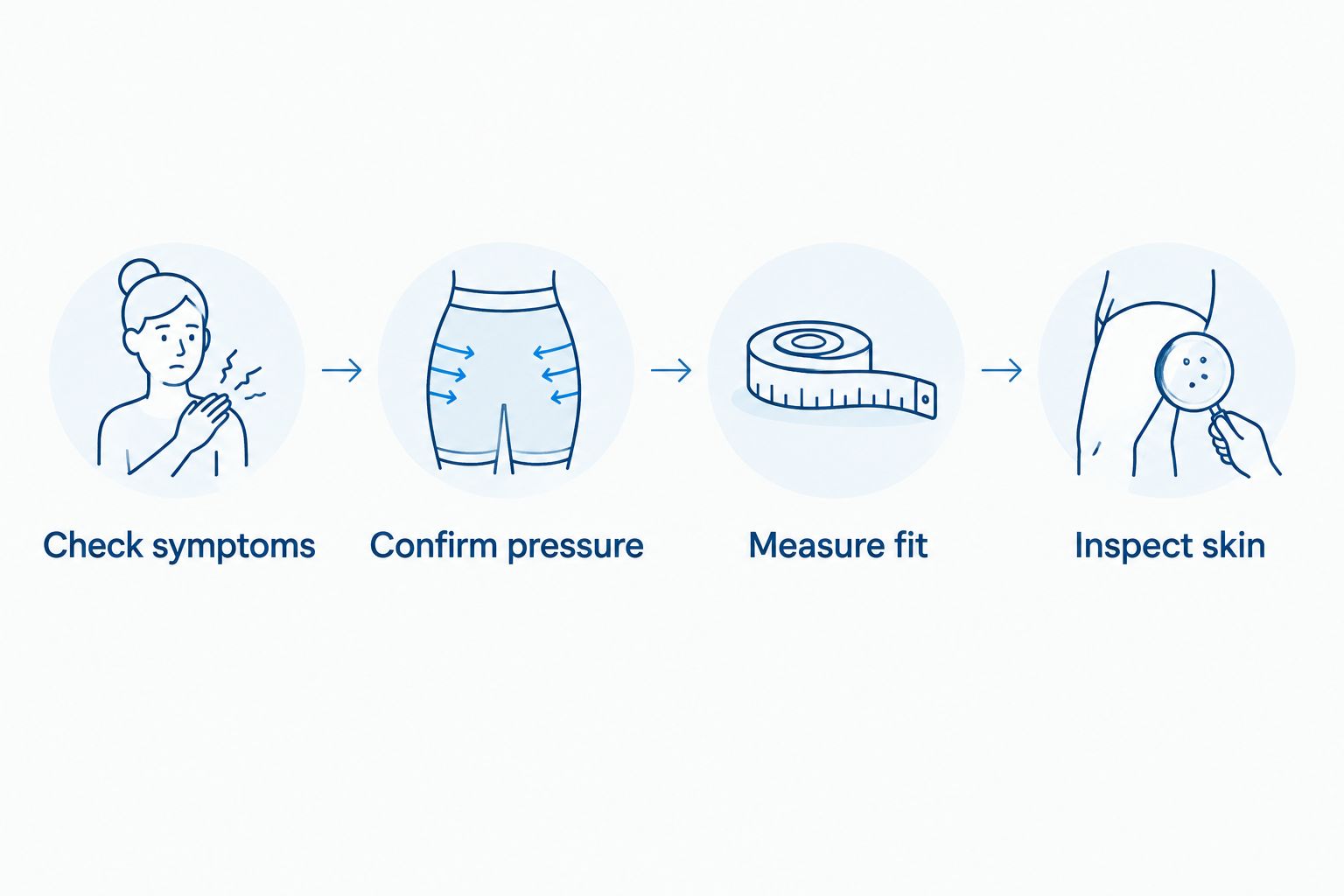
Use this sequence when discussing compression with your pregnancy care team:
- Check symptoms: Describe when swelling started, whether both legs are affected, and whether pain or other symptoms accompany it.
- Confirm pressure: Ask which compression range and garment length are appropriate for you.
- Measure fit: Follow the manufacturer's instructions for ankle circumference, calf circumference, and length where required. Morning measurements help avoid sizing around later-day swelling.
- Inspect skin: After putting the socks on, check for folds, rubbing, color changes, numbness, or increasing pain.
A garment should sit smoothly with the heel positioned correctly. Spread the fabric evenly rather than pulling hard on the upper band. Do not fold or roll the top down; that concentrates pressure into a narrow area.
Putting socks on before swelling builds during the day is often easier than applying them later. Remove them for sleep unless your clinician gives different instructions, and follow the garment's care directions.
Stop wearing the garment and seek advice if it causes new pain, tingling, numbness, or changes in skin color. If reaching your feet is difficult, ask about a dressing aid or assistance rather than repeatedly straining to pull the socks on.
When swelling needs medical attention
Do not use compression socks to delay assessment of sudden or unusual pregnancy swelling. A new swollen, painful, warm, or red leg—especially on one side—needs urgent medical assessment because a blood clot is one possible cause.
Sudden swelling of the face or hands, a severe headache, vision changes, or pain beneath the ribs needs urgent contact with your pregnancy care team. These symptoms can occur with preeclampsia, a serious pregnancy complication involving high blood pressure.
Chest pain, sudden shortness of breath, coughing blood, or fainting requires emergency care. Call 911.
For gradual swelling accompanied by persistent heel pain, skin irritation, nail problems, or difficulty walking, Achilles Foot and Ankle Center can evaluate the foot and ankle concern. Keep your obstetric team informed; podiatry care does not replace pregnancy assessment.
Discuss your foot and ankle concerns
Explore podiatry care for persistent foot pain, skin concerns, or difficulty walking.
Which pregnancy compression socks should you choose in 2026?
Start with properly measured, graduated knee-high socks if your pregnancy clinician recommends compression. Change the fit or design for a specific reason: wide-calf sizing for your measurements, open toes for toe comfort, or full-leg coverage when advised.
Treat stronger pressure as a clinical decision, not a shopping preference. Comfortable shoes, regular movement when medically appropriate, and resting with your legs elevated can support your routine, but persistent or changing symptoms still deserve assessment.
FAQ
What’s the best compression sock for pregnancy swelling?
A properly fitted, graduated knee-high sock is a practical default when your pregnancy clinician recommends compression. Choose the pressure range and size from clinical advice and ankle and calf measurements, not the pregnancy label alone.
Should I choose 15–20 mmHg or 20–30 mmHg during pregnancy?
Your pregnancy clinician should determine the appropriate compression range. A 20–30 mmHg garment applies more pressure than a 15–20 mmHg garment and is not automatically a better choice for swelling.
Can I sleep in compression socks while pregnant?
Remove daytime compression socks for sleep unless your clinician specifically tells you otherwise. Instructions can differ when compression is prescribed for a particular medical reason.
Are open-toe compression socks better than closed-toe socks?
Open-toe socks are better for avoiding enclosed toe seams, not universally better for swelling. They leave the toes uncovered, so choose based on comfort, fit, and your clinician’s recommendations.
Can I wear compression socks if I have gestational diabetes?
Ask your pregnancy care team before choosing compression if you have gestational diabetes, particularly with reduced sensation, wounds, or circulation concerns. Gestational diabetes alone does not establish which sock or pressure range you need.
When should I worry about swollen feet during pregnancy?
Sudden swelling, one-sided painful swelling, or swelling with headache, vision changes, or pain beneath the ribs needs urgent medical assessment. Chest pain or sudden shortness of breath requires emergency care.
Can a podiatrist help with swollen, painful feet during pregnancy?
A podiatrist can evaluate associated foot and ankle pain, skin problems, and footwear difficulties. Achilles Foot and Ankle Center offers foot and ankle care, while your obstetric team assesses pregnancy-related swelling and warning symptoms.
One last thing
For your 2026 purchase, remember this: a deeper sock mark does not prove better compression. Judge the garment by its stated pressure, measured fit, smooth positioning, and how your skin and feet respond—not by how difficult it is to pull on.
This guide provides general education, not an individual diagnosis or compression prescription.
Related guides
- Best shoes for standing all day at work
- Best shoes for plantar fasciitis
- Best diabetic socks for neuropathy