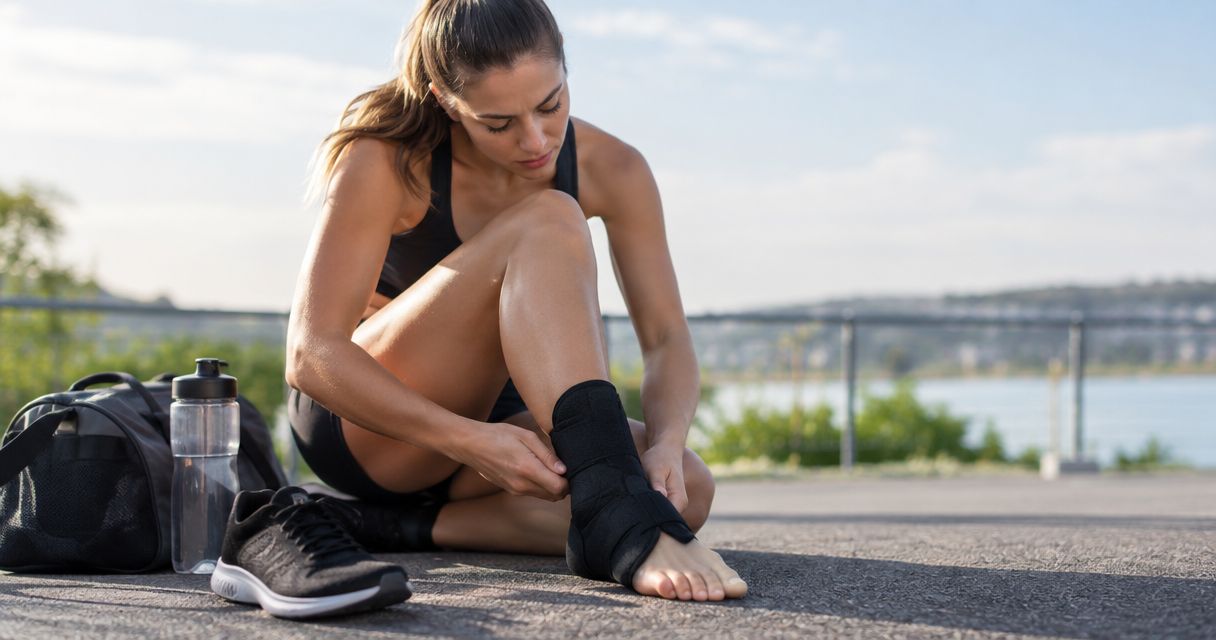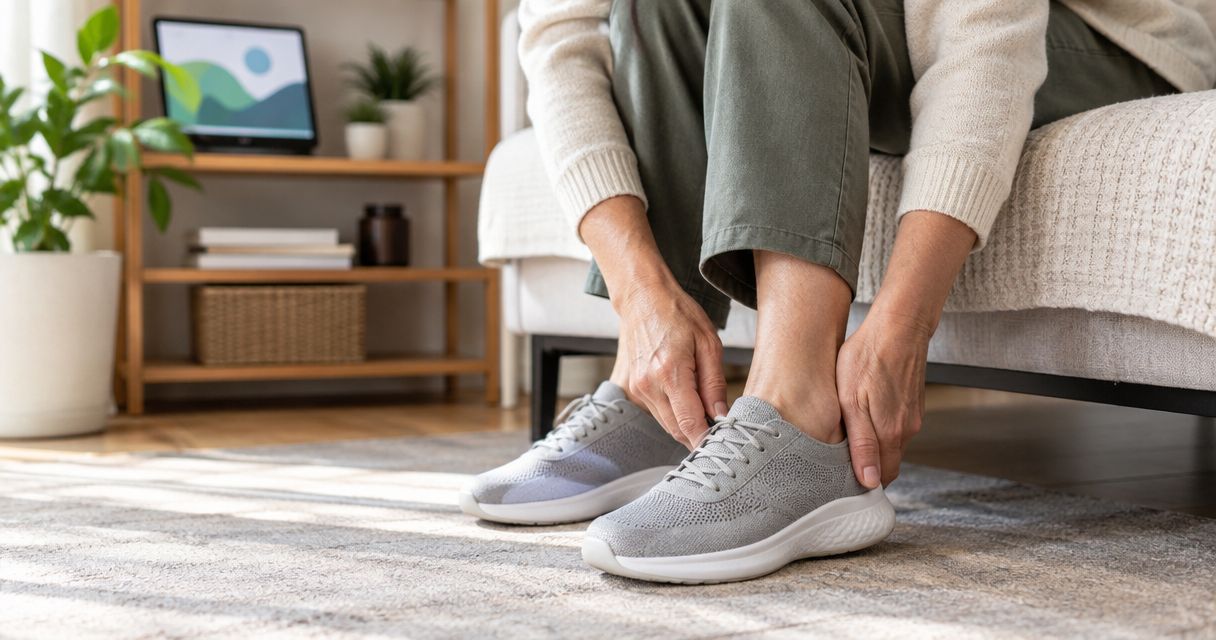

Best overall starting point: cushioned walking shoes with a secure fit. Best for running: running shoes with moderate heel elevation. Best for heel-counter rubbing: cushioned backless footwear for limited indoor use. This 2026 guide compares the best shoes for Achilles tendonitis by activity and pain location; Achilles Foot and Ankle Center provides foot and ankle evaluation when changing shoes is not enough.
- The best shoes for achilles tendonitis match your activity, support your heel, and avoid painful pressure.
- Cushioned walking shoes are the everyday starting point; running shoes suit running only when symptoms allow.
- Heel pain at the tendon attachment needs particular attention to heel-counter pressure.
- Achilles Foot and Ankle Center offers evaluation for Achilles tendon pain; footwear does not replace diagnosis.
Why this matters
Your Achilles tendon connects your calf muscles to your heel bone. The gastrocnemius and soleus are the 2 calf muscles that feed into this tendon, which helps you push off when walking, climbing stairs, and running.
Pain behind the heel is not always the same problem. Symptoms can occur where the tendon attaches to the heel or farther up the tendon, and nearby tissues can also hurt. That distinction changes which shoe features feel comfortable.
A comfortable shoe supports a treatment plan; it does not establish a diagnosis or repair the tendon by itself. Use this 2026 comparison to narrow your choices, not to decide whether an injury is safe to exercise through.
What makes the best shoes for Achilles tendonitis?
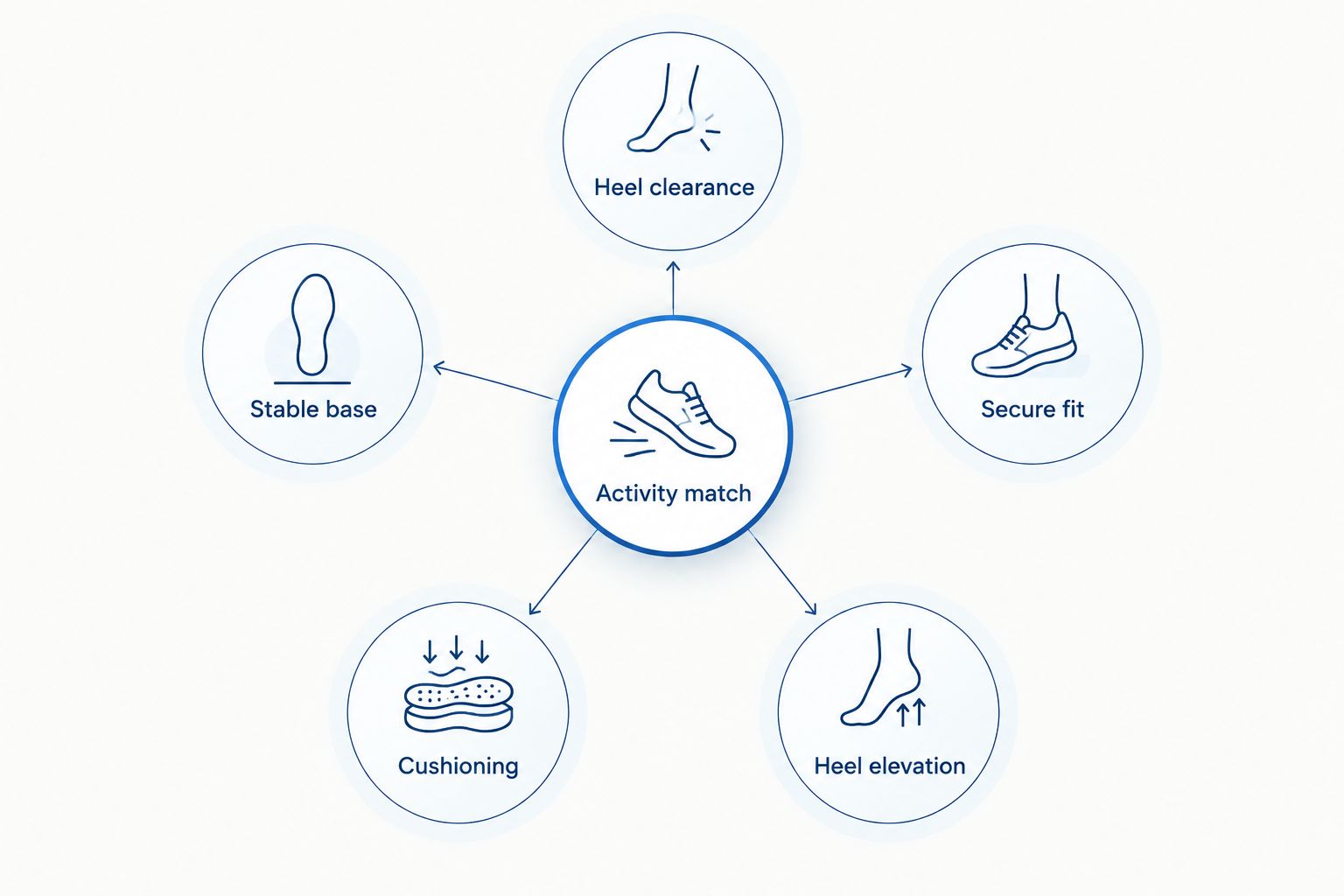
Compare these features before choosing among the 6 shoe categories below. The shoe that feels comfortable on your foot matters more than a category label.
- Heel clearance: The upper edge and heel counter should not press directly against the painful spot. A heel counter is the structure around the back of the shoe.
- Secure fit: Your heel should stay in place without aggressive tightening. Sliding creates friction; excessive pressure creates a different problem.
- Heel elevation: Some elevation under the heel can reduce the ankle bend required during movement. Avoid an abrupt switch to flat or minimalist footwear while symptoms are active.
- Cushioning: Look for comfortable impact absorption, not the softest possible sole. A shoe can feel plush while leaving you unsteady.
- Stable base: The shoe should feel controlled during walking and turning. A rocking sensation from an unstable platform is different from a designed rocker sole.
- Activity match: Walking, running, standing, and indoor use place different demands on footwear. Choose for the activity you actually need to perform.
Pain under the heel calls for a different comparison than pain behind it. The guide to shoes for plantar fasciitis explains that separate footwear question.
Achilles tendonitis shoes at a glance
This 2026 ranking compares footwear types rather than declaring a particular model a treatment. Different shoes within the same category can fit very differently.
| Shoe category | Best for | Standout feature | Key limitation |
|---|---|---|---|
| Cushioned walking shoes | Everyday walking | Walking-focused cushioning and secure fit | A firm heel counter can irritate the painful area |
| Running shoes with moderate heel elevation | Returning to running when appropriate | Heel sits higher than the forefoot | Comfort does not establish readiness to run |
| Stable, orthotic-friendly shoes | Wearing a prescribed insert | Removable insole and usable interior depth | An insert can change heel position and pressure |
| Rocker-soled walking shoes | Walking with uncomfortable ankle movement | Curved sole assists the rolling step | Rocker geometry can feel unfamiliar or unstable |
| Wide-fit adjustable walking shoes | Accommodating a broad foot or variable swelling | Width options and adjustable closure | Extra width alone does not relieve tendon pain |
| Cushioned backless indoor footwear | Avoiding contact with a tender heel | No enclosing heel counter | Less heel retention; unsuitable for running |
1. Cushioned walking shoes: best for everyday walking
Cushioned walking shoes are the default starting point when errands, commuting on foot, or routine daily walking bother your Achilles tendon. Choose a pair that feels stable and holds your foot without pressing on the sore area.
Do not judge cushioning by squeezing the sole with your hand. Walk in the shoe and notice both the landing and the push-off.
Cushioned walking shoes pros:
- Match ordinary walking rather than a specialized sport.
- Offer an enclosed fit with adjustable laces or straps.
- Let you assess heel comfort during your usual walking motion.
Cushioned walking shoes cons:
- A rigid or high heel counter can rub the tendon attachment.
- Very soft cushioning can feel unstable.
- A comfortable pair does not make prolonged painful walking appropriate.
Best for: Daily walking when the heel counter clears the painful area.
Verdict: Buy only after a comfortable walking trial; skip any pair that presses on the tendon.
2. Running shoes with moderate heel elevation: best for running
Heel-to-toe drop describes the difference in height between the heel and forefoot inside a shoe. Running shoes with some heel elevation are a more cautious starting point than abruptly changing to flat, minimalist footwear during an Achilles flare.
There is no single drop that suits every painful tendon. Your symptoms, previous footwear, and rehabilitation plan matter more than a specification on the box.
Running shoes with moderate heel elevation pros:
- Provide running-specific cushioning and foot retention.
- Offer an alternative to a sudden transition into flat shoes.
- Allow you to compare heel fit during sport-specific movement.
Running shoes with moderate heel elevation cons:
- A higher heel does not guarantee pain relief.
- Shoe comfort cannot determine whether the tendon can tolerate running.
- Changing footwear does not address training load by itself.
Best for: Runners whose symptoms and treatment plan permit a return to running.
Verdict: Hold running through pain; buy footwear as part of an appropriate return-to-activity plan.
3. Stable, orthotic-friendly shoes: best for prescribed inserts
An orthotic-friendly shoe has room for an insert without squeezing your foot. A removable insole helps, but usable depth and secure heel retention matter too.
Bring your prescribed insert when trying shoes. Replacing the original insole can change where your heel sits relative to the shoe collar, making a previously comfortable pair rub.
Stable, orthotic-friendly shoes pros:
- Accommodate an insert intended for your needs.
- Allow assessment of the shoe and insert together.
- Support a secure fit without forcing your toes into a cramped space.
Stable, orthotic-friendly shoes cons:
- Not every insert suits Achilles tendon pain.
- Extra material can reduce available interior space.
- A raised heel can meet the collar at an uncomfortable point.
Best for: People using an insert recommended after evaluation.
Verdict: Buy based on the combined fit; skip stacking inserts to chase comfort.
4. Rocker-soled walking shoes: best for a rolling walking step
A rocker sole curves under the foot to assist the rolling motion of a step. This design changes how you move through walking, rather than simply adding padding.
Try it on level ground before deciding. A rocker shape that feels comfortable to one person can feel awkward to another, especially when balance is already difficult.
Rocker-soled walking shoes pros:
- Assist the transition from landing to push-off.
- Offer an alternative when ordinary sole bending feels uncomfortable.
- Combine a structured sole with an enclosed upper.
Rocker-soled walking shoes cons:
- The altered walking feel takes assessment, not blind acceptance.
- Some designs feel unstable during turns.
- Rocker shape alone does not establish suitability for Achilles pain.
Best for: Walkers who find a controlled rolling step comfortable and remain steady in the shoe.
Verdict: Buy only if the rocker feels natural; skip it if you feel unsteady.
5. Wide-fit adjustable walking shoes: best for width and fit changes
Wide-fit footwear addresses crowding, while adjustable closures let you change how tightly the upper holds your foot. These features help when a broad foot makes standard-width shoes uncomfortable.
Do not use a larger size to disguise new swelling. Unexplained swelling deserves assessment, particularly when it comes with warmth, redness, or worsening pain.
Wide-fit adjustable walking shoes pros:
- Give a broad foot more room without relying on extra length.
- Allow adjustment across the top of the foot.
- Reduce the need to overtighten a crowded shoe.
Wide-fit adjustable walking shoes cons:
- Too much width can let the heel slide.
- A roomy forefoot does not prevent heel-counter irritation.
- Fit adjustments do not explain or treat new swelling.
Best for: People whose usual shoes crowd the foot but who still need secure heel retention.
Verdict: Buy the width that fits; hold off on treating unexplained swelling as a shoe-size problem.
6. Cushioned backless footwear: best for limited indoor use
Backless footwear removes contact from an enclosing heel counter. That can be useful when touching the back of the heel is uncomfortable, but the trade-off is reduced heel retention.
Choose a secure, stable indoor option rather than loose slippers that slide around. Backless footwear is not a substitute for supportive shoes during running or demanding walking.
Cushioned backless footwear pros:
- Avoid direct pressure from a closed heel counter.
- Provide an alternative to barefoot walking on hard floors.
- Make it easier to identify whether collar contact contributes to discomfort.
Cushioned backless footwear cons:
- Offer less control of the heel than enclosed shoes.
- Loose designs create slipping or tripping concerns.
- Do not address the underlying cause of tendon pain.
Best for: Short indoor activities when heel-counter contact is the main footwear problem.
Verdict: Buy only for limited indoor use; skip backless footwear for running.
How these categories are ranked
The ranking prioritizes daily usefulness, heel clearance, stable cushioning, and a fit you can assess directly. Specialized categories follow because their benefits depend on a specific need: running, prescribed inserts, altered walking motion, additional width, or avoiding collar contact.
This is a 2026 feature-based buying guide, not a clinical trial or a model-by-model performance test. No shoe category wins for every Achilles problem.
Which shoes should you choose?
Start with cushioned walking shoes if your main goal is comfortable everyday walking. Try shoes on both feet, use your usual socks, and bring any prescribed inserts. Check that the back of the shoe does not touch the most painful spot during a step.
For your 2026 footwear search, reject a pair that requires you to ignore pain while hoping it will break in. Also reject a shoe that feels comfortable standing still but causes rubbing or instability when you walk.
Achilles Foot and Ankle Center is a next step for Achilles tendon pain that needs diagnosis, not another footwear experiment. Seek an evaluation when pain persists, repeatedly returns, or changes your walking. Readers in Mechanicsville and West End can use the same symptom-based approach to deciding when to seek care.
A sudden pop, new inability to push off, or difficulty bearing weight needs urgent medical assessment. Those symptoms are not a reason to keep comparing shoes.
Get your heel pain evaluated
Discuss persistent Achilles pain and which footwear features fit your needs.
FAQ
What’s the best everyday shoe for Achilles tendonitis?
A cushioned walking shoe with a secure fit and no pressure on the painful tendon is the best starting point for everyday use. Compare heel clearance, stability, and comfort while walking rather than choosing by softness alone.
Are flat shoes bad for Achilles tendonitis?
An abrupt switch to flat or minimalist shoes can increase demands on the Achilles tendon. Avoid making that change during active symptoms without guidance, especially if your usual shoes elevate the heel.
Are rocker soles better than regular walking shoes?
Rocker soles are not universally better for Achilles tendonitis. They assist the rolling step, but the design must feel comfortable and stable for your walking pattern.
Should I wear backless shoes if my heel hurts?
Backless footwear can avoid heel-counter pressure during limited indoor use. It provides less heel retention than an enclosed shoe and is not an appropriate running option.
Can a heel lift help Achilles tendon pain?
A heel lift can be part of care for some Achilles tendon problems, but it is not appropriate for every situation. Ask a clinician about suitability and fit rather than adding lifts or stacking inserts yourself.
How do I know whether I have Achilles tendonitis or plantar fasciitis?
Achilles tendon pain usually occurs behind the heel or along the tendon, while plantar fasciitis typically causes pain under the heel. Pain location helps guide an examination but does not establish a diagnosis by itself.
Can I keep running if new shoes make my Achilles feel better?
Better shoe comfort does not establish that running is safe for an injured Achilles tendon. Return to running should reflect symptoms, function, and an appropriate rehabilitation plan.
When should I seek care instead of buying another pair of shoes?
Seek evaluation when Achilles pain persists, recurs, or changes how you walk. Achilles Foot and Ankle Center offers foot and ankle evaluation; a sudden pop or new loss of push-off needs urgent medical assessment.
One last thing
The back of the shoe can matter as much as the sole. Before keeping a new pair, check where its collar meets the tender area during walking—not just while you are seated.
For your next 2026 shoe purchase, choose comfortable movement over an impressive feature list. If every pair irritates the same spot, stop cycling through footwear and have the pain assessed.
Related guides