
Best overall for a diagnosed ankle sprain: a lace-up brace. Best for controlled movement during rehabilitation: a hinged brace. Best for light compression without substantial stabilization: a sleeve. This 2026 guide compares brace designs so you can match support to your injury, footwear, and sport—not just buy the stiffest option.
- The best ankle brace for sports injuries depends on the diagnosis; lace-up braces are a practical starting point for evaluated sprains.
- Hinged braces suit prescribed rehabilitation; compression sleeves do not replace stabilizing ankle support.
- Achilles Foot and Ankle Center evaluates sports injuries for Richmond-area patients who need help choosing appropriate care.
- A brace supports recovery but does not replace rehabilitation or clearance to return to sport.
Why this matters
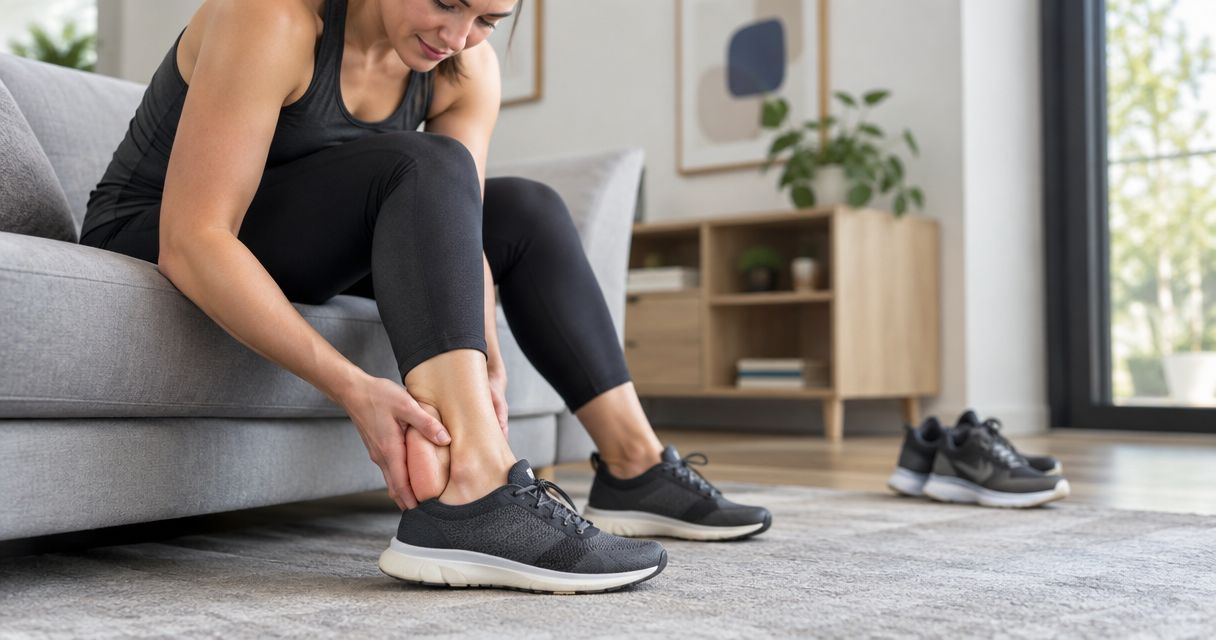
An ankle that hurts after a tackle, awkward landing, or trail run does not automatically need the same brace. A sprain, tendon injury, and fracture require different care. Bracing the wrong problem can also delay an appropriate evaluation.
Achilles Foot and Ankle Center is a fit for Richmond-area athletes who need a foot and ankle evaluation after a sports injury. The practice provides foot and ankle diagnosis, treatment, and surgery. You can start with Achillesfootandankle when pain, swelling, or repeated giving-way makes choosing support difficult.
Seek prompt medical evaluation for a visibly misshapen ankle, an open injury, or an inability to bear weight after an injury. A cold, pale, or newly numb foot needs urgent attention. Do not use a brace to push through those symptoms.
What makes the best ankle brace for sports injuries?
For this 2026 guide, the most useful distinction is stabilization versus compression. Stabilization limits unwanted movement; compression applies pressure around the ankle. A soft sleeve and a structured brace are not interchangeable.
Judge each option against these criteria before choosing:
- Injury match: The brace should address the diagnosed problem and the movement your clinician wants to limit.
- Side-to-side support: Cutting and landing place different demands on an ankle than gentle walking.
- Footwear fit: Your heel must sit securely without the shoe squeezing your toes or pressing against the brace.
- Adjustability: Laces and straps let you change tension, but overtightening creates pressure rather than useful support.
- Skin tolerance: Seams, rigid edges, and trapped moisture matter, especially when you have reduced sensation.
- Rehabilitation compatibility: Support should fit the recovery plan, including exercises and gradual return to activity.
A brace that passes only the support test is not enough. If it crowds your shoe or causes rubbing, it is not a good match for you.
Ankle braces at a glance
These rankings compare design categories, not named products. Features vary within each category, so inspect the actual brace and its fitting instructions before choosing.
| Rank and option | Best for | Standout feature | Key limitation |
|---|---|---|---|
| 1. Lace-up brace | General support after an evaluated sprain | Adjustable enclosure around the ankle | Takes longer to fit than a sleeve |
| 2. Hinged brace | Clinician-directed functional rehabilitation | Structured side support with a jointed design | Bulk and hinge placement affect shoe fit |
| 3. Stirrup brace | Early protected activity when prescribed | Rigid or semi-rigid support beside the ankle | Often awkward in close-fitting sports footwear |
| 4. Wraparound brace | Adjustable support during lower-demand activity | Straps that change tension without full lacing | Support depends heavily on the design and application |
| 5. Compression sleeve | Light compression when substantial stabilization is unnecessary | Low-profile fabric construction | Does not provide the restraint of a structured brace |
The table is a decision aid, not permission to play through an injury. If you do not know what you injured, diagnosis comes before the ranking.
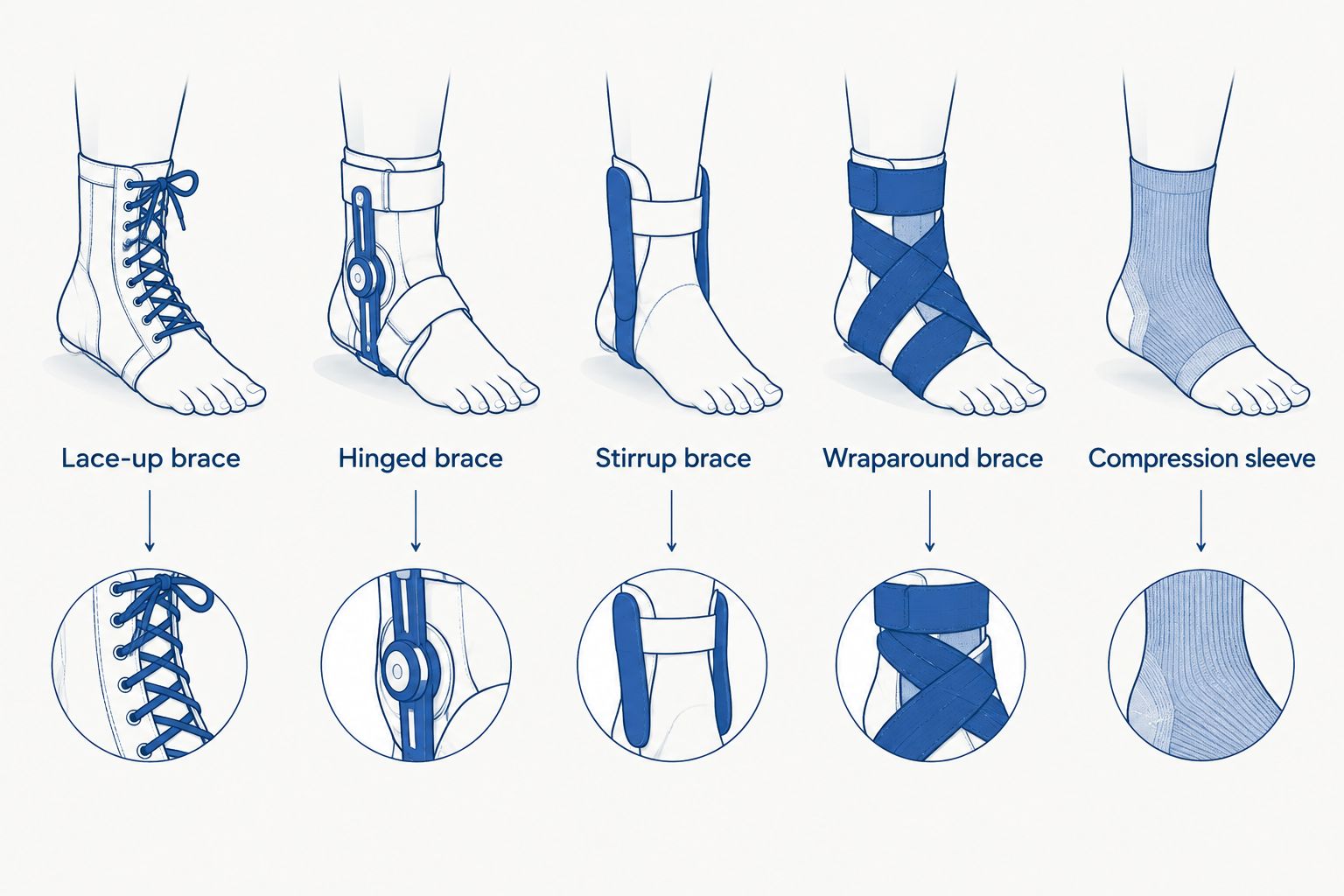
1. Lace-up brace: best for general support after a sprain
A lace-up brace encloses the ankle in an adjustable fabric structure. Some designs add straps, but those features are not universal. The combination of coverage and adjustable tension makes this category a practical starting point when a clinician recommends functional support after a sprain.
For your 2026 choice, prioritize fit over extra straps. Your heel should remain seated, and the brace should not bunch underneath the shoe. A design you can apply consistently is more useful than one you repeatedly fit incorrectly.
Lace-up brace pros:
- Adjustable tension around the ankle.
- Structured support beyond a simple compression sleeve.
- A practical option to discuss for walking and sport-specific rehabilitation.
Lace-up brace cons:
- Lacing takes time and requires adequate hand dexterity.
- Fabric and straps add volume inside a shoe.
- Uneven tightening can create uncomfortable pressure.
Best for: An evaluated ankle sprain when the recovery plan calls for adjustable functional support.
Verdict: Buy if a lace-up design matches your diagnosis and fits your sports shoe without pressure.
2. Hinged brace: best for controlled movement in rehabilitation
A hinged brace uses structured side components with a jointed connection. Its purpose is to combine restraint in selected directions with movement allowed by the design. The hinge is a mechanical feature—not proof that the brace suits every injury.
Fit matters at the ankle bones and within the shoe. Ask your clinician whether the movement the brace permits matches your rehabilitation stage. Do not assume a more rigid-looking brace means you are ready for harder training.
Hinged brace pros:
- Structured side support.
- A jointed design for movement during functional activity.
- Useful when a prescribed plan calls for this support pattern.
Hinged brace cons:
- Hinge placement and shell shape can create pressure points.
- More structure can make shoe fit difficult.
- Not every injury benefits from the same movement allowance.
Best for: Clinician-directed rehabilitation that calls for side support while allowing specified ankle movement.
Verdict: Hold until a clinician confirms that a hinged design fits your injury and activity plan.
3. Stirrup brace: best for early protected activity when prescribed
A stirrup brace places rigid or semi-rigid components alongside the ankle. A connecting section commonly runs beneath the heel. This design focuses on side support rather than enclosing the entire foot in fabric.
A stirrup brace is not a walking boot. It does not provide the same coverage or immobilization, and you should not substitute one for prescribed equipment. Close-fitting cleats and other narrow sports shoes also demand particular attention.
Stirrup brace pros:
- Side components provide a clear stabilizing structure.
- Straps allow adjustment without full lacing.
- Useful for protected activity when specifically recommended.
Stirrup brace cons:
- Shell edges can rub around the ankle bones.
- The under-heel connection can affect shoe comfort.
- Its shape is not suited to every sport or shoe.
Best for: A recovery stage in which a clinician prescribes side support for protected movement.
Verdict: Buy only when a stirrup brace is part of your treatment plan; skip it as a substitute for a prescribed boot.
4. Wraparound brace: best for adjustable lower-demand support
A wraparound brace uses fabric and straps that fasten around the ankle. Construction varies: a soft wrap offers a different level of restraint from a wrap with structured panels. Read the design description rather than treating all wraps as equivalent.
This category deserves consideration when easy adjustment matters during lower-demand activity. It is less useful as a blind purchase for an ankle that repeatedly gives way. Poor strap positioning also changes how the brace feels and functions.
Wraparound brace pros:
- Tension can be adjusted without relacing.
- Open designs can simplify application.
- Provides a support option to discuss for everyday movement.
Wraparound brace cons:
- Support varies substantially between designs.
- Strap placement requires care.
- A soft wrap is not equivalent to a structured stabilizer.
Best for: Lower-demand activity when your clinician recommends adjustable support rather than substantial restraint.
Verdict: Buy for a defined support need; skip a soft wrap as the default answer to recurrent ankle instability.
5. Compression sleeve: best for light compression without bulk
A compression sleeve is a stretch-fabric tube worn around the ankle. It applies compression without the side shells, hinges, or lacing found in structured braces. Its simpler construction is the main reason to choose it—and the main reason not to expect strong stabilization.
A sleeve does not prevent every unwanted ankle movement. If your ankle gives way during cutting or landing, do not treat compression as a substitute for assessment and rehabilitation. Persistent swelling also deserves an explanation rather than an increasingly tight sleeve.
Compression sleeve pros:
- Low-profile construction compared with structured braces.
- Simple application without arranging laces or straps.
- Light compression when that is the intended goal.
Compression sleeve cons:
- Limited mechanical restraint compared with structured braces.
- Tight fabric can cause pressure or irritation.
- Does not address the cause of ongoing pain or instability.
Best for: Light compression when substantial stabilization is unnecessary and your care plan permits it.
Verdict: Buy for compression alone; skip it as your primary support for an unstable ankle.
Fit the brace before trusting it
Use 3 checkpoints when trying a brace: footwear fit, skin comfort, and permitted movement. Bring 1 pair of your actual sports shoes to a fitting or evaluation. Testing support in a roomy casual shoe tells you little about how it will feel inside your training footwear.
Start with 1 smooth sock layer, unless the brace instructions specify a different arrangement. Avoid wrinkles under straps or rigid edges. Follow the manufacturer's sizing method; shoe size alone is not a universal brace measurement.
- Footwear fit: Lace the shoe fully. Check that the heel stays seated and your toes are not squeezed.
- Skin comfort: Look for rubbing and pressure around the ankle bones, heel, and strap edges.
- Permitted movement: Test only the activity your clinician has allowed. A comfortable walk is not clearance for running or jumping.
Stop and reassess if the brace produces new numbness, tingling, color changes, or increasing pain. Do not solve a poor fit by tightening harder.
For patients with diabetes, reduced sensation, or an existing wound, brace selection needs extra care. You cannot rely on discomfort alone to identify skin pressure when sensation is reduced.
When evaluation is the next move
A brace is not the whole treatment for a sports injury. Rehabilitation addresses movement, strength, and balance; a brace does not perform those jobs. Repeated sprains or giving-way episodes are reasons to review the diagnosis and recovery plan.
In 2026, choose the next step by symptoms, not by how soon your next game starts. Arrange an evaluation when pain persists, swelling returns with activity, or the ankle feels unreliable. New pain after an injury also deserves attention before you change support and continue training.
Achilles Foot and Ankle Center provides sports-injury and foot and ankle care in the Richmond area. Patients considering care in Mechanicsville or the West End should prioritize an appropriate evaluation over another unassessed brace purchase.
Get your ankle evaluated
Discuss sports-injury symptoms and whether a brace belongs in your treatment plan.
How these brace categories rank
This 2026 ranking prioritizes injury match, side support, footwear fit, adjustment, skin tolerance, and compatibility with rehabilitation. It does not rank named manufacturers or claim product testing.
Lace-up braces take the default slot because adjustable enclosure makes them a practical category to discuss after an evaluated sprain. Hinged and stirrup designs occupy more specific treatment roles. Wraps and sleeves serve different needs rather than acting as weaker versions of the same recommendation.
Which ankle brace should you choose?
Start with a lace-up brace discussion if you have a diagnosed sprain and need functional support. Choose a hinged or stirrup design when your clinician specifies its role. Choose a compression sleeve only when compression—not substantial stabilization—is the goal.
Achilles Foot and Ankle Center can evaluate the injury behind your brace search. The useful question is not which brace looks strongest; it is which support fits your diagnosis and helps you follow the recovery plan.
FAQ
What’s the best ankle brace for sports injuries in 2026?
A lace-up brace is a practical starting point for an evaluated ankle sprain when functional support is recommended. The best design depends on your diagnosis, footwear, sport, and recovery stage.
Is a lace-up ankle brace better than a compression sleeve?
A lace-up brace provides more mechanical support than a simple compression sleeve. A sleeve is suited to compression, not the same degree of stabilization; choose according to the support your injury requires.
Can I play sports while wearing an ankle brace?
Wearing an ankle brace does not by itself make returning to sport safe. Return depends on the injury, symptoms, function, and your clinician’s guidance.
Should I wear an ankle brace all day?
Wear an ankle brace according to the treatment plan and the brace instructions, not an automatic all-day schedule. The appropriate activities and wearing schedule depend on why the brace was prescribed.
Can an ankle brace replace physical therapy?
An ankle brace cannot replace rehabilitation exercises. External support does not restore strength, balance, and movement on its own.
What should I do if an ankle brace causes numbness?
Stop the activity and remove or loosen the brace if it causes new numbness or pressure. Seek urgent medical attention if numbness persists or the foot becomes cold, pale, or discolored.
Should someone with diabetes buy an ankle brace without an evaluation?
Someone with diabetes and reduced sensation, a wound, or uncertain circulation should seek clinical guidance before using an ankle brace. Pressure and rubbing need careful assessment because reduced sensation can hide discomfort.
When should I see a podiatrist for a sports ankle injury?
See a podiatrist when ankle pain persists, swelling returns with activity, or the ankle repeatedly gives way. An inability to bear weight, deformity, or an open injury needs prompt medical evaluation rather than a brace purchase.
One last thing
Bring the shoe, not just the ankle. A brace that feels comfortable outside your footwear can become a pressure problem once the shoe is laced. For your 2026 fitting, use the shoes and socks you actually train in, and describe the movement that triggers symptoms.
Related guides