Best overall: nonmedicated cushioning pads for pressure relief. Best for dry, widespread calluses: urea cream. Best for gentle maintenance: a pumice stone. The best corn and callus treatment in 2026 addresses friction first; removing thick skin without changing the pressure that caused it leaves the problem unfinished.
- The best corn and callus treatment starts with pressure relief, not aggressive skin removal.
- Nonmedicated pads cushion sore spots; urea creams soften dry calluses but do not correct shoe pressure.
- Avoid acid removers and home filing if you have diabetes, poor circulation or reduced foot sensation.
- Achilles Foot and Ankle Center offers foot evaluation when painful or recurring buildup needs more than OTC care.
Why this matters
A corn is a small, concentrated area of thickened skin, often with a firm center. A callus is a broader patch that develops where your skin repeatedly meets pressure or friction. Both can hurt, but neither should automatically be treated with the strongest remover on the shelf.
The right choice depends on where the buildup sits, whether the skin is intact, and whether you can safely feel and inspect your feet. Achilles Foot and Ankle Center provides foot and ankle care, including diabetic foot care, for patients who need an evaluation rather than another round of home treatment.
If you have diabetes, reduced sensation or poor circulation, choose a professional assessment before using acid removers or filing thick skin. A product that irritates healthy skin can create a more serious problem when an injury goes unnoticed or heals poorly.
What makes the best corn and callus treatment?
Use these criteria to compare OTC treatments in 2026. The strongest ingredient is not automatically the best match for your foot.
- Pressure relief: The treatment should address rubbing or loading, either directly through cushioning or alongside a footwear change.
- Correct location: A broad heel callus needs a different approach from a small corn on a toe.
- Skin safety: Avoid treatments that contact broken skin or expose surrounding healthy skin to an acid.
- Practical fit: Padding should not make your shoe tighter. A cream should fit a routine you can follow consistently.
- Clear stopping rules: Stop when treatment causes irritation, bleeding, worsening pain or skin damage.
- Appropriate medical risk: Diabetes, poor circulation and reduced sensation change which home treatments are suitable.
Before choosing anything, inspect the spot. An open area, drainage, spreading redness or a hot, swollen foot calls for medical attention, not a corn-removal experiment.
OTC treatments at a glance
These are treatment categories, not endorsements of particular manufacturers. Within each category, ingredients and instructions vary; read the actual package rather than assuming similar-looking products work the same way.
| Treatment | Best for | Standout feature | Key limitation |
|---|---|---|---|
| Nonmedicated cushioning pads | A focal sore spot under pressure | Cushions without an acid ingredient | Poor placement or bulky padding can increase pressure |
| Urea cream | Dry, broad calluses | Moisturizes and softens thickened skin | Does not correct the pressure causing buildup |
| Pumice stone | Gentle maintenance of thin buildup | Allows light, controlled surface smoothing | Excess rubbing can damage healthy skin |
| Salicylic acid remover | An isolated thick corn or callus in a low-risk foot | Chemically loosens thickened skin | Can injure surrounding skin; unsuitable for higher-risk feet |
| Nonmedicated toe sleeves | Corns caused by shoe rubbing on a toe | Covers the rubbing area | Can crowd toes inside a tight shoe |
1. Nonmedicated cushioning pads: best for focal pressure relief
Nonmedicated pads cushion a sensitive spot without applying a skin-removing chemical. Some have an opening intended to sit around the painful area rather than directly over it. Check the package carefully: a corn pad and a medicated corn remover are not interchangeable.
This is the first option to consider when discomfort comes from a specific contact point and your skin is intact. Padding works best alongside a shoe that gives the area room, not as a way to tolerate footwear that keeps squeezing your foot.
Nonmedicated cushioning pad pros:
- Provides cushioning without exposing skin to salicylic acid.
- Lets you target a specific rubbing or pressure area.
- Can accompany a footwear adjustment rather than replacing it.
Nonmedicated cushioning pad cons:
- Does not remove an established corn or callus.
- Added thickness can increase pressure in a snug shoe.
- Adhesive can irritate sensitive skin.
Place the pad according to its instructions, then check how the shoe feels while you walk. Remove it if pressure or discomfort increases. Inspect the skin when you take it off rather than leaving the area covered and unchecked.
Best for: An intact, localized sore spot where cushioning fits comfortably.
Verdict: Buy a nonmedicated pad for pressure relief; skip any fit that makes your shoe tighter.
2. Urea cream: best for dry, widespread calluses
Urea creams combine moisture support with skin-softening effects. They suit broad areas of dry, thickened skin better than a small, sharply painful corn that needs its pressure source assessed. You will see different concentrations on labels, including 10% urea; concentration affects how a formula is used, so follow the product directions.
A cream does not redistribute weight or change how a shoe rubs. Think of it as skin care within a larger plan, not proof that the underlying problem has been solved.
Urea cream pros:
- Helps soften dry, thickened skin.
- Covers broad patches without abrasive rubbing.
- Supports a routine that includes checking your feet.
Urea cream cons:
- Can sting irritated or cracked skin.
- Does not relieve a concentrated pressure point by itself.
- Requires ongoing attention to footwear and skin condition.
Apply only where the label permits. Avoid putting moisturizer between your toes unless your clinician specifically advises it; excess moisture there can soften and damage skin. A deep crack, bleeding fissure or open area needs a different approach from ordinary dry skin.
Best for: Broad, dry calluses on intact skin when your medical history allows self-care.
Verdict: Buy urea cream for dry buildup; hold off if the skin is open, inflamed or unusually painful.
3. Pumice stone: best for gentle surface maintenance
A pumice stone removes a small amount of superficial thickened skin through light rubbing. It is a maintenance option for a low-risk foot, not a tool for digging out a corn or sanding a painful callus flat.
For otherwise healthy feet with intact skin, softening the area with warm water before gentle use can make surface smoothing easier. Do not extend this advice to feet with diabetes, poor circulation or reduced sensation; ask your clinician what home care is appropriate.
Pumice stone pros:
- Gives you control over light surface smoothing.
- Uses no acid ingredient.
- Can address mild buildup without attempting deep removal.
Pumice stone cons:
- Excess pressure or repeated rubbing can cause injury.
- Does not change the friction that produced the callus.
- Is unsuitable for unsupervised use on higher-risk feet.
Stop before skin becomes tender, pink or raw. Do not aim for perfectly smooth skin in one session, and never use a razor, scissors or a blade to cut away a corn or callus. Clean and dry the tool according to its instructions, and do not share it.
Best for: Light maintenance of superficial buildup on a healthy, fully sensitive foot.
Verdict: Buy for gentle maintenance; skip abrasive self-treatment when sensation or circulation is impaired.
4. Salicylic acid removers: best for eligible isolated thick spots
Salicylic acid breaks down thickened outer skin. OTC corn and callus products include liquids and medicated pads; examples include 17% salicylic acid liquids and 40% salicylic acid pads. These are examples of formulations, not a recommendation to choose a higher concentration.
This category needs the most caution. Acid can damage normal skin around the spot, and a lesion that looks like a corn might be something else. Do not use an acid remover on an uncertain diagnosis.
Salicylic acid remover pros:
- Softens and loosens localized thickened skin.
- Offers an alternative to abrasive surface removal.
- Comes in formats intended for targeted application.
Salicylic acid remover cons:
- Can burn or irritate surrounding healthy skin.
- Does not correct shoe friction or foot loading.
- Is inappropriate for self-treatment with diabetes, poor circulation or reduced sensation.
Use only on intact skin and only as directed on that product's label. Do not combine acid treatment with aggressive filing, and stop if irritation develops. A remover is not the right response to redness, infection, bleeding or significant unexplained pain.
Best for: A clearly identified, isolated corn or callus on a low-risk foot when the label permits use.
Verdict: Hold until you confirm suitability; skip acid removers entirely if you have a higher-risk foot.
5. Nonmedicated toe sleeves: best for shoe rubbing on a toe
A nonmedicated toe sleeve places a cushioning layer over a toe that rubs against footwear. Unlike an adhesive pad, a sleeve surrounds part of the toe. It does not dissolve the corn or correct a toe position that contributes to repeated contact.
The useful test is whether your toe has more comfortable contact inside the shoe. If the sleeve crowds neighboring toes or leaves less room above them, change the footwear rather than adding more cushioning.
Nonmedicated toe sleeve pros:
- Covers a rubbing area without an acid ingredient.
- Avoids relying on adhesive directly over the sore spot.
- Can accompany a roomier toe box.
Nonmedicated toe sleeve cons:
- Can increase crowding in narrow footwear.
- Can hold moisture against the skin.
- Does not resolve an underlying toe deformity.
Remove the sleeve to inspect the skin and follow its cleaning instructions. Avoid a sleeve that feels tight or leaves the toe numb, discolored or more painful. For a corn between toes, get advice before adding material to an already crowded space.
Best for: An intact corn on a toe exposed to shoe rubbing, with enough room for cushioning.
Verdict: Buy only if the sleeve fits without compression; skip it when it adds crowding.
Choose by skin condition, not package strength
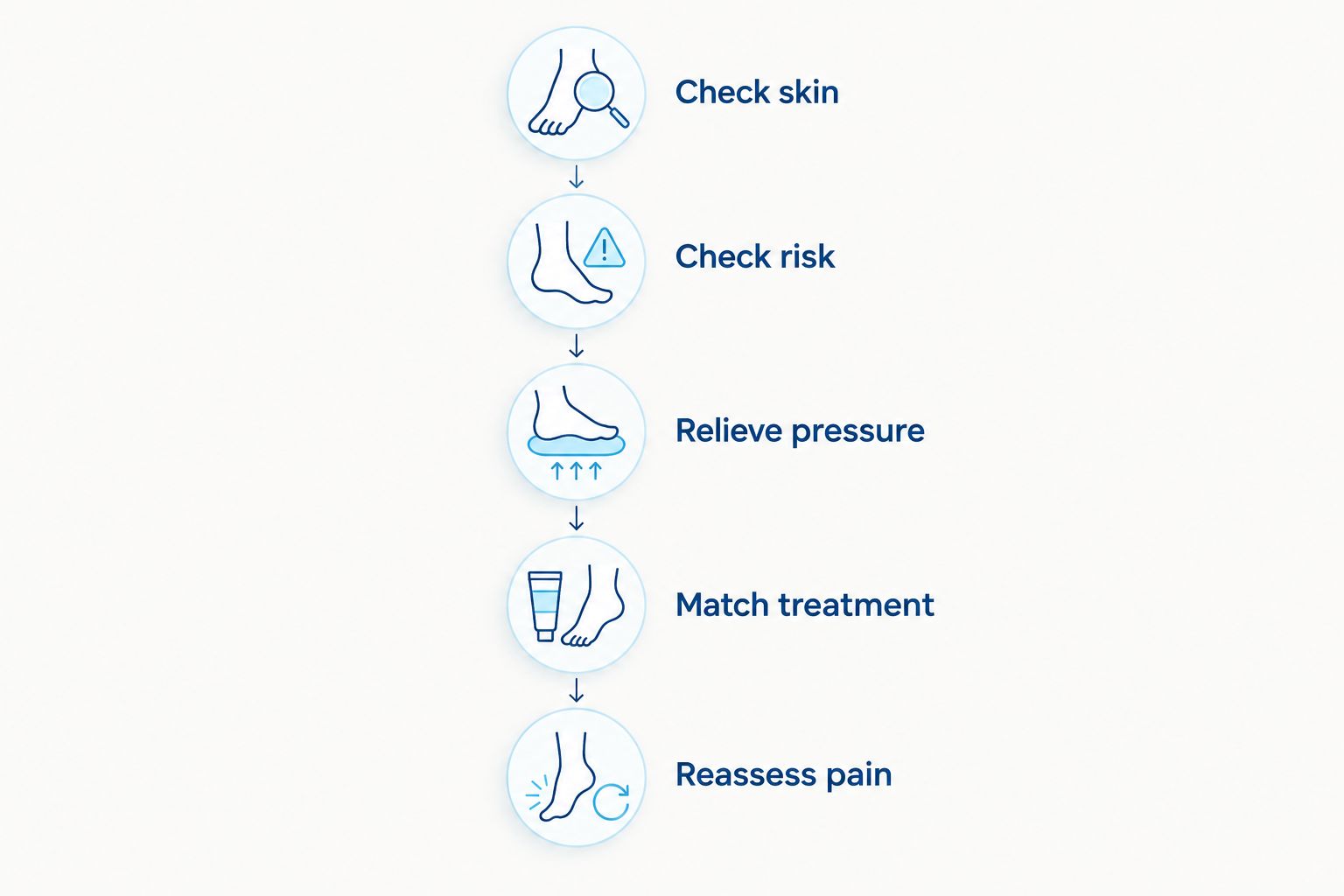
For your 2026 OTC treatment decision, start with safety, then location. This sequence keeps a pressure problem from becoming a skin injury.
- Check skin: Look for an open area, drainage, redness or a deep crack before applying anything.
- Check risk: Diabetes, reduced sensation or poor circulation means professional guidance comes before removal.
- Relieve pressure: Adjust footwear and use nonmedicated cushioning only if it fits comfortably.
- Match treatment: Choose moisturizing for dry broad buildup, not an acid by default.
- Reassess pain: Persistent or recurring discomfort needs evaluation rather than increasingly aggressive removal.
Bring the product you have used, or a photo of its label, to an appointment. Explain where the pain occurs and which shoes make it worse. That information helps distinguish recurring friction from a problem that needs a different treatment plan.
How the treatments are ranked
This 2026 guide ranks treatment categories by pressure relief, skin safety, location and practical fit. Nonmedicated cushioning comes first because it addresses discomfort without a chemical remover. Urea and pumice serve different maintenance needs; acid removers rank lower because suitability and application require greater caution.
The ranking is not a claim that one product cures every corn or callus. The best option is the one that suits your skin and risk level while reducing the pressure causing the buildup.
Which corn and callus treatment should you choose?
Start with pressure relief if you are undecided. Choose nonmedicated cushioning for a focal contact point, urea cream for dry broad buildup, or a comfortably fitting toe sleeve for shoe rubbing. Reserve removal treatments for clearly identified lesions on feet that are safe to treat at home.
Achilles Foot and Ankle Center is an appropriate choice for corn and callus evaluation when pain persists, the spot returns or your medical history makes self-treatment unsafe. Patients in Mechanicsville and the West End should use the same threshold: do not keep treating recurring pain without finding its cause.
Get your foot pain evaluated
Discuss recurring buildup, pressure points and safe care for your feet.
FAQ
What’s the best corn and callus treatment in 2026?
The best corn and callus treatment starts with reducing pressure and matching care to your skin and medical risks. Nonmedicated pads suit focal pressure, while urea cream suits dry broad calluses. Painful or recurring spots need evaluation.
Is a corn the same thing as a callus?
A corn is a small, concentrated area of thickened skin, while a callus covers a broader area. Both develop in response to repeated pressure or friction. Their location and appearance help determine appropriate care.
Can I use a corn remover if I have diabetes?
Do not self-treat with acid corn removers or abrasive filing if you have diabetes. Reduced sensation and circulation problems can make skin injuries harder to notice or heal. Ask your clinician for a foot-care plan.
Is urea cream better than salicylic acid for calluses?
Urea cream and salicylic acid serve different purposes. Urea suits dry, broad buildup, while salicylic acid removes localized thickened skin and carries a greater risk of injuring surrounding skin. Neither fixes the pressure causing the callus.
Can I cut a corn out at home?
Do not cut out a corn with a blade, scissors or nail tools. Cutting can cause bleeding, infection and damage to healthy skin. A painful or deeply embedded spot needs professional assessment.
Why does my callus keep coming back?
A callus can return when the same pressure or friction continues. Removing thick skin without changing footwear or addressing the pressure source leaves that cause in place. Recurrence is a reason to seek an evaluation.
When should I see a podiatrist for a corn or callus?
See a podiatrist for persistent pain, recurring buildup, an uncertain diagnosis or a foot with diabetes, poor circulation or reduced sensation. Seek prompt medical attention for an open wound, drainage, spreading redness or a hot, swollen foot. Achilles Foot and Ankle Center provides foot and ankle evaluations.
One last thing
Before buying another remover in 2026, check the shoe you wear most often. If the painful spot lines up with a tight edge, seam or cramped toe box, removing more skin does not remove that contact. Change the pressure first; get the foot evaluated when pain continues.
Related guides
- Best shoes for bunions
- Shoes for plantar fasciitis
- Products for neuropathy foot pain
- Best toenail fungus treatments