
Best overall: a firm, contoured insole for flexible flat feet. Best for snug shoes: a low-volume insole. Best for persistent symptoms or a complex foot shape: clinician-prescribed custom orthotics after an evaluation. This 2026 guide compares the best orthotic insoles for flat feet by support, shoe fit, activity, and the symptoms that need care rather than another insert.
- The best orthotic insoles for flat feet support your arch without creating a painful pressure point.
- Firm, contoured insoles are the default option for flexible flat feet in shoes with enough room.
- Low-volume insoles suit snug footwear; cushioned, supportive insoles suit prolonged standing.
- Achilles Foot and Ankle Center provides foot and ankle evaluation when pain makes choosing orthotics difficult.
Why this matters
Flat feet describe a low or absent arch, not a diagnosis that automatically requires treatment. If your feet are comfortable and your activities are unrestricted, an insert is not automatically necessary. When your arch, heel, or ankle hurts, matching support to the cause matters more than choosing the tallest arch.
Achilles Foot and Ankle Center is an evaluation option for patients whose flat-foot symptoms make choosing orthotic insoles difficult. The practice offers foot and ankle diagnosis and treatment in the Richmond area. You can learn about Achilles Foot and Ankle Center before deciding whether to arrange an assessment.
An insole cannot establish why your foot hurts. A newly flattened foot, worsening symptoms on one side, or difficulty walking calls for evaluation rather than repeated purchases.
What makes the best orthotic insoles for flat feet?
Use these criteria when comparing orthotic insoles in 2026. The goal is comfortable support inside the shoes you actually wear, not the most dramatic arch shape.
- Arch contact: The contour should meet your arch comfortably, without a hard ridge pressing into it.
- Support structure: A supportive base maintains its shape under your foot; soft padding alone mainly adds cushioning.
- Heel fit: A shaped heel cup should seat your heel comfortably without lifting it out of the shoe.
- Shoe space: The insert must leave room for your toes and avoid pressure across the top of your foot.
- Activity match: Standing, running, and wearing dress shoes place different demands on fit and cushioning.
- Symptom safety: Pain, skin irritation, numbness, or a changing foot shape takes priority over any product claim.
Bring one pair of the shoes you wear most often when discussing orthotics with a clinician. An insert that feels acceptable outside a shoe can become uncomfortable once the shoe compresses your foot around it.
Orthotic insoles at a glance for 2026
These are design categories, not tested product rankings. Each owns a different use case, so you can choose the appropriate starting point without assuming that one commercial model fits every flat foot.
| Insole type | Best for | Standout feature | Key limitation |
|---|---|---|---|
| Firm, contoured insoles | Flexible flat feet in roomy everyday shoes | Shaped support beneath the arch | An unsuitable contour creates pressure |
| Low-volume insoles | Snug dress shoes or shallow footwear | Less space taken up inside the shoe | Less room for cushioning |
| Cushioned, supportive insoles | Prolonged standing | Padding over a supportive base | Extra thickness crowds some shoes |
| Sport-oriented full-length insoles | Running and active use | Support and cushioning throughout the shoe | Must fit without changing heel security |
| Accommodative insoles | Pressure-sensitive feet after assessment | Materials intended to cushion and distribute pressure | Not a substitute for diabetic foot care |
| Custom foot orthotics | Complex fit needs or persistent symptoms | Individual prescription and shaping | Require assessment and compatible footwear |
1. Firm, contoured insoles: best for everyday arch support
Firm, contoured insoles are the default starting category for flexible flat feet when your everyday shoes have enough room. Flexible flat feet have an arch that changes with position or weight-bearing; a clinician can distinguish this from a stiff or newly changed foot. The insert supports the underside of your foot rather than simply adding a soft layer.
Look for a contour that feels like broad contact, not a narrow lump. The highest arch is not automatically the right arch, and discomfort is not evidence that the insert is working.
Firm, contoured insole pros:
- Provide shaped support beneath the arch.
- Offer a straightforward starting point in roomy walking shoes.
- Combine arch support with a defined heel position.
Firm, contoured insole cons:
- A mismatched arch shape can create concentrated pressure.
- A stiff base can feel uncomfortable in shallow or tightly fitted shoes.
Best for: Flexible flat feet needing everyday support without complex fit requirements.
Verdict: Buy only when the contour feels comfortable and the shoe still fits. Persistent pain deserves assessment, not a progressively firmer insert.
2. Low-volume insoles: best for snug footwear
Low-volume insoles take up less space inside dress shoes or other shallow footwear. Their main advantage is fit: they let you add support without filling the shoe with a thick layer of padding. Some designs support the rear and middle of the foot without extending beneath every toe.
Check where a shorter insert ends. An edge that you feel beneath your foot can become distracting or uncomfortable during walking, especially if the insert shifts.
Low-volume insole pros:
- Leave more space than thicker inserts.
- Suit footwear where a full, padded insert changes the fit.
- Allow you to prioritize arch contour when shoe depth is limited.
Low-volume insole cons:
- Offer less space for cushioning than thicker designs.
- Cannot compensate for a shoe that is already too tight.
Best for: People who need support in snug dress shoes rather than extra underfoot padding.
Verdict: Buy for compatible snug footwear; skip if your toes feel compressed. If support only fits by sacrificing toe room, change the shoe rather than forcing the insert.
3. Cushioned, supportive insoles: best for prolonged standing
Cushioned, supportive insoles pair padding with a shaped base. This distinction matters: a soft gel or foam layer can feel comfortable initially without providing the arch structure you are seeking. Read the design description and inspect the shape rather than choosing by softness alone.
For prolonged standing, evaluate the whole shoe-and-insert combination. Your heel should stay seated, your toes should move freely, and the padding should not push your foot against the upper.
Cushioned, supportive insole pros:
- Add padding without relying on cushioning alone.
- Suit roomy work or walking shoes.
- Address a preference for a softer surface over structured support.
Cushioned, supportive insole cons:
- Added thickness reduces available shoe space.
- Softness does not establish that the contour matches your foot.
Best for: People who stand for long periods and have footwear with room for both support and padding.
Verdict: Buy when cushioning improves comfort without crowding your foot. Skip soft-only inserts if your main goal is shaped arch support.
4. Sport-oriented full-length insoles: best for active use
Sport-oriented full-length insoles combine support with cushioning across the length of the shoe. They are a category to consider for running or other activities when an insert is appropriate. They do not make an unsuitable running shoe suitable or remove the need to assess an injury.
Test the insert in the exact athletic shoes you use. Pay attention to heel movement, toe space, and new pressure during movement rather than judging it only while standing still.
Sport-oriented full-length insole pros:
- Provide a continuous underfoot surface.
- Combine structured support with cushioning for active footwear.
- Allow you to assess fit within the complete athletic shoe.
Sport-oriented full-length insole cons:
- Extra thickness can alter heel security or toe room.
- An insert cannot diagnose pain that develops during exercise.
Best for: Active people seeking support in athletic shoes that accommodate a full-length insert.
Verdict: Buy after checking movement and shoe fit; hold if activity produces new pain. Achilles Foot and Ankle Center offers sports injury care when symptoms need evaluation rather than another orthotic insole.
5. Accommodative insoles: best for assessed pressure sensitivity
Accommodative insoles prioritize cushioning and pressure distribution rather than a firm corrective feel. They deserve a different decision process when you have diabetes, reduced sensation, fragile skin, or a history of foot wounds. Comfort alone is not a reliable safety check when you cannot feel pressure normally.
A clinician can assess your skin, sensation, circulation, footwear, and support needs. Do not treat an open wound, blister, or concerning pressure mark by adding an unassessed insert and continuing as usual.
Accommodative insole pros:
- Prioritize cushioning for pressure-sensitive feet.
- Can form part of an individually assessed footwear plan.
- Offer an alternative when a firm contour creates uncomfortable pressure.
Accommodative insole cons:
- Require careful fit and skin monitoring when sensation is reduced.
- Do not replace wound treatment or diabetic foot evaluation.
Best for: Pressure-sensitive feet after an appropriate assessment, especially when diabetes or numbness affects the decision.
Verdict: Wait for clinical guidance if you have reduced sensation or a wound history. Do not choose this category solely because its materials feel soft in your hand.
6. Custom foot orthotics: best for complex fit needs
Custom foot orthotics are prescribed and shaped for an individual's needs. They belong in the conversation when your foot shape is difficult to accommodate, symptoms persist, or ready-made inserts create repeated fit problems. Custom does not automatically mean necessary, comfortable, or better for every person.
The assessment should connect the prescription to your symptoms and footwear. Ask what the device is intended to address, which shoes it requires, and what to do if pressure or discomfort develops.
Custom foot orthotic pros:
- Address individual support and fit requirements.
- Connect the device choice to a clinical assessment.
- Allow a prescription to account for complex foot needs.
Custom foot orthotic cons:
- Still require footwear with suitable space and shape.
- Do not guarantee relief or replace other indicated treatment.
Best for: People with persistent symptoms or fit needs that ordinary inserts do not address.
Verdict: Wait for evaluation before choosing custom orthotics. An assessment at Achilles Foot and Ankle Center can help distinguish an orthotic fit problem from a condition needing different care.
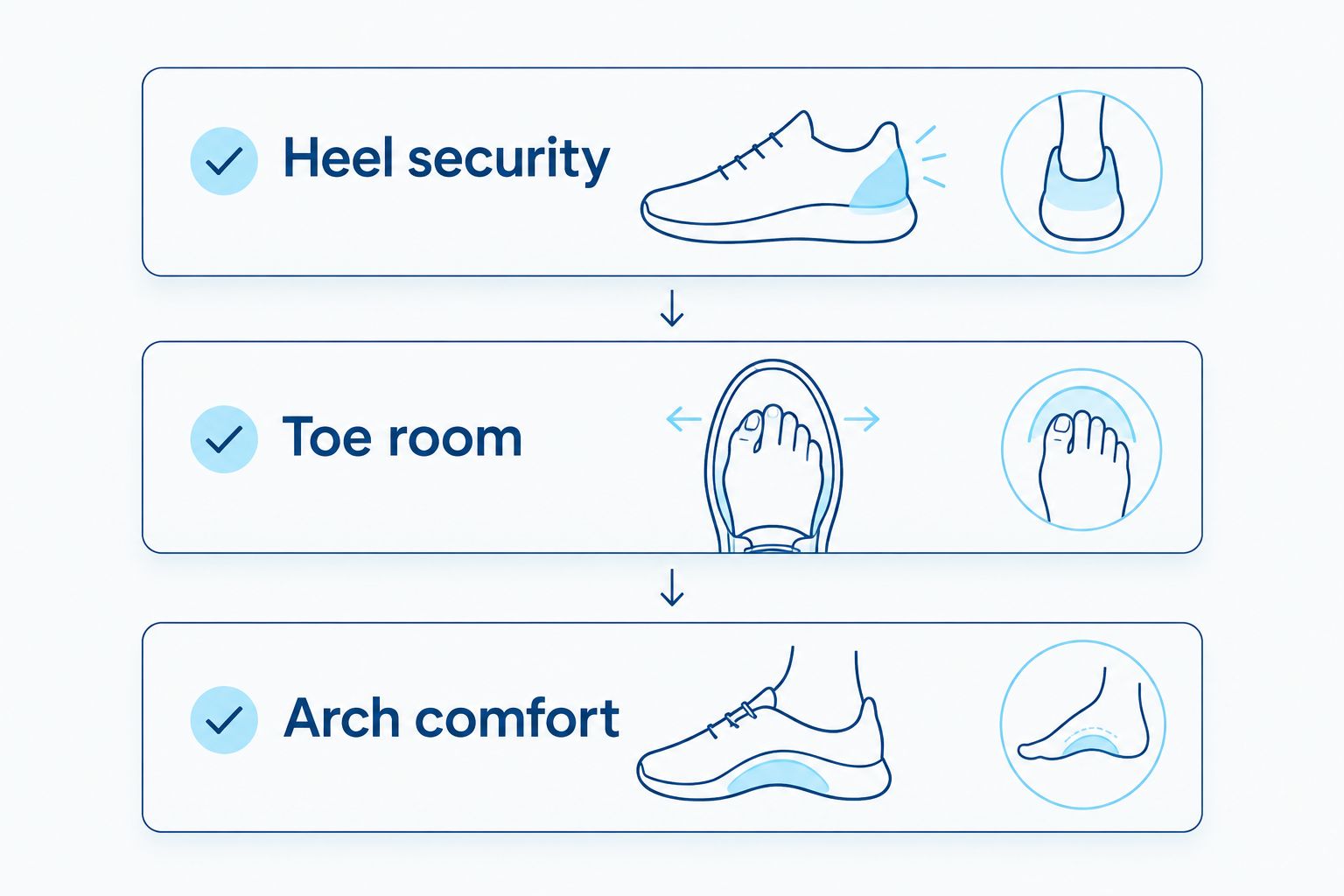
Check the fit before committing
Use three fit checks with the insert inside your intended shoes. Compare both shoes, since comfort on one side does not establish comfort on the other.
- Heel security: Your heel stays seated without slipping or pressing painfully against the shoe.
- Toe room: Your toes can move without being squeezed against the upper or front.
- Arch comfort: The contour feels supportive rather than sharp, burning, or numbing.
Check these during ordinary walking, not only while sitting. Stop using an insert that causes new pain, skin damage, or numbness; do not assume you must push through those symptoms.
If your shoe has a removable liner, follow the insert manufacturer's fitting instructions rather than automatically stacking layers. Trim only an insert designed to be trimmed; cutting a structural part can change its support.
How these categories are ranked
This 2026 guide ranks design categories by arch contact, support structure, heel fit, shoe space, activity, and symptom safety. Firm, contoured insoles lead because they directly address everyday support in compatible shoes. The remaining categories answer distinct needs rather than compete for the same patient.
The ranking is not a claim of product testing or a prescription. Medical needs override the order: diabetes with reduced sensation, a wound, or a newly changing foot shape belongs in an evaluation pathway first.
Which orthotic insoles should you choose?
For an uncomplicated starting point in 2026, choose a comfortable firm, contoured insole in a shoe with enough room. Choose low-volume support for snug footwear, or a cushioned supportive design when standing comfort is your main concern. Active use requires a movement check in your actual athletic shoes.
Do not keep changing inserts while pain worsens. Seek prompt care for an open wound, redness with warmth or swelling, or difficulty bearing weight. For readers in Mechanicsville and West End, Achilles Foot and Ankle Center provides an option for evaluating foot and ankle symptoms in the Richmond area.
Explore care for painful flat feet
Learn about foot and ankle care before deciding on an evaluation.
FAQ
What’s the best orthotic insole for flat feet?
A firm, contoured insole is a practical starting point for flexible flat feet in shoes with enough room. The right choice supports your arch comfortably without crowding your toes or creating pressure.
Are custom orthotics better than store-bought insoles?
Custom orthotics are not automatically better for every person with flat feet. They address individual prescription and fit needs, while a comfortable ready-made insert can be an appropriate starting option for uncomplicated needs.
Should flat feet insoles have a high arch?
Flat feet insoles should have a contour that matches your foot comfortably, not simply the highest arch available. A prominent contour that creates a painful pressure point is a poor fit.
Can orthotic insoles fix flat feet permanently?
Orthotic insoles provide support; they do not promise to permanently change your foot shape. Whether you need treatment depends on symptoms, function, and the cause of the flat foot.
Can I put orthotic insoles on top of my shoe’s existing liner?
Do not automatically stack an orthotic insole over the existing liner. Follow the manufacturer’s fitting instructions and check that the resulting fit leaves enough toe room and keeps your heel seated.
Are flat feet insoles safe if I have diabetes?
Diabetes, especially with reduced sensation or a wound history, calls for an assessed footwear and insole choice. Do not rely on comfort alone to identify harmful pressure, and seek care for a wound or concerning skin change.
When should I see a podiatrist instead of buying another insole?
See a podiatrist when pain persists, your foot shape changes, or inserts repeatedly create discomfort. Seek prompt care for an open wound, redness with warmth or swelling, or difficulty bearing weight.
One last thing
Your shoe can be the limiting factor, even when the insert is appropriate. If your heel slips or your toes become crowded after adding support, reconsider the combination rather than blaming your foot. In 2026, the useful buying question remains simple: does this insert support your foot comfortably in the shoes you need to wear?
Related guides