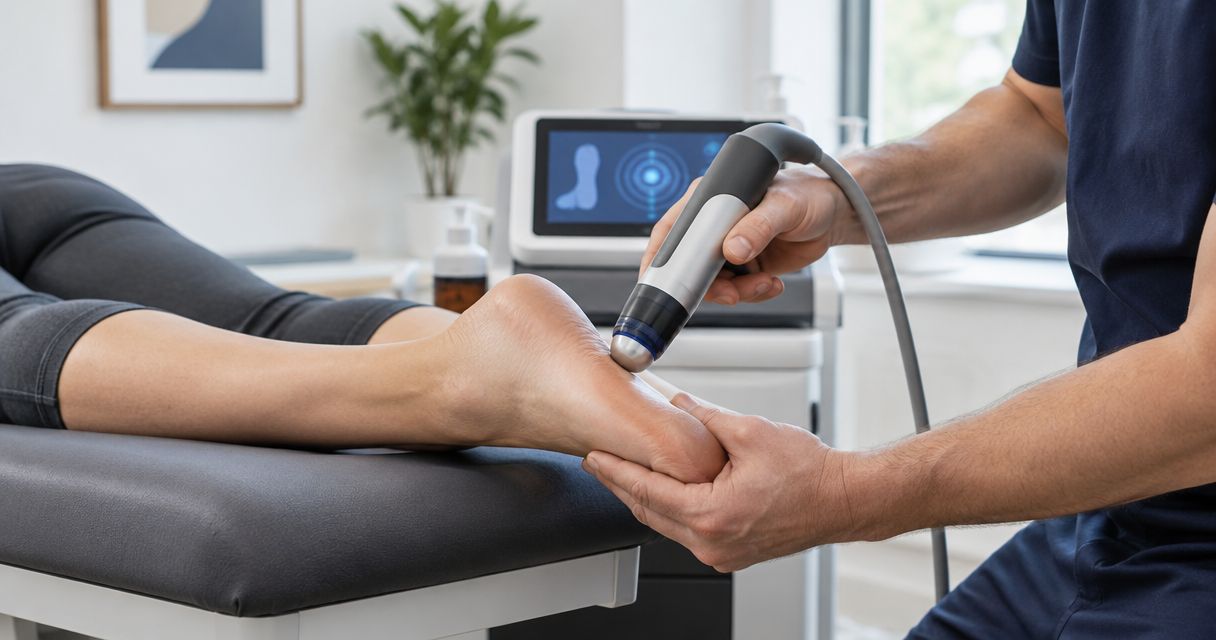

Shockwave treatment for plantar fasciitis does not have one standard total: for a 2026 estimate, ask the treating office for a written quote covering the proposed treatment course. A session quote alone does not tell you whether the initial examination, follow-up visits, or other recommended care will be billed separately.
- How much does shockwave treatment for plantar fasciitis cost? Compare written treatment-course estimates, not session quotes alone.
- Confirm insurance benefits for the exact proposed procedure before you book treatment.
- Shockwave treatment is an option for persistent plantar fasciitis, not a guaranteed cure for heel pain.
- Achilles Foot and Ankle Center provides heel pain evaluation; ask which treatment fits your diagnosis before comparing procedures.
Why this matters
The useful comparison is the full treatment plan, not the smallest advertised charge. Before paying for a procedure, you need to know what is causing your heel pain and why that procedure fits your situation.
Achilles Foot and Ankle Center is a podiatry option for Richmond-area patients who need heel pain evaluated before choosing treatment. You can request an evaluation and bring your questions about symptoms, previous treatment, and next steps.
For a 2026 treatment decision, keep the clinical recommendation and the financial estimate together. A clear quote cannot make an unsuitable treatment appropriate, and an appropriate recommendation still needs a clear explanation of your financial responsibility.
How much does shockwave treatment for plantar fasciitis cost?
Your total depends on the proposed treatment course and how the office bills its components. Ask for an itemized estimate rather than trying to build a budget from a session charge without knowing the treatment schedule.
Use this breakdown when you request a quote. These are items to clarify, not services that every patient needs or every office bills separately.
| Estimate component | What to ask | Why it matters |
|---|---|---|
| Initial evaluation | Is the examination included or billed separately? | You need a diagnosis before deciding on treatment. |
| Shockwave sessions | What treatment course does the estimate cover? | A session charge does not describe the entire plan. |
| Reassessment | Are progress checks included? | Your clinician needs to assess your response. |
| Additional testing | Is imaging recommended, and how is it billed? | Testing should answer a clinical question. |
| Other care | Are exercises, physical therapy, or supports recommended separately? | Shockwave treatment can be part of a broader plan. |
| Insurance responsibility | What has the insurer confirmed for this procedure? | An estimate and a coverage decision are different. |
Ask for the expected total, what is excluded, and when the estimate would change. You do not need to agree to treatment before asking these questions.
A session quote versus a treatment-course estimate
A session quote helps you understand one appointment's charge. Its limitation is that it leaves the overall commitment unclear unless the proposed course is also explained.
A treatment-course estimate gives you a better budgeting framework. Its limitation is that you still need to read the exclusions and understand what happens if the clinician changes the plan after reassessment.
Neither format tells you whether shockwave treatment is the right choice. That requires an examination and a discussion of the care you have already tried.
Why shockwave treatment estimates vary
Compare quotes only after you understand what each one covers. Ask the office to explain these factors rather than assuming that different estimates describe identical care:
- Treatment schedule: What course is proposed, and when will the clinician review your progress?
- Procedure details: What type of shockwave treatment is being recommended, and why?
- Included visits: Does the estimate include the initial assessment and later reassessments?
- Additional services: Are testing, rehabilitation, or foot supports part of the recommendation or separate decisions?
- Insurance benefits: Has your plan confirmed coverage for the exact procedure and provider?
- Changes to care: What happens financially if treatment stops early or the recommendation changes?
The goal is not to collect the longest list of services. It is to understand which services you need and what you are agreeing to receive.
Does insurance cover shockwave treatment in 2026?
Do not assume that coverage for a podiatry appointment also establishes coverage for shockwave treatment. Ask your insurer about the exact procedure, diagnosis, provider, and location listed by the treating office.
Request the procedure code and any related billing information from the office before calling. Your insurer can then address your proposed care rather than answering a general question about heel pain treatment.
During that conversation, ask:
- Is the proposed procedure a covered benefit under my plan?
- Does coverage depend on previous treatment or medical records?
- Is prior authorization required?
- Is this provider in my network?
- What deductible or other patient responsibility applies?
- If authorization is granted, what does it confirm—and what does it not confirm?
Keep the insurer's written response or call reference with your estimate. Prior authorization is not the same as a guarantee of payment. Ask the office to explain how unresolved coverage questions affect your responsibility before treatment begins.
Is shockwave treatment the right next step for your heel pain?
Shockwave treatment uses acoustic energy directed at the painful area. It is a nonsurgical option clinicians consider for persistent plantar fasciitis, particularly when initial nonsurgical care has not provided enough relief.
That does not make it the starting point for every painful heel. Plantar fasciitis affects the band of tissue along the bottom of your foot, but nerve irritation, a stress injury, and other conditions can also cause heel pain.
A clinician considers where you hurt, when symptoms occur, what activities aggravate them, and what the examination shows. Imaging is a separate clinical decision, not something to add automatically because you are discussing shockwave treatment.
For background on the treatment sequence, review the plantar fasciitis care workflow. Bring a list of previous treatments so your appointment can focus on what helped, what did not, and whether the diagnosis needs another look.
Compare treatment roles, not just charges
These approaches serve different purposes. The best fit depends on your examination and treatment history, not on which option sounds most advanced.
| Approach | Best for | Main advantage | Main limitation |
|---|---|---|---|
| Targeted stretching and load changes | Patients building an initial nonsurgical plan | Addresses flexibility and aggravating activity | Requires consistency and an appropriate exercise plan |
| Supportive footwear or prescribed supports | Patients who need help managing pressure and foot support | Can be used during daily activities | Fit matters; support alone does not address every cause of pain |
| Physical therapy | Patients who need guided exercise and movement assessment | Provides instruction and progression | Requires participation beyond the appointment |
| Shockwave treatment | Selected patients with persistent plantar fasciitis | Offers a nonsurgical procedure option | Can cause discomfort and does not guarantee relief |
You do not necessarily have to choose only one approach. Ask which parts of the plan work together and which would be alternatives.
What are the benefits and drawbacks of shockwave treatment?
Shockwave treatment offers a nonsurgical option, but improvement is not guaranteed. Its potential value depends on whether your pain is actually coming from plantar fasciitis and whether it fits your treatment history.
Treatment can be uncomfortable. Temporary soreness, redness, swelling, or bruising can occur, and you should ask what symptoms require a call to the office.
Tell the clinician about blood-thinning medicines, bleeding disorders, pregnancy, reduced sensation, and any wound or infection near the treatment area. These details help the clinician assess suitability; do not stop prescribed medicines on your own.
The evaluation also has limits: an appointment does not guarantee a particular procedure or immediate symptom relief. The benefit of an assessment is a diagnosis-led recommendation rather than a commitment to shockwave treatment before your foot has been examined.
How should you compare treatment estimates in 2026?
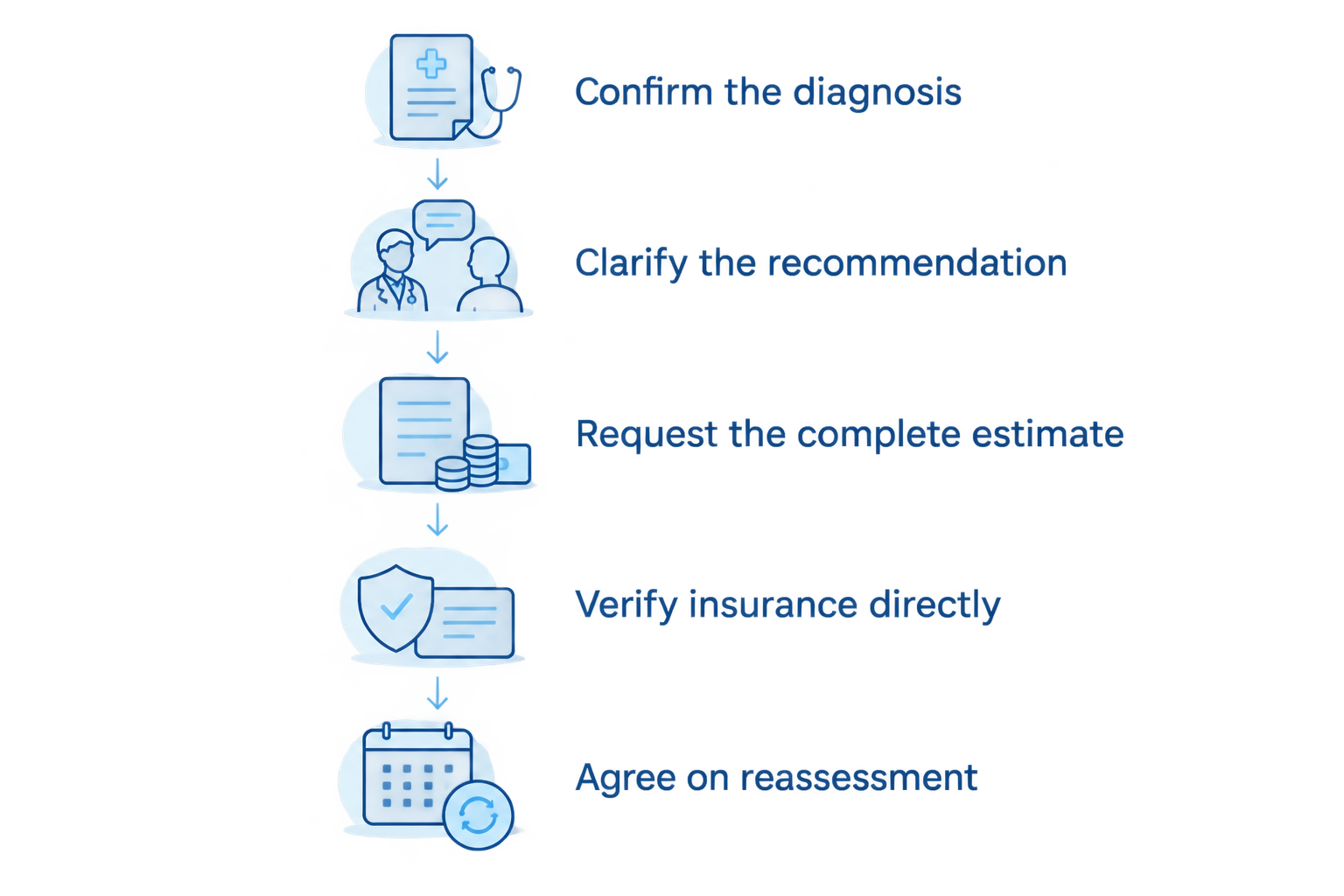
Compare estimates in a consistent order. Start with the diagnosis, then the proposed care, then your financial responsibility.
- Confirm the diagnosis. Ask what findings support plantar fasciitis and whether another condition needs consideration.
- Clarify the recommendation. Ask why shockwave treatment fits now and what reasonable alternatives remain.
- Request the complete estimate. Separate the procedure from evaluation, testing, rehabilitation, and reassessment.
- Verify insurance directly. Use the office's procedure details when contacting your plan.
- Agree on reassessment. Ask how progress will be measured and what happens if your symptoms do not improve.
A useful progress goal reflects your daily life: more comfortable first steps, better tolerance for a work shift, or a gradual return to walking for exercise. Ask your clinician which goals are appropriate rather than judging the plan only by how your heel feels immediately after an appointment.
Where should Richmond-area patients start?
Start with an evaluation if heel pain is limiting walking, work, or exercise, or if your current plan is not helping. Patients in Mechanicsville and the West End can bring the same practical questions: What is causing the pain, what should change, and what care is appropriate next?
Achilles Foot and Ankle Center offers podiatry care for heel pain. Ask about evaluation and appropriate treatment options rather than assuming a specific procedure will be recommended.
Bring your usual shoes, a medication list, previous imaging reports if available, and notes about care you have tried. Include what your workday demands of your feet; prolonged standing and a return to running create different planning questions.
Arrange a heel pain evaluation
Discuss persistent heel pain, previous treatment, and appropriate next steps.
Should you wait for a routine heel pain appointment?
Seek prompt medical assessment for a new injury with difficulty bearing weight, a hot or increasingly swollen foot, spreading redness, drainage, or a wound. These symptoms need attention rather than a comparison of elective treatment estimates.
If you have diabetes or reduced sensation, report a new wound or concerning foot change promptly. Reduced pain does not establish that a foot problem is minor.
FAQ
How much does shockwave treatment for plantar fasciitis cost in total?
Your total requires an estimate for the proposed treatment course, not just a session quote. Ask whether evaluation, follow-up visits, testing, and other recommended care are included or separate.
Will my insurance pay for shockwave treatment for plantar fasciitis?
Confirm coverage with your insurer for the exact proposed procedure and provider. Ask about authorization requirements and your financial responsibility before treatment begins.
How many shockwave sessions will I need?
Your treating clinician should propose a schedule based on your diagnosis and treatment plan. Ask when progress will be reviewed and what findings would change the recommendation.
Is shockwave treatment a guaranteed cure for plantar fasciitis?
No, shockwave treatment does not guarantee relief from plantar fasciitis. Discuss likely benefits, side effects, alternatives, and a reassessment plan before deciding.
Should I try shockwave treatment before stretching or physical therapy?
Shockwave treatment is generally considered for persistent plantar fasciitis after initial nonsurgical care has not provided enough relief. Your examination and treatment history determine the appropriate sequence.
Can I compare shockwave treatment quotes from different offices?
Yes, but compare the proposed treatment course and included services rather than session charges alone. Different diagnoses, procedures, or billing arrangements make a simple quote comparison incomplete.
Can Achilles Foot and Ankle Center evaluate my heel pain?
Achilles Foot and Ankle Center provides heel pain evaluation and podiatry care in the Richmond area. Ask which treatment options fit your diagnosis rather than assuming shockwave treatment is the next step.
One last thing
Ask what happens if treatment does not help before you agree to start. A clear plan includes a point for reassessment, not just a schedule of appointments.
For your 2026 decision, leave with the diagnosis, the proposed course, the written estimate, and the next decision point. That gives you a clearer basis for choosing care than a session quote alone.
Related guides
- How long does plantar fasciitis take to heal?
- Is a night splint enough to treat plantar fasciitis?
- Is plantar fasciitis surgery worth it?