If you are asking what causes pain on top of foot problems, the answer is usually one of five things: irritated extensor tendons, pressure from tight shoes or laces, a stress fracture in one of the long foot bones, arthritis in the midfoot, or a compressed nerve. Less often, a sprain, gout, or a cyst is behind it. Clinicians call this dorsal foot pain, and it covers the whole upper surface of the foot, from the ankle crease to the toes.
The top of the foot has very little padding. Tendons, bones, joints, and nerves sit right under the skin, so one shoe lace can press on all of them at once. This article explains why the cause matters, walks through each cause and how it feels, and shows how stabbing pain, pain near the ankle, and pain in the toes point to different problems. It then covers home care, red flags, and what a podiatrist does.
We are podiatrists at Achilles Foot and Ankle Center in Central Virginia, and the guidance below follows how we sort these problems out in the exam room. Use it to narrow down your likely cause. It cannot replace an exam.
Why the cause of top-of-foot pain matters
The cause matters because the same ache can come from a tendon that needs looser laces or from a bone that needs protection from impact, and those two problems call for opposite responses. Pain here is rarely random. A handful of structures sit under the skin, and each one fails in a recognizable way.
Why the top of the foot is so exposed
The top of the foot, called the dorsum, has almost no padding. The extensor tendons run across it and lift your toes. The five metatarsal bones lie just beneath them, the midfoot joints sit behind those, and small nerves and blood vessels run close to the skin.
Compare that with the sole, which has a thick fat pad. On top, a lace, a strap, or a snug shoe upper presses directly on tendon, nerve, and bone at the same moment. That is why one ache can have several sources, and why location alone rarely settles the question.
Certain habits raise the odds. Sudden jumps in walking, running, or standing time are the biggest one. Tight or worn-out shoes, high arches that lift the foot closer to the laces, long hours on hard floors, and an old midfoot injury all add to it.
The top of your foot has almost no padding, so tendons, bone, and nerves all take the hit from a tight shoe.
Why the right diagnosis changes the treatment
Treatment follows the cause, so a wrong guess costs you time. Here is how the right and wrong first moves differ for four common causes.
| Cause | Helpful first move | Move that backfires |
|---|---|---|
| Tendon irritation | Looser lacing and a break from the trigger activity | Tying laces tighter for "support" |
| Stress fracture | Protecting the bone from impact | Running through the pain |
| Nerve compression | Removing pressure from the spot | Squeezing into the same shoe |
| Gout flare | Medical care aimed at the flare | Treating it like a bruise |
The two that matter most to catch early are a stress fracture and gout. A fracture gets worse when you keep loading it. Gout needs different medication than a mechanical problem does.
The most common causes and how each one feels
The most common cause is extensor tendon irritation, often from shoe pressure, followed by stress fractures, midfoot arthritis, nerve compression, and sprains. Gout and cysts are less common but worth knowing. The table gives you a side-by-side view, and the sections below explain each cause.
| Cause | What it feels like | Typical trigger | Best clue |
|---|---|---|---|
| Extensor tendon irritation | Broad ache or burning across the top | Tight laces, new shoes, more mileage | Worse when you lift your toes |
| Stress fracture | Pinpoint pain over one bone | Training jump, hard surfaces | Hurts with every step, may ache at night |
| Sprain or strain | Pain, swelling, bruising | A twist or awkward landing | You remember the moment |
| Midfoot arthritis | Stiff, aching, sometimes a bony bump | Age, an earlier injury | Worse when pushing off |
| Nerve compression | Burning, tingling, electric feeling | Tight shoes, swelling, bone spur | Tapping the spot reproduces it |
| Gout | Sudden severe pain, redness, heat | Often comes on overnight | Even a bedsheet hurts |
Tendon irritation and tight shoes
Extensor tendinopathy means the tendons that lift your toes and foot have become irritated. Tendinitis on top of the foot usually feels like a broad ache or burning across the upper foot, with tenderness along the tendon line. It flares with walking, running, or stairs and eases with rest.
Tight laces, a stiff tongue, new shoes, and a quick increase in activity are the usual triggers. High arches make it more likely. The pain is spread out, not pinned to one bone, and it often improves within minutes of loosening your laces. That test is simple and tells you a lot.
A broad ache that eases when you loosen your laces is tendon or shoe pressure until proven otherwise.
Stress fractures
A stress fracture is a tiny crack in a bone caused by repeated force, not one big injury. In the foot, the metatarsals are the usual site. The pain is focal, meaning you can put one fingertip on it, and it gets worse with each step or impact.

Swelling over the bone is common, and the pain may linger at rest or wake you at night. Early on, a stress fracture can be invisible on an ordinary X-ray, so a normal film does not rule it out. Runners, dancers, and anyone who suddenly ramps up activity are at higher risk.
Sprains and strains
A sprain injures a ligament and a strain injures a muscle or tendon. Either can hurt on top of the foot after a twist, a misstep, or an awkward landing. You will usually notice pain, swelling, and bruising, and sometimes stiffness or trouble putting weight on the foot.
Midfoot injuries can look like an ordinary sprain at first. If you cannot walk normally, or you heard a pop, treat it as more than a sprain until someone examines it.
Midfoot arthritis, bone spurs, and cysts
In midfoot osteoarthritis, the cartilage in the small joints behind the arch wears down. It builds gradually, with stiffness and aching that worsen when you push off or walk on uneven ground. Some people develop a hard, fixed bump on top, called a tarsal boss, which is bone.
A ganglion cyst is different. It is a fluid-filled lump that feels soft and may move under your finger. Either one can hurt when a shoe presses on it. A new or growing lump should be examined, because you cannot reliably tell a cyst from a bone spur by sight.
Nerve compression
Small nerves, including branches of the deep peroneal nerve, run close to the surface on top of the foot. When one is squeezed by a tight shoe, swelling, or a bone spur, you feel burning, tingling, numbness, or an electric sensation that may travel toward the toes. Tapping over the spot can bring it on.

If the burning or numbness shows up in both feet, especially at night or if you have diabetes, think of peripheral neuropathy instead. That is a nerve problem, not a shoe problem, and it needs testing.
Gout
Gout is inflammatory arthritis caused by uric acid crystals in a joint. It classically strikes the big toe, but it can also hit the midfoot and the top of the foot. A flare tends to arrive fast, often overnight, with severe pain, redness, warmth, and swelling.
Do not self-diagnose it. A red, hot, swollen foot can also mean infection, and the two need very different treatment. Get that pattern looked at promptly.
How to tell causes apart by where it hurts
You can narrow the list by combining where the pain sits with how it behaves. Pinpoint, burning, and sudden pain each point toward different causes, and the same logic works near the ankle and in the toes.
Stabbing pain on top of the foot
A stabbing pain usually means a nerve, a bone, or a sudden inflammatory flare, not a general tendon ache. Match the stab to its pattern:
- Stabs on one spot with each step: a metatarsal stress fracture, especially if the spot is tender to press.
- Shooting or electric pain toward the toes: a compressed nerve, often tied to a particular shoe.
- Sudden severe pain with redness and heat: gout or infection, which needs prompt evaluation.
- A sharp pain after a twist or landing: a sprain or strain, and a pop suggests something more serious.
If the stabbing comes and goes, look for a trigger. Pain that appears only in certain shoes, or only when laced tight, is pressure on a tendon or nerve. Pain that comes with activity and builds each day is more worrying for bone.
Where it hurts narrows the list, but how it behaves (pinpoint, burning, or sudden) narrows it further.
Pain on top of the foot near the ankle
Near the ankle, the main suspects are extensor tendons, a sprain, a navicular stress fracture, and joint arthritis. The extensor tendons cross the front of the ankle, where laces and the shoe collar press on them. That produces an ache along the tendon that worsens with uphill walking or stairs.
A sprain at this end of the foot comes with swelling, bruising, and a clear injury moment. Expect recovery from a real ankle sprain to take at least six weeks. The navicular bone sits at the top of the midfoot near the ankle, and a stress fracture there causes a vague, deep ache that is easy to miss. If you have pain here that builds with activity and no clear injury, get imaging.
Pain on top of the foot and toes
When the pain involves the toes, widen the list to toe joints and the nerves that feed them:
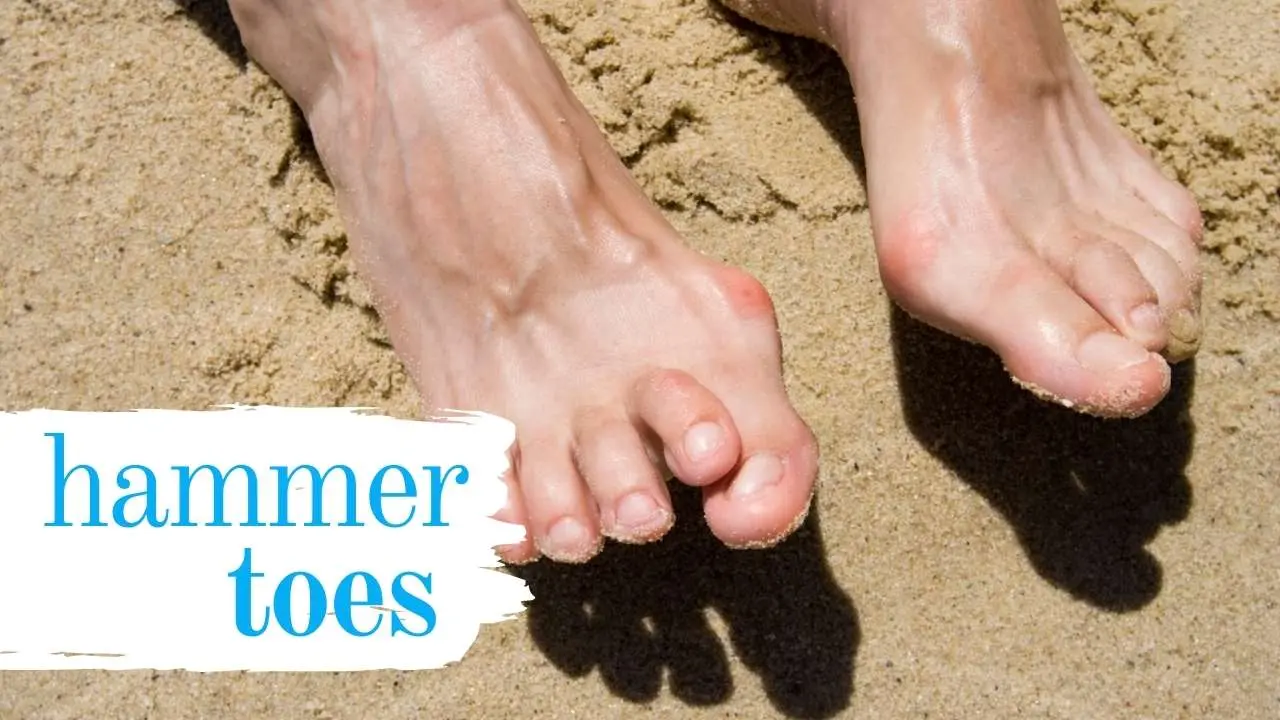
- Hammertoes: the middle joint of a smaller toe bends up and its knuckle rubs against the top of the shoe.
- Hallux rigidus: the big toe joint stiffens and hurts, and a bump often forms on top of it.
- Gout in the big toe: sudden, hot, intensely tender joint.
- Tight toe box: a shoe that is too narrow or shallow compresses the toes and the nerves under the forefoot skin.
- Neuropathy: burning, tingling, or numbness in the toes of both feet.
The pattern to watch is symmetry. One painful toe joint points to a local problem, while burning or numbness in both feet points to the nerves or circulation.
How to ease top-of-foot pain at home
To ease top-of-foot pain at home, take pressure off the top of the foot first, then rest, ice, and elevate it, and give it about two weeks. This works for mild pain with no injury and no warning signs. If you have any red flag from the next section, skip the home plan.
A step-by-step home plan
Follow these steps in order. The first two cost nothing and fix many cases.
- Loosen your laces and skip the eyelets over the tender spot. Slip a thin foam pad or folded gauze under the tongue.
- Switch to roomier shoes with a deeper toe box and a soft, padded tongue.
- Cut back high-impact activity. Cycling and swimming usually let you stay fit while the foot settles.
- Ice it with a wrapped pack for 15 to 20 minutes, up to four times a day. Never put ice directly on the skin.
- Elevate the foot when you sit, which helps with swelling.
- Use an over-the-counter pain reliever only if it is safe for your health and other medications. Ask a pharmacist if you are unsure.
- Return gradually. Do not go straight back to your old routine.
Do not stretch, massage, or "walk off" sharp, pinpoint pain over a bone. That is the pattern that deserves a stress fracture check.
Take the pressure off first. Loosening your laces costs nothing and settles many cases of top-of-foot pain.
A two-week checkpoint timeline
A timeline keeps you honest about whether home care is working. Use these checkpoints.
| Window | What to do | What should happen |
|---|---|---|
| Days 1 to 3 | Re-lace, change shoes, ice, rest from impact | Pain starts to ease |
| Days 4 to 7 | Keep low-impact activity only | Tenderness and swelling shrink |
| Days 8 to 14 | Begin a gradual return | Pain stays mild and does not build overnight |
| After day 14 | Book an exam if still sore | Pain at this point needs a diagnosis |
Here is a worked example of a gradual return. If you walked 60 minutes a day before the pain began, restart at 20 minutes and add 10 minutes every other day. That gives you 20, 30, 40, 50, and 60 minutes, and you reach your old routine in about nine days. Stop and step back a level if the pain climbs above a mild ache or is worse the next morning.
When top-of-foot pain needs a podiatrist
See a podiatrist if the pain lasts more than about two weeks, keeps returning, or limits your walking. Get urgent care for any sign that the foot is injured, infected, or short on blood flow. The lists below separate the two situations.
Signs to book a visit soon
Book an appointment if any of these apply:
- The pain has not improved after about two weeks of home care.
- It returns every time you resume your activity.
- You can press on one spot over a bone and it hurts.
- A lump, swelling, or bump is not going away.
- Tingling or numbness persists.
- Pain interferes with work, exercise, or daily walking.
- You have diabetes, reduced sensation, or a history of foot wounds, and you develop new foot pain.
Signs that need urgent care
Seek same-day or emergency care if you cannot put weight on the foot, it looks deformed, or you heard a snap or pop during an injury. The same goes for rapidly increasing swelling or severe pain, an open wound, or a red, hot foot with fever. A foot that turns pale, blue, cold, or suddenly numb also needs care now. Call 911 for a life-threatening emergency.
If you cannot put weight on the foot, skip the home plan and get it examined.
Can foot pain be related to heart problems?
Foot pain on its own is rarely a heart symptom, and pain from tight shoes or irritated tendons has nothing to do with the heart. The real link is circulation.
Peripheral artery disease narrows the arteries to the legs. It tends to cause cramping with walking that eases at rest, cold or pale feet, and sores that heal slowly. Heart failure can cause swelling in both feet and ankles. If either pattern sounds familiar, tell your doctor instead of treating it as a shoe problem.
How a podiatrist finds the cause and treats it
A podiatrist finds the cause by combining your history, a hands-on exam, and imaging when it is needed, then matches treatment to the diagnosis. Most causes start with non-surgical care, and surgery is reserved for problems that do not respond.
What the exam and imaging involve
Expect questions about where it hurts, when it began, and what changed: shoes, mileage, standing time, a past injury. The exam then checks tenderness over tendon, joint, and bone, swelling, range of motion, strength, sensation, and how you walk. Your shoes and wear pattern tell us a lot too.
Imaging depends on the suspected cause. At our offices we perform X-rays, ultrasound, and fluoroscopy on site. Ultrasound helps with tendons and cysts. An early stress fracture can hide on X-ray, so we may order an MRI or CT, which we arrange through an imaging center based on your insurance. If nerve symptoms are unclear, nerve function tests such as a nerve conduction velocity test and electromyography can find the source.
Treatment options by cause
Treatment is chosen by cause, not by where the pain sits.
| Cause | Common treatments |
|---|---|
| Tendon irritation | Footwear and lacing changes, orthotics, physical therapy |
| Stress fracture | Rest from impact, a stiff-soled shoe or walking boot, gradual return |
| Sprain | Immobilization, bracing, physical therapy |
| Midfoot arthritis | Supportive shoes, orthotics, corticosteroid injection, surgery if advanced |
| Nerve compression or neuropathy | Footwear changes, medication, physical therapy, laser therapy, surgery for neuromas |
| Gout | Medication aimed at the flare and its cause |
| Ganglion cyst | Monitoring, drainage, surgery if it keeps returning |
| Hammertoe or hallux rigidus | Roomier shoes, padding, splints, injections, surgery as a last resort |
We try non-surgical options first, and Dr. Baldwin tries all non-surgical treatments before surgery. When foot mechanics are part of the problem, we make custom orthotics using a 3D imaging system. The goal is a plan that fits your symptoms, activity level, and medical history.
Getting your foot checked
Pain on top of the foot almost always comes from a tendon, a bone, a joint, or a nerve, and the pattern of where it hurts and what triggers it tells you which one. Start by loosening your laces and switching to roomier shoes. Give home care about two weeks, and take any red flag seriously.
If your foot still hurts after two weeks, keeps coming back, or shows any warning sign above, book a same-day appointment with our team. We try to make room for urgent problems, though same-day slots are not guaranteed.