The quickest answer to how to relieve arch pain at home is to combine four things: supportive shoes with an insert, daily calf and plantar fascia stretches, ice with lighter activity, and gentle self-massage. Shoes and stretching suit most people with soreness in the morning or after a long day. Ice and rest suit a flare-up. Massage suits a tight, tender spot. A good fix reduces the load on your arch or loosens what is pulling on it, instead of just numbing the pain while you keep overloading the foot.
Arch pain is frustrating because it shows up when you least want it: the first steps out of bed, the end of a shift on your feet, or mid-run. Many guides list a dozen remedies without telling you which to try first or when home care is the wrong plan. This article gives you four fixes in order of how much they usually help, shows you exactly how to do each one, and then explains what causes arch pain and when to see a podiatrist.
At Achilles Foot and Ankle Center, our podiatrists in the Richmond area diagnose and treat heel and arch pain, and we try non-surgical options first. The steps below are the same basics we start with.
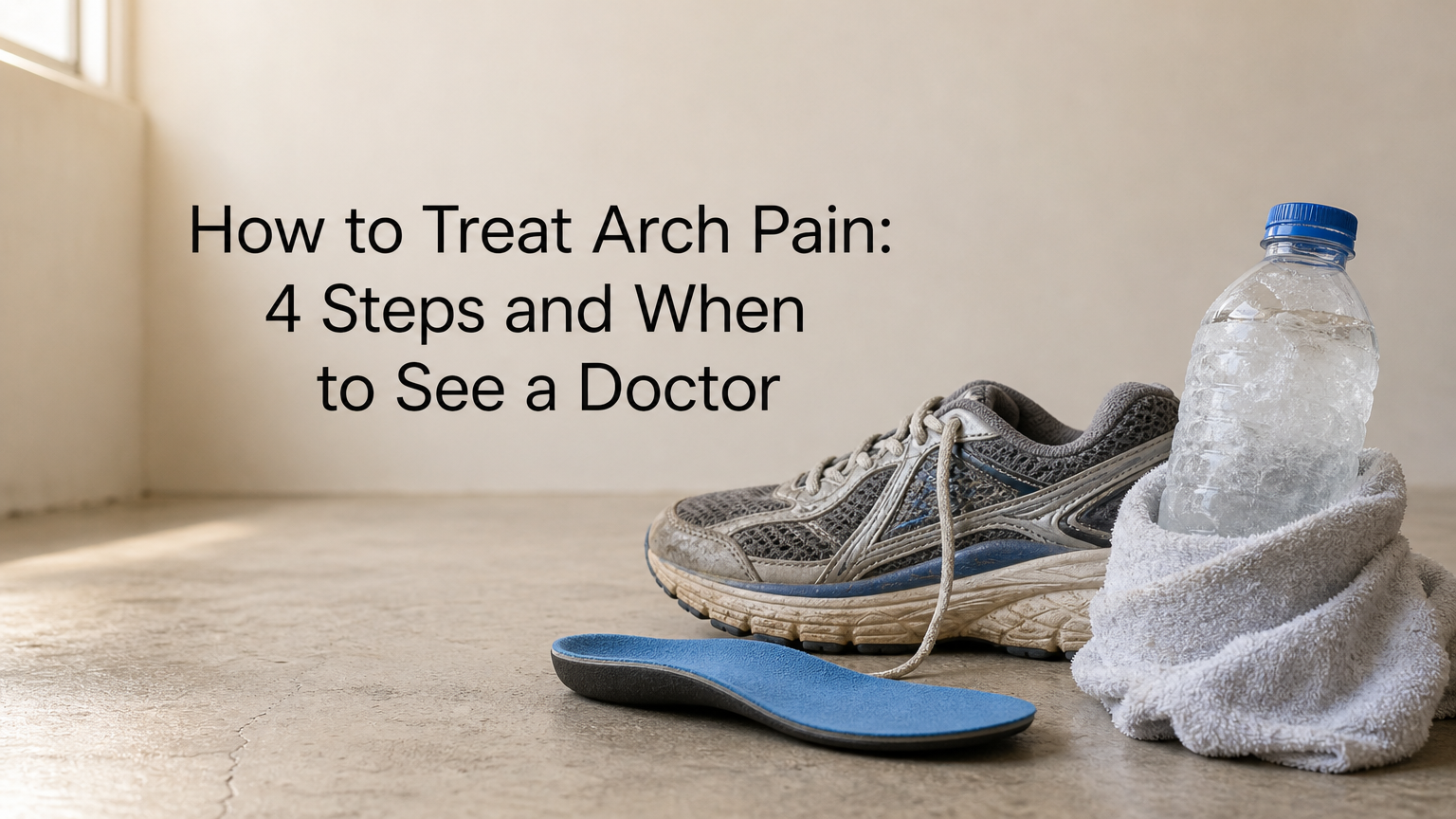
1. Supportive shoes and an arch insert
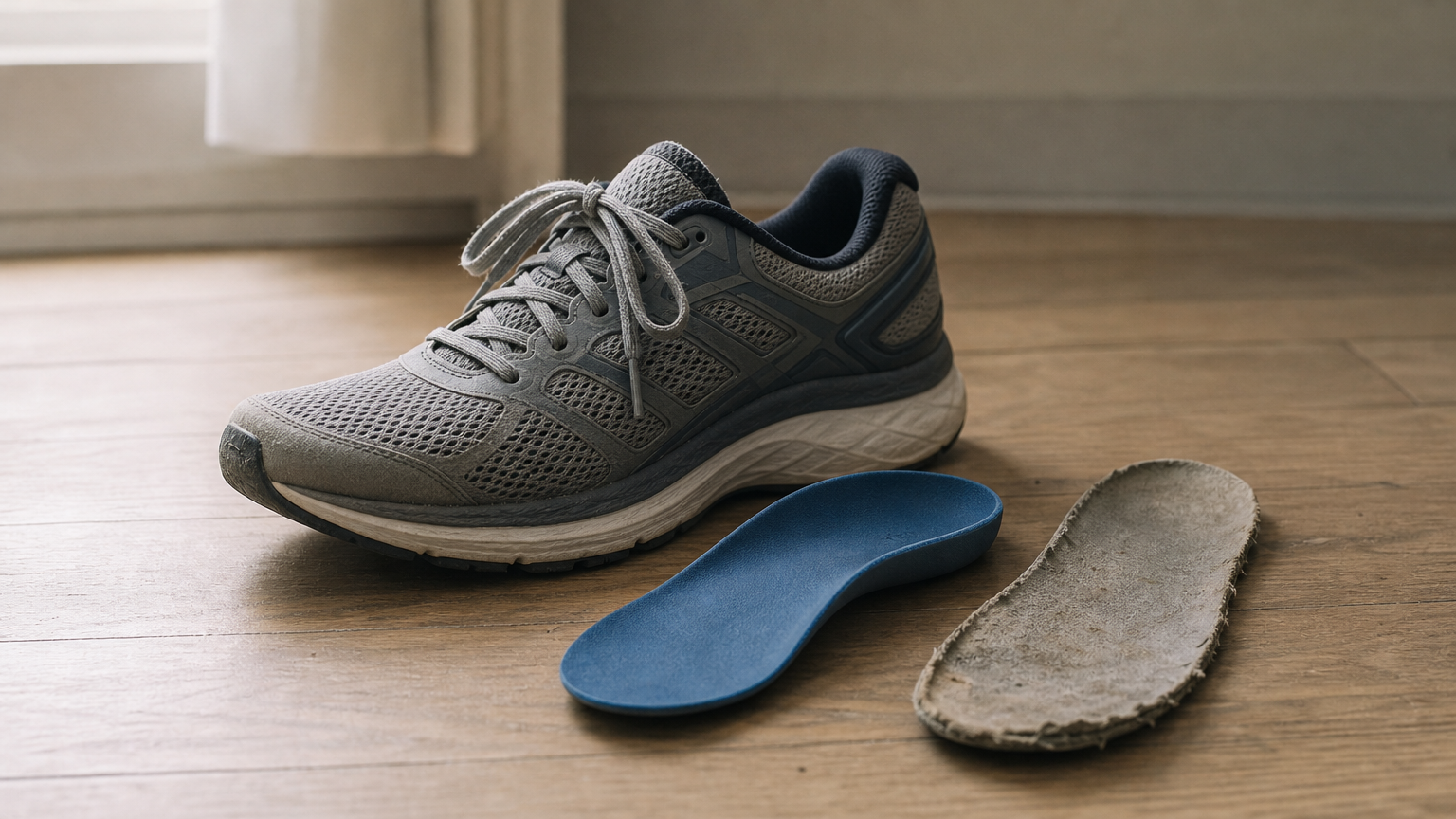
Supportive shoes with a ready-made arch insert are the best first move, because they take strain off the arch every step you take. If your shoes are flat, worn out, or flimsy, nothing else on this list will hold up for long.
Why it helps
A shoe with a firm midsole and a snug heel keeps your foot from rolling inward and overstretching the arch. An insert adds contour under the arch and a deep heel cup that holds your foot in better alignment.
Worn-out shoes lose that support quietly. A common guideline is to replace running shoes every 300 to 500 miles. If you cover 20 miles a week, that means new shoes every 15 to 25 weeks.
How to do it
- Pick a shoe that does not twist like a washcloth when you wring it. It should bend only at the ball of the foot.
- Remove the factory insole and put a prefabricated arch insert in the shoes you wear most.
- Break in the insert gradually, a few hours a day at first.
- Skip flip-flops and flat shoes for long walks or standing.
- If you run, a gait analysis at a specialty running store helps you match the shoe to your foot.
A shoe that twists in your hands leaves your arch to do all the work.
2. Daily calf and plantar fascia stretches
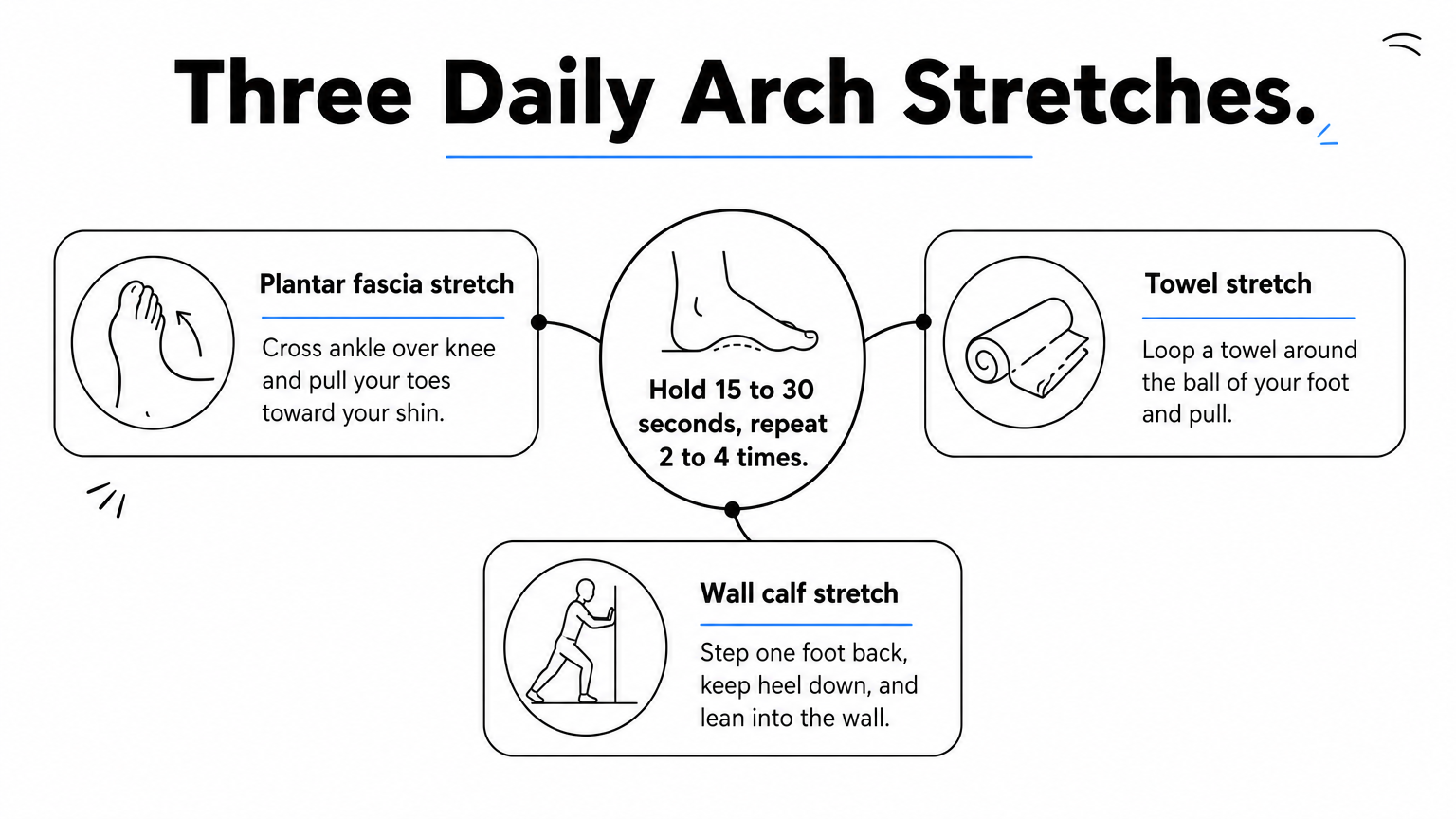
Stretching your calf and the band under your foot, twice a day, is the fix that tends to help the most over weeks. Tight calves, hamstrings and Achilles tendons pull on the foot and add strain to the arch.
Why it helps
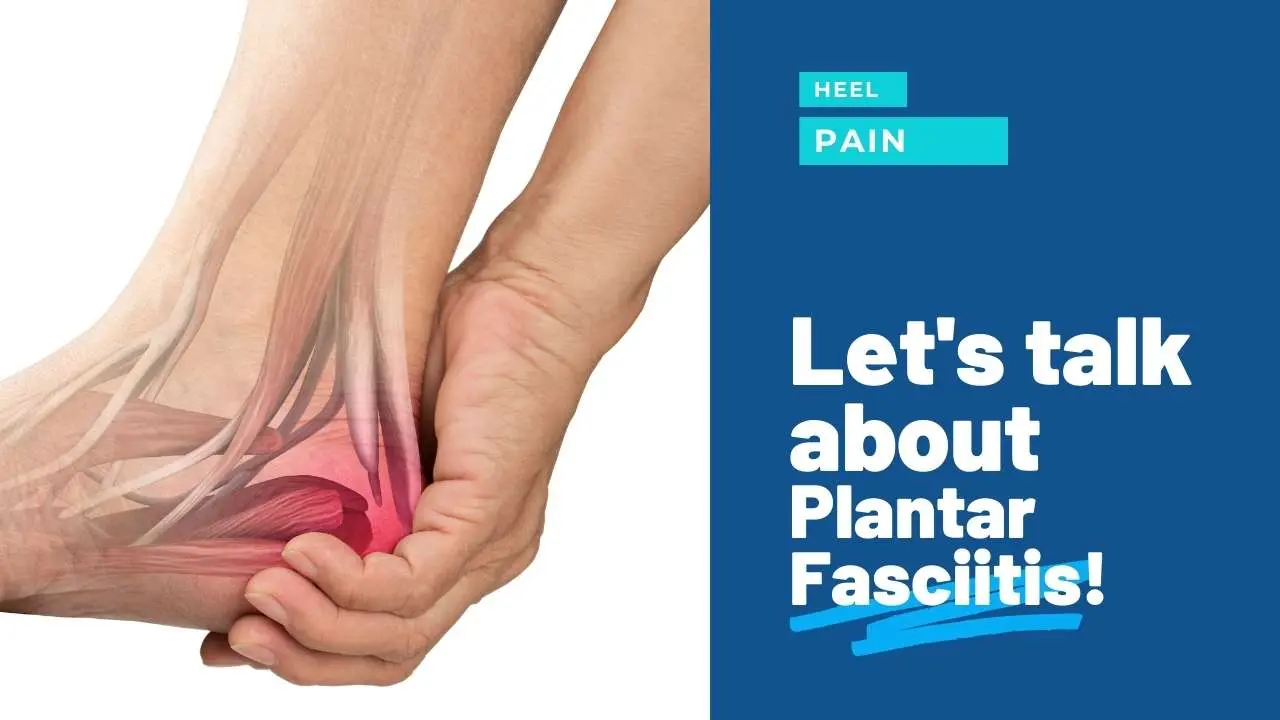
The plantar fascia is a thick band running from your heel to your toes. It tightens while you sleep, so your first steps of the day stretch it suddenly. That is why arch pain is often worst in the morning or after sitting. Regular stretching keeps the tissue more flexible, so those moments hurt less.
How to do it
Go slowly and stop short of sharp pain. Hold each stretch 15 to 30 seconds and repeat 2 to 4 times. Do the routine twice a day, for example before you get out of bed and after an evening shower, when your muscles are warm.
- Plantar fascia stretch: sit, cross one ankle over the opposite knee, and pull your toes back toward your shin.
- Towel stretch: sit with your leg straight, loop a towel around the ball of your foot, and pull it toward you.
- Wall calf stretch: step one foot back, keep the heel down and the knee straight, and lean into the wall.
A stretch should feel like a pull, not a stab. If the pain sharpens, ease off.
Stretch before your first step of the day, not after the pain has already started.
3. Ice, rest, and lighter activity
Ice and a temporary cut in activity calm an irritated arch after a long day. Most arch pain comes from too much load, so reducing the load is part of the treatment.
Why it helps
Cold eases soreness and swelling, and lighter activity lets irritated tissue settle. Rest does not mean lying on the couch. It means doing less of whatever set the pain off, such as running on hard surfaces, long walks, or hours on a hard floor.
Over-the-counter anti-inflammatory medicine can also help some people. Check with your pharmacist or doctor first if you have stomach, kidney, or heart concerns or take other medicines.
How to do it
- Wrap an ice pack or a bag of frozen peas in a thin cloth. Never put ice directly on skin.
- Apply it to the arch for 15 to 20 minutes, several times a day, especially after activity.
- Swap running or jumping for swimming or cycling for a couple of weeks.
- Build back up gradually instead of returning to your full routine in one day.
- Take sitting breaks if your job keeps you on your feet.
If you have diabetes or numbness in your feet, talk to a podiatrist before using ice. Reduced sensation can hide an injury or a cold burn.
Cut the load that caused the pain, but do not stop moving altogether.
4. Self-massage with a ball or frozen bottle
Rolling the bottom of your foot over a small ball is a simple way to loosen a tight arch. It works best alongside stretching, not instead of it.
Why it helps
Gentle pressure along the sole eases tension in the plantar fascia and the small muscles of the arch. It also gives you a way to find the exact tender spot. Where it hurts tells you something. Pain near the heel points one way, and pain along the inner arch points another.
How to do it
Sit in a chair and place a tennis ball or a frozen water bottle under your bare foot. Roll slowly from heel to ball for two to three minutes, using light to moderate pressure. The frozen bottle adds cold at the same time. Repeat once or twice a day.
- Keep the pressure comfortable. Soreness is fine, but sharp pain is not.
- Skip massage on swollen, bruised, or warm areas.
- Stop if the pain gets worse afterward.
- If you have diabetes or neuropathy, ask your podiatrist before trying it.
Roll until the tight spot softens, and never until it screams.
Why arch pain happens and when to see a podiatrist
Arch pain usually comes from overload, tight tissue, or a foot structure that puts extra stress on the arch. Home care suits mild pain. Pain that lingers, swells, or follows an injury needs an exam.
Common causes
The location and timing of your pain offer clues. Pain on the inner arch, for example, can point to the tendon that supports the arch, while pain on the top of the foot is a different area and worth having checked.
| Cause | Where it hurts | Common clue |
|---|---|---|
| Plantar fasciitis | Arch and heel | Worst with first steps in the morning or after sitting |
| Flat feet or posterior tibial tendon dysfunction | Inner arch, sometimes inner ankle | Swelling along the inside, arch that looks lower over time |
| High arches (cavus foot) | Arch, ball, and heel | Rigid high arch, pressure under the heel and ball |
| Overuse or poor footwear | Whole arch | Starts after more walking, standing, or flat shoes |
| Nerve irritation such as tarsal tunnel | Arch | Burning or tingling |
When home care is not enough
Arch pain that lasts more than two weeks despite consistent home care should be evaluated. Seek care sooner for severe pain, swelling, bruising, pain after an injury, or trouble putting weight on the foot. Sudden pain that appears with no clear cause also deserves an exam.
Two weeks of steady home care with no improvement is your cue to get the foot examined.
At our Richmond-area offices, we examine your feet and can take x-rays and ultrasound on site. Treatment starts with conservative options, from rest and stretching to physical therapy, bracing, and custom orthotics made with 3D imaging. If your arch pain traces back to flat feet, high arches, or plantar fasciitis, we treat those conditions directly.
Start with shoes and stretching
If you only do two things, replace worn-out shoes with supportive ones and stretch your calves and plantar fascia every day. Add ice, lighter activity, and gentle massage as needed. Most mild arch pain responds to this routine within a couple of weeks, and the same habits help prevent it from returning.
If your pain is not improving, keeps coming back, or comes with swelling or trouble walking, do not wait it out. A podiatrist can find the cause and build a plan around your feet, your symptoms, and your daily life. You can book a same-day appointment online or call 804-273-1717. We try to make room for urgent issues, though same-day slots are not guaranteed.