Best overall for controlled arch massage: a smooth foot roller. Best for targeted pressure: a tennis ball. Best household option: a chilled water bottle. This 2026 guide compares the best massage tools for plantar fasciitis by pressure control, ease of use, and safety—not promises of a cure.
- The best massage tools for plantar fasciitis allow gentle, adjustable pressure; a smooth foot roller is the default choice.
- A tennis ball targets a smaller area; a chilled water bottle combines rolling with cooling.
- Massage supports heel pain care but does not replace stretching, supportive footwear, or an appropriate evaluation.
- Achilles Foot and Ankle Center evaluates persistent heel pain when home care is not enough.
Why this matters
Plantar fasciitis involves irritation of the strong band of tissue connecting your heel to your toes. Pain commonly appears near the bottom of the heel, especially with your first steps after rest. Massage can offer temporary comfort, but it does not establish why your heel hurts.
Achilles Foot and Ankle Center is best for patients who need a plantar fasciitis evaluation rather than another massage tool. The practice provides foot and ankle care in the Richmond area. You can learn about Achilles Foot and Ankle Center before deciding on your next step.
If rolling feels pleasant but walking remains painful, do not keep increasing pressure. Review the broader plantar fasciitis home-care-to-treatment process so a comfort measure does not become your entire treatment plan.
What makes the best plantar fasciitis massage tools in 2026?
Choose a tool you can control while seated. The strongest sensation is not the best measure of a useful massage.
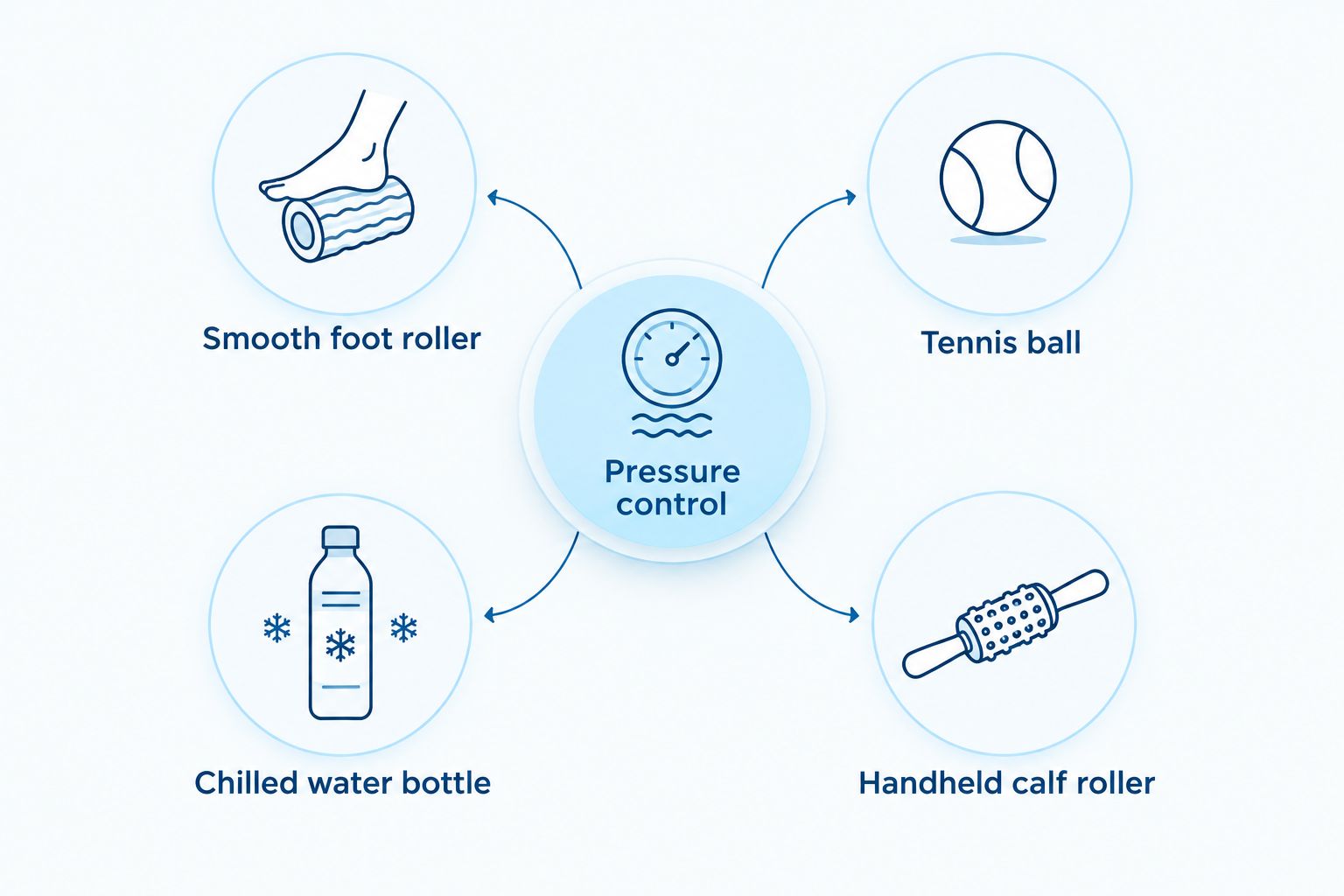
- Pressure control: You should be able to reduce pressure immediately without balancing on the tool.
- Contact surface: Smooth surfaces make a sensible starting point for a tender arch. Hard spikes concentrate pressure.
- Target area: A broad roller suits the arch; a smaller ball reaches a more localized area.
- Stability: The tool should move predictably on your floor without shooting away from your foot.
- Skin safety: You need to see and inspect the skin before and after use. Cold, heat, and friction require extra caution.
- Practical upkeep: Choose a surface you can clean according to its instructions and inspect for damage.
A tool that meets these criteria is easier to use gently. None of these features proves that one device heals plantar fasciitis faster than another.
Massage tools at a glance: 2026 picks
These are tool categories, not endorsements of particular manufacturers. Individual designs vary, so inspect the actual item rather than relying on its category name.
| Tool | Best for | Standout feature | Key limitation |
|---|---|---|---|
| Smooth foot roller | Broad arch massage | Rolling contact across the sole | Standing on it can add excessive pressure |
| Tennis ball | Targeted pressure | Small contact area and adjustable placement | Can roll away on smooth flooring |
| Chilled water bottle | Cooling with gentle rolling | Combines a cool surface with broad contact | Cold is unsafe for some feet |
| Handheld calf roller | Calf muscle massage | Keeps pressure away from a tender heel | Does not directly address the sole |
| Massage gun | Carefully controlled calf massage | Powered percussion | Easy to overdo; not a default heel tool |
The important distinction is where pressure goes. An arch tool, a cooling tool, and a calf tool serve different purposes; buying all of them is unnecessary.
1. Smooth foot roller: best for broad arch massage
A smooth foot roller moves beneath your arch while you sit. Its broad contact makes it a practical default when you want general massage rather than pressure on a single tender point.
Choose a design that stays predictable underfoot. Deep ridges and rigid spikes are not necessary to make the massage useful.
Smooth foot roller pros:
- Pressure changes easily as you lift or lower your foot.
- Broad contact suits a gentle pass along the arch.
- Manual operation lets you stop immediately.
Smooth foot roller cons:
- Some designs slide or roll unpredictably.
- Leaning your body weight onto the roller can aggravate a sore foot.
Best for: Someone with an intact, normally sensitive foot who wants controlled arch massage alongside a treatment plan.
Verdict: Buy if you want a dedicated tool and can use it comfortably while seated.
2. Tennis ball: best for targeted pressure
A tennis ball lets you choose a smaller area beneath the arch. Start seated and keep enough weight off the ball that you can move your foot without bracing against discomfort.
A hard lacrosse ball is not an automatic upgrade. Greater firmness makes it easier to apply concentrated pressure, which is a disadvantage when your foot is already irritated.
Tennis ball pros:
- Easy to reposition beneath different parts of the arch.
- Requires no power or settings.
- Simple to remove from underfoot when pressure feels uncomfortable.
Tennis ball cons:
- Can escape across a smooth floor.
- Its smaller contact area makes excessive pressure easier to apply.
Best for: Someone who prefers precise placement over broad rolling contact.
Verdict: Buy if targeted, light pressure feels better than a roller; skip hard-ball substitutions when your arch is sensitive.
3. Chilled water bottle: best for cooling with rolling
A chilled water bottle provides a cool surface that rolls under the foot. Wrap it in a thin cloth and use light pressure while seated; choose a bottle that is intact and rolls evenly.
Cold is a comfort measure, not proof that the underlying problem is improving. Avoid cold treatment without clinical guidance if you have reduced sensation or poor circulation, and never use it over damaged skin.
Chilled water bottle pros:
- Combines gentle rolling with cooling.
- Covers a broader area than a small ball.
- Pressure remains under your control when seated.
Chilled water bottle cons:
- Condensation can make the floor slippery.
- Excessive cold can injure skin, particularly when sensation is reduced.
Best for: Someone with normal sensation and circulation who prefers cooling after activity.
Verdict: Hold until you know cold is appropriate for your feet; otherwise choose a room-temperature tool.
4. Handheld calf roller: best for calf muscle massage
A handheld calf roller lets you massage the muscular part of your lower leg without pressing directly into the heel. That makes it a separate option for people whose calves feel tight but whose soles dislike rolling.
Keep the roller on muscle rather than the shinbone, ankle bones, or Achilles tendon. Calf massage and calf stretching are different activities; one does not replace the other.
Handheld calf roller pros:
- Keeps direct pressure off a sensitive sole.
- Your hands control the location and force.
- Can complement a clinician-recommended stretching routine.
Handheld calf roller cons:
- Requires enough hand strength and reach to use comfortably.
- Does not provide massage beneath the arch.
Best for: Someone seeking gentle calf muscle massage rather than direct foot massage.
Verdict: Buy for that specific purpose, not as a substitute for evaluating persistent heel pain.
5. Massage gun: best reserved for clinician-guided calf use
A massage gun delivers repeated pulses through an attachment. It is not the default choice for a painful heel, where bone, sensitive tissue, and nearby nerves leave little room for careless pressure.
Do not use a massage gun over the heel bone, Achilles tendon, wounds, or an area of reduced sensation. Ask a clinician whether powered massage belongs in your care before using it for plantar fasciitis symptoms.
Massage gun pros:
- Provides powered massage without repeated hand movements.
- Allows targeted placement over an appropriate muscle area.
- Offers an alternative for people who dislike rolling tools.
Massage gun cons:
- Intensity is easy to overestimate or tolerate poorly.
- Attachments and settings vary, so one device's instructions do not apply to another.
Best for: Someone whose clinician has identified an appropriate calf area and explained safe use.
Verdict: Skip as your first plantar fasciitis massage purchase.
How to use a manual tool without chasing pain
Start by checking your skin. Do not roll over a blister, cut, rash, ulcer, or newly bruised area, and do not massage an acutely injured foot.
Use this sequence for a room-temperature manual roller or ball:
- Sit securely. Place both feet within easy reach of the floor, with the tool beneath the affected arch.
- Begin lightly. Move slowly without leaning your full body weight into the tool.
- Avoid sharp pain. Reduce pressure or stop if you feel stabbing, burning, tingling, or increasing discomfort.
- Check afterward. Look for skin irritation and notice how walking feels, not just how the massage felt.
Massage should not leave you limping more afterward. A pleasant sensation during rolling does not justify worsening symptoms later or more painful first steps the next morning.
There is no need to match someone else's routine. Follow device instructions and your clinician's advice rather than treating a longer session as a better session.
When massage is the wrong next step
Heel pain has several possible causes, including plantar fasciitis, nerve irritation, and stress injury. Burning, numbness, pain after an injury, or pain that keeps worsening deserves assessment rather than more forceful rolling.
Seek prompt medical care for an inability to bear weight, a sudden pop with new weakness, spreading redness, fever, or an open wound. Do not massage a swollen, warm, painful calf; it needs urgent assessment, particularly if symptoms are unexplained.
If you have diabetes, poor circulation, reduced feeling, or a history of foot ulcers, ask your care team before starting massage or cold treatment. Pain cannot reliably warn you about excessive pressure when sensation is impaired.
For patients in Mechanicsville and West End, the decision is the same: choose an appropriate evaluation when heel pain changes how you walk or limits ordinary activities. Achilles Foot and Ankle Center provides heel pain care and diabetic foot care; a massage tool cannot replace either.
Get your heel pain evaluated
Discuss persistent heel pain and whether home massage fits your foot care needs.
How these 2026 picks are ranked
The order prioritizes controllable pressure, suitable contact area, and straightforward use. Smooth manual tools come before powered percussion because they make a simpler starting point for gentle self-massage—not because this list establishes superior healing results.
The recommendations compare practical features rather than results from a product trial. Your diagnosis, skin condition, circulation, and sensation matter more than the ranking.
Which massage tool should you choose in 2026?
Choose a smooth foot roller if you want one default tool for gentle arch massage. Choose a tennis ball for more localized contact, or a chilled bottle only when cold is appropriate. A calf roller serves a different area; a massage gun is not a necessary upgrade.
Keep the rest of your care in view. Supportive footwear, appropriate stretching, and adjustments to painful activities address needs that rolling alone does not. If you keep buying tools because symptoms return, change the plan rather than the gadget.
FAQ
What’s the best massage tool for plantar fasciitis?
A smooth manual foot roller is a practical default because you can control pressure while seated. A tennis ball suits more localized contact, but neither tool replaces diagnosis or a broader treatment plan.
Is a tennis ball better than a foot roller?
A tennis ball is better suited to targeted pressure, while a foot roller provides broader contact. Choose the option that stays comfortable without making walking more painful afterward.
Can massage cure plantar fasciitis?
Massage is not a guaranteed cure for plantar fasciitis. It can provide temporary comfort, while treatment also considers activity, footwear, stretching, and the cause of your symptoms.
Should I use a frozen bottle on my heel?
Do not place a frozen bottle directly against bare skin. Use a cloth barrier, follow clinical guidance, and avoid cold treatment without advice if you have reduced sensation or poor circulation.
Can I use a massage gun directly on my heel?
Avoid using a massage gun directly over the heel bone or Achilles tendon. Ask a clinician whether gentle calf muscle use is appropriate instead.
Is foot massage safe if I have diabetes?
Ask your care team before starting foot massage if you have diabetes, especially with numbness, circulation problems, or previous ulcers. Avoid massage over wounds or damaged skin.
When should I see a podiatrist instead of buying another tool?
Arrange an evaluation when heel pain persists, worsens, changes your walking, or limits daily activity. Achilles Foot and Ankle Center evaluates plantar fasciitis and other causes of foot and ankle pain.
One last thing
Judge the tool by your next walk, not by how intense the massage feels. If your foot feels worse afterward, stop using it and discuss the change with a clinician. More pressure is not evidence of more progress.
Related guides
- Best shoes for plantar fasciitis
- How long plantar fasciitis takes to heal
- Whether a night splint is enough to treat plantar fasciitis