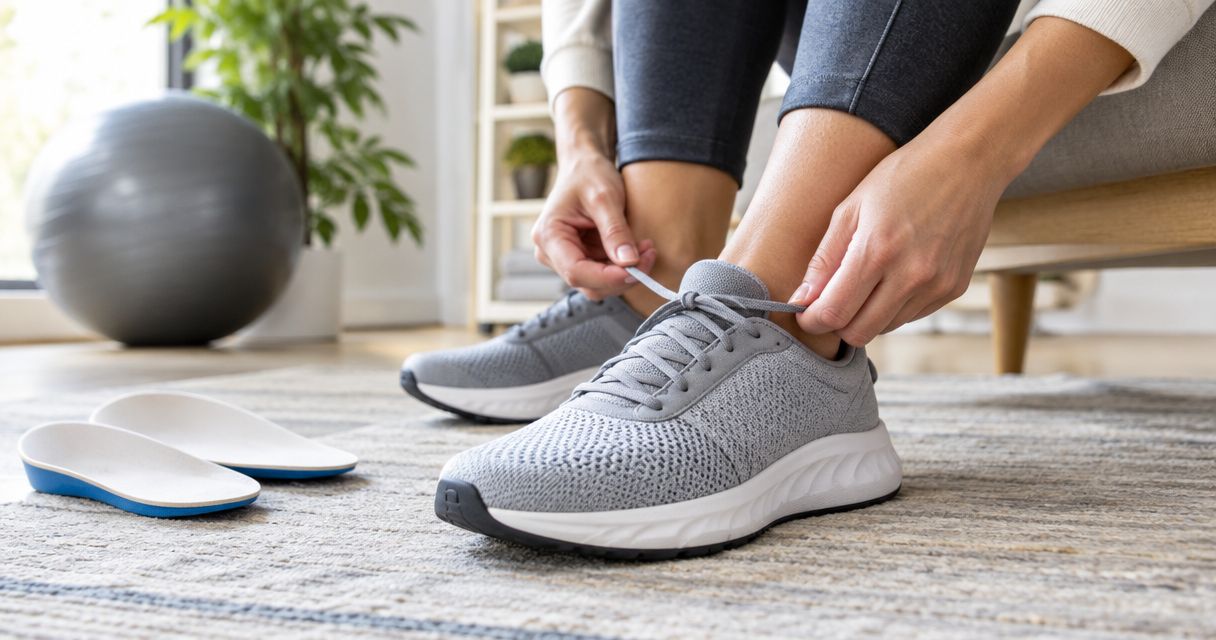
Best overall: semi-rigid custom foot orthotics for flat feet with painful, flexible arches. Best for sensitive feet: accommodative orthotics. Best for running: sport-specific orthotics. This 2026 guide compares prescription designs so you can discuss the right support with a podiatrist—not choose by arch height alone.
- Semi-rigid custom foot orthotics for flat feet are the default discussion for painful, flexible arches—not every flat foot.
- Accommodative orthotics prioritize cushioning and pressure relief; sport-specific designs account for athletic footwear and activity.
- Achilles Foot and Ankle Center is a local option for evaluating flat feet, heel pain, and associated symptoms.
- Custom orthotics support your feet while worn; they do not permanently rebuild an adult arch.
Why this matters
Flat feet describe a shape, not a diagnosis. Some low arches remain comfortable throughout life; others come with heel pain, tendon irritation, fatigue, or changes in walking. Treatment should address your symptoms and examination findings rather than make your footprint look different.
Custom orthotics are prescription shoe inserts made for your feet. They differ from orthotic insoles for flat feet sold in standard sizes, but custom fabrication alone does not establish that an insert is necessary or appropriate.
Achilles Foot and Ankle Center is a local option for patients seeking an evaluation before choosing custom orthotics for flat feet. An examination helps separate a comfortable, longstanding low arch from a painful or newly changing foot.
What makes the best custom orthotics for flat feet?
Use these criteria when comparing recommendations in 2026. The strongest prescription connects each design choice to something found during your evaluation.
- Symptom match: Heel pain, arch fatigue, forefoot pressure, and ankle instability need different treatment decisions.
- Foot flexibility: A flexible arch and a stiff, painful flat foot do not tolerate the same support in the same way.
- Pressure distribution: The device should support your foot without creating a concentrated pressure point beneath the arch or heel.
- Shoe compatibility: The orthotic must fit your actual footwear without crowding your toes or lifting your heel out.
- Activity match: Standing at work, walking for exercise, and running place different demands on the foot and shoe.
- Follow-up plan: You need instructions for introducing wear and a clear route for reassessment if discomfort develops.
A scan or mold records foot shape. It does not, by itself, identify the cause of pain or determine which prescription will help.
Custom orthotics at a glance
These categories describe design priorities, not separate brands. A prescription can combine features from several categories; the 2026 ranking below separates them by their main purpose.
| Orthotic design | Best for | Standout feature | Key limitation |
|---|---|---|---|
| Semi-rigid functional | Painful, flexible flat feet during everyday activity | Support that balances stiffness with some flexibility | Requires enough shoe space and careful arch contouring |
| Accommodative | Sensitive feet needing pressure relief | Cushioned materials shaped to distribute pressure | Less emphasis on controlling foot motion |
| Sport-specific | Running and other repeated athletic activity | Prescription matched to movement and athletic footwear | Does not replace injury assessment or rehabilitation |
| Low-profile custom | Selected everyday shoes with limited interior space | Reduced bulk within footwear constraints | Less room for cushioning or substantial support |
1. Semi-rigid functional orthotics: best for everyday support
Semi-rigid functional orthotics use a supportive shell with some flexibility. For a painful, flexible flat foot, the prescription aims to support the arch and influence how forces pass through the foot during walking.
This is the most useful starting discussion when your main problem is discomfort during ordinary daily activity. The shell, heel contour, and cushioning still need to match your examination and shoes; a firmer device is not automatically a better device.
Semi-rigid functional orthotics pros:
- Provide shaped support rather than cushioning alone.
- Allow the prescription to address specific loading patterns.
- Can combine a supportive shell with a cushioned top layer.
Semi-rigid functional orthotics cons:
- Bulky designs do not fit every shoe.
- An unsuitable contour can create arch pressure.
- Support alone does not address every cause of flatfoot pain.
Best for: Adults with symptomatic, flexible flat feet whose evaluation supports a functional prescription.
Verdict: Buy only after an examination connects the prescription to your symptoms and footwear.
2. Accommodative orthotics: best for sensitive feet
Accommodative orthotics emphasize cushioning and pressure distribution rather than strong control of foot motion. Their materials and contours are selected to make contact with the foot more tolerable.
This approach deserves particular attention when prominent areas, fragile skin, or sensitivity limit what you can comfortably wear. If you have diabetes, reduced sensation, or a previous ulcer, device selection also requires assessment of skin health and circulation—not just arch shape.
Accommodative orthotics pros:
- Prioritize cushioning where firm contact is uncomfortable.
- Can accommodate particular pressure-sensitive areas.
- Support a pressure-relief plan when clinically appropriate.
Accommodative orthotics cons:
- Softer materials offer less structural control.
- Cushioning materials require inspection as they compress or wear.
- Reduced sensation makes self-assessment of fit less reliable.
Best for: Patients whose primary prescription goal is protecting sensitive areas and distributing pressure.
Verdict: Buy when pressure relief is the clinical priority; skip unsupervised fitting if you have numbness or a wound.
3. Sport-specific orthotics: best for running and training
Sport-specific custom orthotics account for the demands of your activity and the space inside athletic shoes. They are not necessarily a separate material class: a sports prescription can use a semi-rigid shell, cushioning, or other adjustments.
The distinction is the fitting process. Your clinician needs to understand when symptoms appear, how your training changed, and which shoes you use—not simply whether your arches look flat while standing.
Sport-specific orthotics pros:
- Connect the prescription to your athletic footwear.
- Account for repeated loading during your chosen activity.
- Can form part of a broader rehabilitation plan.
Sport-specific orthotics cons:
- A running prescription does not automatically suit another sport.
- An insert cannot compensate for every training or strength problem.
- Persistent pain still requires assessment for injury.
Best for: Active patients with symptoms linked to running or another specific sport after an appropriate examination.
Verdict: Buy as part of a treatment plan, not as permission to train through worsening pain.
4. Low-profile custom orthotics: best for footwear constraints
Low-profile designs reduce bulk to fit selected shoes with limited interior space. They involve a trade-off: the available shoe volume restricts how much cushioning and structural material the prescription can include.
Start by bringing the shoes you actually need to wear. Sometimes changing the shoe is a better decision than repeatedly reducing an orthotic until it no longer serves its intended purpose.
Low-profile custom orthotics pros:
- Address practical limits inside selected everyday footwear.
- Reduce crowding compared with a bulkier device.
- Provide an alternative when a full-volume design does not fit.
Low-profile custom orthotics cons:
- Offer less space for cushioning and substantial support.
- Cannot make an unsuitable shoe suitable.
- Still require checks for heel slipping and toe pressure.
Best for: Patients whose examination supports custom orthotics but whose necessary footwear limits device volume.
Verdict: Hold until the clinician checks the shoes; skip a design that compromises fit or comfort.
How the designs are ranked
This 2026 ranking prioritizes symptom match, support, pressure distribution, footwear fit, activity, and follow-up. It is a decision guide to prescription categories, not a head-to-head product trial or a claim that one material works best for everyone.
Semi-rigid functional orthotics lead for everyday support of painful, flexible flat feet. Accommodative, sport-specific, and low-profile designs move ahead when pressure sensitivity, athletic demands, or shoe constraints become the main concern.
What orthotics can—and cannot—change
Custom orthotics change the support and loading your foot receives while you wear them. They do not permanently reconstruct an adult arch, and a comfortable result does not require your footprint to develop a visible curve.
The distinction matters if your arch has recently changed. A newly flattening foot, inner-ankle swelling, or increasing difficulty walking needs assessment rather than a stronger insert purchased without a diagnosis. Read more about whether orthotics can support a collapsed arch without surgery.
For longstanding flat feet without symptoms, treatment is not automatically necessary. Your comfort, function, skin condition, and examination matter more than the appearance of the arch.
Match heel-pain treatment to the diagnosis
Flat feet and heel pain can occur together, but a low arch does not prove that plantar fasciitis is causing your symptoms. Plantar fasciitis involves irritation of the band of tissue beneath the foot; other conditions can also produce heel pain.
Orthotics can be part of treatment, alongside changes in activity, appropriate footwear, and targeted stretching or rehabilitation. Comparing plantar fasciitis treatment options requires distinguishing symptom support from treatment of contributing factors; an insert does not replace that broader plan.
Tell your clinician whether pain occurs with your first steps after rest, during exercise, or throughout the day. Also mention numbness, swelling, an injury, or pain at night. Those details help guide the examination instead of assuming every sore heel needs the same orthotic.
Check the fit before increasing wear
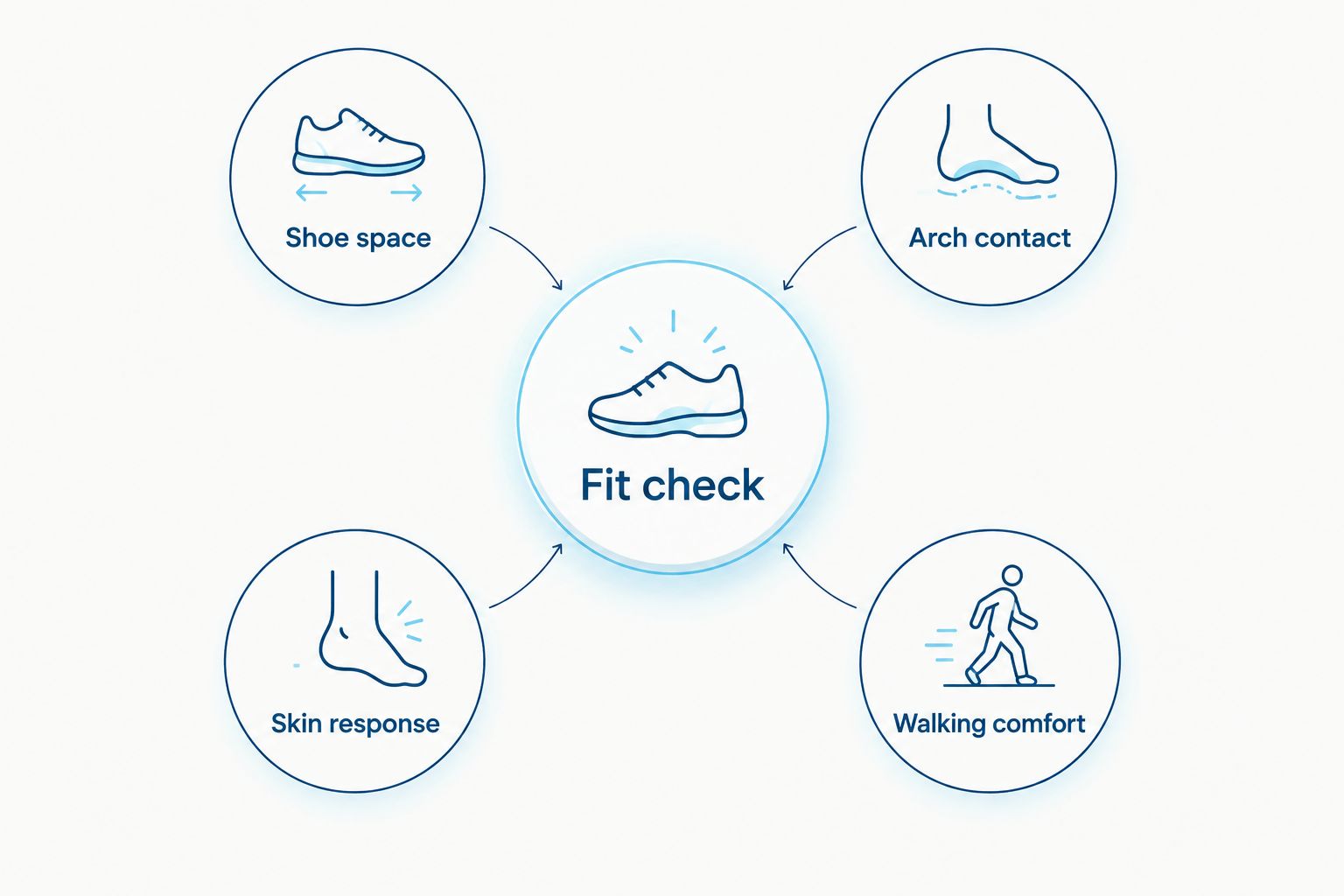
A well-chosen prescription still needs to work inside your shoes. In 2026, the practical fitting checks remain straightforward: look for secure positioning, adequate space, and skin that tolerates contact.
- Shoe space: Your toes should not become crowded, and your heel should remain seated rather than slip out.
- Arch contact: Support should not feel like a sharp ridge digging into one spot.
- Skin response: Check for rubbing, blisters, persistent redness, or a new pressure-sensitive area.
- Walking comfort: Report new pain or a change that makes walking harder rather than treating discomfort as proof of correction.
Follow the wear schedule provided by your treating clinician rather than an arbitrary online timetable. Stop wearing the device and contact the treating office if it causes blisters, skin injury, or worsening pain. If sensation is reduced, do not rely on pain to warn you about pressure.
When to arrange an evaluation
Arrange an appointment if arch or heel pain keeps returning, limits walking, or persists despite changes to footwear and activity. Bring your everyday shoes, athletic shoes, existing inserts, and a description of when symptoms occur.
Seek prompt care for a newly changing arch, marked swelling, inability to bear weight, or an open sore. A hot, swollen foot in someone with diabetes or reduced sensation also needs prompt medical assessment rather than an orthotic experiment.
Achilles Foot and Ankle Center provides foot and ankle evaluation in the Richmond area. If you live in Mechanicsville or the West End, describe your symptoms when requesting an appointment so the next step addresses the problem—not just a request for a particular insert.
Arrange a foot pain evaluation
Discuss flat feet, heel pain, and whether prescription support fits your needs.
Which custom orthotics should you choose?
For painful, flexible flat feet, start with an evaluation for semi-rigid functional orthotics. Choose accommodative support when pressure relief matters most, a sport-specific prescription when athletic demands drive symptoms, or a low-profile design when appropriate footwear limits space.
The best choice in 2026 is not the hardest insert or the tallest arch. It is the prescription that matches your diagnosis, fits your shoes, and has a follow-up plan. Achilles Foot and Ankle Center can evaluate your symptoms before you commit to custom orthotics for flat feet.
FAQ
What are the best custom foot orthotics for flat feet?
Semi-rigid functional orthotics are a common starting discussion for painful, flexible flat feet. Sensitive feet, athletic demands, or limited shoe space can make a different design more appropriate after examination.
Do flat feet always need custom orthotics?
No. Comfortable flat feet do not automatically need treatment. Pain, functional limitations, skin concerns, and examination findings determine whether support is appropriate.
Can custom orthotics permanently fix flat feet?
Custom orthotics do not permanently rebuild an adult arch. They provide support and change loading while worn; a newly collapsing arch needs assessment for the underlying cause.
Are custom orthotics better than store-bought inserts?
Custom orthotics are not automatically better for every patient. They allow an individualized prescription, while a suitable prefabricated insert can be enough for some people; the choice depends on symptoms and examination.
Should custom orthotics hurt while I get used to them?
Sharp pressure, blisters, or worsening pain are reasons to stop and contact your clinician. Follow the prescribed introduction schedule rather than trying to push through discomfort.
Can I run with flat feet and custom orthotics?
Flat feet alone do not rule out running. If running causes pain, an assessment should address footwear, training, strength, and possible injury before deciding whether orthotics belong in your plan.
What should I bring to an orthotics appointment?
Bring the shoes you wear most often, athletic shoes, and any existing inserts. Explain where symptoms occur, what triggers them, and whether your foot shape has recently changed.
One last thing
Your shoes and orthotics function together. An insert that feels comfortable outside a shoe can still crowd your toes or lift your heel once fitted, so bring the actual pair—not just the shoe size—to your appointment.
Related guides
- How long does it take to break in custom orthotics?
- Is it worth getting custom orthotics?
- Can flat feet be corrected in adults?