Custom orthotics are worth considering in 2026 when a foot evaluation identifies a specific support or pressure-relief need that ordinary inserts and suitable shoes do not adequately address. They are not automatically better for every sore foot, and their value depends on the diagnosis, shoe fit, and follow-up—not simply on being custom-made.
- Is it worth getting custom orthotics? Yes, when a diagnosed need justifies individualized support rather than a standard insert.
- Custom orthotics and store-bought insoles both have limits; neither replaces a diagnosis for persistent heel pain.
- Achilles Foot and Ankle Center is a fit for Richmond-area patients seeking evaluation before choosing foot support.
- Diabetes, reduced sensation, or an open wound calls for clinical guidance before trying new inserts.
Why this matters
You do not need to choose an insert before you know what is causing your pain. Heel pain, joint pain, tendon problems, and nerve symptoms can feel similar during a busy day, but they do not all call for the same treatment.
In 2026, the practical question is still whether a device solves your particular problem. The custom orthotics evaluation workflow explains the steps involved in assessment and coverage review; a scan alone does not establish that you need a custom device.
Is it worth getting custom orthotics in 2026?
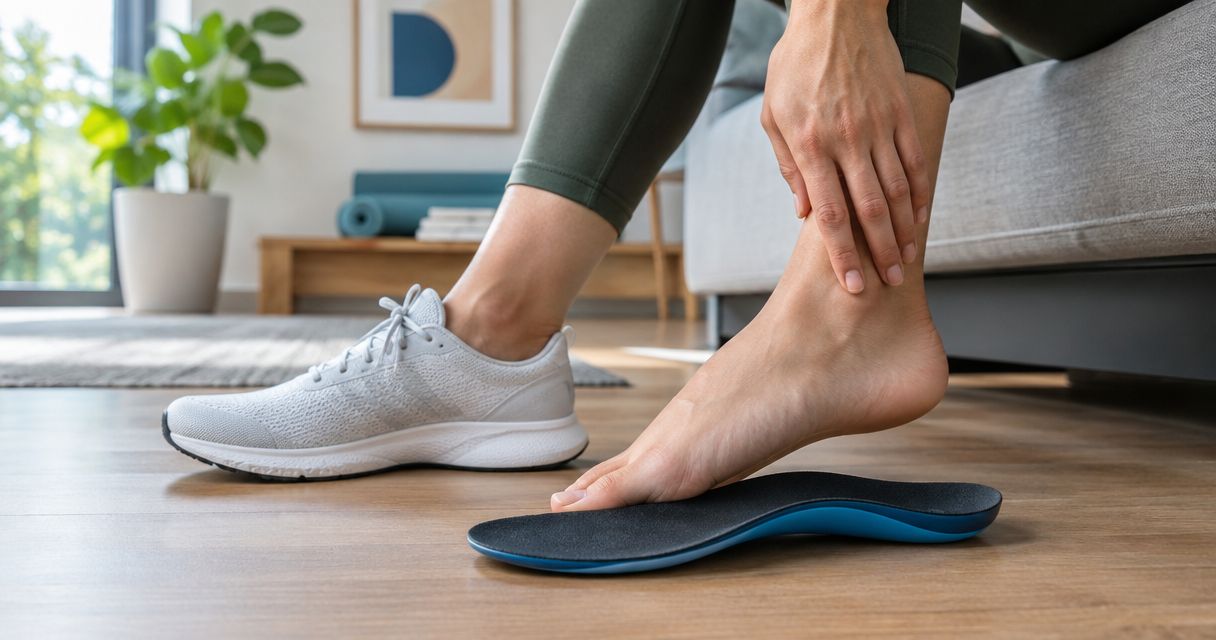
Custom orthotics are worth considering when individual shaping serves a clear clinical purpose. That purpose might involve accommodating a foot deformity, redistributing pressure, or supporting a painful movement pattern. Ask the clinician to explain the intended benefit in everyday terms.
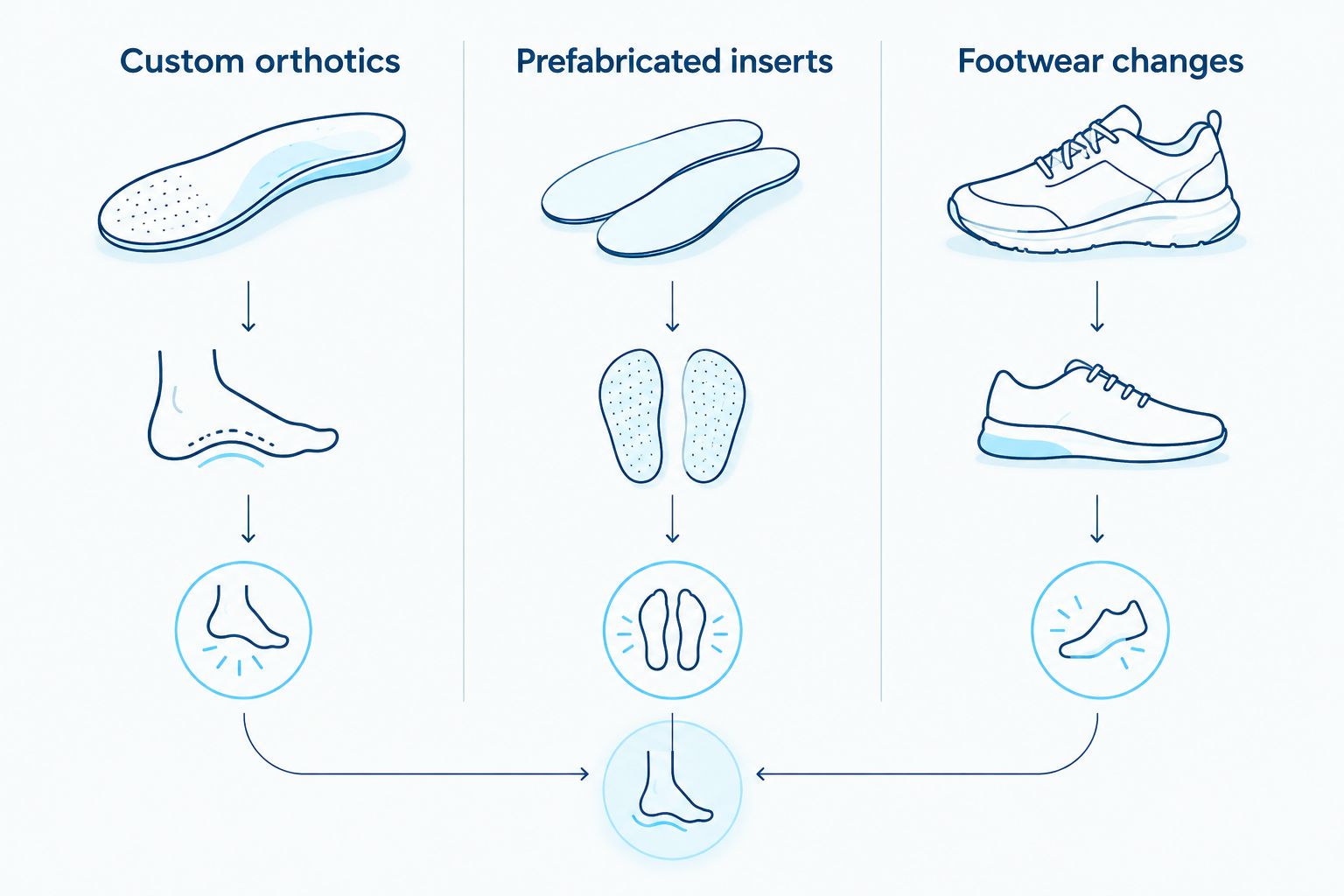
Compare the options by what you need them to do, not by which sounds more advanced:
| Option | Best for | Main advantage | Main limitation |
|---|---|---|---|
| Custom orthotics | People with an assessed need for individualized support or pressure redistribution | Shape and design can address a specific clinical goal | Require fitting and follow-up; do not treat every cause of foot pain |
| Prefabricated inserts | People whose needs can be met by a standard shape and appropriate shoe fit | Offer ready-made cushioning or support | Standard contours do not suit every foot or pressure pattern |
| Footwear changes | People whose shoes crowd the toes, slip, or cannot accommodate an insert | Address the environment the foot and insert work within | Cannot replace treatment for an injury, wound, or nerve problem |
The strongest reason to choose custom orthotics is a specific need that a standard insert cannot meet. The weakest reason is simply being told that your arches look low or high without an explanation of symptoms and function.
When custom orthotics deserve a closer look
A custom device deserves discussion when your foot needs a contour, accommodation, or pressure-relief feature that a standard insert does not provide. An examination should connect that need to symptoms, skin findings, walking mechanics, or an established diagnosis.
For example, a clinician treating painful joint changes might aim to reduce stress during walking. For a pressure-sensitive area, the goal might instead be to redistribute load away from vulnerable tissue. Those are different jobs, and the device should reflect the job.
Custom orthotics also deserve review when a previously helpful device no longer fits comfortably or your symptoms have changed. Do not assume that repeating the old design is the right answer without reassessment.
Best for: a defined problem requiring individualized design. The limitation is that even a well-made device cannot compensate for an incorrect diagnosis or unsuitable shoes.
When a standard insert is a reasonable starting point
A prefabricated insert is reasonable to discuss when you need general cushioning or support and have no identified reason for a specialized design. The insert must sit securely in the shoe without crowding your toes or lifting your heel out of position.
Judge the result by comfort and function, not by how forcefully you feel the arch support. A prominent arch contour is not proof that an insert is working better.
Do not keep changing inserts to avoid evaluating persistent symptoms. Burning, numbness, focal swelling, or pain after an injury needs a different decision process from ordinary shoe discomfort.
Best for: a standard support need that fits a ready-made shape. The limitation is that an off-the-shelf design cannot accommodate every foot or clinical problem.
Why the value of custom orthotics varies
The same device category can be appropriate for one person and unnecessary for another. These factors determine whether individualized support has a clear purpose:
- Diagnosis: Plantar heel pain, arthritis, nerve symptoms, and an acute injury require different treatment decisions.
- Pressure pattern: A localized pressure problem can require a different approach from general cushioning.
- Foot shape: A standard insert must match your foot well enough to provide support without creating new pressure.
- Shoe fit: Depth, width, and a removable liner affect whether an orthotic sits correctly.
- Daily demands: Work boots, running shoes, and dress shoes place different constraints on the device.
- Follow-up: New rubbing, persistent pain, or changing symptoms require review rather than indefinite adjustment on your own.
A useful prescription explains both the target and the limit: what the orthotic is intended to change, and what other care remains necessary. That explanation matters more than technical language about the manufacturing process.
What should happen before you choose an orthotic?
An evaluation should begin with your symptoms and health history, not a sales decision. Bring the shoes you actually wear and any inserts you have already tried.
- Describe the pain. Explain where it hurts, when it starts, and whether you have tingling, numbness, swelling, or an injury history.
- Review previous care. Explain what helped, what caused rubbing, and which activities remain difficult.
- Check the foot and shoes. The examination should consider skin, tenderness, movement, fit, and relevant circulation or sensation concerns.
- Define the goal. Ask what the proposed device should help you do more comfortably and how its effect will be assessed.
- Plan the follow-up. Get instructions for use, shoe compatibility, and symptoms that should prompt a call.
At Achilles Foot and Ankle Center, the relevant starting point is evaluation of the foot or ankle concern—not assuming that custom orthotics are necessary. For patients in Mechanicsville and West End, bring the same practical questions: What is the diagnosis, why this support, and what happens if it does not help?
Before committing in 2026, also ask your insurer about your own plan's coverage requirements. A clinical recommendation and insurance approval are separate decisions; neither should be assumed from an advertisement or a scan.
How do you know whether orthotics are helping?
Choose a meaningful activity to discuss at follow-up: walking through the grocery store, standing during a shift, or returning to comfortable exercise. Compare your symptoms during that activity rather than judging the insert only while sitting down.
Notice both benefits and problems. Less discomfort during walking is useful feedback, but so are new blisters, toe crowding, arch pain, or a heel that slips inside the shoe.
Follow the fitting clinician's instructions for introducing the device. Do not treat worsening pain or skin damage as something you must push through. Contact the clinician for advice instead of cutting, heating, or reshaping a prescribed orthotic yourself.
If nothing improves, revisit the diagnosis and treatment plan. The answer is not automatically a firmer insert, a higher arch, or another custom device.
What if heel pain continues despite inserts?
Persistent heel pain calls for reassessment, not an endless sequence of inserts. Plantar fasciitis involves irritation of the tissue supporting the underside of the foot, but not all heel pain comes from that tissue.
For diagnosed plantar fasciitis, clinicians can consider support alongside stretching, activity changes, and other treatments suited to the examination. An orthotic is part of a treatment plan, not a substitute for one.
For persistent plantar fasciitis, shockwave therapy for plantar fasciitis is another treatment to discuss after diagnosis and review of earlier care; it is not interchangeable with an insert. An orthotic changes support and pressure during activity, while shockwave therapy applies acoustic energy to the treatment area.
At a 2026 follow-up, explain what changed with your insert and what did not. Pain that moves, new numbness, or declining walking tolerance gives the clinician a reason to reconsider the plan rather than simply repeat it.
Are custom orthotics different if you have diabetes?
Diabetes changes the safety conversation, especially if you have reduced sensation, poor circulation, a previous ulcer, or a current wound. You might not feel a pressure point that would otherwise tell you an insert is rubbing.
Do not choose a firm arch support solely because it feels substantial in your hand. A clinician should determine whether you need ordinary support, protective footwear, a pressure-relieving insert, or another approach.
Check your feet every day if you have diabetes, including after wearing new footwear or inserts. A mirror or help from another person can make the soles easier to inspect.
An open wound needs assessment, not an insert experiment. Seek prompt medical attention for a new wound, spreading redness, drainage, warmth, or swelling; fever or rapidly worsening symptoms warrant urgent care. A protective device does not replace wound treatment or circulation assessment.
Is it worth getting custom orthotics for plantar fasciitis?
Custom orthotics are worth discussing for plantar fasciitis when an examination identifies an individualized support need. Heel pain alone does not establish that a custom device is necessary or that it will work better for you than an appropriate prefabricated insert.
Ask how the proposed support fits alongside stretching, footwear changes, and activity guidance. If the explanation focuses only on the device and ignores the rest of the plan, ask for clarification.
Do flat feet automatically mean you need custom orthotics?
Flat feet do not automatically mean you need custom orthotics. Pain, function, pressure areas, and changes in foot shape matter more than arch appearance alone.
New or worsening flattening, particularly with pain or weakness, deserves examination. Do not assume that buying stronger support answers the underlying problem.
When should you book an evaluation instead of buying inserts?
Book an evaluation when pain keeps returning, changes your walking, interrupts normal activities, or comes with numbness or swelling. Achilles Foot and Ankle Center provides foot and ankle care for Richmond-area patients, including those seeking help with heel pain and diabetic foot concerns.
Patients in Mechanicsville and West End can contact the practice to discuss an appropriate evaluation. The benefit of that visit is a diagnosis and a plan; custom orthotics should be a decision within that plan, not the assumed outcome.
FAQ
Are custom orthotics better than store-bought inserts?
Custom orthotics are not automatically better than store-bought inserts. They offer individualized design when an examination identifies a need that a standard shape does not adequately address.
Should I get custom orthotics for heel pain?
Get the cause of your heel pain assessed before choosing custom orthotics. Support can be part of treatment, but heel pain can also require care that an insert does not provide.
Do I need orthotics if my flat feet do not hurt?
Painless flat feet alone do not establish a need for custom orthotics. Seek evaluation if you develop pain, reduced function, or a new change in foot shape.
Can custom orthotics cure plantar fasciitis?
Custom orthotics do not guarantee a cure for plantar fasciitis. A clinician can consider them alongside stretching, footwear changes, and other treatment based on your symptoms.
Should new orthotics hurt while I get used to them?
Do not push through worsening pain, blisters, or skin damage from new orthotics. Follow your fitting instructions and contact the prescribing clinician if discomfort persists or new symptoms appear.
Can I use the same orthotics in every pair of shoes?
An orthotic must fit securely in each shoe without crowding your toes or causing heel slippage. Different shoe shapes and depths can limit whether the same device fits appropriately.
Is it safe to try orthotics if I have diabetic neuropathy?
Diabetic neuropathy calls for clinical guidance before trying new orthotics because reduced sensation can hide rubbing or pressure injury. Ask about appropriate footwear, skin checks, and follow-up.
One last thing
Bring your most-used shoes to the appointment—even the worn pair you are ready to replace. How an insert fits inside the shoe matters just as much as how its contour matches your foot.
For your 2026 decision, ask Achilles Foot and Ankle Center one direct question: What specific problem would custom support address that my current shoes and inserts do not? A clear answer gives you a reason to proceed—or a reason to choose a different next step.
Related guides
- Best orthotic insoles for flat feet
- Plantar fasciitis: home stretching to injection workflow
- Diabetic foot care for seniors