No, plantar fasciitis is not usually permanent; most people improve with nonsurgical care, although recovery often takes months rather than days. Persistent or returning heel pain needs reassessment, because an ongoing problem does not automatically mean permanent damage—or confirm that plantar fasciitis is the correct diagnosis.
- Is plantar fasciitis permanent? Usually not; persistent heel pain needs reassessment, not an assumption of lifelong damage.
- Recovery depends on managing foot strain and following an appropriate stretching and support plan.
- Achilles Foot and Ankle Center provides foot and ankle evaluation for Richmond-area patients with heel pain.
- New numbness, a foot wound, or inability to bear weight needs prompt medical attention.
Is plantar fasciitis a permanent condition?
Plantar fasciitis usually improves without surgery. The American Academy of Orthopaedic Surgeons’ OrthoInfo guidance states that more than 90% of patients improve within 10 months of starting simple treatment methods. That describes a group of patients, not a deadline or a guaranteed outcome for your foot.
If heel pain keeps interrupting your walking, work, or exercise, Achilles Foot and Ankle Center offers foot and ankle evaluation in the Richmond area. An examination helps establish what is causing the pain before you spend more time treating it yourself.
For your 2026 care decisions, separate these questions:
- Is the diagnosis right? Pain under the heel can come from plantar fasciitis, but nerve irritation, a stress fracture, and other conditions can also cause heel pain.
- Is the current plan reducing strain? Stretching alone cannot account for every factor, especially when long shifts or exercise keep aggravating the foot.
- Is your function improving? Easier first steps and better walking tolerance matter more than expecting every day to be pain-free.
A slow recovery calls for a better-informed plan. It does not, by itself, establish that the condition will last forever.
Why this matters
Heel pain can make ordinary decisions difficult: whether to walk the dog, stand through a shift, or return to exercise. Calling the problem permanent too early can leave you avoiding activity unnecessarily; dismissing it can keep you repeating activities that aggravate it.
Achilles Foot and Ankle Center is appropriate for Richmond-area patients seeking an evaluation of persistent heel pain. The purpose of that visit is to understand your symptoms and choose appropriate care—not to promise a particular recovery date.
For patients in Mechanicsville and West End, the next step is the same: arrange an evaluation when heel pain keeps changing how you walk or limits daily activities. You do not need to wait until the pain becomes severe.
Long-lasting pain is not the same as permanent damage
The plantar fascia is a strong band of tissue along the bottom of your foot. It helps support your arch and takes load as you stand and walk. Plantar fasciitis causes pain associated with this tissue, commonly near its attachment at the heel.
Symptoms often feel worse with the first steps after sleep or sitting. Pain can ease as you start moving, then return after prolonged standing or activity. That pattern supports the diagnosis, but it cannot establish it without considering your history and examination.
When symptoms persist, clinicians sometimes use the word chronic. Chronic describes an ongoing condition; it does not mean treatment cannot help. Likewise, a flare after a better week does not prove that your foot has suffered permanent injury.
Your 2026 recovery plan should focus on function as well as discomfort. Notice whether you can walk more comfortably, stand with fewer interruptions, and complete normal tasks without increasing pain afterward. Those changes give your clinician useful information even before symptoms disappear completely.
Why plantar fasciitis recovery varies
Recovery varies because feet do not experience the same demands, and heel pain does not always have the same cause. These factors help explain why a plan needs to fit your circumstances:
- Daily standing and walking: Work and caregiving can keep loading the heel even when you stop recreational exercise. Tell your clinician which demands you cannot easily change.
- Changes in activity: A sudden increase in running, walking, hills, or standing can exceed what your foot currently tolerates. Returning immediately to that same load can bring symptoms back.
- Calf and foot flexibility: Tight calf muscles can contribute to strain through the foot. An appropriate stretching plan addresses that factor without forcing painful movements.
- Footwear and support: Unsupportive or worn shoes can aggravate symptoms. The useful feature is how footwear fits and supports your foot, not whether it carries a particular label.
- Consistency of treatment: Sporadic stretching and repeated activity flare-ups make it harder to assess whether a plan is working. A manageable routine is more useful than an ambitious routine you cannot maintain.
- Another source of pain: Burning, tingling, unusual swelling, or pain after an injury can point toward a different problem. Treating every painful heel as plantar fasciitis can delay appropriate care.
These are reasons to personalize treatment, not reasons to blame yourself. An evaluation should account for your work, mobility, health, and goals.
Which treatments help, and what are their limits?
Nonsurgical care is usually the starting point. Choosing treatment in 2026 means matching each option to a specific problem rather than collecting devices or escalating treatment simply because recovery feels slow.
| Option | Best for | Potential benefit | Limitation or concern |
|---|---|---|---|
| Activity adjustment | People whose symptoms increase with walking, running, or standing | Reduces aggravating load while you recover | Work and home responsibilities can make changes difficult |
| Calf and plantar fascia stretching | People with first-step pain or tightness | Addresses flexibility and supports symptom management | Forceful stretching can aggravate pain; technique matters |
| Supportive footwear or inserts | People whose current shoes aggravate heel pain | Changes support and pressure during daily activity | Fit varies, and an insert alone does not address every contributor |
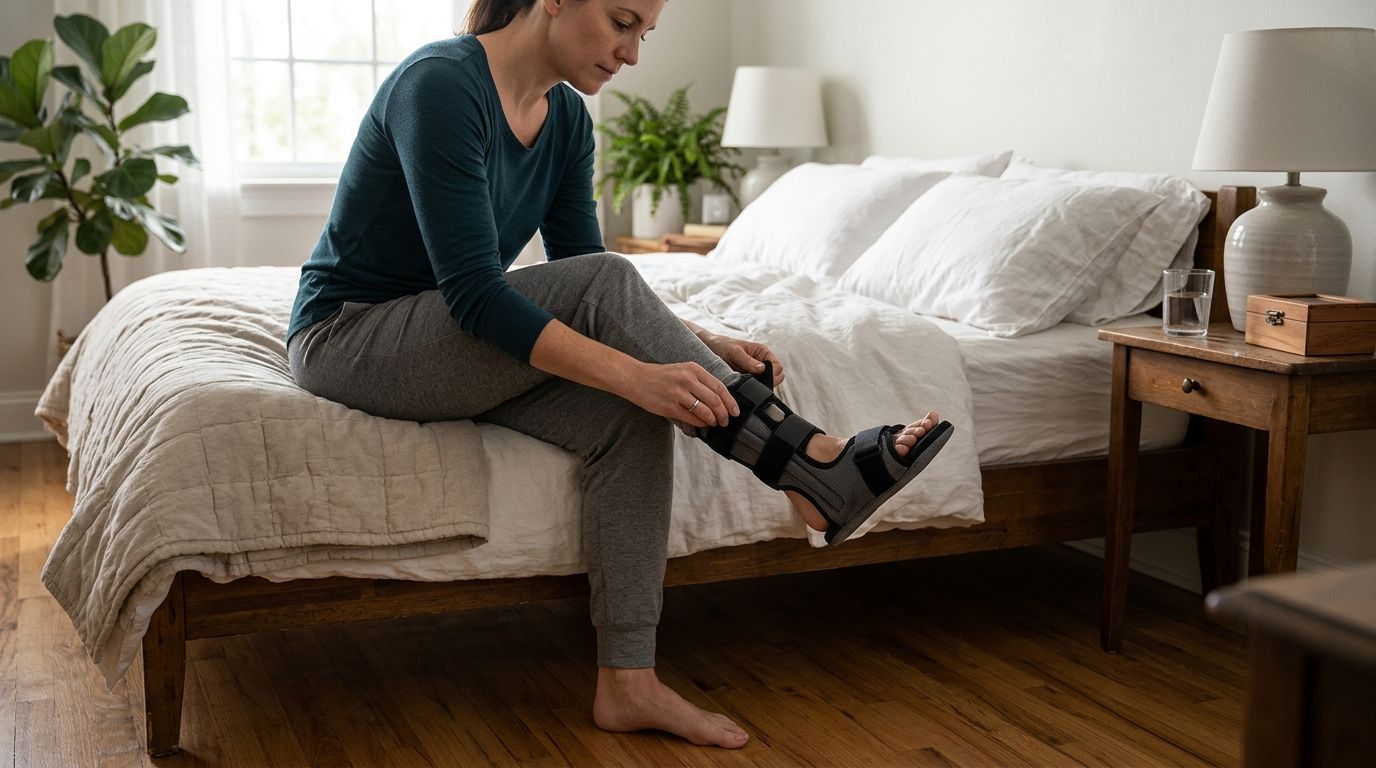
| Night splints | People with persistent first-step morning pain | Holds the foot in a stretched position overnight | Sleep disruption and discomfort can limit use |
| Clinician-directed procedures | People with persistent symptoms despite appropriate care | Adds options after diagnosis and treatment review | Benefits, risks, and suitability differ by procedure |
The benefit of evaluation at Achilles Foot and Ankle Center is access to foot and ankle diagnosis and treatment. Its limit is equally important: an examination does not guarantee immediate relief or establish that a particular procedure will be suitable.
A treatment can be reasonable without being necessary for everyone. Ask what problem it addresses, how you should use it, and what would lead your clinician to change course.
How do you keep a slow recovery moving?
A useful plan makes daily decisions clearer. It should explain what you can continue, what you should modify, and when to check back—not simply tell you to rest indefinitely.
Adjust aggravating activity
Identify the activities that reliably increase heel pain during or afterward. Reduce or modify those demands with your clinician’s guidance rather than repeatedly pushing through worsening symptoms.
Activity adjustment does not always mean stopping all movement. Ask which alternatives fit your health and symptoms, especially if exercise supports your diabetes management or general well-being.
Use a repeatable stretching plan
Gentle, appropriate stretching of the calf and plantar fascia is a common part of care. Stop a movement that produces sharp pain, and ask for help if you are unsure about technique.
The plantar fasciitis stretching-to-injection guide explains the broader treatment pathway. Progressing through that pathway should depend on your examination and response, not an assumption that everyone eventually needs an injection.
Review shoes you actually wear
Bring information about your work shoes, exercise shoes, and footwear at home. A supportive shoe used only occasionally cannot address the time you spend in footwear that aggravates symptoms.
Avoid treating softness as the only measure of comfort. Fit, stability, and how the shoe feels during your normal activities all matter.
Agree on reassessment
Ask when to return if symptoms remain unchanged or worsen. Bring a brief record of first-step pain, daily walking tolerance, and activities that trigger a flare.
For a 2026 appointment, that symptom history is more useful than a long list of products you have considered. It helps connect treatment decisions to what your foot is experiencing.
When should persistent heel pain be checked?
Arrange an evaluation when heel pain keeps returning, changes your walking, or remains limiting despite reasonable self-care. You do not need to wait for a particular number of months before asking for help.
Seek prompt medical attention for an inability to bear weight, a sudden injury with significant pain, or a hot, red, swollen foot. A wound, spreading redness, fever, or drainage also needs prompt assessment, particularly if you have diabetes.
Burning, tingling, or numbness deserves attention rather than being assumed to be ordinary plantar fasciitis. If you have diabetes or reduced sensation, do not rely on pain alone to tell you whether a foot problem is serious.
Achilles Foot and Ankle Center provides heel-pain and diabetic foot care. Explain any changes in sensation or skin when arranging care so the team understands the concern.
Get your heel pain evaluated
Discuss persistent heel pain and the next appropriate step in your care.
Does plantar fasciitis lasting a year mean you need surgery?
12 months of symptoms does not automatically mean you need surgery. AAOS OrthoInfo guidance generally reserves surgery for symptoms that have not improved after 12 months of aggressive nonsurgical treatment; the decision still depends on diagnosis, disability, and the care already tried.
A year of occasional stretching is not the same as a coordinated treatment plan. Before discussing an operation, your clinician should review what you used, how consistently you used it, and whether the findings still support plantar fasciitis.
Can plantar fasciitis come back after it improves?
Yes, plantar fasciitis can return after symptoms improve. A rapid increase in activity or renewed exposure to aggravating demands can bring heel pain back, so return to demanding activities gradually and keep the parts of your plan that remain useful.
Can you walk with plantar fasciitis?
Yes, you can often continue some walking with plantar fasciitis, but the amount should match your symptoms and clinical advice. Reduce activity that increases pain or makes you limp, and seek assessment if bearing weight becomes difficult.
FAQ
Is plantar fasciitis permanent if I have had it for months?
Plantar fasciitis lasting months is not automatically permanent. Persistent symptoms warrant a review of the diagnosis, daily demands, and treatment plan rather than an assumption of lifelong damage.
How long does plantar fasciitis usually take to improve?
More than 90% of patients improve within 10 months of starting simple treatment methods, according to AAOS OrthoInfo guidance. That group-level finding does not predict an individual recovery date.
Does chronic plantar fasciitis mean permanent damage?
Chronic plantar fasciitis does not automatically mean permanent damage. Chronic describes persistent symptoms, and ongoing pain needs assessment rather than a conclusion based on duration alone.
Should I completely stop walking until my heel heals?
You do not necessarily need to stop all walking, but you should modify activity that worsens pain or changes your gait. Ask your clinician how to maintain appropriate movement while reducing aggravating strain.
Why does my heel hurt again after feeling better?
Heel pain can return when activity exceeds what your foot currently tolerates. Repeated flare-ups also warrant checking whether the original diagnosis and treatment plan still fit.
Does plantar fasciitis always need an injection or surgery?
Plantar fasciitis does not always need an injection or surgery; most patients improve with nonsurgical care. Procedures require an individual discussion of expected benefits, risks, and alternatives.
When should I get heel pain checked if I have diabetes?
Arrange an evaluation for persistent heel pain if you have diabetes, and seek prompt attention for a wound, redness, warmth, swelling, or drainage. Reduced sensation can make pain an unreliable guide to the seriousness of a foot problem.
One last thing
For 2026, make the goal more specific than simply having less pain: identify an everyday activity you want to do comfortably again. Tell your clinician whether that means finishing a work shift, taking a neighborhood walk, or returning to exercise.
Feeling better briefly is not the same as tolerating your usual workload. Before making a large jump in activity, check whether your current routine leaves your heel comfortable afterward and during your next first steps. That distinction helps you discuss a practical return to the activities you love.
Related guides
- How long does plantar fasciitis take to heal?
- Is plantar fasciitis surgery worth it?
- Can walking barefoot make plantar fasciitis worse?