Instead of guessing when you can walk, work, and wear regular shoes again, use this bunion surgery consult to recovery timeline to organize your 2026 care around your surgeon’s instructions and healing checks. Start with a bunion evaluation at Achilles Foot and Ankle Center, then build a written plan for preparation, protected walking, follow-up visits, and return to activity.
- Use this bunion surgery consult to recovery timeline as a planning guide, not personal surgical clearance.
- Achilles Foot and Ankle Center provides bunion care for Richmond-area patients seeking evaluation and treatment.
- Your procedure determines weight-bearing restrictions; a smaller incision does not automatically mean unrestricted walking.
- Plan for wound care, transportation, work adjustments, and swelling before scheduling surgery.
Why this matters
A bunion is a change in alignment at the base of the big toe, not simply an extra bump of bone. Surgery aims to address that alignment when pain and functional limitations justify an operation. Appearance alone is not a reason to proceed.
Achilles Foot and Ankle Center is best suited to Richmond-area patients seeking a local evaluation of bunion pain and treatment options. An evaluation helps you separate shoe pressure from joint pain, understand nonsurgical care, and decide whether surgery fits your needs.
Recovery also has separate milestones: a closed incision, healing bone, comfortable shoes, and readiness for demanding activity. Reaching one does not mean you have reached them all.
Before you start
- Gather your health information. Bring your medication and supplement list, allergies, previous foot procedures, relevant records, and the shoes that cause symptoms. Include diabetes, numbness, circulation problems, nicotine use, and any history of blood clots.
- Check access and practical support. Confirm referral requirements with your insurer, arrange transportation, and identify help with meals, stairs, children, or pets. Describe whether your job requires standing, driving, lifting, or safety footwear.
- Resolve the walking restriction before scheduling. Some procedures allow protected walking; others require you to keep weight off the operated foot. Confirm the exact restriction and practice with any prescribed mobility aid before surgery, not afterward.
Your 2026 recovery milestones
Use these milestones to ask better questions, not to set your own clearance dates. AAOS OrthoInfo’s Bunion Surgery guidance describes suture removal at about 2 weeks and swelling that can persist for 6 months to 1 year. Your surgeon’s instructions take priority.
| Milestone | Planning reference | What determines your next step |
|---|---|---|
| Consultation | Before choosing surgery | Symptoms, examination, imaging, health risks, and previous treatment |
| Wound review | Often around 2 weeks; timing varies | Incision condition and the surgeon’s closure method |
| Protected recovery | Procedure-specific; no universal walking date | Bone correction, fixation, wound healing, and imaging |
| Regular footwear | After your surgeon approves | Swelling, shoe fit, comfort, and protection needs |
| Swelling resolution | Can take 6 months to 1 year | Individual healing and activity demands |
| Higher-impact activity | After explicit clearance | Bone healing, strength, movement, and safe function |
A calendar date is a planning aid, not proof that your foot is ready. Ask what must be true before each restriction changes.
Consultation and procedure selection
Establish the source of your pain
- Describe the limitation. Explain where the pain occurs, which shoes trigger it, and what you have stopped doing. Mention pain beneath the forefoot or in other toes, not just over the bump.
- Review previous care. Tell the clinician whether wider shoes, padding, activity changes, or prescribed inserts helped. Bring useful examples rather than trying to remember every product name.
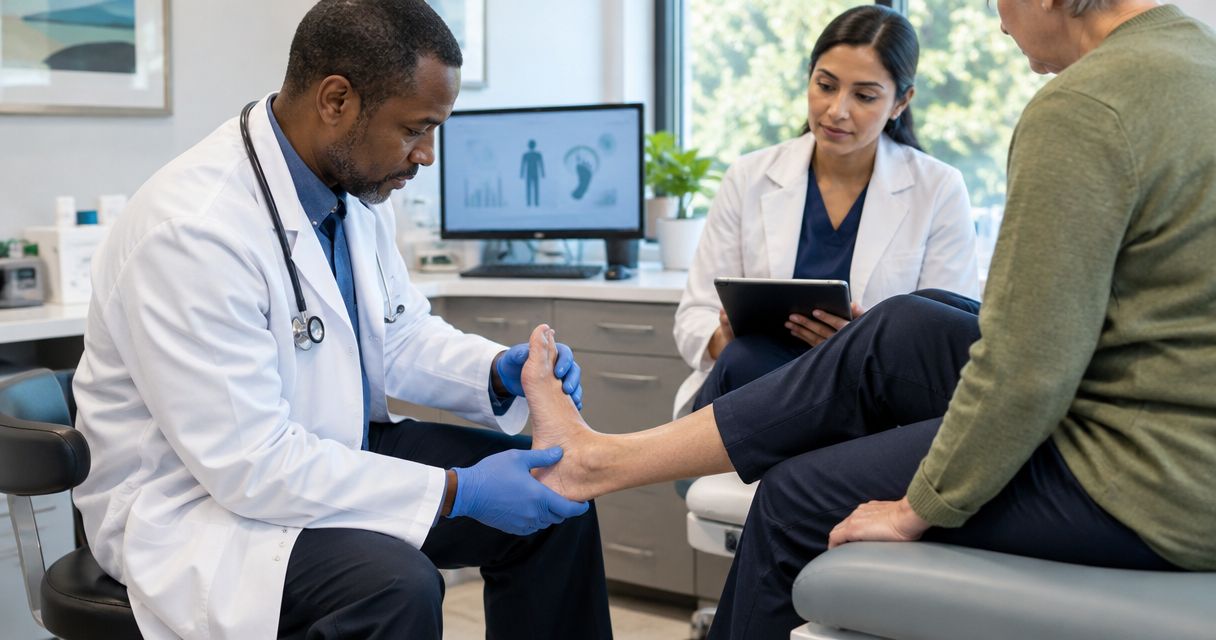
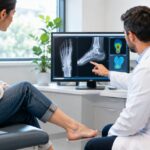
- Complete the examination and recommended imaging. The clinician evaluates alignment, movement, skin, sensation, and circulation. Weight-bearing X-rays help assess alignment while you stand when appropriate.
- Connect the findings to a treatment goal. Ask whether the aim is less shoe pressure, better walking tolerance, treatment of an arthritic joint, or another specific problem.
Expected result: You understand what is causing the symptoms and whether surgery deserves consideration. For more context on imaging, read the foot X-ray to diagnosis workflow.
Compare the treatment paths
Your operation should match your deformity and joint condition. These are broad treatment categories, not interchangeable choices or a complete list of procedures.
| Treatment path | Best for | Potential benefit | Limitation or trade-off |
|---|---|---|---|
| Nonsurgical symptom management | People whose symptoms remain manageable without surgery | Reduces pressure and helps accommodate the foot | Does not reliably reverse the underlying alignment |
| Osteotomy, or bone realignment | Selected bunions where a bone cut can correct alignment | Repositions bone while preserving the involved joint when appropriate | Requires bone healing; restrictions depend on the correction |
| Fusion, or joining selected bones | Selected deformities, instability, or arthritic joints | Stabilizes or corrects the joint being treated | Removes movement at the fused joint and requires bone union |
Ask which bones and joints the proposed operation addresses. An incision described as minimally invasive does not tell you the entire recovery plan: the underlying correction still needs protection.
Expected result: You can explain why the recommended procedure fits your foot, what alternatives exist, and what trade-offs you accept.
Preparation and home arrangements
Confirm the medical instructions
- Request a written medication plan. Ask about prescriptions, supplements, diabetes medicines, and blood thinners. Do not stop or change them on your own.
- Complete requested clearance or testing. Requirements depend on your health, the procedure, and anesthesia. Report new illness, skin damage, or an infection before the operation.
- Confirm fasting and arrival instructions. Follow the surgical team’s directions rather than an internet fasting schedule. Ask whom to contact if you accidentally eat, drink, or take the wrong medicine.
- Discuss pain control and clot prevention. Ask how to take prescribed medicine, which side effects require a call, and whether you need specific measures to reduce clot risk.
Expected result: You have written instructions and know whom to call when something changes. Uncertainty about a medicine is a reason to contact the team, not improvise.
Prepare the recovery space
- Clear walking routes. Remove loose rugs and cords, improve lighting, and keep essentials within reach. Plan how you will manage the bathroom and stairs.
- Arrange a place to elevate your foot. Follow the team’s positioning advice and avoid pressure against the incision. Keep medicines and contact instructions nearby.
- Practice with prescribed equipment. Confirm that you can use crutches, a walker, or another prescribed aid safely. Do not assume a knee scooter suits your balance, home, or procedure.
- Make a work and transport plan. Discuss remote duties, seated breaks, lifting restrictions, and footwear requirements. Driving requires separate clearance, especially with a right-foot operation, restrictive footwear, or sedating medicine.
Expected result: You can move through your home without breaking the planned walking restriction. For patients planning care around Mechanicsville or the West End, include travel and help at home in the same discussion.
Surgery-day handoff and recovery progression
Confirm the discharge plan
- Review the operation and consent. Confirm the foot, planned procedure, anesthesia discussion, and your remaining questions with the surgical team.
- Have your support person hear the instructions. Anesthesia and pain medicine can affect recall. Keep a written copy of the discharge directions.
- Confirm weight-bearing language. Ask whether you must avoid all weight, place weight through a particular area, or walk only in prescribed protection. Repeat the instruction back in plain language.
- Check the follow-up arrangements. Know your appointment details, dressing instructions, and the daytime and after-hours contact routes.
Expected result: You leave knowing how to protect the foot, manage prescribed medicines, and obtain help. Do not leave an unclear instruction for trial and error at home.
Advance through recovery checks
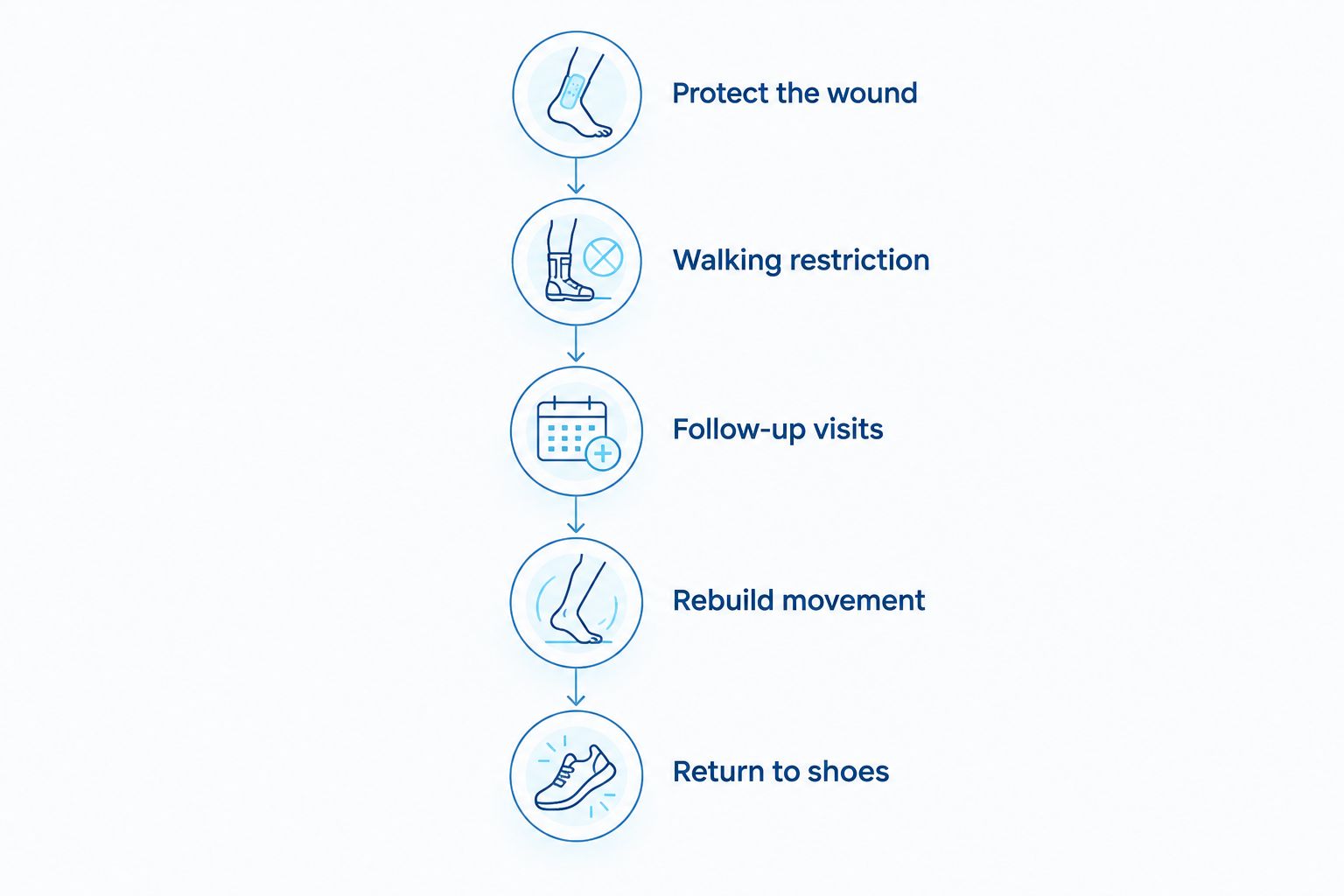
- Protect the wound. Keep dressings clean and dry as directed. Do not remove a dressing, soak the foot, or apply creams unless the team instructs you to do so.
- Follow the walking restriction. Use prescribed protection even when pain is mild. Comfortable walking does not establish that a bone correction has healed.
- Attend follow-up visits. The surgeon checks the incision and alignment and uses imaging when indicated. Ask what findings support any change in activity.
- Rebuild movement and strength when cleared. Start toe exercises or physical therapy only if prescribed. Some procedures require different movement precautions.
- Return to shoes and activity in stages. Discuss work footwear, walking demands, driving, and exercise separately. Increase activity according to the agreed plan rather than testing several changes together.
Expected result: Each increase in activity follows a healing check and a clear instruction, not just less pain.
Keep your 2026 recovery plan somewhere your support person can find it. Record updated restrictions after each appointment so older instructions do not remain the household default.
If you are not ready for surgery
A consultation can end with continued nonsurgical care. That is a treatment decision, not a failed appointment.
- Choose a symptom-management plan. Discuss footwear, padding, activity adjustments, or prescribed supports suited to your examination.
- Track function rather than appearance. Note which activities remain difficult and whether skin irritation or shoe pressure continues.
- Agree on reassessment triggers. Ask when persistent pain, changing function, or skin problems should bring you back.
Nonsurgical care avoids operative recovery but does not reliably straighten an established bunion. Surgery addresses alignment but introduces wound, bone-healing, stiffness, nerve-injury, and recurrence risks. Your decision should reflect symptoms and goals, not pressure to choose an operation.
Troubleshooting your recovery plan
- You cannot manage the prescribed mobility aid. Contact the surgical team before attempting unsupported walking. Ask for equipment reassessment or instruction; do not substitute a device without checking.
- Your dressing becomes wet, loose, or soiled. Contact the team for replacement instructions. Do not soak the foot or remove protective layers without permission.
- Swelling increases after activity. Return to the prescribed protection and elevation plan and report persistent or worsening swelling. Sudden calf pain or swelling needs urgent assessment; chest pain or shortness of breath requires emergency care.
- Pain worsens instead of settling. Contact the surgical team, especially with spreading redness, drainage, fever, new numbness, or pale, blue, or cold toes. Do not wait for a routine visit.
- Your employer requests a firm return date. Ask for restrictions tied to actual duties. Seated work, prolonged standing, safety footwear, and driving are different recovery demands.
Customize your workflow
Ask Achilles Foot and Ankle Center to help connect your bunion evaluation with your health history and daily responsibilities. Diabetes, reduced sensation, circulation problems, and previous wounds deserve discussion before surgery because they affect planning and monitoring.
Bring a short list of goals: walking the dog, completing a standing shift, or returning to exercise. Ask what evidence of healing each goal requires. Do not use someone else’s recovery date as your target.
Discuss your bunion treatment options
Bring your symptoms, footwear concerns, and recovery questions to an evaluation.
FAQ
What is the bunion surgery consult to recovery timeline in 2026?
The timeline starts with examination and procedure selection, then moves through preparation, surgery, wound checks, protected activity, and gradual return to function. The operation and your healing determine the dates; swelling can persist for 6 months to 1 year.
Can I walk immediately after bunion surgery?
Immediate walking depends on the procedure and your surgeon’s instructions. Some operations allow protected weight-bearing, while others require keeping weight off the operated foot.
When can I drive after bunion surgery?
You can resume driving only when you can control the vehicle safely and your surgical team clears you. The operated side, protective footwear, and sedating medicines all affect that decision.
Does minimally invasive bunion surgery mean a faster recovery?
A smaller incision does not guarantee a faster overall recovery. Bone healing, the correction performed, and your health still determine protection and activity restrictions.
When can I wear normal shoes again?
Return to regular shoes requires your surgeon’s approval and enough room for the recovering foot. Swelling and pressure over the incision can delay comfortable shoe wear even after the wound closes.
Should I schedule both feet at the same time?
Discuss simultaneous and staged surgery with your surgeon rather than assuming either is appropriate. Walking restrictions, home support, health risks, and your ability to transfer safely are central to the decision.
Can Achilles Foot and Ankle Center evaluate whether I need bunion surgery?
Achilles Foot and Ankle Center offers bunion care and foot and ankle surgery in the Richmond area. An evaluation can address your symptoms, nonsurgical options, and whether a surgical discussion fits your needs.
One last thing
A foot can feel better before it is ready for unrestricted use. Before leaving your final planning visit in 2026, ask: What finding—not just what date—allows me to take the next step? Write down the answer for walking, work, shoes, and exercise separately.
Related guides