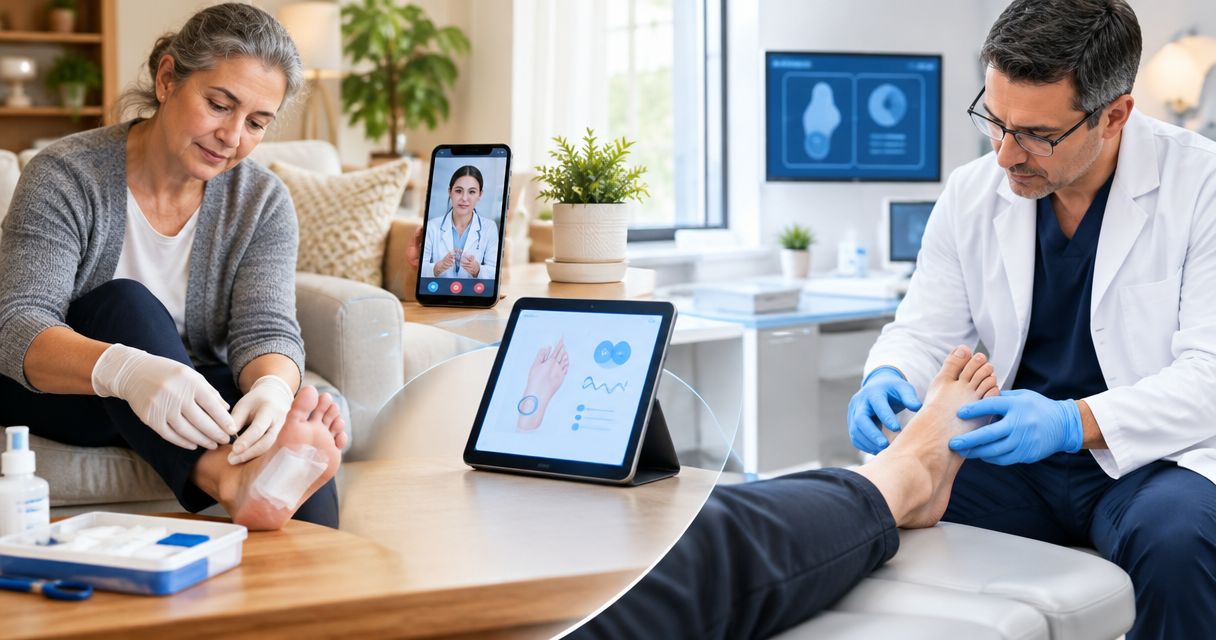
Restaurant workers’ foot care is a routine of shoe selection, skin checks, and symptom management aimed at keeping you comfortable and safe through a shift. This 2026 guide to foot care for restaurant workers addresses prolonged standing, wet floors, tight footwear, and the point when pain needs an examination rather than another insole.
- Foot care for restaurant workers starts with well-fitting, slip-resistant shoes, dry socks, and daily skin checks.
- Achilles Foot and Ankle Center offers podiatry care for restaurant workers with persistent heel pain, nail problems, or diabetic foot concerns.
- Plantar fasciitis and heel pain need symptom-specific care; extra cushioning alone does not establish the cause.
- Seek prompt care for wounds, spreading redness, new numbness, or an injury that prevents normal walking.
Why foot care matters for restaurant workers
Restaurant work combines standing at a station with walking, turning, carrying, and cleaning. Your footwear must handle those tasks without squeezing your toes or allowing your heel to slide. Slip resistance matters, but it does not replace fit.
Sweat, spills, and repeated rubbing create another problem: skin that stays damp is more vulnerable to irritation. A blister or sore nail edge deserves extra attention when diabetes, reduced sensation, or poor circulation affects your feet.
Achilles Foot and Ankle Center is a podiatry option for restaurant workers who need heel pain, nail problems, or diabetic foot concerns evaluated. Workers in Mechanicsville and the West End can learn about the practice through Achilles Foot and Ankle Center.
For your 2026 work routine, focus on symptoms that change your walking, return each shift, or fail to settle between shifts. Do not treat recurring pain as an unavoidable part of restaurant work.
Build a foot-care routine around your shift
Check your feet before you put on work shoes
Start with a free, practical habit: look at your feet before work. Check the soles, heels, spaces between your toes, and nail edges. Use a mirror if you cannot see the bottoms comfortably.
Look for a change from your usual skin, not just pain. Reduced sensation can make a blister or wound difficult to feel. Make 1 daily foot check your baseline, especially if you have diabetes; inspect again whenever a shoe starts rubbing or a sock becomes wet.
A quick check also helps you recognize a footwear problem early. A recurring red spot over the same toe is a reason to reassess fit, not simply add thicker socks.
- Check for blisters, cuts, cracks, drainage, and new redness.
- Look inside shoes for debris, folded liners, or rough seams.
- Compare both feet for unusual swelling or color changes.
- Keep an open wound out of direct shoe friction and arrange appropriate care.
Choose shoes for fit, traction, and your work tasks
Evaluate your current shoes before buying a replacement. Your toes should not press against the front or sides, and your heel should stay secure while you walk. Try shoes with the socks you wear at work.
Choose slip-resistant work footwear that also fits your foot. Follow your workplace’s footwear requirements, and check the outsole for wear or contamination. A cushioned shoe with a smooth or worn sole is not a complete answer for a wet kitchen floor.
For a feature-based comparison, read the guide to shoes for standing all day at work. If heel pain, bunion pressure, or numbness makes finding a comfortable shoe difficult, an evaluation at Achilles Foot and Ankle Center can address the underlying concern rather than relying on repeated purchases.
- Test walking, turning, and standing in both shoes.
- Choose enough toe space without letting your foot slide.
- Check the outsole and follow its cleaning instructions.
- Replace footwear when damage or wear compromises fit or traction.
- Reject shoes that cause pressure, numbness, or rubbing during a try-on.
Keep socks and skin dry during service
Start with clean socks and dry feet. Pack 2 pairs of socks for a shift: the pair you wear and a spare for a change after a spill or heavy sweating. This is a practical packing suggestion, not a medical threshold.
After washing, dry carefully between your toes. Moisturize dry skin on the tops and bottoms of your feet, but avoid leaving lotion between the toes, where trapped moisture can cause problems.
Itching, peeling skin and a thickened or discolored nail are different concerns. Athlete’s foot affects skin; nail changes can have several causes, including fungal infection and repeated shoe pressure. Do not assume every damaged nail needs the same treatment.
- Change socks when they become damp or uncomfortable.
- Let shoes dry thoroughly between uses.
- Avoid sharing nail tools, socks, or footwear.
- Ask for evaluation when itching, cracking, or nail changes persist.
Break up standing and respond to early discomfort
Use the work pattern you already have. When service allows, alternate stationary tasks with gentle movement and use a seated break rather than spending the entire break standing. Do not introduce exercises that interfere with kitchen safety.
Build 3 checkpoints per workday into your 2026 routine: before work, during a break, and after the shift. At each checkpoint, notice shoe pressure, damp socks, and whether discomfort has changed. These checkpoints are reminders, not a substitute for an examination.
An anti-fatigue mat can add cushioning at a fixed station, but its placement must not create a trip hazard or conflict with sanitation requirements. A mat does not correct a painful shoe fit or explain persistent heel pain.
- Use permitted breaks to sit and take pressure off your feet.
- Change position instead of locking your knees while standing.
- Report damaged mats or unsafe flooring through workplace procedures.
- Stop any movement that causes sharp pain or worsens symptoms.
Match heel-pain care to the symptoms
Notice where the pain occurs and when it starts. Pain under the heel with the first steps after rest is a common plantar fasciitis pattern. Plantar fasciitis involves irritation of the band of tissue supporting the arch, but other conditions can also cause heel pain.
Begin by reducing activities that aggravate symptoms outside work and avoiding barefoot walking if it increases discomfort. Gentle calf and foot stretching is a common part of plantar fasciitis care; the appropriate approach depends on the diagnosis and your tolerance.
Recurring heel pain needs a diagnosis, not an endless cycle of different inserts. Achilles Foot and Ankle Center offers heel-pain care and can evaluate whether plantar fasciitis or another problem explains your symptoms. Bring your work shoes to the appointment so fit and wear can be discussed.
- Record whether pain occurs under the heel, behind it, or elsewhere.
- Note first-step pain, shift-related pain, and pain at rest.
- Avoid forcing a stretch through sharp or increasing pain.
- Seek evaluation when pain changes your gait or keeps returning.
Protect nail edges, blisters, and pressure spots
Trim toenails straight across and avoid digging into the corners. Cutting deeply down the side of a painful nail can injure the surrounding skin rather than resolve an ingrown toenail.
For a small, intact blister, reduce friction and protect the area with an appropriate dressing. Do not deliberately puncture it. An open blister needs gentle cleaning and protection; worsening redness, drainage, or pain calls for medical attention.
Diabetes, poor circulation, or reduced sensation changes the safest approach. Avoid cutting calluses or using medicated corn removers on your own when these conditions apply. A pressure spot that barely hurts can still need attention.
- Keep nail edges from pressing against tight shoe fronts.
- Avoid using blades or scissors to remove callused skin.
- Do not cover increasing pain with repeated layers of padding.
- Arrange care for an inflamed nail edge or a wound that is not improving.
Arrange an evaluation when symptoms cross the line
Use your symptom notes to explain what happens during work and what remains afterward. Include the location of pain, recent footwear changes, injuries, and any history of diabetes or circulation problems. Photos of changing skin can help you describe the timeline, but they do not replace an examination.
Seek prompt assessment for a foot wound when you have diabetes or reduced sensation. Spreading redness, warmth, drainage, or increasing swelling also needs attention. Severe injury, inability to bear weight, a suddenly cold or discolored foot, or fever with a worsening wound warrants urgent medical care.
For restaurant workers in Mechanicsville and the West End, Achilles Foot and Ankle Center offers foot and ankle diagnosis and treatment. An examination helps distinguish concerns that need different treatment plans.
- Bring work shoes and any inserts you currently use.
- List symptoms and activities that make them better or worse.
- Mention diabetes, numbness, circulation concerns, and prior wounds.
- Ask which work activities need adjustment while you recover.
Arrange a foot evaluation
Discuss recurring heel pain, nail problems, or diabetic foot concerns before they disrupt another shift.
Compare foot-care options for restaurant shifts
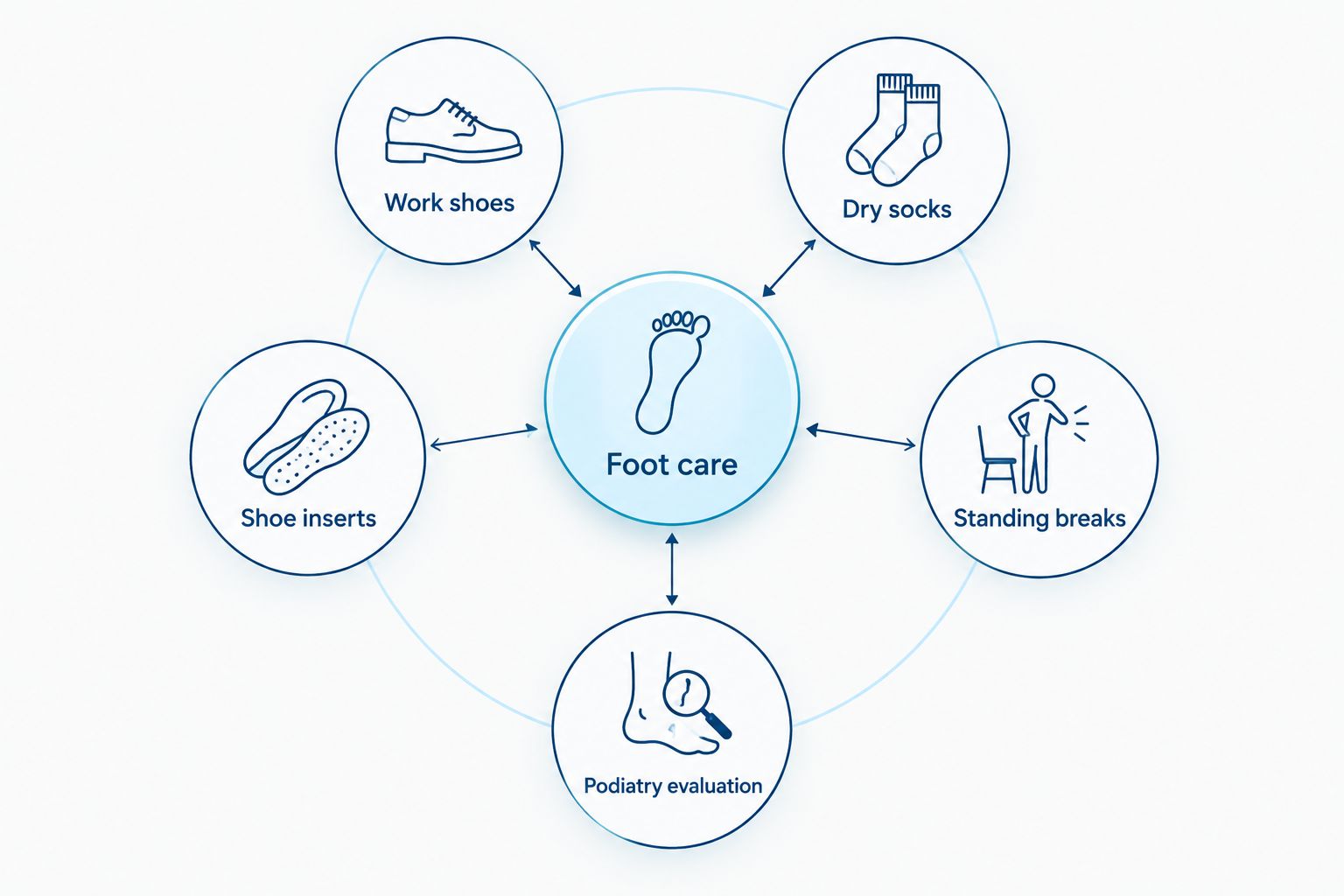
For 2026, compare each option by the problem it addresses—not by how much cushioning it promises. Shoe fit, moisture control, and clinical evaluation serve different purposes. No accessory replaces assessment of an unexplained wound, numbness, or persistent pain.
| Option | Best for | Main benefit | Key limitation |
|---|---|---|---|
| Work shoes | Workers whose current shoes squeeze, slip, or rub | Combine task-appropriate traction with a better fit | Cannot diagnose or treat every cause of foot pain |
| Dry socks | Workers dealing with sweat or wet footwear | Help manage moisture and reduce damp contact | Do not correct pressure from poorly fitting shoes |
| Shoe inserts | Workers needing additional support after fit is checked | Adjust cushioning or support inside a shoe | Can crowd the shoe; the wrong shape can add pressure |
| Standing breaks | Workers able to alternate tasks or sit during breaks | Reduce uninterrupted standing | Depend on workplace conditions and do not treat an injury |
| Podiatry evaluation | Workers with recurring pain, nail problems, numbness, or wounds | Identifies the concern and guides treatment | Requires an appointment; treatment response varies |
Choose the option that addresses your actual problem. Dry socks help with moisture, while a sore nail edge needs pressure relief and sometimes treatment. Trying to solve both with a thicker insert can make the shoe tighter.
Common mistakes restaurant workers make
Choosing traction while ignoring toe pressure
A slip-resistant sole is essential to consider, but a narrow upper can still irritate bunions, nails, and toe joints. Check both workplace suitability and fit. Do not accept painful pressure as the trade-off for safer traction.
Leaving wet socks on through closing
A busy shift makes a sock change easy to postpone. Keep the spare pair somewhere accessible and change when work conditions allow. Persistent dampness deserves attention even when you do not have a blister yet.
Stacking inserts inside an already tight shoe
More padding takes up space. Adding an insert without removing a removable liner or checking fit can crowd your toes and lift your heel. Recheck the whole shoe rather than judging the insert on its own.
Treating every nail change as fungus
Repeated contact with a shoe can damage a nail, while fungal infection is another possible cause. Have persistent changes assessed before committing to treatment. An increasingly red or draining nail edge needs more than a cosmetic fix.
Waiting for diabetic foot problems to hurt
Reduced sensation can hide the discomfort you would normally use as a warning. Follow a daily inspection routine and seek prompt advice for a new wound. Pain is not a reliable screening method when sensation is impaired.
FAQ
What is the best foot care for restaurant workers in 2026?
The best starting routine combines well-fitting, slip-resistant work shoes, dry socks, daily skin checks, and attention to recurring symptoms. Persistent heel pain, nail inflammation, numbness, or wounds need an appropriate evaluation rather than another accessory.
Are soft shoes always better for standing through a restaurant shift?
Soft shoes are not automatically better for restaurant work. Fit, secure footing, workplace requirements, and support matter alongside cushioning; a soft shoe that squeezes your toes or lets your heel slide is a poor match.
Does heel pain after work mean I have plantar fasciitis?
Heel pain after work does not establish a plantar fasciitis diagnosis. First-step pain after rest is a common pattern, but an examination is needed to distinguish plantar fasciitis from other causes of heel pain.
Should I use inserts in my restaurant work shoes?
Inserts are an option when they address a support need and fit without crowding your shoe. Check toe space and heel security after adding them, and seek advice if the insert increases pain or pressure.
What should I do about an ingrown toenail before a shift?
Reduce pressure on the sore nail edge and avoid cutting deeply into the corner. Redness, drainage, increasing pain, or diabetes is a reason to seek professional care rather than dig out the nail yourself.
What foot symptoms need urgent care?
Severe injury, inability to bear weight, a suddenly cold or discolored foot, or fever with a worsening wound needs urgent medical care. A new foot wound with diabetes, spreading redness, or drainage also requires prompt assessment.
Where can restaurant workers near Richmond get foot pain evaluated?
Achilles Foot and Ankle Center offers podiatry evaluation for heel pain, nail concerns, diabetic foot problems, and other foot and ankle conditions. Workers in Mechanicsville and the West End can discuss symptoms and appropriate next steps with the practice.
One last thing
Take your work shoes to a foot-pain appointment—not just your most comfortable weekend pair. The footwear you use during service helps explain where rubbing and pressure occur. Make this your 2026 rule: change the routine when symptoms change, rather than waiting until walking becomes difficult.
Related guides