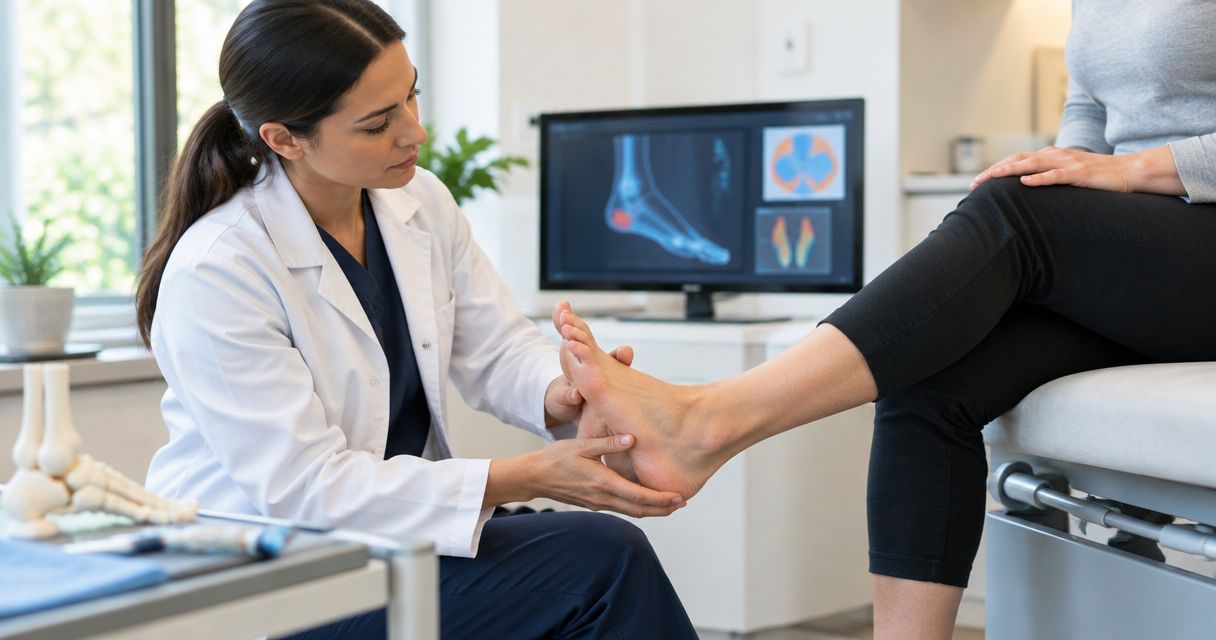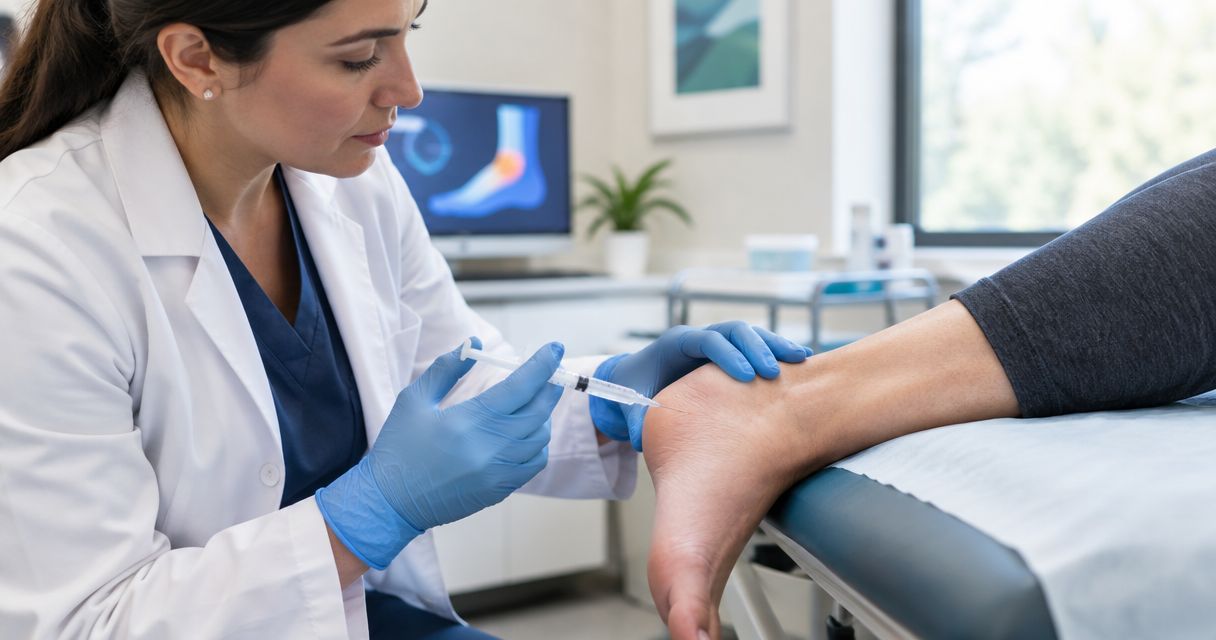

Yes, walking barefoot can make plantar fasciitis pain worse, especially on hard floors or when your heel is already sore. In 2026, the practical advice remains to wear comfortable, supportive footwear during a flare-up and reduce activities that increase pain; a temporary increase in soreness does not, by itself, prove new tissue damage.
- Can walking barefoot make plantar fasciitis worse? Yes—hard floors and unsupported walking can aggravate heel pain.
- Supportive indoor shoes are a better choice than barefoot walking during a plantar fasciitis flare-up.
- Morning heel pain deserves attention, but symptoms alone cannot confirm plantar fasciitis.
- Achilles Foot and Ankle Center offers foot and ankle evaluation for Richmond-area patients with heel pain.
Can walking barefoot make plantar fasciitis worse?
Barefoot walking can aggravate plantar fasciitis symptoms because it removes the cushioning and support your shoes provide. This is particularly noticeable when you step onto tile, hardwood, or concrete after resting. Walking barefoot is not the only cause of plantar fasciitis, and not everyone reacts the same way.
The plantar fascia is a strong band of tissue along the bottom of your foot that helps support your arch. When it becomes painful, changing footwear is one part of care—not a replacement for adjusting activity or checking the diagnosis. The plantar fasciitis home-care and treatment guide explains how conservative care fits into a broader treatment plan.
| Walking option | Best for | Main benefit | Main limitation |
|---|---|---|---|
| Supportive indoor shoes | Walking around home during a flare-up | Provide cushioning and a more supportive base | Poor fit can create pressure or rubbing |
| Supportive outdoor shoes | Errands, work, and routine walking | Combine foot protection with support | Shoes alone do not address every cause of heel pain |
| Barefoot walking | People without symptoms or a medical reason to protect their feet | Avoids shoe pressure and allows unrestricted movement | Can aggravate an already painful heel and exposes skin to injury |
| Thin, flat slippers | Brief indoor use when comfort allows | Cover the foot | Often provide little cushioning or arch support |
Why this matters
You do not need to give up all walking because your heel hurts. You do need to notice whether everyday habits keep provoking it. Walking barefoot while cooking, doing laundry, or getting ready for work can add to the same daily load as exercise.
For your 2026 care plan, focus on function rather than a promise that a particular shoe will fix the problem. Useful improvements include getting out of bed more comfortably, walking without limping, and finishing necessary activities without steadily increasing pain.
Supportive indoor shoes: best for a painful flare-up
Choose an indoor shoe that holds your foot securely and feels comfortable under your heel and arch. A cushioned sole, enough room for your toes, and a secure fastening are useful starting points. A shoe that makes you grip with your toes to keep it on is not a good match.
Support does not mean maximum stiffness or the tallest arch contour. An arch shape that presses painfully into your foot is a reason to try a different fit, not something to push through. Check for rubbing around your heel and toes as well.
The advantage of indoor shoes is simple: you can keep comfortable support available during ordinary household tasks. The limitation is equally important—supportive footwear cannot establish whether your pain comes from plantar fasciitis, a nerve problem, or another condition.
Barefoot walking: pause it when it provokes pain
Do not use painful barefoot walking as a way to strengthen your foot. Strengthening exercises and repeated exposure to an activity that causes pain are not the same thing. During a flare-up, choose a tolerable level of activity instead of testing your heel repeatedly.
Barefoot walking is not universally harmful. For someone without symptoms, foot wounds, reduced sensation, or another reason to protect the feet, the decision is different from managing active heel pain. That distinction prevents a temporary care recommendation from becoming an unnecessary lifelong restriction.
There is also no universal date when barefoot walking becomes safe again. If symptoms settle, discuss a gradual return when appropriate rather than switching abruptly from supportive shoes to prolonged barefoot activity.
Why barefoot walking affects heel pain differently
The footwear advice you follow in 2026 should reflect your symptoms and daily routine. These factors help explain why the same activity feels tolerable on one occasion and painful on another:
- Floor surface: Hard floors provide less cushioning beneath your heel than a padded surface. A rug is not a substitute for well-fitting footwear if walking still hurts.
- Time spent standing: Preparing meals or standing at a counter adds load even when you are not taking many steps.
- Current symptoms: A heel that already hurts during routine walking needs a different approach from a foot that has returned to comfortable activity.
- Calf flexibility: Tight calf muscles can contribute to increased strain through the foot. A stretching plan should stay gentle rather than painful.
- Recent activity changes: An increase in walking, running, or standing can contribute to symptoms, whether you wear shoes or not.
- Foot sensation and skin health: Neuropathy, wounds, and circulation problems change the safety of barefoot activity, separate from plantar fasciitis.
What should you do instead of walking barefoot?
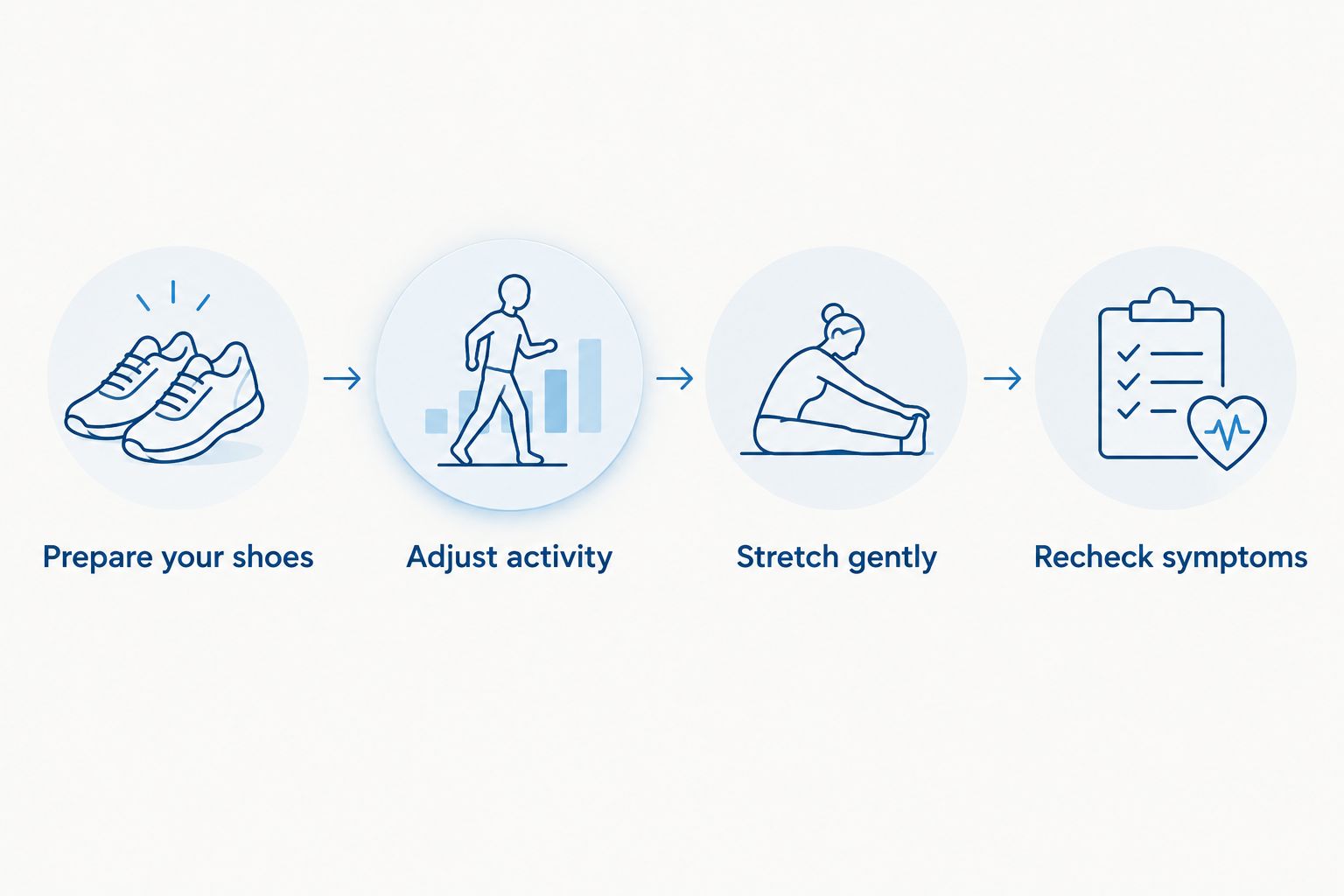
Start with changes that reduce avoidable irritation without making your routine unnecessarily complicated. For a practical 2026 home plan, use the following sequence and adjust it if symptoms increase.
- Prepare your shoes. Keep supportive footwear beside your bed or where you usually remove outdoor shoes. Put it on before walking across a hard floor.
- Adjust activity. Reduce activities that reliably increase heel pain, particularly prolonged standing, running, or jumping. Avoid limping through exercise to finish a planned session.
- Stretch gently. For a straight-knee calf stretch, face a wall, place the affected leg behind you, and keep that heel down. Hold a comfortable stretch for 30 seconds and repeat 3 times, without bouncing or forcing pain.
- Recheck symptoms. Notice how your heel feels during activity, afterward, and when you next get out of bed. Repeated worsening is a reason to change the plan or seek evaluation.
If cold helps, apply a wrapped cold pack for up to 20 minutes rather than placing ice directly against your skin. Do not use cold treatment on a numb foot or an area with poor circulation without medical guidance. Stop if it causes burning, skin changes, or increased discomfort.
Stretching also needs limits. Stop a stretch that produces sharp pain, tingling, or worsening symptoms, and ask for an individualized plan if balance, recent injury, or another condition makes the movement difficult.
Can you walk barefoot first thing in the morning?
Barefoot walking can make the first steps after sleep more uncomfortable when you have plantar fasciitis. Pain after rest is a common symptom pattern, although it does not confirm the diagnosis on its own. Keep supportive shoes within reach instead of crossing the room to find them.
Before standing, gently move your ankle and toes through a comfortable range. Once you are up, avoid rushing into stairs, heavy carrying, or a long period of standing if your heel is painful. The goal is a calmer start to necessary movement, not a test of how much pain you can tolerate.
Is walking barefoot on carpet better than tile?
Carpet generally offers more cushioning than tile, but it does not provide the structured support of a shoe. A softer surface can feel more comfortable without making prolonged barefoot walking a good choice during a flare-up. Let pain and walking comfort guide the decision.
If you still limp or develop increasing heel pain on carpet, change the activity or footwear. Do not assume the surface makes the symptoms harmless.
Does less pain mean your plantar fasciitis has healed?
Less pain is encouraging, but a comfortable period does not prove that your foot is ready for unrestricted activity. Symptoms can change with rest, footwear, and how much you do. Increase activity gradually rather than making several changes at once.
For example, avoid combining a longer walk, a return to running, and a switch to barefoot time on the same day. Keeping changes separate makes it easier to recognize which activity your foot tolerates.
When should you get heel pain evaluated?
Arrange an evaluation when heel pain persists, keeps returning, changes how you walk, or limits work and everyday activities. You do not need to wait until you cannot walk. Pain at the bottom of the heel can come from more than one condition, so treatment should follow an assessment rather than an assumption.
Achilles Foot and Ankle Center is best suited to Richmond-area patients seeking a foot and ankle evaluation for persistent heel pain. Patients in Mechanicsville and the West End can use the same decision rule: recurring pain or reduced function deserves attention, even if a change of shoes offers temporary relief.
An examination can help distinguish plantar fasciitis from problems such as a stress fracture, heel-pad pain, or nerve irritation. Imaging is not automatically necessary for every painful heel; the history and examination help determine whether it is useful.
Seek prompt medical care for inability to bear weight, a significant injury, an open wound, or a red, hot, swollen foot. Fever with spreading redness also needs urgent attention. These symptoms should not be managed as a routine plantar fasciitis flare-up at home.
Get your heel pain evaluated
Discuss persistent heel pain and an appropriate next step for your foot and ankle care.
What changes if you have diabetes or numb feet?
Avoid barefoot walking if you have diabetes-related loss of sensation or another condition that prevents you from feeling foot injuries. A small cut, blister, or object underfoot can go unnoticed. This concern applies even when plantar fasciitis pain is improving.
Inspect your feet and the inside of your shoes, and arrange prompt care for a wound, drainage, or new redness. Do not use the absence of pain as proof that your skin is healthy. Achilles Foot and Ankle Center offers diabetic foot care as well as heel-pain evaluation, allowing both concerns to be discussed during an appropriate visit.
FAQ
Can walking barefoot make plantar fasciitis worse even inside my house?
Yes, walking barefoot indoors can aggravate plantar fasciitis symptoms, especially on hard floors. Supportive indoor shoes are a practical alternative during a painful flare-up.
Should I wear shoes all day if I have plantar fasciitis?
Wear comfortable, supportive footwear for walking and standing if going barefoot increases your pain. You do not need to keep shoes on while resting simply because you have plantar fasciitis.
Are socks enough support for plantar fasciitis?
Ordinary socks do not provide the cushioning and structured support of a shoe. Socks can cover your feet, but they are not a substitute for supportive footwear when barefoot walking hurts.
Is barefoot walking a good strengthening exercise for plantar fasciitis?
Painful barefoot walking is not an appropriate substitute for a strengthening program. Ask about exercises matched to your symptoms and function rather than trying to strengthen your foot by walking through pain.
Do I need custom orthotics before I stop walking barefoot?
No, you can switch to comfortable, supportive footwear without first obtaining custom orthotics. An evaluation can help determine whether an insert or another treatment belongs in your care plan.
Can I keep exercising with plantar fasciitis in 2026?
You can often remain active by choosing activities that do not aggravate heel pain. Reduce or stop exercise that causes limping or steadily increasing symptoms, and seek guidance if you cannot find a comfortable activity.
Where can I get persistent heel pain checked near Richmond?
Achilles Foot and Ankle Center provides foot and ankle care in the Richmond, Virginia area. An evaluation can help identify the cause of persistent heel pain and guide an appropriate treatment plan.
One last thing
Count standing time, not just exercise time. A day without a workout can still include substantial time on your feet while cooking, cleaning, or working. For the rest of 2026, make your next change practical: keep supportive shoes where barefoot walking usually begins, and seek evaluation if pain continues to limit your day.
Related guides
- How long does plantar fasciitis take to heal?
- Can plantar fasciitis go away on its own?
- Best shoes for standing all day at work