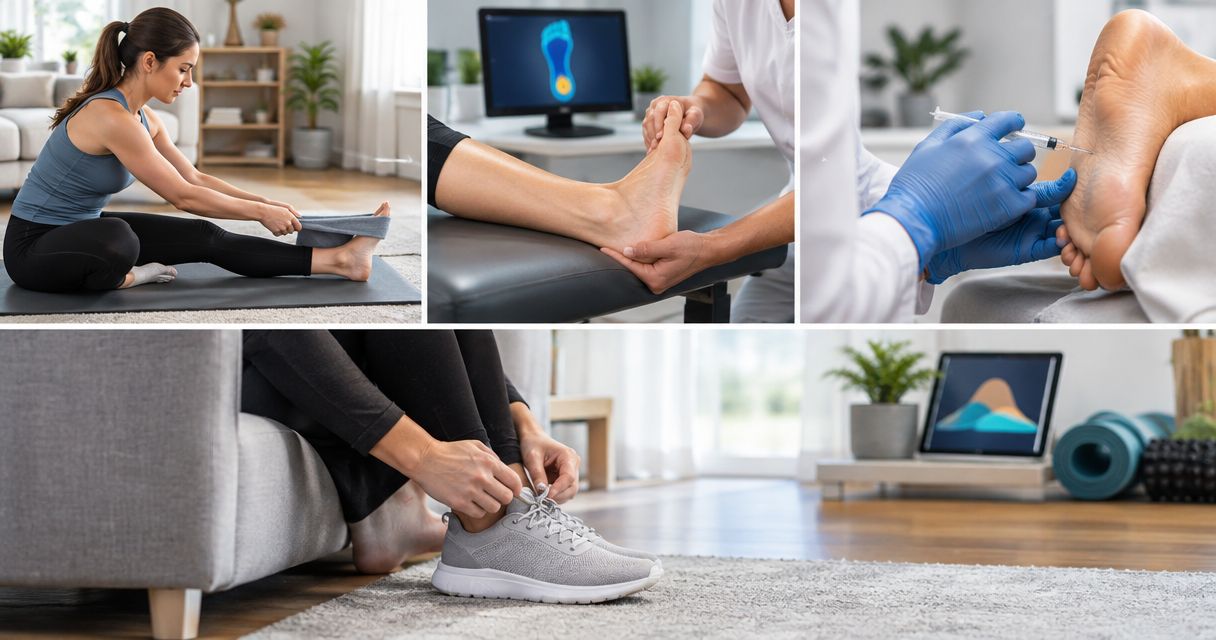
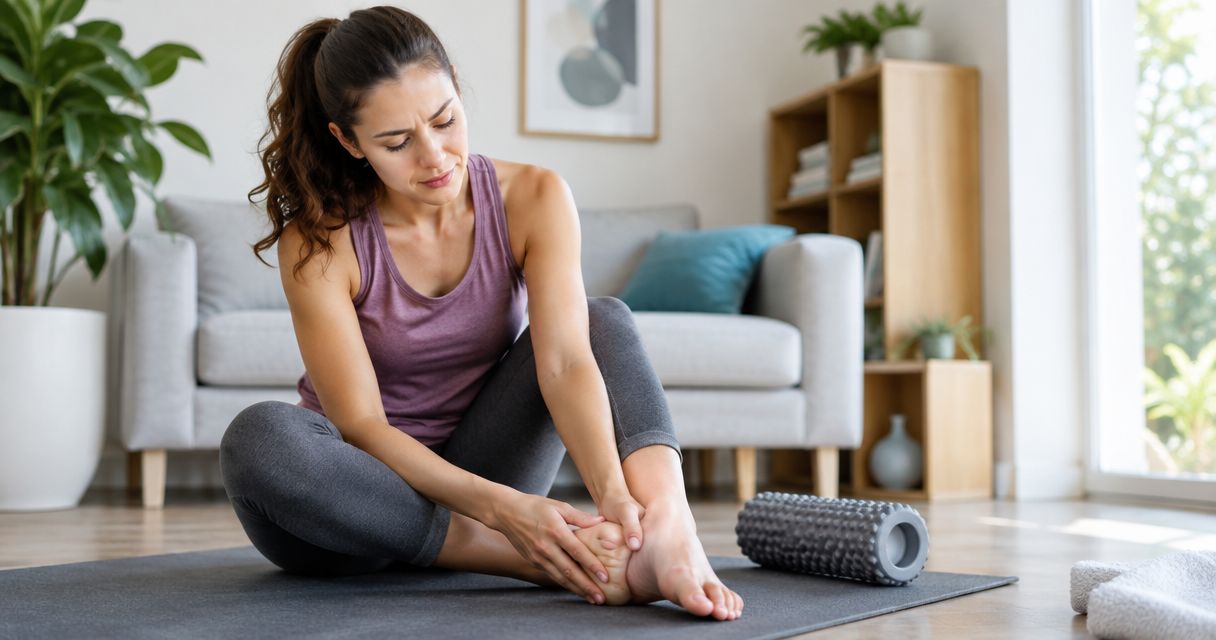
Yes, plantar fasciitis can improve without procedures, but waiting without changing the strain on your heel is not a reliable recovery plan. Supportive footwear, activity changes, and gentle stretching often help; persistent pain, numbness, or difficulty bearing weight needs an evaluation rather than more waiting.
- Can plantar fasciitis go away on its own? Yes, but reducing strain helps recovery more than simply waiting.
- Morning heel pain can fit plantar fasciitis; numbness, wounds, and sudden injury need a different assessment.
- Achilles Foot and Ankle Center provides heel pain evaluations for patients who need a diagnosis and treatment plan.
- Seek assessment when heel pain worsens, limits normal activities, or does not improve with home care.
Can plantar fasciitis go away on its own?
Plantar fasciitis often improves with nonsurgical care. That is different from doing nothing: recovery usually involves changing the activities, footwear, or movement patterns that keep irritating the tissue along the bottom of your foot.
For context in 2026, the American Academy of Orthopaedic Surgeons’ OrthoInfo guidance states that more than 90% of patients improve within 10 months of starting simple treatment methods. That figure describes improvement with treatment, not a guarantee of complete recovery or evidence that ignoring pain works.
A practical starting sequence is:
- Reduce aggravating activity. Cut back on running, jumping, or long periods of standing that clearly increase heel pain.
- Support your foot. Choose comfortable shoes with cushioning and support rather than walking barefoot on hard floors.
- Add gentle stretching. Stretch the calf and bottom of the foot without forcing a painful position.
- Watch the trend. Look for easier first steps and better walking tolerance, not just a brief decrease in discomfort.
- Arrange an assessment when needed. Worsening pain or symptoms that limit everyday activity deserve attention.
For footwear considerations, the guide to shoes for plantar fasciitis explains features to compare. Shoes can support a care plan, but they cannot confirm why your heel hurts.
Why this matters
Heel pain can settle during a quiet weekend and return when your normal routine resumes. That pattern does not necessarily mean the tissue has recovered enough for the same walking, work, or training load.
Judge recovery by what you can comfortably do and how your heel feels afterward. A less painful afternoon is encouraging, but repeated painful mornings suggest your current routine still needs adjustment.
Plantar fasciitis is also not the only cause of heel pain. A stress injury, irritated nerve, or problem near the Achilles tendon can require a different approach. Avoid treating the label as certain if you have never had the symptoms assessed.
Home care versus waiting: what is the difference?
The useful distinction is not simply “treatment or no treatment.” It is whether you are reducing the strain that provokes symptoms and checking that your foot is improving.
| Approach | Best for | Main benefit | Limitation |
|---|---|---|---|
| Waiting without changing activity | Not recommended for ongoing, activity-limiting pain | Requires no new routine | Leaves aggravating strain unchanged and can delay diagnosis |
| Activity changes, supportive shoes, and gentle stretching | Mild symptoms without warning signs | Addresses common sources of irritation without a procedure | Requires consistency and does not establish the diagnosis |
| Podiatry evaluation | Persistent, recurrent, unusual, or limiting heel pain | Helps identify the cause and tailor care | Requires an appointment; improvement still takes time |
| Clinician-directed additional treatment | Symptoms that need more than an initial home plan | Adds options based on examination findings | Not every option suits every patient |
Start with appropriate home care for mild symptoms, not open-ended waiting. If pain keeps returning when you resume normal activity, an evaluation can help you change the plan instead of repeating the same cycle.
What does sensible home care involve?
A useful home-care plan in 2026 focuses on reducing irritation while keeping you safely active. Avoid adding several devices, exercises, and treatments at once; a simpler routine makes it easier to recognize what helps or aggravates symptoms.
Activity changes: best for reducing repeated irritation
Temporarily reduce the activities that clearly worsen your heel pain. If running hurts, choose a lower-impact activity that does not reproduce symptoms, such as swimming when appropriate for your health.
Complete inactivity is not automatically necessary. The limitation is that “less exercise” will not solve the problem if your workday still involves prolonged standing or your replacement activity also hurts.
Supportive footwear: best for everyday walking comfort
Choose shoes that feel comfortable, hold your foot securely, and provide cushioning and support. Avoid relying on worn-out footwear or walking barefoot on hard surfaces when those choices trigger pain.
No shoe is right for every foot. An insert also changes how a shoe fits, so check for pressure, crowding, or new discomfort rather than assuming additional support is always better.
Gentle stretching: best for a consistent movement routine
Calf and plantar fascia stretches are common parts of nonsurgical care. Keep the movement controlled and comfortable; a stronger stretch is not automatically a better stretch.
Stop if stretching produces sharp pain or new symptoms. If you are unsure about technique, ask a clinician to demonstrate it, especially when you have reduced sensation or other foot problems.
Cold therapy: best for temporary symptom relief
The NHS plantar fasciitis guidance advises using an ice pack wrapped in a towel for up to 20 minutes. Keep ice off bare skin, and do not use cold therapy over an area with reduced sensation or poor circulation without medical advice.
Cold can ease discomfort, but it does not replace changes to an aggravating routine. Avoid using temporary pain relief as permission to push through a painful run or shift.
Why plantar fasciitis recovery varies
Recovery depends on more than how long the pain has been present. These factors help explain why another person’s timeline does not predict yours:
- Daily loading: Standing, walking, running, and jumping repeatedly load the tissue under your foot.
- Footwear: Shoes that aggravate symptoms can make comfortable activity harder, even when you are stretching regularly.
- Calf flexibility: Tight calf muscles can contribute to strain, which is why calf stretching often appears in treatment plans.
- Consistency: An occasional stretch does not offset repeatedly returning to activities that provoke pain.
- Diagnostic accuracy: Heel pain from another condition will not necessarily respond to a plantar fasciitis routine.
- Other health conditions: Diabetes, poor circulation, or reduced sensation change the safety of self-care and the need for assessment.
These are reasons to personalize care, not reasons to blame yourself. Start with changes you can maintain, then review whether walking and daily tasks are becoming easier.
How do you know whether your heel is improving?
Look for a pattern across ordinary activities. First steps after sleep or sitting should become easier, and you should tolerate your usual walking with less discomfort afterward.
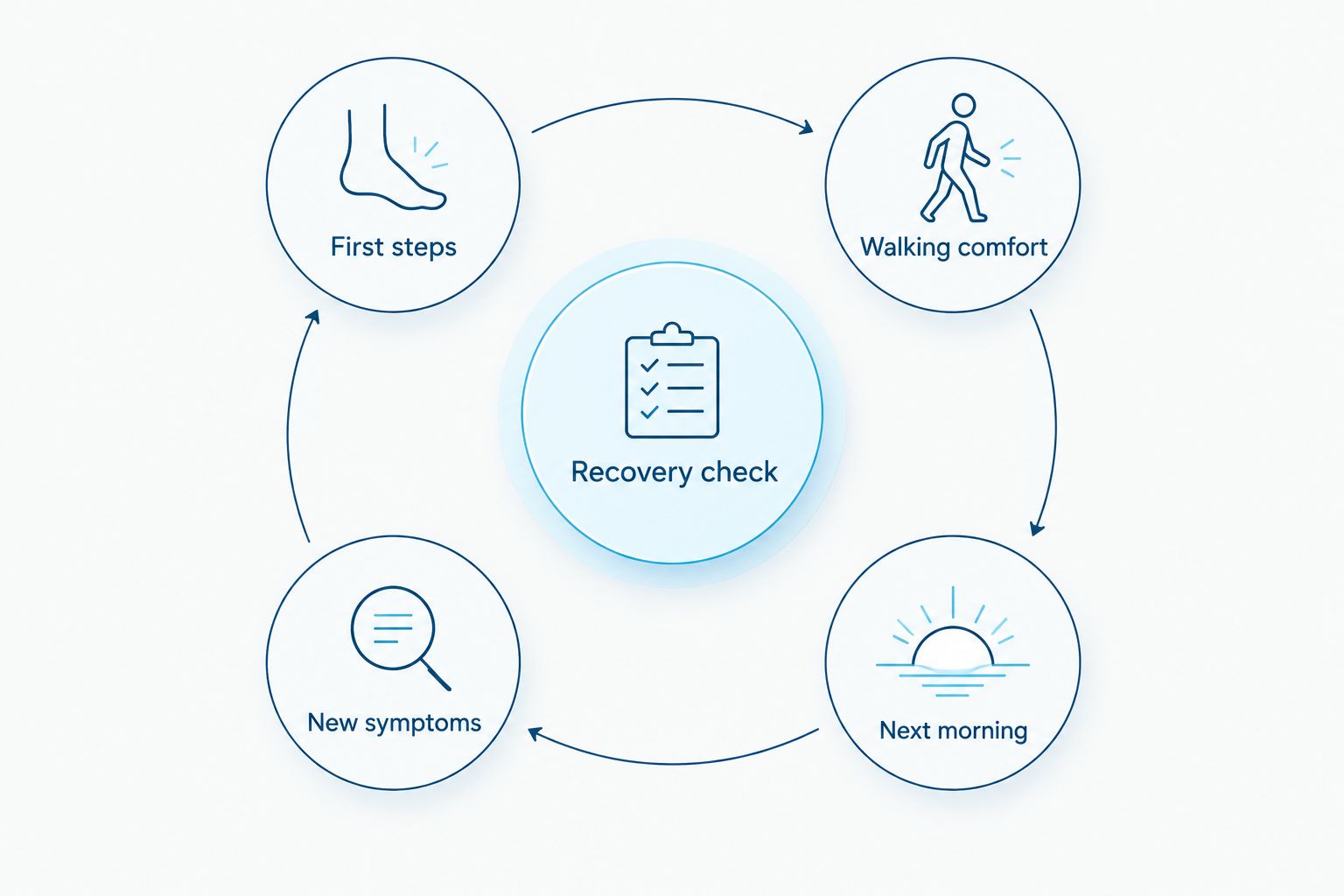
For a simple 2026 symptom log, record these observations:
- First steps: Is getting out of bed easier, unchanged, or harder?
- Walking comfort: Can you complete everyday tasks without changing your gait?
- Next morning: Did yesterday’s activity make today noticeably worse?
- New symptoms: Have numbness, swelling, skin changes, or pain elsewhere appeared?
A log is useful because memory tends to emphasize the best or worst day. You do not need a complicated scoring system; a few plain-language notes can help explain the pattern at an appointment.
Improvement should support a gradual return to activity, not an immediate return to everything. Increase activity cautiously and step back if the same heel pain returns or your walking pattern changes.
When should you stop waiting and get your heel checked?
The NHS plantar fasciitis guidance recommends assessment when pain has not improved after 2 weeks of self-treatment. It also advises assessment for severe pain, pain that stops normal activities, worsening or recurring pain, and tingling or loss of sensation.
That 2-week checkpoint is not a recovery deadline. It is a reason to review persistent symptoms rather than allowing an uncertain diagnosis to guide months of self-treatment.
Seek urgent medical assessment for a significant injury, inability to bear weight, a hot and swollen foot, or redness spreading from a wound. Fever with a foot wound also needs urgent attention. If you have diabetes and develop a new foot wound or a hot, swollen foot, do not wait for it to become painful.
Achilles Foot and Ankle Center is best suited to patients seeking a heel pain evaluation and an individualized care plan. For patients in Mechanicsville and West End, the next step is the same: arrange an appropriate assessment when pain persists, limits activity, or includes warning signs.
Get your heel pain assessed
Discuss persistent heel pain and the next steps for diagnosis and care.
What happens at a heel pain evaluation?
A clinician asks where the pain occurs, when it started, what brings it on, and whether you have numbness or an injury history. Examining your foot and ankle helps distinguish a typical plantar fasciitis pattern from other causes.
Imaging is not automatically required for every painful heel. Examination findings determine whether tests would help check for another problem or clarify an uncertain diagnosis.
For a heel pain appointment in 2026, bring the shoes you wear most often and a short account of what you have tried. Include medicines, inserts, exercise changes, and whether symptoms improved or worsened.
An evaluation at Achilles Foot and Ankle Center can help establish a plan for heel pain. Its limitation is straightforward: an appointment does not guarantee immediate relief, and a treatment plan can require adjustment as your symptoms change.
Does plantar fasciitis always need surgery?
More than 90% of patients improve within 10 months of simple treatment methods, according to AAOS OrthoInfo guidance. Surgery is not the usual starting point for plantar fasciitis.
Persistent symptoms call for reassessment, not an automatic operation. A clinician considers the diagnosis, treatments already tried, and how much the condition affects your life before discussing additional options.
Can I keep walking if I have plantar fasciitis?
You can often continue necessary walking if it remains tolerable and does not leave symptoms worse afterward. Reduce optional walking when it aggravates pain, and avoid pushing through discomfort that changes your gait.
If you cannot bear weight or develop sudden severe pain, stop and seek assessment. That is not a situation to manage by testing how far you can walk.
FAQ
Can plantar fasciitis go away on its own without treatment?
Plantar fasciitis can improve without procedures, but reducing strain is more useful than simply waiting. Supportive shoes, activity changes, and gentle stretching are common starting measures.
How long should I try home care before seeing someone?
The NHS recommends assessment if heel pain has not improved after 2 weeks of self-treatment. Seek care sooner for severe pain, worsening symptoms, numbness, or difficulty bearing weight.
Does less pain mean my plantar fasciitis has healed?
Less pain is encouraging, but it does not prove your foot is ready for its previous activity level. Check whether normal walking and the following morning remain comfortable as you gradually increase activity.
Is going barefoot good for plantar fasciitis?
Going barefoot on hard surfaces can aggravate plantar fasciitis symptoms. Use comfortable, supportive footwear if barefoot walking makes your heel hurt.
Should I stretch my foot if stretching hurts?
Do not force a stretch that produces sharp pain. Ask a clinician to check the technique and whether stretching is appropriate for the cause of your symptoms.
Can diabetes change how I should handle heel pain?
Diabetes warrants earlier attention to foot symptoms, especially when sensation or circulation is reduced. A new wound, redness, swelling, or a hot foot needs prompt assessment rather than a standard home-care trial.
Can Achilles Foot and Ankle Center evaluate persistent heel pain?
Achilles Foot and Ankle Center provides foot and ankle care, including heel pain evaluation. An assessment helps identify the cause and guide treatment rather than assuming all heel pain is plantar fasciitis.
One last thing
For your 2026 recovery plan, pay attention to the morning after activity. A walk that feels manageable at the time but repeatedly leaves you limping the next morning is a reason to reduce the load and review your approach.
You do not need to wait until pain becomes severe to ask for help. The goal is a clearer diagnosis and a practical plan that helps you return to the activities you enjoy.
Related guides
- Night splints for plantar fasciitis
- Shoes for standing all day at work
- Foot and ankle care for runners
- Diabetic foot care for seniors