Plantar fasciitis usually improves over several months, not a few days, and pain relief often comes before your foot is ready for unrestricted activity. Recovery takes longer when standing, walking, or running keeps aggravating the heel; persistent or unusual pain also needs an evaluation to confirm the diagnosis.
- How long does plantar fasciitis take to heal? Expect gradual improvement over months rather than an immediate recovery.
- Less morning heel pain is progress, but it does not automatically mean your foot is ready for running.
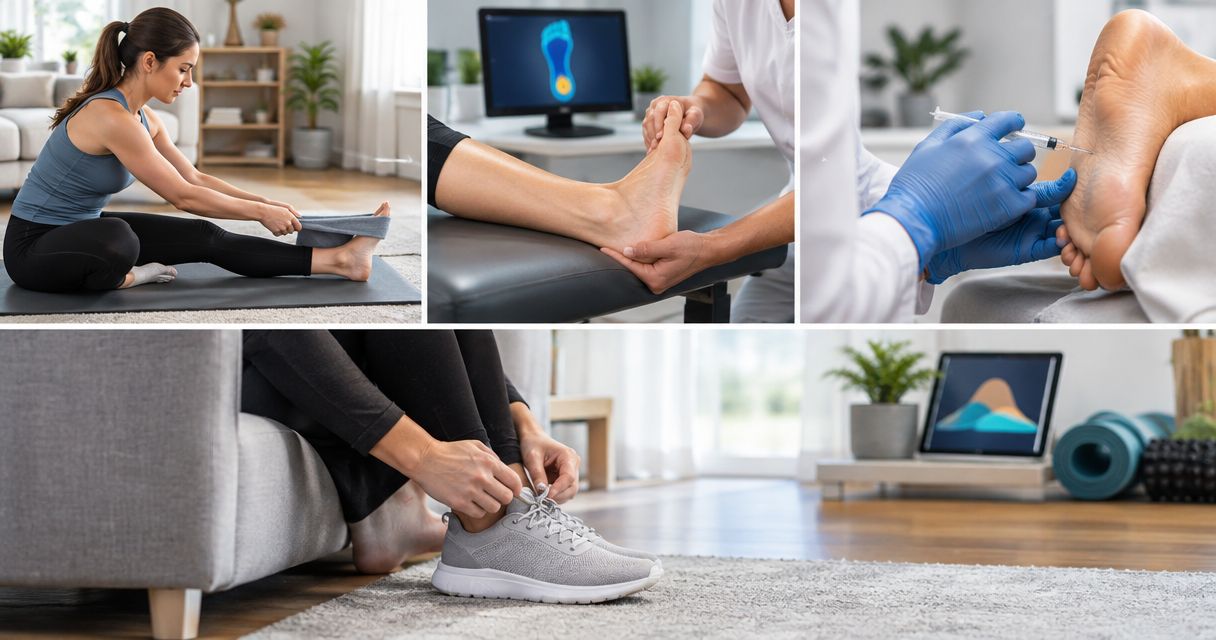
- Supportive footwear, activity changes, and an individualized exercise plan address different parts of plantar fasciitis recovery.
- Achilles Foot and Ankle Center provides heel pain evaluations for patients whose symptoms persist or limit daily activities.
Why this matters
Feeling better and being ready for your usual workload are different milestones. Heel pain can ease during a walk and return afterward, so judging recovery only by how your foot feels once you get moving can be misleading.
A useful recovery plan makes daily activity more manageable without repeatedly triggering a setback. If footwear is part of the problem, the guide to shoes for plantar fasciitis explains features to consider alongside an evaluation—not instead of one.
How long does plantar fasciitis take to heal?
Expect improvement over months rather than a fixed deadline. The American Academy of Orthopaedic Surgeons states in its patient guidance on plantar fasciitis that more than 90% of patients improve within 10 months of starting simple treatment methods. That describes improvement across a group, not a promise that your heel will be pain-free by a particular date.
For your 2026 recovery plan, separate these milestones:
| Recovery milestone | What it looks like | What it does not establish |
|---|---|---|
| Early symptom relief | First steps and ordinary walking hurt less | Your foot can tolerate your previous exercise load |
| Better daily function | You manage necessary activity with fewer symptoms afterward | Long shifts or longer walks will be comfortable |
| Return to exercise | You gradually tolerate activity without a sustained flare | You should immediately resume your old distance or intensity |
| Sustained recovery | Your usual activities remain manageable over time | Heel pain cannot return |
The most useful question is not simply whether your heel hurts today. Ask whether the same activity is becoming easier without causing a worse morning afterward.
Early improvement: follow the trend
Morning pain, walking tolerance, and symptoms after a workday give you practical ways to track progress. An isolated comfortable afternoon tells you less than a consistent pattern of easier first steps and fewer activity-related flare-ups.
Keep your comparison simple. Record the activity that triggered symptoms and whether the next morning felt better, similar, or worse; you do not need a complicated tracking system.
Return to activity: rebuild tolerance
A calmer heel still needs time to adjust to increased loading. Returning to running, jumping, or long walks all at once can recreate the same mismatch between what your foot tolerates and what you ask it to do.
Increase activity gradually, following your clinician's guidance. If symptoms rise and stay elevated, step back rather than treating pain as something you must push through.
Why plantar fasciitis recovery time varies
Two people with heel pain can have different recovery paths. These factors help explain why a calendar estimate cannot replace an individualized plan:
- Daily loading: Long periods of standing, walking, or running repeatedly load the painful area. A workable plan accounts for your job and essential activities.
- Symptom duration: Pain that has persisted deserves reassessment, particularly when previous treatment has not changed the pattern.
- Footwear: Shoes that fit poorly or lack adequate support can make everyday activity harder to tolerate. Comfort and fit matter more than a label alone.
- Calf and foot function: Calf tightness, strength, and movement patterns influence the demands on your foot. Exercises should match the examination findings.
- Treatment consistency: A plan used only during severe flare-ups does not provide the same steady activity management as a routine you can maintain.
- The diagnosis: A stress fracture, nerve problem, or another source of heel pain requires a different approach. Persistent pain is not proof that plantar fasciitis simply needs more time.
Bring these factors into your 2026 appointment discussion. Explain what your day actually involves, including standing at work, stairs, exercise, and walking barefoot at home.
What helps plantar fasciitis improve?
Match treatment to the problem instead of adding every available product. Activity changes, exercises, footwear, and selected supports serve different purposes, and each has limitations.
| Approach | Best for | Main benefit | Limitation or caution |
|---|---|---|---|
| Activity modification | People whose symptoms rise with standing, walking, or impact exercise | Reduces repeated aggravation while preserving tolerable movement | Work and caregiving duties can make changes difficult |
| Stretching and rehabilitation | People who need help with flexibility, strength, or activity progression | Addresses movement and loading as part of recovery | Forceful stretching or poorly matched exercises can increase pain |
| Supportive footwear | People whose current shoes make walking uncomfortable | Makes daily activity easier to manage | Shoes alone do not confirm or correct every cause of heel pain |
| Orthotic inserts | People who need additional support or pressure redistribution | Changes how the foot is supported inside a shoe | Fit matters; an insert that increases pain needs reassessment |
| Night splints | People with persistent first-step morning pain | Holds the ankle and foot in a stretch during sleep | Sleep disruption and discomfort can limit use |
Change the activity that repeatedly triggers pain
You do not necessarily need complete rest. The goal is to reduce activities that reliably worsen symptoms while keeping movement within a tolerable range.
If running triggers heel pain, ask about a temporary lower-impact alternative. Swimming or cycling places different demands on the foot, but neither should be treated as automatically suitable when it also causes pain.
For a standing job, discuss practical changes such as seated tasks or opportunities to change position. Advice that ignores your workday is difficult to follow and difficult to evaluate.
Use an exercise plan you can tolerate
Plantar fascia and calf stretching commonly form part of conservative care. Rehabilitation can also include strengthening and a gradual return to activity, depending on your symptoms and examination.
Stretching should not create sharp or escalating pain. If an exercise consistently leaves your heel worse, stop that exercise and ask for guidance rather than increasing the intensity.
Choose supports for a specific reason
A shoe insert and a night splint are not interchangeable. An insert supports the foot during activity; a night splint holds the foot in a position intended to address symptoms such as painful first steps.
Comfort is part of whether a treatment is usable. A support that causes rubbing, numbness, or new pain needs review, especially if you have diabetes or reduced sensation.
How can you tell whether your heel is improving?
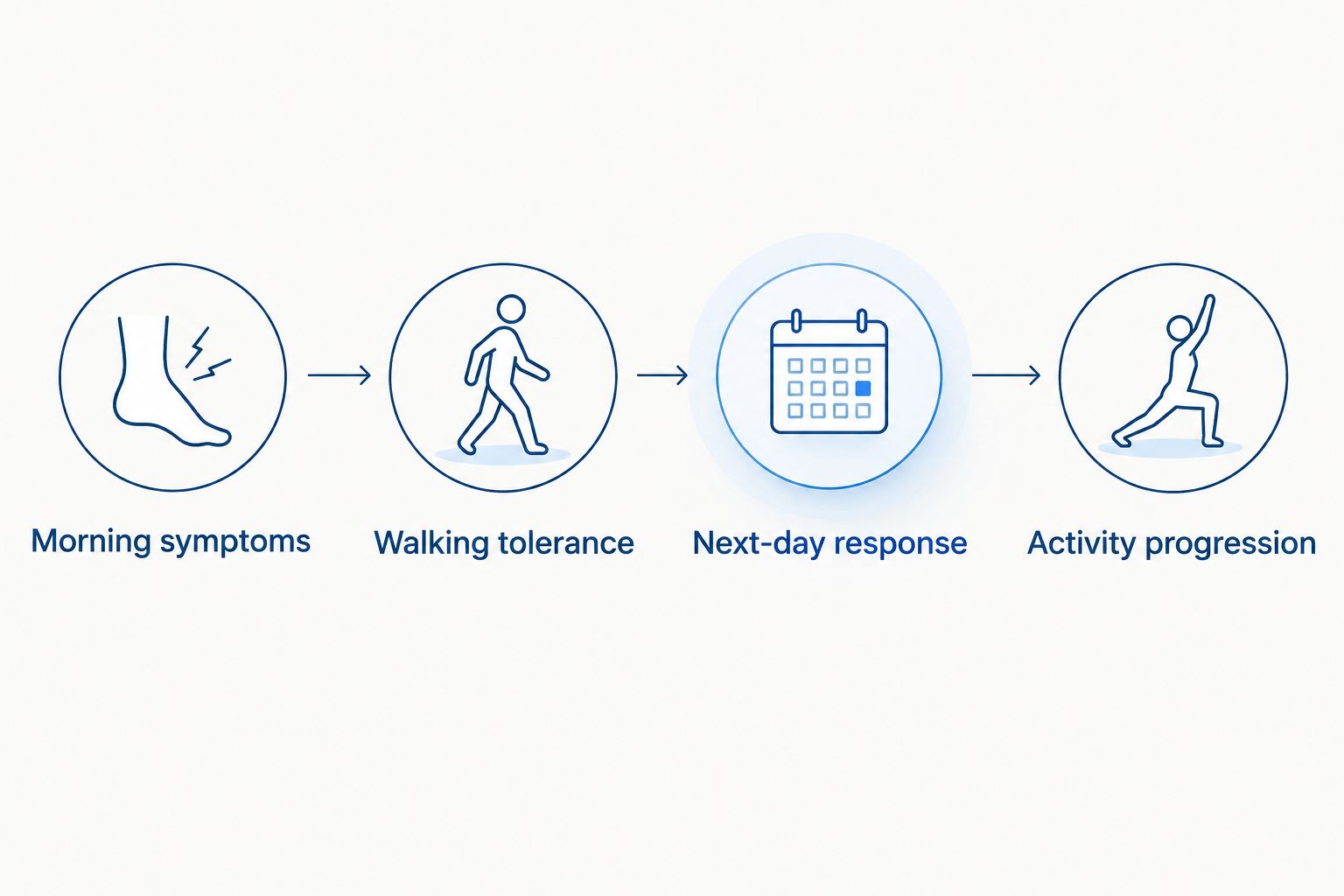
Look for a pattern across daily life rather than repeatedly testing your foot with the activity that hurts most. These checkpoints help you describe progress clearly:
- Morning symptoms: Notice whether the first steps after sleep are becoming easier.
- Walking tolerance: Compare similar necessary walks rather than a short indoor trip with a long outdoor outing.
- Next-day response: Check whether yesterday's activity caused a lasting increase in symptoms.
- Activity progression: Add demands gradually instead of increasing distance, speed, and frequency together.
A brief record is useful at an appointment because it connects symptoms to actual demands. Include what you changed, what improved, and what still triggers pain.
When should you get heel pain evaluated?
Arrange an evaluation when heel pain keeps returning, changes how you walk, interferes with work, or does not improve with sensible activity and footwear changes. You do not need to wait until you have exhausted a general recovery estimate.
Achilles Foot and Ankle Center is a fit for Richmond-area patients who need a heel pain evaluation rather than more trial-and-error self-treatment. Patients in Mechanicsville and the West End should describe the same practical concerns: painful first steps, standing demands, exercise goals, and treatments already tried.
An examination helps determine whether plantar fasciitis explains your symptoms and whether further testing is appropriate. Not every painful heel needs imaging, and an image alone does not determine the treatment plan.
Seek prompt medical attention for an inability to bear weight after an injury, a sudden pop with significant pain, or a red, hot, swollen foot. Fever, an open wound, or a new foot problem with diabetes also calls for prompt assessment rather than routine home treatment.
Get your heel pain evaluated
Discuss persistent heel pain and an appropriate next step with Achilles Foot and Ankle Center.
Can plantar fasciitis heal without complete rest?
Plantar fasciitis often improves without complete inactivity when you reduce aggravating loads and follow an appropriate treatment plan. Continuing the same painful routine without changes is different from staying active within your foot's tolerance.
Your 2026 activity goals should include a manageable starting point and a gradual progression. If ordinary walking remains painful, get guidance before adding impact exercise.
Does less morning pain mean plantar fasciitis has healed?
Less morning pain is a useful sign of improvement, not proof of complete recovery. Your foot also needs to tolerate daily demands without a persistent flare afterward.
Keep the routine that is helping while activity increases gradually. Avoid treating the first pain-free morning as permission to resume every previous activity at once.
Why does plantar fasciitis keep coming back?
Plantar fasciitis symptoms can return when activity increases faster than your foot can tolerate or when an aggravating daily demand remains unchanged. Repeated flare-ups also warrant checking whether the original diagnosis and treatment plan still fit.
For your 2026 plan, review the whole pattern: work shoes, standing time, exercise changes, and recovery between demanding days. A new device is not always the missing step.
FAQ
How long does plantar fasciitis take to heal completely?
Plantar fasciitis generally improves over several months, but complete recovery varies. Pain relief can arrive before your foot tolerates unrestricted activity, so use daily function and your response after activity to guide progression.
Is it normal for plantar fasciitis to last for months?
Plantar fasciitis can last for months, but persistent symptoms still deserve reassessment. Do not assume that every ongoing heel problem is plantar fasciitis or that waiting alone will resolve it.
Should I stop walking if I have plantar fasciitis?
Reduce walking that consistently worsens your heel pain rather than assuming all walking must stop. If necessary daily walking is painful or changes your gait, arrange an evaluation for a more specific activity plan.
Can I keep running with plantar fasciitis?
Running that worsens heel pain or causes a lasting flare should be reduced or paused while you get guidance. Return gradually after everyday activity becomes more manageable, rather than immediately resuming your previous workload.
Will a night splint make plantar fasciitis heal faster?
A night splint can help selected patients with persistent first-step morning pain, but it does not guarantee faster recovery. Fit, comfort, and the rest of your treatment plan matter.
Do I need an X-ray for plantar fasciitis?
An X-ray is not required for every case of plantar fasciitis. A clinician uses your history and examination to decide whether imaging would help investigate another cause of heel pain.
When should someone with diabetes get heel pain checked?
Someone with diabetes should seek prompt assessment for new foot pain accompanied by redness, warmth, swelling, skin damage, or a wound. Reduced sensation can make pain an unreliable measure of how serious a foot problem is.
One last thing
The morning after activity often tells you more than the activity itself. A heel that warms up during a walk but feels markedly worse the next morning has not necessarily tolerated that workload well.
For 2026, make your goal a repeatable, comfortable routine—not a deadline you feel pressured to meet. Achilles Foot and Ankle Center can evaluate persistent heel pain and help you choose an appropriate next step toward the activities you love.
Related guides
- Night splints for plantar fasciitis
- Foot and ankle care for runners
- Shoes for standing all day at work