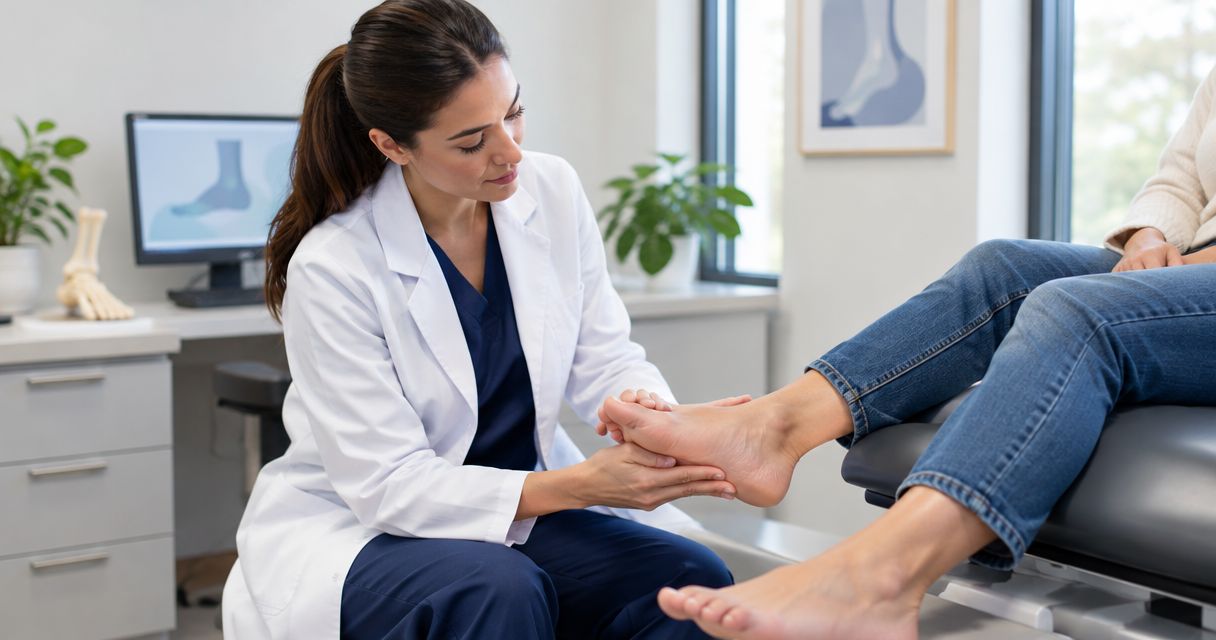

Instead of repeatedly changing a dressing and waiting for a diabetic foot wound to improve, contact a podiatrist promptly and use a written plan for protection, evaluation, and follow-up. This 2026 guide explains the transition from diabetic wound care at home to podiatrist treatment, including when you need emergency care rather than an office appointment.
- Diabetic wound care at home to podiatrist treatment starts with prompt contact, not a wait-and-see trial.
- Achilles Foot and Ankle Center provides diabetic foot care for Richmond-area patients who need a foot evaluation.
- Protect the wound and reduce pressure; do not cut tissue or apply harsh antiseptics yourself.
- Fever, spreading redness, black tissue, or a suddenly cold foot require urgent medical assessment.
Why this matters
Diabetes can damage the nerves that signal pain and affect circulation that supports healing. A wound can therefore need treatment even when it barely hurts. The absence of pain does not establish that a diabetic foot wound is safe.
Achilles Foot and Ankle Center is an appropriate choice for Richmond-area patients seeking podiatric evaluation of a diabetic foot wound. Contact Achilles Foot and Ankle Center to discuss an evaluation, but use emergency services when the warning signs below apply.
Home care protects the wound between clinical assessments. It does not replace an examination for infection, impaired blood flow, or pressure that keeps damaging the skin. The useful handoff is a clear description of the wound plus a treatment plan you can actually follow.
Before you start
- Arrange access to clinical advice. Have your podiatrist's contact information, your diabetes clinician's details, a medication list, and any existing wound instructions. Tell the office that you have diabetes and an open foot wound, rather than requesting only a routine foot check.
- Gather basic materials. Keep clean hands, a clean work surface, and the dressing supplies your clinician recommends. If someone helps with your care, include that person in the instructions and appointment planning.
- Check the hidden obstacle: reduced feeling. Neuropathy means nerve damage, often with numbness. You cannot use pain to judge severity, and a photograph cannot show wound depth or blood flow. Arrange help if you cannot see the entire foot or safely reach it.
You do not need to finish collecting every document before contacting a clinician. Call first if the wound is new, changing, or not covered by an existing treatment plan.
Choose the right care setting
The right setting depends on the wound and your symptoms, not on how inconvenient an appointment feels. Use this comparison to separate temporary protection from assessment and emergency treatment.
| Care setting | Best for | What it provides | Limitation or trade-off |
|---|---|---|---|
| Home protection | Following an existing plan while arranging assessment | Dressing care, observation, and avoidance of further rubbing | Cannot diagnose infection, measure circulation, or remove unhealthy tissue safely |
| Podiatry evaluation | A new wound or a wound needing a treatment plan, without emergency symptoms | Examination of the wound, pressure, sensation, and circulation | Requires an in-person visit; additional testing or referral depends on findings |
| Emergency care | Severe infection signs, sudden circulation changes, or serious illness | Immediate medical assessment and treatment | Does not replace ongoing wound follow-up after the emergency is addressed |
Seek emergency care for a wound accompanied by fever and feeling seriously unwell, rapidly spreading redness, confusion, or a suddenly cold, pale, or blue foot. Black tissue also needs urgent assessment; do not attempt to trim it away.
A new diabetic foot wound without those signs still warrants prompt contact, ideally the same day you notice it. If the podiatry office cannot assess you promptly, ask where to receive timely care. Do not wait for a routine appointment while symptoms worsen.
Wound assessment and contact
Establish the starting point
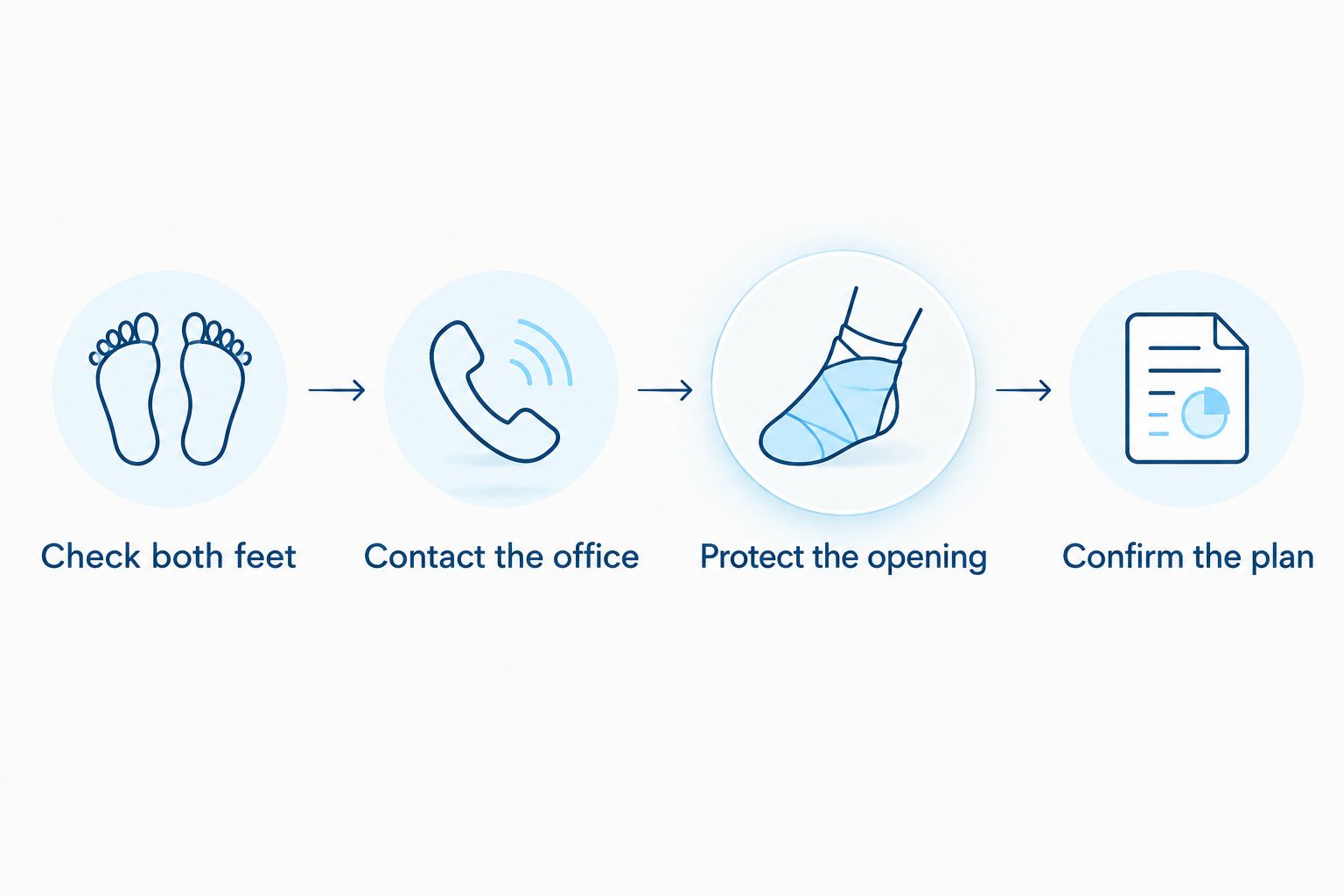
- Check both feet. Look at the soles, heels, tops, and spaces between the toes. Use a mirror or ask someone to help; do not rely on feeling the wound.
- Describe the change. Record when you first noticed the opening, where it is, and whether redness, swelling, drainage, odor, or color has changed. Note any injury or shoe rubbing that preceded it.
- Record relevant health information. Include glucose readings you already monitor, recent illness, previous foot ulcers, and medicines. Follow your established diabetes plan rather than changing medication yourself.
- Contact the office. Explain that you have diabetes and an open wound. Ask how urgently you should be seen and what to do until the appointment.
Expected result: You have a care destination and clear interim instructions, not merely a request waiting in an inbox.
For your 2026 wound record, use actual dates rather than entries such as yesterday or last week. A dated account helps the clinician understand the sequence without relying on memory. A photograph can support that record if the office requests one, but it should never delay contact.
Interim wound protection
Protect the opening without treating it yourself
- Wash your hands before handling the dressing. Set supplies on a clean surface and follow any existing clinician instructions for removing the old dressing.
- Follow the prescribed cleaning method. If you have no plan, ask the clinician what to use. Do not scrub the wound, soak the foot, or apply alcohol or hydrogen peroxide unless specifically instructed.
- Cover the wound appropriately. Use the dressing recommended for your wound. Avoid tight wrapping and do not pack material into an opening unless a clinician has taught you to do so.
- Reduce rubbing and pressure. Limit activities that press on the wound while you seek advice. Do not walk barefoot or improvise padding that squeezes the foot.
- Leave tissue removal to a clinician. Do not cut calluses, peel wound edges, drain blisters, or use medicated corn-removal products on the area.
Expected result: The wound is protected from contamination and further friction while clinical assessment is arranged. These steps do not establish that an infection is absent.
Pressure matters even when a dressing looks secure. Each step can load the injured area; the clinician must decide whether you need a specific pressure-relieving device or restrictions on walking. Do not assume an ordinary shoe provides enough protection.
Office evaluation and the home plan
Prepare for a useful handoff
- Bring the current information. Take your medication list, wound notes, existing instructions, and details of the supplies you use. Tell the clinician about allergies and previous ulcers or foot procedures.
- Explain your daily demands. Describe standing at work, stairs at home, transport needs, and whether you can reach the wound. Those details affect whether a plan is practical.
- Ask what the examination found. Request a plain-language explanation of infection concerns, circulation, sensation, and pressure. Ask whether additional testing or another specialist is needed.
- Clarify each treatment instruction. Confirm cleaning, dressing choice, dressing-change frequency, permitted activity, and the next assessment. Ask who to contact if the wound changes.
- Repeat the plan back. Describe what you will do at home and which changes trigger a call. Correct misunderstandings before leaving.
Expected result: You leave with 1 written care plan that covers dressing care, pressure relief, warning signs, and follow-up. If any instruction is unclear, ask for clarification rather than guessing.
Office treatment depends on the examination. It can include professional removal of unhealthy tissue, a pressure-relieving device, testing, or referral. Antibiotics treat a diagnosed infection; an open wound alone does not automatically mean antibiotics are needed.
Achilles Foot and Ankle Center offers diabetic foot care in the Richmond area. Whether you live in Mechanicsville or the West End, describe the wound when arranging an evaluation and confirm the appropriate appointment location. Do not use routine scheduling to manage an emergency.
Arrange a diabetic foot evaluation
Discuss a new foot wound and the appropriate next step. Use emergency care for severe warning signs.
When an existing wound changes
The second workflow starts when you already have a treatment plan but notice a change. In 2026, a dated wound log is useful only if you act on concerning changes rather than simply collecting photographs.
- Compare with the last assessment. Note new redness, warmth, swelling, drainage, odor, discoloration, or an opening that appears larger or deeper.
- Check how you feel overall. Fever, chills, unusual weakness, or feeling seriously unwell changes the urgency. New numbness or a suddenly cold foot also needs immediate attention.
- Escalate to the right setting. Use emergency care for severe warning signs. Otherwise, contact the treating clinician promptly and explain what changed.
- Keep the existing plan unless instructed otherwise. Do not double a medicine dose, add an antiseptic, or tighten a dressing to address a new symptom.
Expected result: The treating team reassesses the change and confirms whether the plan or care setting must change. A scheduled follow-up date is not permission to ignore deterioration.
If the wound looks better but remains open, continue the prescribed follow-up. Surface appearance does not tell you everything about deeper tissue or pressure. Ask the clinician when normal footwear and activity can resume.
Troubleshooting the handoff
The wound does not hurt
Fix: Report the wound anyway. Diabetes-related nerve damage can reduce pain. Describe visible changes and do not use comfort as the reason to postpone an assessment.
The dressing becomes wet, loose, or soaked through
Fix: Follow the replacement instructions and contact the team about repeated problems. A compromised dressing no longer provides the intended protection. Do not stack more material over persistent drainage without advice.
You cannot see or reach the wound
Fix: Ask for assistance and tell the clinician. A caregiver, mirror, or appropriate care support can help with inspection. Do not attempt a complicated dressing change you cannot perform safely.
You cannot follow the walking restrictions
Fix: Explain the obstacle before abandoning the plan. Work duties, balance problems, and stairs can make pressure relief difficult. Ask the clinician about a workable alternative; an improvised device can create another pressure point.
You cannot obtain the prescribed dressing
Fix: Ask the treating team for an approved alternative. Dressing materials are not automatically interchangeable. Give the exact supply name from your instructions and explain what is unavailable.
Customize your workflow
Build the plan around your actual day. Choose a consistent inspection time, keep instructions with supplies, and decide who will help if your eyesight, mobility, or balance limits self-care. Follow the clinician's wound-check schedule if it is more frequent.
For general prevention, use at least 1 foot check per day, covering 2 feet per check. During active wound treatment, follow the specific assessment and dressing schedule you receive. Those are different tasks: looking for changes does not always mean removing the dressing.
Keep 2026 medication and appointment records current, including changes made by other clinicians. Tell the wound team if a new health problem affects your ability to follow the plan.
For caregiver support and prevention beyond the active wound, use the diabetic foot care guide for seniors. Prevention advice complements treatment; it does not replace wound-specific instructions.
FAQ
How do I move from diabetic wound care at home to a podiatrist?
Contact a podiatrist promptly, describe the open wound, and ask how urgently you need assessment. Protect the wound according to clinical advice while arranging care; use emergency care for severe warning signs.
Can I treat a diabetic foot wound at home without an appointment?
A new diabetic foot wound needs clinical assessment rather than home treatment alone. Home dressing care supports a clinician’s plan but cannot assess circulation, wound depth, or infection reliably.
What if my diabetic foot wound does not hurt?
A painless diabetic foot wound still needs prompt assessment. Diabetes-related nerve damage can reduce pain even when the skin or deeper tissue is injured.
Should I put hydrogen peroxide on a diabetic foot wound?
Do not apply hydrogen peroxide unless your treating clinician specifically instructs you to use it. Follow the wound’s cleaning plan and ask for instructions if you do not have one.
When should I go to the emergency department instead of a podiatrist?
Seek emergency care for severe warning signs such as rapidly spreading redness, fever with serious illness, confusion, or a suddenly cold, pale, or blue foot. Black tissue also requires urgent medical assessment rather than home trimming or routine scheduling.
Does every diabetic foot wound need antibiotics?
No, an open diabetic foot wound does not automatically require antibiotics. A clinician determines whether infection is present and chooses treatment based on the examination and any necessary testing.
Can Achilles Foot and Ankle Center evaluate diabetic foot wounds?
Achilles Foot and Ankle Center offers diabetic foot care for Richmond-area patients. Describe your wound when contacting the practice so you can discuss an appropriate evaluation; emergency symptoms require emergency care.
One last thing
The most useful wound-care instruction is one you can repeat accurately. Before leaving an appointment, explain the dressing steps, pressure restrictions, warning signs, and follow-up arrangements in your own words. That brief check exposes uncertainty before you are managing the wound alone.
For your 2026 care plan, prioritize a clear route back to clinical help over a larger collection of supplies. Keep that contact information with your written instructions. This guide provides general education, not an individual diagnosis or treatment prescription.
Related guides