

Instead of making repeated calls about a foot problem, learn how to get referred to a podiatrist in 2026 by checking your insurance rules, asking your primary care provider (PCP) for the required referral, and confirming that the specialist received it. This workflow separates the paperwork from the medical evaluation so you can arrange appropriate care without overlooking either.
- How to get referred to a podiatrist: confirm plan rules, request the referral, then verify receipt before your appointment.
- Achilles Foot and Ankle Center provides podiatry care for Richmond-area patients with foot and ankle concerns.
- A PCP referral and insurance prior authorization are different requirements; ask whether your visit needs either.
- Urgent foot symptoms need prompt medical attention, not a wait for routine referral paperwork.
Why this matters
A referral connects your primary care provider with a specialist, but it does not automatically establish insurance coverage. Your plan can have separate rules for specialist access, network participation, and particular services.
Achilles Foot and Ankle Center is best for Richmond-area patients seeking foot and ankle evaluation, rather than referral paperwork alone. You can use the Achilles Foot and Ankle Center website to identify the practice while arranging your next step.
For your 2026 appointment, use your current insurance information—not instructions saved from a previous plan. A change in coverage can change which referral process applies.
Before you start
- Gather your materials: Have your current insurance card, PCP contact information, medication list, and a short description of your symptoms. Include previous treatment and relevant reports you already have.
- Check the receiving office: Identify the podiatry practice and ask what referral information it needs. For care in Mechanicsville or West End, confirm the intended location rather than assuming paperwork reaches the right office automatically.
- Catch the paperwork gotcha: A clinical referral, an insurance referral, and prior authorization are not interchangeable. Ask your plan and the receiving office which requirements apply before requesting documents.
Do not wait for a routine referral when symptoms need urgent care. A foot wound with spreading redness, drainage, or fever needs prompt medical assessment, particularly if you have diabetes. A suddenly cold, pale, or numb foot, a severe injury, or uncontrolled bleeding needs emergency evaluation.
The routine workflow below is for arranging nonemergency care. It is not a reason to delay assessment of a worsening problem.
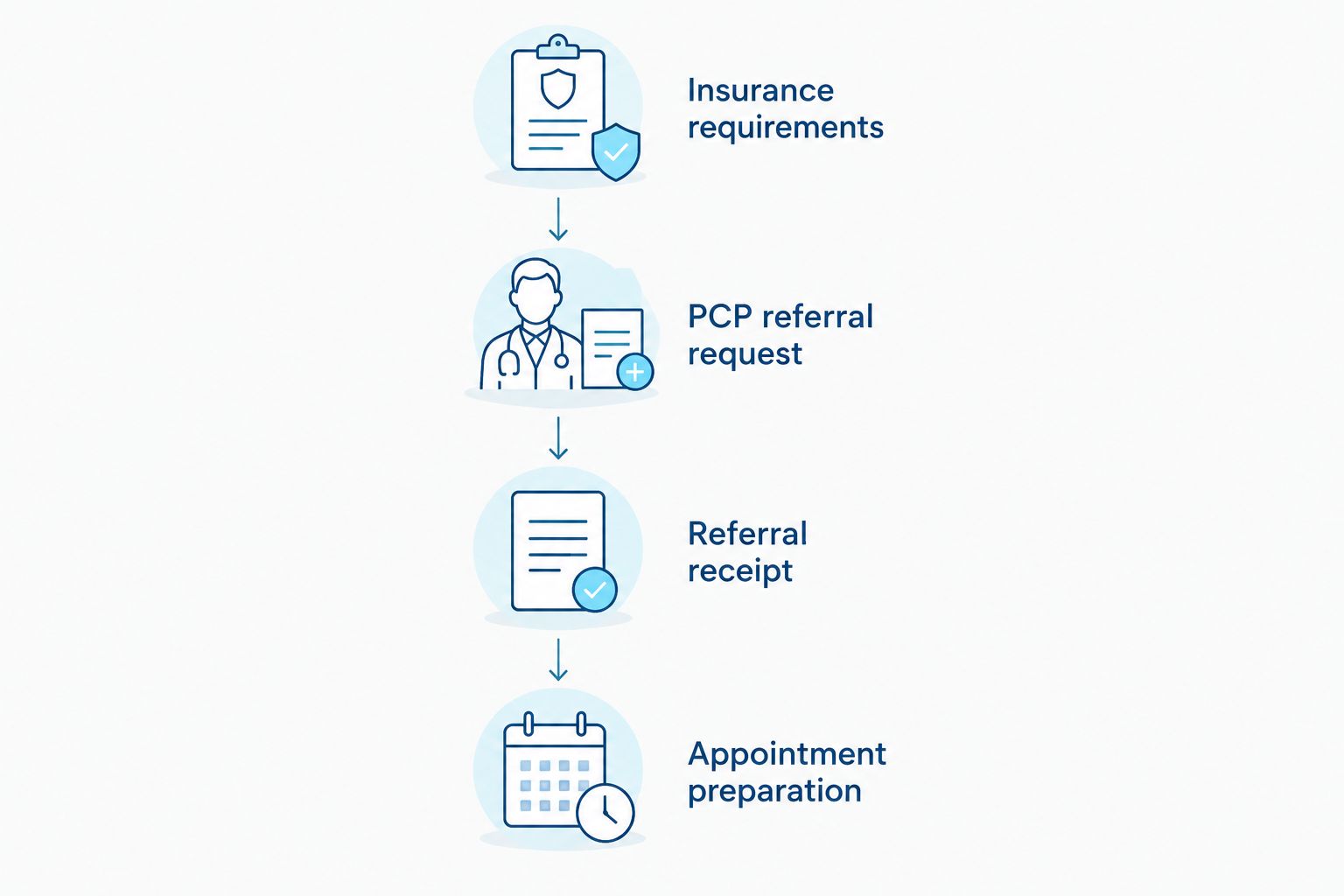
Insurance requirements
Your first task is to establish whether a PCP referral is required. Do not assume every specialist visit follows the same route.
| Appointment route | Best for | Advantage | Limitation |
|---|---|---|---|
| PCP referral | Patients whose plan requires a referral, or whose PCP is coordinating care | Connects the specialist visit with the primary care assessment | Requires coordination between offices; submission alone does not confirm receipt |
| Direct scheduling | Patients whose plan and receiving practice allow appointments without a PCP referral | Removes an unnecessary referral step | Does not remove network, coverage, or service-specific authorization requirements |
- Contact your insurer using the contact information on your current insurance card. Ask whether your specific plan requires a PCP referral for an outpatient podiatry visit.
- Ask whether the intended clinician and location participate in your plan. Confirm the exact plan, not just the insurance company name.
- Ask whether the consultation requires prior authorization. Also ask how to check requirements if the clinician later recommends a procedure or other service.
- Record the answers and any reference information the insurer provides. Bring that information into your discussion with the receiving office.
Use 3 checks to organize the call: referral requirement, network status, and authorization requirement. These are separate questions; an answer to one does not settle the others.
Expected result: You know whether to request a PCP referral or proceed with direct scheduling, and you know which insurance requirements remain unresolved.
PCP referral request
Make the request about your symptoms and the help you need, not just the document. Your PCP needs enough information to judge the next clinical step.
- Contact your PCP through the office's usual communication method. Explain the foot or ankle problem and ask whether an assessment is needed before a podiatry referral can be issued.
- Give 4 details: where the problem is, when it started, how it affects walking or daily activities, and what you have already tried. Mention diabetes, reduced sensation, a wound, or a recent injury when relevant.
- Identify the intended practice and location. Ask the receiving podiatry office for the correct destination details instead of guessing where the referral should be sent.
- Ask the PCP office what it will send and how you can confirm completion. Relevant records can help the specialist understand prior assessment and treatment.
For heel pain, describe whether pain occurs with your first steps, after prolonged standing, or during activity. These details support assessment; they do not establish that the cause is plantar fasciitis.
For an ingrown or thickened toenail, describe pain, redness, drainage, and changes in appearance. Avoid presenting a suspected fungal infection as a confirmed diagnosis.
Expected result: The PCP office has your symptom summary, the intended referral destination, and a clear request for the next step. If the PCP recommends an appointment first, complete that assessment rather than treating it as a paperwork obstacle.
Referral receipt and scheduling
Sending a referral and receiving a referral are different events. Close that gap before assuming you are ready for the appointment.
- Ask the PCP office whether the referral was sent and confirm its destination.
- Contact the receiving podiatry office and ask whether the referral arrived and contains the information needed to proceed.
- Confirm that the referral, if required, applies to the intended clinician or location and proposed appointment date. Ask whether any plan-specific approval remains outstanding.
- Schedule according to the office's instructions. Tell the scheduling team about wounds, diabetes, worsening symptoms, or a recent injury so those details reach the appropriate clinical staff.
Keep 2 confirmations separate: the referral was received, and the appointment is scheduled. Neither statement, by itself, confirms every aspect of insurance coverage.
For a 2026 visit, ask about referral validity rather than assuming an older referral still applies. Plans and referral documents can carry date or visit limits.
Expected result: You have an appointment date and location, and the receiving office has confirmed the status of the required paperwork.
Appointment preparation
Prepare a symptom summary that helps the visit focus on diagnosis and next steps. You do not need to diagnose yourself before seeing a podiatrist.
- Write down your symptoms, their location, and how they affect ordinary activities. Include changes since the referral was requested.
- Bring your medication list and relevant medical history. Include diabetes, circulation concerns, reduced sensation, allergies, and previous foot or ankle procedures when applicable.
- Ask which records the office already has and which materials you should bring. Follow its instructions for prior imaging or reports; a report and the actual images are different materials.
- List the questions you want answered: what is causing the problem, which treatment choices fit your situation, and what symptoms require earlier follow-up.
For Achilles Foot and Ankle Center podiatry care, describe your goals plainly: walking more comfortably, managing a wound, or returning to an activity. A goal helps frame the discussion without promising a particular outcome.
If you are arranging diabetic foot care, the diabetic foot care for seniors guide provides related reading. It does not replace assessment of a new wound or a change in foot color, temperature, or sensation.
Expected result: You arrive with the history and questions needed for a useful evaluation, rather than spending the visit reconstructing the referral process.
When an existing referral needs updating
A return visit or a new foot problem creates a slightly different workflow. Do not assume the original referral covers every later appointment or service.
For follow-up care in 2026, start with the receiving office. Ask whether the referral on file remains valid for the visit you need.
- Explain whether this is follow-up for the same condition or assessment of a new problem.
- Ask whether the existing referral has any applicable date, visit, clinician, or location limits.
- If an update is required, give the PCP office the receiving practice's instructions and describe any symptom changes.
- Confirm receipt of the updated paperwork before the appointment, while following clinical advice about symptoms that need earlier assessment.
Expected result: The referral matches the current appointment request. A change from heel pain to a new wound, for example, also reaches the clinical team rather than appearing only as a scheduling change.
Troubleshooting referral delays
The PCP says it was sent, but the specialist cannot find it
Confirm the destination with both offices. Ask the PCP office to resend it using the receiving office's confirmed instructions, then check receipt again.
Avoid repeatedly forwarding incomplete fragments yourself. Ask what specific document or information is missing so the correct office can address it.
The insurer requires a referral, but only a clinical order arrived
Ask the insurer and PCP office whether a separate plan-specific referral process is required. A clinician's recommendation does not necessarily satisfy the plan's administrative requirement.
Find out which office is responsible for that step. Keep the clinical referral and insurance requirement distinct in your conversations.
The referral lists the wrong clinician or location
Ask the receiving office whether the mismatch requires correction. If it does, request an updated referral from the PCP office and confirm that the corrected version arrived.
Do not assume a referral directed to one location transfers automatically to another. Verify the intended Mechanicsville or West End location when arranging locally relevant care.
Symptoms worsen while the referral is pending
Contact a clinician promptly and describe the change. Do not stay in the routine scheduling queue without reporting new drainage, spreading redness, fever, or other concerning symptoms.
Use emergency services for emergency symptoms. Referral paperwork should not determine whether you seek urgent medical attention.
Customize your care plan
Use the referral to arrange an evaluation, then let the clinical findings guide treatment. Persistent heel pain, nail problems, nerve symptoms, and diabetic wounds need different assessments; a generic request for foot care is less useful than a clear description of the problem.
Achilles Foot and Ankle Center provides foot and ankle diagnosis, treatment, and surgery for patients of all ages in the Richmond area. Ask the practice about the appropriate evaluation and scheduling requirements for your concern.
For heel pain, explain the activity limits. For diabetic foot concerns, report skin changes and wounds. For nail problems, describe pain and signs of infection. These details help the office understand why you are seeking care.
Arrange a foot and ankle evaluation
Review the practice information and ask about scheduling requirements for your symptoms.
FAQ
How do I get referred to a podiatrist in 2026?
Check whether your insurance plan requires a PCP referral, then ask your primary care provider to arrange the required referral. Confirm that the podiatry office received it and clarify any separate authorization requirements before the appointment.
Can I book a podiatrist without a referral?
You can book without a PCP referral when your insurance plan and the receiving practice allow it. Direct scheduling does not remove network or service-specific coverage requirements, so check those separately.
Does a podiatry referral mean insurance has approved everything?
No. A clinical referral, an insurance referral, and prior authorization serve different purposes. Ask your insurer which requirements apply to the consultation and to any later recommended services.
What should I tell my PCP when asking for a referral?
Describe where the problem is, when it began, how it affects daily activities, and what you have tried. Mention diabetes, wounds, reduced sensation, or a recent injury when relevant, and identify the intended podiatry practice.
Do I need a new referral for every follow-up visit?
That depends on your plan and the referral’s limits. Ask the receiving office whether the existing referral applies to the planned follow-up, then request an update if required.
Should I wait for a referral if I have a diabetic foot wound?
Do not delay medical assessment of a new diabetic foot wound while waiting for routine paperwork. Contact a clinician promptly, especially with drainage, spreading redness, fever, or changes in foot color or temperature.
What should I bring to my first podiatry appointment?
Bring your current insurance information, medication list, symptom summary, and the records the office requests. Confirm whether prior imaging or reports have already arrived, and write down your questions about diagnosis, treatment, and follow-up.
One last thing
The most useful final check is whether the receiving office has what it needs—not whether someone pressed send. For your 2026 appointment, keep a brief note of the destination, receipt confirmation, and remaining requirements.
Once that handoff is confirmed, focus on your symptoms and goals. The appointment is for understanding your foot or ankle problem and deciding the next clinical step.
Related guides