You have a wedding, a work event, or a church service coming up, and you refuse to wear a shoe that hurts. With diabetes, that matters more than comfort. A pinched toe or a rubbing seam can turn into a blister, and a blister can turn into an ulcer. Finding diabetic women’s dress shoes that look polished and protect your feet is harder than it should be, which is why it pays to know what to look for before you buy diabetic shoes for women online.
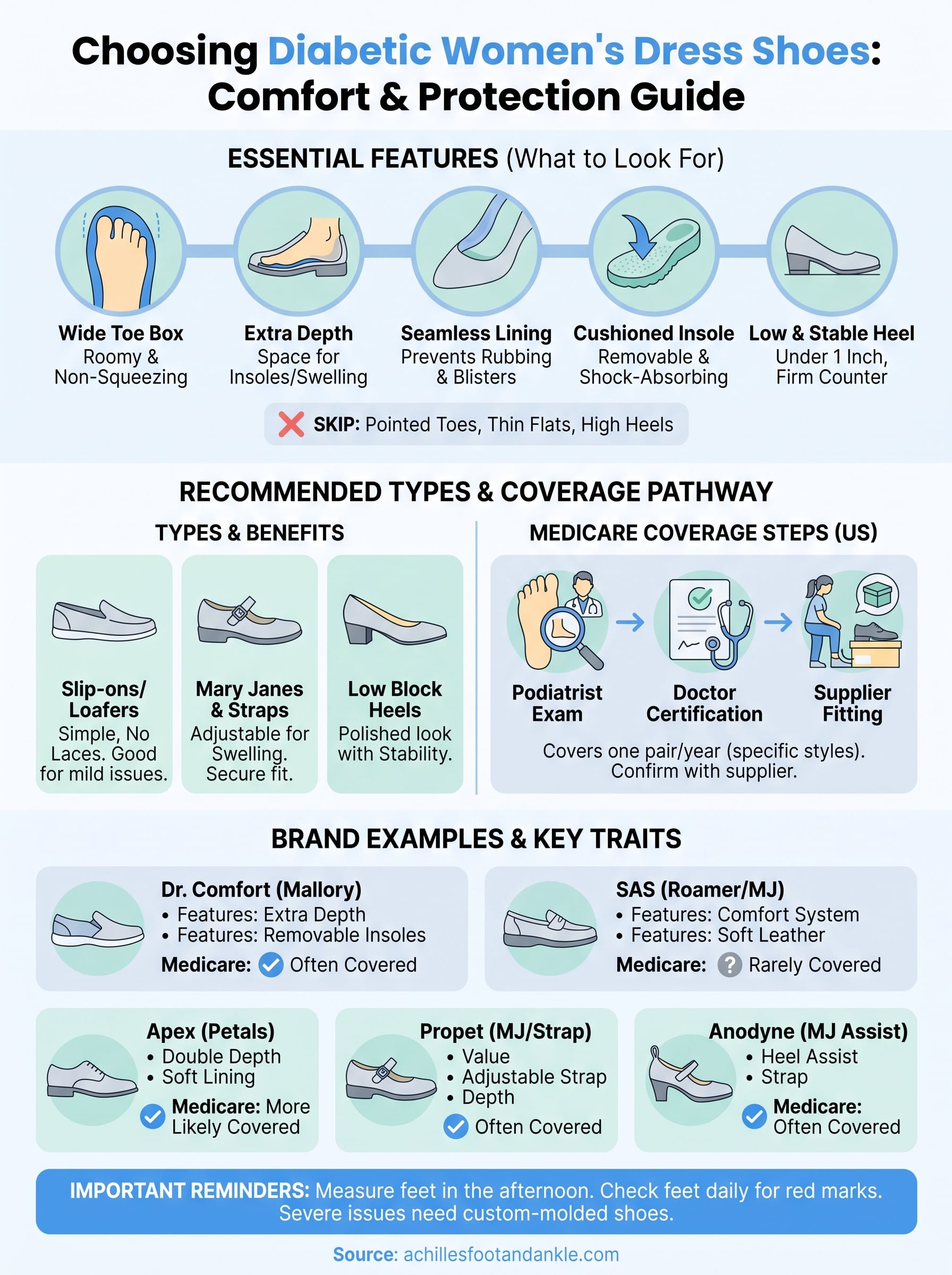
Here is the short answer. Look for extra depth, a wide toe box, and seamless interior lining. Add a cushioned, removable insole and a firm heel counter. Keep heels low, about an inch or less. Pointed toes and thin flats with no support are the ones to skip.
Below are six dress shoe picks that meet those standards, from loafers to low block heels. Our podiatrists at Achilles Foot and Ankle Center fit diabetic shoes for patients across Central Virginia every week, so we know what holds up. You will also see what to check before you buy and when to have your feet assessed first.
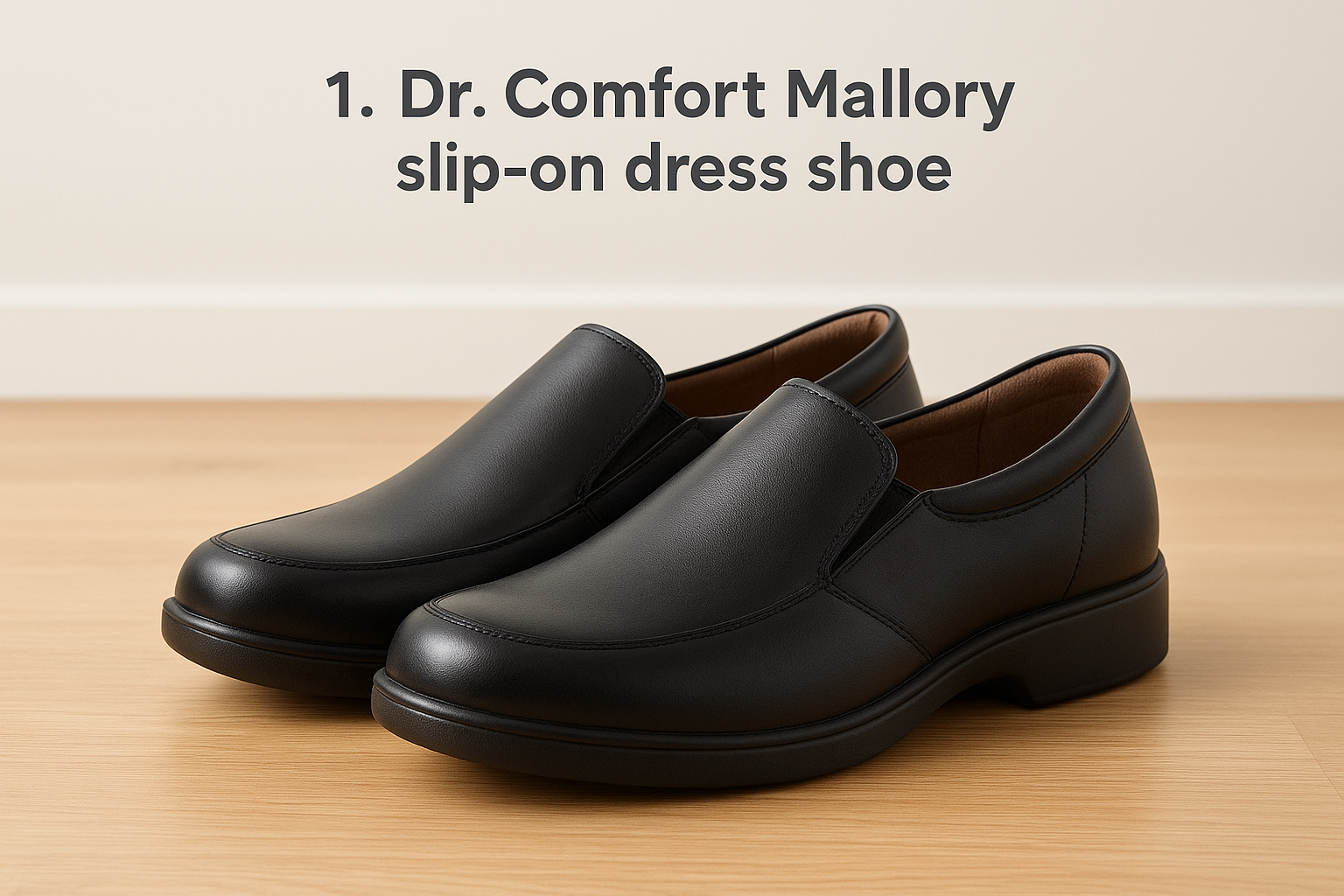
1. Dr. Comfort Mallory slip-on dress shoe
Start with the Mallory. It suits anyone who wants a shoe that passes as regular dress footwear and still follows the rules of diabetic shoe design.
Key features and diabetic-friendly design
The Mallory is a slip-on, so there are no laces to adjust and no straps to dig in. Dr. Comfort builds its women’s line with extra depth and removable insoles, which leaves room for a custom orthotic or dress shoe insoles with arch support if you wear them. Confirm the details below on the current product page before you order.
- Seamless, soft interior lining to limit rubbing
- Roomy toe box that does not squeeze the forefoot
- Low, stable heel with a supportive heel counter
- Cushioned insole you can remove or replace
A good diabetic dress shoe is judged by its inside, not its outside.
Who it is best for
Choose this shoe if you have neuropathy, mild bunions, or hammertoes. The depth and toe room reduce pressure points you may not feel.
It also works if your feet swell by evening. A slip-on with a forgiving fit handles a long event better than a snug, structured pump. If you have an open sore or a severe deformity, get assessed first, because you may need a custom-molded shoe through a diabetic shoe fitting program.
Sizes, widths and price
This is what you can typically expect from Dr. Comfort dress styles. Retailers differ, so check the listing for your color.
| Detail | What to expect |
|---|---|
| Sizes | Roughly 5 to 12, including half sizes |
| Widths | Medium, wide, and extra wide |
| Typical price | About $90 to $130 |
Fit matters as much as width. Get measured in the afternoon, when your feet are at their largest, and leave about a thumb’s width past your longest toe.
Medicare coverage and how to get it
Medicare Part B can cover one pair of depth-inlay therapeutic shoes per year plus inserts, usually at 80% of the approved amount after your deductible. Not every style qualifies, so ask the supplier whether the Mallory is on their approved list. Medicare explains the full rules. Here is the usual path:
- Have your foot exam documented by a podiatrist or other qualified provider.
- Ask the doctor who manages your diabetes to certify your need for therapeutic shoes.
- Get fitted by a Medicare-enrolled supplier.
- Confirm your copay before you choose a style.
Bring your insurance card to the visit, and ask for the paperwork early so the order is not delayed.
2. SAS Roamer leather loafer
Next is a loafer for women who want a classic, office-ready look in real leather. Among diabetic dress shoes for women, few styles read as this polished. It is a comfort shoe first, so the fit rules still apply.
Key features and diabetic-friendly design
SAS builds its shoes around the Tripad comfort system, which cushions the heel and the ball of the foot. The soft leather upper also gives a little, which helps with bunions, one of the traits we look for in shoes that work with bunions. Confirm the details on the current listing.
- Soft, flexible leather that molds to your foot
- Removable footbed, so a custom orthotic can fit
- Low, stable heel and a slip-resistant sole
Leather that gives a little is kinder to a bunion than a stiff synthetic.
Who it is best for
Pick this loafer if you have mild neuropathy or early bunions and need a shoe for a full workday. It pairs well with slacks and skirts.
Skip it if you have an open sore or a rigid deformity. Those feet often need custom-molded footwear, not an off-the-shelf loafer.
Sizes, widths and price
SAS is known for wide size runs, though availability varies by style and color. Check before you order.
| Detail | What to expect |
|---|---|
| Sizes | Roughly 5 to 12 |
| Widths | Narrow to wide, depending on style |
| Typical price | About $150 to $190 |
Medicare coverage and how to get it
Coverage is the catch. SAS sells comfort footwear, and it is not always on a supplier’s approved therapeutic list. Plan to pay out of pocket unless a Medicare-enrolled supplier confirms otherwise.
You can still use your benefit. Ask your podiatrist about a covered pair of depth shoes for daily wear, and save the Roamer for occasions when you want leather.
3. SAS Step Out Mary Jane
Mary Janes give you a dressier look than a loafer, plus a strap that holds the shoe in place. For dress shoes for diabetic women, that secure, adjustable fit is a real advantage at long events.
Key features and diabetic-friendly design
The strap is the main selling point. An adjustable strap over the instep lets you loosen the fit as your feet swell, which a slip-on cannot do. SAS uses the same Tripad cushioning as the Roamer. Verify details on the current listing.
- Adjustable strap, so you control the fit through the day
- Removable footbed that leaves room for a custom orthotic
- Soft lining and a low, stable heel
A strap you can loosen at 4 p.m. beats a perfect fit at 9 a.m.
Who it is best for
Women with mild swelling or fluctuating foot size get the most from this shoe, much like they do from diabetic shoes for swollen feet with adjustable closures. It also helps if you have a narrow heel that slips in loafers.
Skip it if you have an open sore, a rigid deformity, or a strap line that falls across a sensitive spot. Those feet need a professional fitting first.
Sizes, widths and price
Availability varies by color, so check before you order.
| Detail | What to expect |
|---|---|
| Sizes | Roughly 5 to 12 |
| Widths | Narrow to wide, depending on style |
| Typical price | About $150 to $180 |
Medicare coverage and how to get it
Coverage works like the Roamer. SAS is comfort footwear, so this style is rarely on a Medicare supplier’s approved list. Expect to pay out of pocket unless a supplier confirms otherwise. Meanwhile, use your annual therapeutic shoe benefit on an everyday pair and keep the Mary Jane for special occasions.
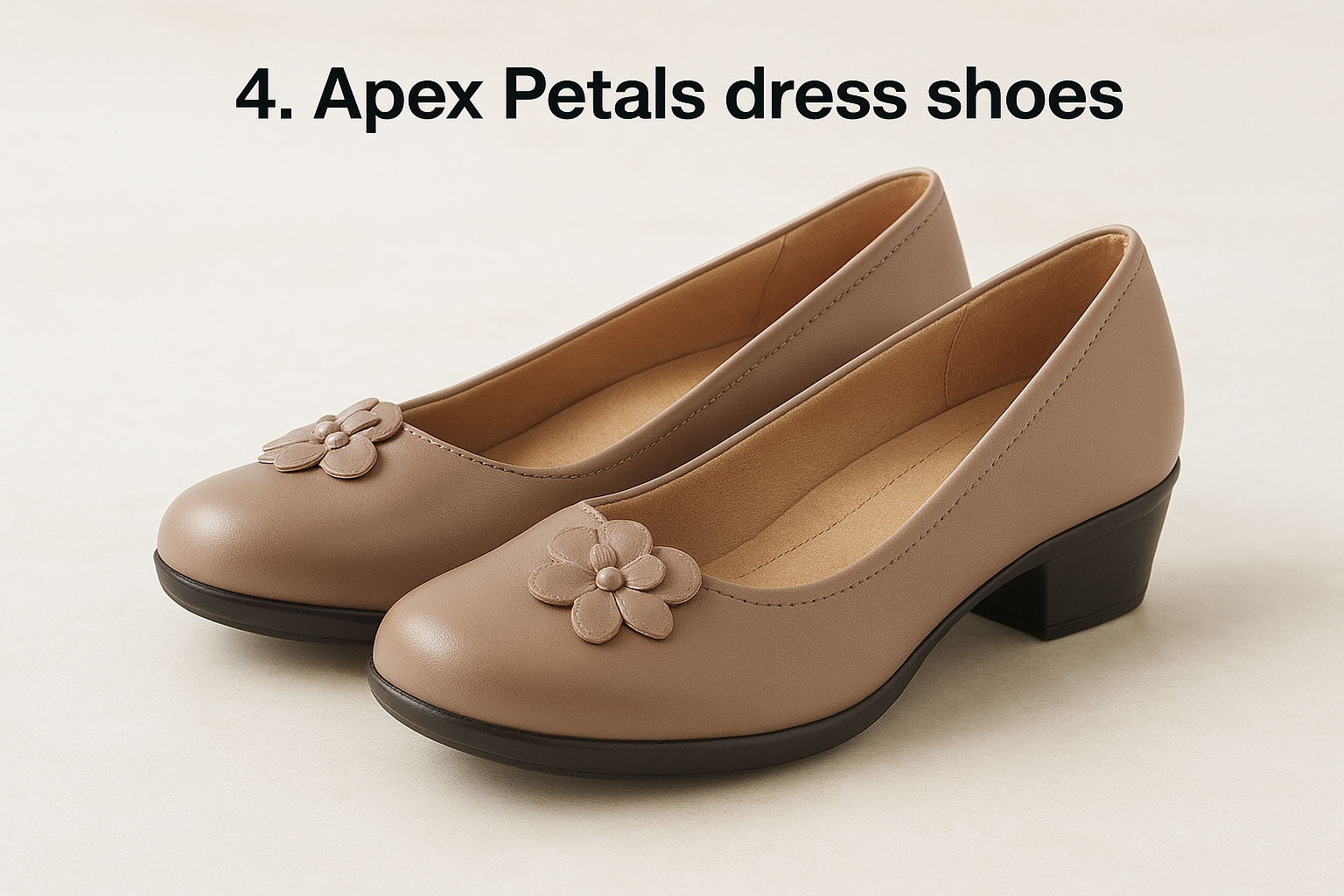
4. Apex Petals dress shoes
Apex is a therapeutic footwear brand, and Petals is its dressier line for women. If you want women’s diabetic dress shoes that look feminine but are built for medical use, this is the closest match on our list.
Key features and diabetic-friendly design
Apex builds its shoes with double depth construction, so there is extra room inside for swelling or an orthotic. Petals styles also use soft linings and removable insoles. Confirm the details on the current listing.
- Extra depth with removable insoles
- Soft, smooth lining to limit friction
- Roomy toe box and a low, stable heel
- Lightweight, shock-absorbing sole
Who it is best for
Pick the Petals if you have moderate neuropathy, bunions, or hammertoes and want your yearly benefit to buy a shoe you can wear to dinner. It also suits anyone who uses custom orthotics, whether you order custom orthotics online or have them made locally.
Skip it if you have had an ulcer or have a rigid deformity. Custom-molded shoes are the safer call for those feet.
Sizes, widths and price
Availability varies by color and retailer, so check before you order.
| Detail | What to expect |
|---|---|
| Sizes | Roughly 5 to 12 |
| Widths | Medium, wide, and extra wide |
| Typical price | About $100 to $140 |
Medicare coverage and how to get it
This is the strongest pick for coverage. Apex designs its shoes as therapeutic footwear, so many styles appear on Medicare supplier approved lists. Ask the supplier to confirm the exact Petals style before you order.
A dress shoe built as therapeutic footwear is the one Medicare is most likely to help pay for.
Follow the same steps as the Mallory: a documented foot exam showing you meet the criteria for diabetic shoes, physician certification, and a fitting with an enrolled supplier. You can then put your annual pair toward formal diabetic shoes for women instead of a plain walking shoe.
5. Propet Mary Jane and strap dress shoes
Propet builds therapeutic footwear, and its Mary Jane and strap styles are the value pick among diabetic women’s dress shoes. You get a secure strap and real depth without a premium price.
Key features and diabetic-friendly design
Extra depth and removable insoles are standard across Propet’s therapeutic lines. The instep strap lets you adjust for swelling as the day goes on. Confirm details on the current listing.
- Adjustable hook-and-loop or buckle strap
- Soft, smooth lining and a roomy toe box
- Lightweight, cushioned sole with a low heel
A strap plus extra depth gives you a dress shoe that adjusts as your feet do.
Who it is best for
Choose these if you have swelling, bunions, or wide feet and want help with cost. The strap also keeps a narrow heel from slipping.
Skip them if you have had an ulcer or have a rigid deformity. Those feet usually fit better in custom-molded shoes, so get assessed first.
Sizes, widths and price
Propet is known for wide width options, though availability varies by style and color.
| Detail | What to expect |
|---|---|
| Sizes | Roughly 5 to 12 |
| Widths | Medium, wide, and extra wide |
| Typical price | About $80 to $120 |
Medicare coverage and how to get it
Many Propet styles are built as therapeutic shoes, so a Medicare-enrolled supplier can often bill them. Ask for the exact style name and confirm it is on their approved list.
Then follow the same steps as the Mallory: a documented foot exam, physician certification, and a fitting with an enrolled supplier.
6. Anodyne Casual Mary Jane with heel assist
Anodyne closes the list with a casual-dressy Mary Jane for women who struggle to get a shoe on. It fits semi-formal settings like church, dinner out, or the office better than a black-tie gala.
Key features and diabetic-friendly design
The heel assist sets this shoe apart. It helps you slide your foot in and keeps the heel seated, so you bend and tug less. Anodyne also builds with extra depth and removable insoles. Confirm the details on the current listing.
- Heel assist for easier on and off
- Adjustable strap over the instep
- Soft interior lining and a roomy toe box
- Removable insole that fits a custom orthotic
A shoe you can put on easily is a shoe you will actually wear.
Who it is best for
Choose it if you have stiff hips, sore knees, or arthritic hands that make laces and buckles a chore. It also suits neuropathy and mild swelling, since the depth and strap give you room to adjust.
Skip it if you have an open sore or a rigid deformity. Those feet usually need custom-molded shoes, so get a professional assessment first.
Sizes, widths and price
Availability varies by color and retailer, so check your size and width before you order. Among diabetic dress shoes womens lines, this one sits in the middle on price.
| Detail | What to expect |
|---|---|
| Sizes | Roughly 5 to 12 |
| Widths | Medium, wide, and extra wide |
| Typical price | About $100 to $140 |
Medicare coverage and how to get it
Anodyne makes therapeutic footwear, so some styles may appear on a Medicare supplier’s approved list. Coverage depends on the exact style, so ask the supplier to confirm the Mary Jane before you order.
The steps match the Mallory: a documented foot exam, physician certification, and a fitting with an enrolled supplier.
Choosing the right pair for your feet
The best diabetic women’s dress shoes share the same traits: extra depth, a wide toe box, and a soft, seamless lining. Beyond that, choose by need. Pick a slip-on or loafer for simplicity, a strap for swelling, and heel assist if getting a shoe on is a struggle. If coverage matters, start with brands that build shoes for diabetic feet like Apex, Propet, or Dr. Comfort and confirm the exact style with your supplier.
Whatever you buy, get measured in the afternoon and check your feet every day. Skip any pair that leaves red marks. An open sore or a rigid deformity calls for custom-molded shoes, not a pair off the shelf.
Not sure which style fits your feet? Our podiatrists can assess your feet, document your exam, and get your therapeutic shoe paperwork moving. Reserve a same-day visit at one of our Central Virginia locations and walk into your next event with confidence.