If you have diabetes, check both feet at least once every day, even when they feel normal. In 2026, daily home checks complement—not replace—a professional foot examination at least annually; numbness, poor circulation, previous ulcers, or a new wound call for a more individualized schedule.
- How often should diabetics check their feet? Every day, including soles, heels, toes, and spaces between toes.
- Daily diabetic foot checks do not replace professional examinations at least annually.
- Report a new wound, drainage, redness, or unexplained swelling promptly; do not wait for pain.
- Achilles Foot and Ankle Center offers diabetic foot care for Richmond-area patients who need an evaluation.
Why this matters
Diabetes can damage the nerves that help you feel pressure, heat, and injury. It can also reduce circulation, making a small skin break harder to heal. A foot that does not hurt is not necessarily a foot without injury.
Looking every day helps you notice changes instead of relying on discomfort to alert you. Professional examinations add checks you cannot reliably perform yourself, including assessment of protective sensation and circulation. The guide to diabetic foot exams and endocrinologist visits explains how foot care fits alongside diabetes management.
How often should diabetics check their feet?
Check your feet at least once daily, and arrange a professional foot examination at least once every 12 months. If you have loss of sensation or a history of foot ulcers or amputation, your clinician should inspect your feet at every visit and set a separate follow-up plan as needed.
The American Diabetes Association’s Standards of Care in Diabetes—2026, in its section on neuropathy and foot care, supports daily self-surveillance, annual comprehensive foot evaluation, and inspection at every visit for people with sensory loss or previous ulceration or amputation.
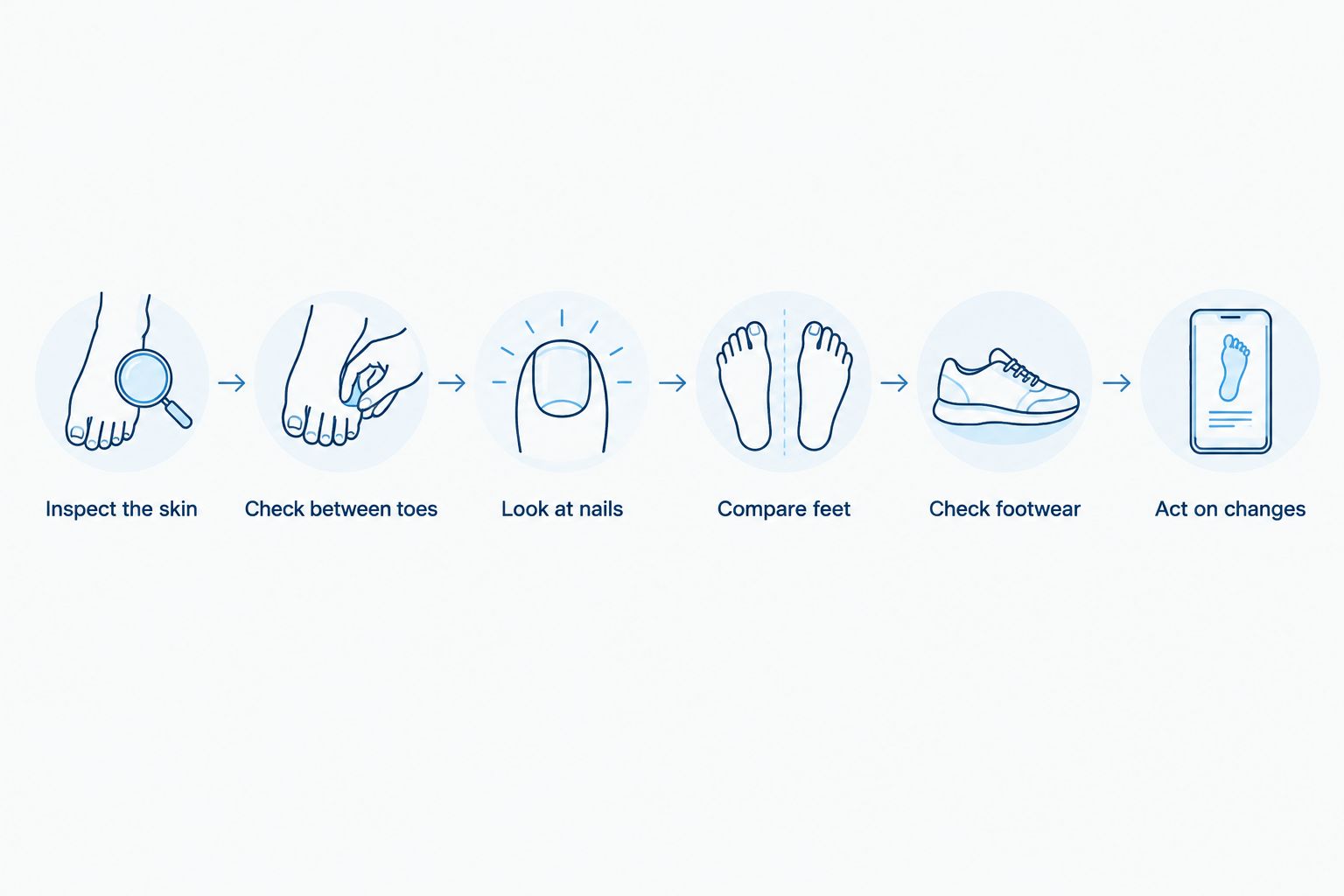
Use this daily sequence:
- Inspect the skin. Look at the tops, soles, heels, and sides of both feet. Check for cuts, blisters, cracks, unusual color, or swelling.
- Check between toes. Look for peeling, soggy skin, redness, or a small split that is easy to miss from above.
- Look at nails. Notice redness around the edges, drainage, thickening, or a nail pressing into nearby skin.
- Compare feet. Notice whether one foot looks more swollen or feels warmer than the other. Do not use sharp objects to test sensation.
- Check footwear. Look and feel inside shoes for stones, rough seams, folded insoles, or anything that could rub.
- Act on changes. Contact your care team about a new wound or concerning change rather than waiting for the next scheduled examination.
Sit somewhere with good lighting so you can examine your feet without rushing or losing your balance. A mirror helps you see the soles; if bending or vision is difficult, ask someone you trust to help.
Daily home checks: At least once every day
Best for: noticing visible changes between appointments. Choose a dependable point in your routine, such as after washing and drying your feet or before putting on clean socks. Consistency matters more than choosing morning or evening.
You are looking for something new or different, not trying to diagnose it. A blister, darkened patch beneath a callus, broken skin, or drainage deserves attention even if it seems small.
For your 2026 daily routine, make sure you can see all surfaces of both feet, not just the toes. Checking only the painful side misses the purpose when diabetes has reduced feeling.
The strength of home inspection is frequency. Its limitation is that normal-looking skin does not rule out nerve damage, circulation problems, or deeper injury.
Professional foot examinations: At least every 12 months
Best for: assessing risk that a visual home check cannot measure. A professional foot examination reviews skin, nails, foot shape, sensation, circulation, and relevant medical history. Tell the clinician about burning, tingling, numbness, cramps, previous wounds, and shoes that rub.
An annual examination is a minimum routine, not permission to wait a year after a problem appears. Ask when your next foot examination is due and whether your individual risk requires earlier follow-up.
During your 2026 diabetes review, confirm that a foot examination is included rather than assuming blood tests cover foot health. Blood sugar management and foot inspection address different parts of diabetes care.
Professional assessment can identify concerns that need treatment or closer monitoring. Its limitation is timing: an appointment provides a snapshot, so you still need daily checks between visits.
| Type of check | Best for | Main benefit | Important limitation |
|---|---|---|---|
| Daily home inspection | Spotting new visible changes | Helps you notice wounds, rubbing, and swelling between visits | Cannot reliably assess circulation or protective sensation |
| Annual professional examination | Reviewing overall foot risk | Assesses skin, sensation, circulation, and foot structure | Does not replace daily observation |
| Clinician-directed follow-up | Managing higher-risk feet or an active problem | Matches monitoring to your findings and history | Requires an individual plan rather than a universal interval |
Higher-risk feet: Checks at every clinical visit
If you have sensory loss or a history of foot ulceration or amputation, your feet should be inspected at every clinical visit. You also need a follow-up schedule suited to your foot risk; routine visits for unrelated concerns do not necessarily replace dedicated foot care.
Tell your clinician if you cannot feel part of your foot, have been told you have poor circulation, or have had a wound that was slow to heal. A previous ulcer matters even after the skin has closed.
If you already have an open wound, follow its treatment and review schedule rather than the routine prevention calendar. Do not remove a prescribed dressing simply to perform the usual inspection unless your care team has instructed you to do so.
The safest schedule is daily observation plus the professional follow-up your foot risk requires. More frequent appointments do not remove the need to notice a change at home.
Why your professional check schedule varies
The daily inspection habit stays the same, but professional follow-up depends on what your examination and history show. These factors change the plan:
- Reduced sensation: You might not feel rubbing, pressure, or a skin injury, so pain becomes an unreliable warning.
- Poor circulation: Reduced blood flow affects healing and increases the importance of assessing a new wound promptly.
- Previous ulcer or amputation: Past injury identifies a need for closer prevention and surveillance.
- Foot shape and pressure points: Bunions, prominent bones, or other deformities can concentrate pressure inside shoes.
- An active wound or infection: Treatment requires its own review schedule, separate from routine screening.
- Difficulty checking independently: Limited vision, mobility, or reach means you need a reliable helper or an adapted inspection method.
Ask your clinician to explain which findings apply to you. Leave with a clear answer about the next appointment and which changes should trigger an earlier call.
What changes mean you should call today?
Contact your clinician the same day for a new open wound, blister, drainage, spreading redness, or unexplained warmth or swelling. Do not wait for pain or for your next routine visit. Mention that you have diabetes when you describe the problem.
A suddenly warm, red, swollen foot needs prompt assessment even when the skin is intact and discomfort is mild. Several conditions can cause this pattern, and a home check cannot distinguish them safely.
Seek emergency care for a foot that suddenly becomes cold, pale, or blue, rapidly worsening discoloration, or signs of a serious infection such as fever with spreading redness or feeling very unwell. These changes require more than a routine appointment.
While arranging care for broken skin, gently protect it with a clean dressing and avoid pressure on the area. Do not cut away skin, pop a blister, or apply a corn-removal acid. If you have an existing wound-care plan, follow those instructions.
Does checking more often replace a podiatry appointment?
Daily checking does not replace an examination. Looking more frequently can reveal a visible change, but it cannot tell you whether blood flow is adequate or whether you have lost protective sensation—the ability to feel pressure that could cause injury.
If you keep finding redness in the same place, a recurring blister, or a callus that changes color, arrange an evaluation rather than repeatedly covering the area. The underlying pressure or footwear problem needs attention too.
Achilles Foot and Ankle Center is a local option for Richmond-area patients who need diabetic foot evaluation. Patients in Mechanicsville and West End should seek an assessment for persistent rubbing, nail problems, numbness, or skin changes rather than relying on self-diagnosis.
Arrange a diabetic foot evaluation
Discuss foot changes and your examination schedule with Achilles Foot and Ankle Center.
What if you cannot see or reach your feet?
Keep the daily check; change how you do it. Use a hand mirror or a safely positioned mirror that lets you see the soles without twisting or standing on one leg. Good lighting makes small skin changes easier to notice.
If vision or mobility prevents a complete inspection, ask a family member or caregiver to help every day. Explain that the check includes heels, soles, and between the toes, not just a quick look at the tops.
Bring this difficulty up at your next visit so your care team can help you build a workable routine. An incomplete check is a reason to adjust the method, not to blame yourself or stop checking.
How do you turn a daily check into useful information?
Notice changes, then describe them clearly. When you call, explain where the problem is, when you first noticed it, whether the skin is open, and whether there is drainage, warmth, swelling, or a color change.
A photograph can help you show what changed, but it cannot determine how deep a wound is or replace an examination. Do not delay calling while waiting to see whether tomorrow’s photograph looks better.
For a practical 2026 plan, keep your care team’s contact details somewhere accessible and know how to obtain advice outside normal office hours. Ask for those instructions during a routine appointment, before you need them urgently.
FAQ
How often should diabetics check their feet if nothing hurts?
Check both feet at least once every day, even when nothing hurts. Diabetes-related nerve damage can reduce the pain that would otherwise warn you about an injury.
Should I check my feet in the morning or at night?
Choose a time you can repeat every day; morning and evening are both suitable. Make sure you have enough light and can inspect the soles, heels, nails, and spaces between toes.
Do I still need a foot exam if I check my feet every day?
Yes, you still need a professional foot examination at least every 12 months, with closer monitoring when your risk requires it. Home checks cannot reliably assess protective sensation or circulation.
Can I wait until my next appointment for a small blister?
Contact your clinician the same day about a new blister if you have diabetes. Avoid popping it or continuing to wear footwear that rubs the area.
Is a mirror enough to check the bottoms of my feet?
A mirror can help you inspect the bottoms of your feet if you can see the skin clearly and use it safely. Ask a trusted helper when poor vision or limited movement prevents a complete check.
Should I cut off a callus I find during my foot check?
Do not cut off a callus yourself or use acid-based corn removers on a diabetic foot. Ask your clinician to assess the skin and the pressure causing it.
Where can I discuss a diabetic foot-check schedule near Richmond?
Achilles Foot and Ankle Center provides diabetic foot care in the Richmond, Virginia area. Ask for an evaluation to discuss your skin, sensation, circulation, and appropriate follow-up schedule.
One last thing
Check inside your shoes before your feet go into them. A folded insole, rough seam, or small object can create pressure that you do not feel. This simple companion habit makes the daily skin check more useful: you are looking for both an injury and what might cause one.
Related guides
- Diabetic foot care for seniors
- Home diabetic wound care and office treatment
- Primary care referral to a podiatrist