Yes, diabetic foot ulcers can recur after healing because closing the wound does not remove underlying nerve damage, poor circulation, or repeated pressure. A healed ulcer needs ongoing protection, regular foot examinations, and prompt attention to new skin changes—even when your foot does not hurt.
- Can diabetic foot ulcers recur after healing? Yes—healed skin still needs protection from pressure, friction, and injury.
- Published recurrence estimates reach approximately 40% within 1 year after a diabetic foot ulcer heals.
- Check both feet daily; a new blister, drainage, or unexplained warmth needs prompt medical attention.
- Achilles Foot and Ankle Center provides diabetic foot care for patients who need evaluation after an ulcer heals.
Why this matters
A closed wound is a milestone, not the end of diabetic foot care. Nerve damage can prevent you from feeling a rubbing shoe or a small injury, while reduced circulation can make another wound harder to heal. Prevention needs to address those risks, not just the appearance of the old ulcer.
Achilles Foot and Ankle Center offers diabetic foot care and evaluation in the Richmond area. For patients in Mechanicsville and West End, an appropriate next step after healing is a follow-up examination and a clear plan for protecting the previously injured foot.
Can diabetic foot ulcers recur after healing?
Yes. The same site can reopen, or a new ulcer can develop elsewhere on either foot. In 2026, the practical message remains that a history of ulceration places you in a group needing continued preventive care.
The New England Journal of Medicine review Diabetic Foot Ulcers and Their Recurrence reports widely cited recurrence estimates of approximately 40% within 1 year, 60% within 3 years, and 65% within 5 years after healing. These are published estimates across patient populations, not a prediction of your individual outcome or newly collected 2026 figures.
| Time after healing | Approximate published recurrence estimate | What it means for your care |
|---|---|---|
| Within 1 year | 40% | Put a prevention plan in place as the wound closes. |
| Within 3 years | 60% | Continue follow-up even when your skin looks normal. |
| Within 5 years | 65% | Treat foot protection as ongoing care, not a temporary precaution. |
Recurrence does not automatically mean that the original treatment failed. An ulcer can heal successfully while the conditions that caused it remain. Your personal risk depends on circulation, sensation, foot shape, footwear, and other health factors.
Does healed skin mean my foot is back to normal?
Healed skin means the wound has closed; it does not prove that sensation, circulation, or pressure distribution has returned to normal. Your clinician needs to assess those issues separately.
Avoid using the absence of pain as your clearance to return to every activity. With diabetic neuropathy—nerve damage related to diabetes—an injury can develop without the usual warning discomfort.
Why diabetic foot ulcer recurrence risk varies
The most useful prevention plan addresses the reason your ulcer developed. These factors help explain why risk differs between people:
- Loss of protective sensation. Numbness makes pressure, rubbing, and small injuries harder to notice. You need visual checks rather than relying on pain.
- Reduced blood flow. Peripheral artery disease limits circulation to the foot and can interfere with healing. A foot examination helps determine whether vascular assessment is needed.
- Pressure and foot shape. Prominent bones, toe deformities, and altered walking patterns concentrate force on vulnerable skin. Callus can identify areas carrying excessive pressure.
- Footwear and friction. Tight shoes, worn inserts, seams, or objects inside a shoe can injure skin. A shoe that feels comfortable is not necessarily protective when sensation is reduced.
- Diabetes and overall health. Blood glucose management, kidney disease, and other medical conditions affect wound risk and treatment decisions. Coordinate foot care with your diabetes care team.
- Previous ulceration or amputation. Prior tissue injury identifies a foot that needs continued monitoring. Amputation can also change how pressure is distributed during walking.
These factors often overlap. Buying different socks alone will not correct poor circulation, and improving blood glucose does not remove a pressure point beneath a prominent bone.
What should your prevention plan include in 2026?
Combine daily inspection, appropriate footwear, and scheduled professional care. Each addresses a different problem; none replaces the others.
| Prevention measure | Best for | Main benefit | Limitation |
|---|---|---|---|
| Daily skin inspection | Finding visible changes early | Helps you spot blisters, cracks, redness, or drainage | Does not assess deeper tissue or blood flow |
| Prescribed therapeutic footwear | Reducing pressure in an at-risk foot | Protects vulnerable areas when correctly fitted and worn | Needs fit checks and does not eliminate ulcer risk |
| Professional foot examinations | Assessing sensation, circulation, and pressure | Identifies concerns you cannot reliably assess at home | Does not replace daily checks between visits |
| Coordinated diabetes care | Managing health factors affecting the foot | Connects foot protection with broader medical care | Does not directly remove shoe friction or local pressure |
Therapeutic footwear means shoes or inserts selected to accommodate and protect an at-risk foot. After a plantar ulcer—an ulcer on the bottom of the foot—heals, clinicians can prescribe footwear designed to reduce pressure at the vulnerable site. The benefit depends on appropriate selection, fit, and use.
For your 2026 follow-up plan, ask whether you need protective footwear indoors as well as outdoors. Walking barefoot or using poorly protective slippers leaves your skin exposed to injuries you might not feel.
How often should you have a foot examination?
The International Working Group on the Diabetic Foot recommends screening every 1–3 months for people in its highest-risk category. That category includes people with loss of protective sensation or peripheral artery disease who also have a history of ulceration, amputation, or end-stage kidney disease.
Your clinician should set your interval after assessing your risk. Do not interpret a future appointment as permission to wait when a new skin change appears; new concerns need assessment between scheduled visits.
How to check your feet after an ulcer heals
Make the check part of your daily routine rather than waiting for discomfort. Use good lighting, and ask for help if your vision, balance, or flexibility makes inspection difficult.
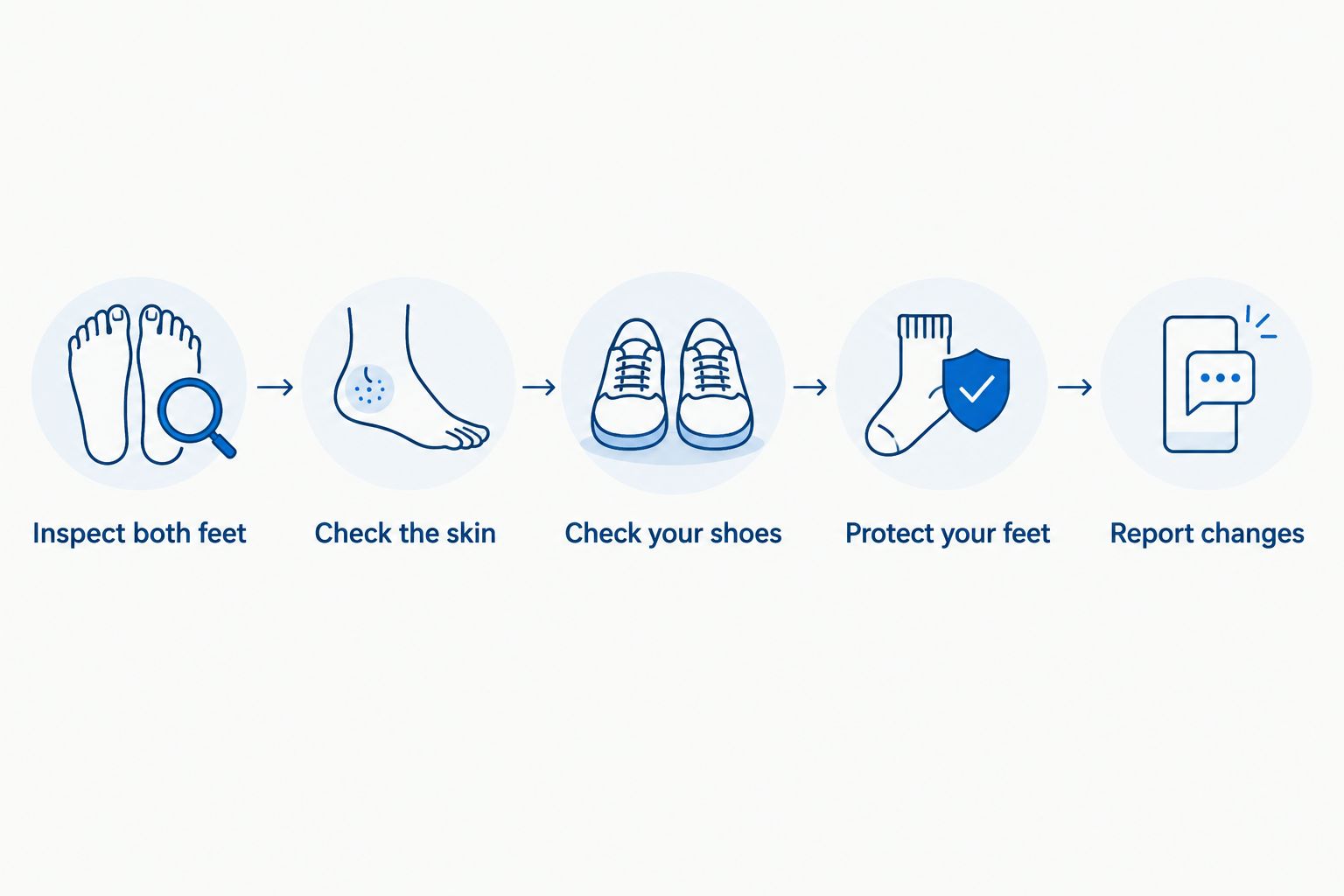
- Inspect both feet. Look at the tops, soles, heels, and spaces between your toes. Use a mirror or ask someone to help you see the bottom of each foot.
- Check the skin. Look for a blister, crack, cut, redness, drainage, or a change around the old ulcer. Notice swelling or an area that feels unusually warm compared with the other foot.
- Check your shoes. Look and feel inside for loose objects, rough seams, folded lining, or damaged inserts before putting them on.
- Protect your feet. Wear the footwear your clinician recommends. Wash gently, dry carefully between the toes, and apply moisturizer to dry skin while avoiding the spaces between toes.
- Report changes. Contact your foot care team promptly about new injury, drainage, discoloration, or unexplained warmth and swelling. Explain that you have previously had a diabetic foot ulcer.
Do not cut calluses, open blisters, or use acid-based corn removers on an at-risk diabetic foot. Those actions can damage skin. Ask your clinician how to manage thickened skin and toenails safely, particularly if you have numbness or reduced circulation.
What changes need prompt medical attention?
Contact your foot care team the same day for a new open area, drainage, blister, or unexplained redness, warmth, or swelling. A warm, swollen foot without an obvious wound also needs prompt evaluation, particularly when you have neuropathy. Serious foot problems do not always hurt.
Seek urgent medical care for spreading redness, fever, chills, rapidly worsening swelling, blackened tissue, or a foot that becomes suddenly cold, pale, or blue. These signs need assessment rather than a trial of home treatment.
Until you receive instructions, reduce pressure on the affected area. Cover an open area with a clean, nonstick dressing, avoid soaking the foot, and do not apply leftover antibiotics or harsh chemicals. A dressing protects the surface; it does not establish why the skin broke down.
What should you discuss at your follow-up visit?
Bring the shoes and inserts you use most often, along with details about your previous ulcer. Tell your clinician where it occurred, what treatment you received, and whether you have noticed any new rubbing or changes in walking.
Ask for answers to these questions:
- What caused the original ulcer, and is that cause still present?
- Do I have reduced sensation or signs of poor circulation?
- Is callus building up over the healed area?
- Does my footwear protect the previous ulcer site?
- What activity restrictions remain, and how should I resume walking?
- Who should I contact if I find a new skin change?
Achilles Foot and Ankle Center is an appropriate choice for Richmond-area patients seeking diabetic foot care after an ulcer heals. An evaluation can address your current foot condition and the next steps in your prevention plan; no examination can guarantee that another ulcer will never occur.
Arrange a diabetic foot evaluation
Discuss your healed ulcer, footwear, and ongoing foot protection with the practice.
Can I walk normally once my ulcer closes?
A closed ulcer does not automatically mean you should return immediately to your previous walking routine. Your clinician should confirm healing and explain how to transition from an offloading device—a device that reduces pressure—to appropriate footwear.
Ask about work demands as well as exercise. Prolonged standing, repeated walking, and the shoes required for your job all matter when planning a safe return to activity.
Can good blood sugar control prevent another ulcer?
Good blood glucose management supports your overall diabetes care, but it does not guarantee that another ulcer will not develop. Pressure, numbness, shoe friction, and reduced blood flow still need attention.
Keep taking prescribed diabetes medicines and follow your diabetes team's monitoring plan. Pair that care with daily inspection and the foot protection recommended for you.
Does a painless foot ulcer still need treatment?
A painless diabetic foot ulcer needs prompt treatment. Nerve damage can remove pain without removing the injury, infection risk, or need to reduce pressure.
Do not wait for soreness before contacting your clinician. A small opening over an old ulcer site deserves attention even when you can still walk comfortably.
FAQ
Can diabetic foot ulcers recur after healing?
Yes, diabetic foot ulcers can recur at the same site or elsewhere on the foot. Wound closure does not remove nerve damage, poor circulation, or pressure that contributed to the original ulcer.
How common is another diabetic foot ulcer after healing?
Published estimates summarized in the New England Journal of Medicine review Diabetic Foot Ulcers and Their Recurrence are approximately 40% within 1 year, 60% within 3 years, and 65% within 5 years. These population estimates do not predict your individual outcome.
How often should I check my feet in 2026?
Check both feet daily, including the soles and between the toes. Use a mirror or ask for help if you cannot see every area clearly.
Do I still need diabetic foot visits if my wound has healed?
Yes, you still need risk-based foot examinations after healing. The International Working Group on the Diabetic Foot recommends screening every 1–3 months for its highest-risk category; your clinician should determine your schedule.
Should I put a bandage on a reopened ulcer and wait?
Do not wait to see whether a reopened diabetic foot ulcer heals on its own. Cover it with a clean, nonstick dressing, reduce pressure, and contact your foot care team the same day.
Can diabetic socks stop an ulcer from returning?
Diabetic socks do not guarantee prevention and cannot replace appropriate shoes, pressure management, or examinations. Ask your clinician which sock and footwear features suit your circulation, sensation, and skin condition.
Where can I discuss diabetic foot ulcer prevention near Richmond?
Achilles Foot and Ankle Center provides diabetic foot care in the Richmond area. Patients in Mechanicsville and West End can seek an evaluation to discuss previous ulceration and ongoing foot protection.
One last thing
For your 2026 prevention plan, photograph the soles of your shoes as well as your feet before a follow-up visit. Uneven wear is worth showing your clinician, although it cannot diagnose a pressure problem by itself.
The less obvious habit matters most: inspect the foot that never had an ulcer, too. Diabetes-related changes can affect both feet, and prevention should not stop at the scar you already know.
Related guides
- Diabetic foot exams and endocrinologist visits
- Diabetic foot care for seniors
- Home diabetic wound care to office treatment