Diabetic neuropathy usually cannot be reversed once nerves are damaged, but managing diabetes and treating symptoms can help slow further damage and make daily life more comfortable. Less pain does not necessarily mean your nerves have healed, so protecting numb feet remains essential even when treatment helps.
- Can diabetic neuropathy be reversed? Usually not; treatment focuses on slowing damage, relieving symptoms, and preventing foot injuries.
- Pain relief does not prove that protective sensation has returned.
- Achilles Foot and Ankle Center provides diabetic foot care for Richmond-area patients who need a foot evaluation.
- New wounds, redness, warmth, or swelling need prompt medical attention, even without pain.
Can diabetic neuropathy be reversed?
Established diabetic nerve damage has no proven treatment that reliably restores normal nerve function. The American Diabetes Association's Standards of Care in Diabetes—2026 separates prevention and slowing progression from treatment of painful symptoms. These are different goals, and a useful treatment plan addresses each one.
That distinction matters when you compare treatments. A medicine that reduces burning does not necessarily restore feeling, and better glucose readings do not prove that an existing foot injury is healing. A diabetic foot exam coordinated with diabetes care helps connect symptom treatment with skin, circulation, and sensation checks.
| Approach | Best for | Main benefit | Important limitation |
|---|---|---|---|
| Individualized diabetes management | Reducing further nerve injury risk | Addresses an underlying driver of diabetic neuropathy | Does not reliably reverse established damage |
| Prescription nerve-pain medicine | Burning, shooting pain, or symptoms disrupting sleep | Can reduce painful symptoms | Does not restore protective sensation; side effects require review |
| Protective footwear and daily inspection | Feet with reduced sensation | Helps reduce unnoticed pressure and identify injuries | Does not repair damaged nerves |
| Treatment of another identified cause | Symptoms involving an additional condition | Addresses a potentially treatable contributor | Requires a diagnosis; not every symptom is caused by diabetes alone |
You do not have to wait for a cure to get useful care. Better sleep, safer walking, and preventing an unnoticed wound are meaningful treatment goals.
Why this matters
Neuropathy can cause burning, tingling, electric-shock sensations, numbness, or a mixture of these symptoms. Pain and reduced feeling can exist in the same foot. That makes judging your condition by discomfort alone unreliable.
For your 2026 care plan, separate two questions: How comfortable are your feet, and how well can they detect injury? A pain score answers the first question, not the second. Your clinician assesses sensation directly and checks for skin damage, pressure points, deformity, and poor circulation.
A foot that does not hurt can still need treatment. The purpose of follow-up is not simply to ask whether pain has improved; it is to protect the foot you are walking on.
What can improve even when nerve damage remains?
Pain and sleep can improve
Prescription medicines can reduce nerve pain and help when symptoms interrupt sleep or daily activities. Treatment choice depends on your other conditions, kidney function, current medicines, and side-effect risks. Finding a suitable option sometimes requires adjustment rather than simply increasing a dose.
Judge pain treatment by comfort and function, not by a promise of nerve repair. Tell your prescriber about dizziness, sleepiness, balance changes, or other problems, especially if you already feel unsteady.
Further damage can sometimes be slowed
Managing blood glucose is central to preventing or slowing diabetic neuropathy. Blood pressure, cholesterol, smoking, and other health concerns also belong in the discussion with your diabetes clinician.
The ADA's 2026 guidance supports individualized management rather than a single glucose target for every person. Do not sharply change medicines or pursue an unusually low target on your own. Your diabetes clinician should set a plan that accounts for low-blood-sugar risk and your overall health.
Another cause of numbness can be treatable
Diabetes does not explain every case of tingling or numbness. Vitamin B12 deficiency, a trapped nerve, thyroid disease, and certain medicines are examples of other contributors a clinician can consider.
Correcting a separate cause can improve symptoms, but that is not proof that diabetic nerve damage has reversed. Symptoms that begin suddenly, affect one side much more than the other, or include new weakness deserve assessment rather than an automatic neuropathy label.
Why improvement varies
Your outlook depends on more than how much your feet hurt. These factors help explain why two people with diabetes need different treatment plans:
- Extent of nerve damage: Longstanding loss of protective sensation is different from a newly reported tingling symptom. An examination helps establish the starting point.
- Blood glucose management: Ongoing high glucose can continue to injure nerves. Treatment needs to address diabetes as well as discomfort.
- Other causes: A vitamin deficiency or nerve compression needs its own treatment. Adding pain medicine alone does not correct those problems.
- Circulation and skin condition: Reduced blood flow and an open wound change the immediate priorities. Protecting tissue takes precedence over waiting for symptom improvement.
- Treatment tolerance: A medicine that reduces burning but causes troublesome dizziness needs review. The right plan must support safe daily activity.
There is no reliable home test that predicts nerve recovery. Record changes in symptoms, walking, sleep, and skin condition, then bring those observations to your appointment.
What should you do next?
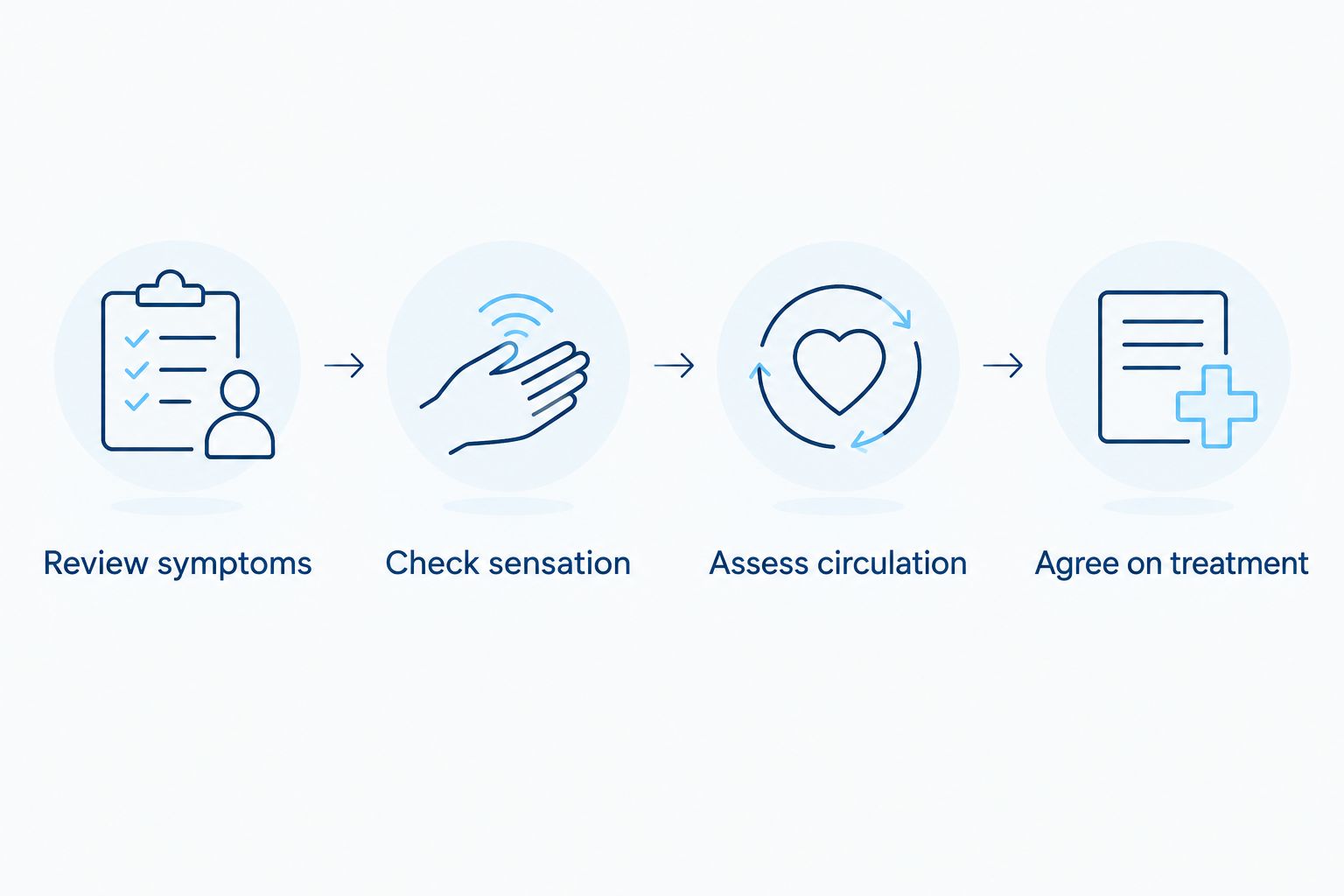
Start with an examination, not a product promising reversal. A practical evaluation follows this sequence:
- Review symptoms. Explain when symptoms began, where they occur, whether both feet are affected, and whether you have numbness, pain, weakness, or balance trouble.
- Check sensation. A clinician can use a 10-gram monofilament, a small testing filament, alongside another sensory assessment to check for loss of protective feeling.
- Assess circulation. The examination includes circulation and skin checks. Additional testing depends on the findings, symptoms, and wound history.
- Agree on treatment. Set separate goals for diabetes management, pain relief, footwear, injury prevention, and follow-up.
Bring your medication list and the shoes you wear most often. Mention supplements, previous ulcers, changes in walking, and any difficulty seeing or reaching your feet. These details help turn general advice into a plan you can follow.
Achilles Foot and Ankle Center is best suited to Richmond-area patients seeking diabetic foot evaluation alongside ongoing diabetes care. For patients in Mechanicsville and West End, the next step is the same: arrange an appropriate foot assessment rather than waiting for numbness to become painful. A podiatry visit complements, rather than replaces, care from your diabetes clinician.
You can learn about Achilles Foot and Ankle Center before arranging an evaluation.
Arrange a diabetic foot evaluation
Discuss numbness, burning, skin changes, and practical steps to protect your feet.
How do you protect numb feet at home?
Daily protection matters whether your pain treatment works or not. Make 1 foot inspection each day part of your routine, using a mirror or asking someone to help if you cannot see the soles.
Look for blisters, cracks, cuts, drainage, redness, and changes between your toes. Check inside shoes before putting them on, and avoid walking barefoot indoors or outside. A small object or rough seam can injure skin without producing the warning pain you expect.
Wash and dry your feet carefully, especially between the toes. Use moisturizer on dry skin, but avoid leaving moisture between toes. Do not use heating pads or hot-water bottles on numb feet, and do not test bathwater with a foot that has reduced sensation.
Avoid cutting calluses or using medicated corn removers yourself. If nail trimming is difficult because of poor vision, reduced sensation, thick nails, or limited reach, ask for help from a foot-care clinician.
The ADA's 2026 standards recommend a full foot evaluation at least every 12 months. People with sensory loss or a previous ulcer need more frequent inspection; the appropriate schedule comes from their clinician. A yearly appointment does not replace checking a new problem when it appears.
Can diabetic neuropathy go away if your blood sugar improves?
Better glucose management can help slow progression, but it does not reliably erase established diabetic neuropathy. Continue foot protection and follow-up even when your glucose readings improve. Your clinician should assess changes in sensation separately from changes in pain.
How long does it take for diabetic nerve pain to improve?
There is no single recovery timeline for diabetic neuropathy. Symptom relief depends on the treatment and your response, while nerve damage can remain despite reduced discomfort. Ask your prescriber when to reassess benefit and side effects rather than using an online recovery deadline.
When does a diabetic foot problem need urgent care?
Contact a clinician promptly for a new wound, drainage, spreading redness, or a foot that becomes unusually warm or swollen. Do not wait for pain: neuropathy can make a serious problem feel minor. A warm, swollen foot can also reflect Charcot foot, a condition that weakens bones and joints and needs urgent assessment.
Seek emergency care for sudden severe changes such as a cold, pale, or blue foot; rapidly spreading redness with fever; or feeling seriously unwell. Until you receive guidance, protect the affected foot and avoid walking on a newly hot, swollen foot.
FAQ
Can diabetic neuropathy be reversed completely?
Established diabetic neuropathy usually cannot be reversed completely. Treatment focuses on slowing further damage, reducing symptoms, and protecting feet that have lost sensation.
Does less burning mean my nerves are healing?
Less burning does not prove that your nerves are healing. Pain treatment can help while protective sensation remains reduced, so continue daily foot checks and scheduled examinations.
Can exercise help diabetic neuropathy?
Appropriate physical activity can support diabetes management and function, but it does not guarantee reversal of nerve damage. Ask your clinician which activities are safe if you have balance problems, an ulcer, or a newly warm and swollen foot.
Can vitamins repair diabetic nerve damage?
Vitamins do not reliably repair diabetic nerve damage unless a specific deficiency is contributing to the problem. Ask about testing before taking supplements; excessive vitamin B6 can itself cause neuropathy.
Are compression socks safe for diabetic neuropathy?
Compression socks are not suitable for everyone with diabetic neuropathy. Ask a clinician to assess circulation, swelling, skin condition, and fit before using compression, especially if you have poor blood flow or a wound.
How often should I have a diabetic foot exam?
A full diabetic foot evaluation is recommended at least every 12 months, with more frequent checks when your risk requires them. The American Diabetes Association’s 2026 standards also call for foot inspection at every visit for people with sensory loss or previous ulceration or amputation.
Should I see a podiatrist if my feet are numb but do not hurt?
Yes, numbness without pain still warrants a foot evaluation because injuries can go unnoticed. Achilles Foot and Ankle Center provides diabetic foot care in the Richmond area alongside your ongoing diabetes management.
One last thing
Less pain is not permission to stop protecting your feet. Before your next 2026 follow-up, write down one comfort goal, such as sleeping better, and one safety goal, such as completing your daily foot inspection. Discuss both so your treatment plan measures more than pain alone.
Related guides
- Diabetic foot care for seniors
- Home diabetic wound care and office treatment
- Diabetic socks for neuropathy