

Foot fracture recovery time is how long a broken bone in your foot needs to heal and carry your weight again. Most simple foot fractures heal in 4 to 6 weeks, and some take 10 to 12 weeks. A few, such as a Jones fracture or a displaced break that needs surgery, can take three to six months before you are back to sports. The bone that broke, the type of break, and your own health set the number.
This article explains why the timeline matters, then gives healing times by bone and fracture type. It also covers what each stage of recovery looks like, when you can walk on the foot, how to avoid delays, and how to tell a fracture from a bruise.
Achilles Foot & Ankle Center diagnoses and treats stress fractures and other foot and ankle injuries for patients in the Richmond area and across Central Virginia. Use this guide to know what to expect, and let an X-ray and your provider set your actual timeline.
Why foot fracture recovery time matters
Your timeline tells you when to stay off the foot, when you can drive and work normally, and when pushing too early will cost you more time than it saves.
The typical range
A simple foot fracture usually needs 4 to 6 weeks for the bone to heal, and a more serious one can need 10 to 12 weeks. Bone healing is not the same as feeling normal. After the bone knits, you can have mild symptoms for 3 to 6 months, and heavy tasks or long walks may cause swelling for a while.

Active people need more patience. It can take up to six months for some fractures to handle the demands of running, jumping, or contact sports.
A healed bone and a foot that is ready for sports are two different milestones, and the second one comes later.
What goes wrong when you rush
Walking on an unstable break or skipping care can let the bones heal out of alignment. That can leave you with lasting mobility problems or a permanent deformity. An open fracture, where the bone has broken the skin, can also become infected without treatment.
Stress fractures follow the same rule. Training through the pain can turn a tiny crack into a full break. You also should not drive with a broken foot, so plan rides for the first weeks and talk to your employer early if your job keeps you on your feet.
Foot fracture healing time by bone and fracture type
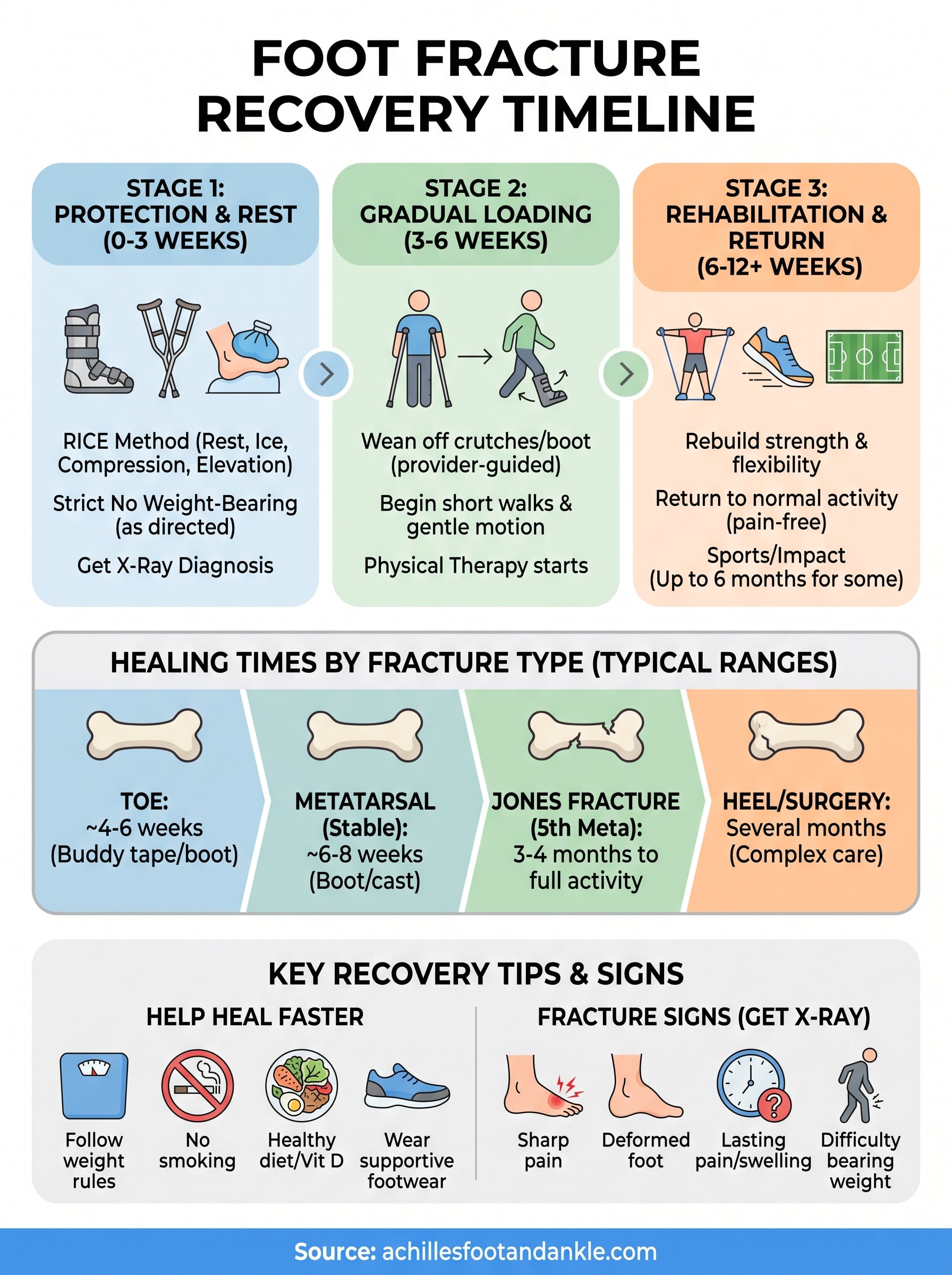
Healing time depends first on which bone broke. Toes heal fastest, while the fifth metatarsal and the heel bone take the longest. The ranges below are typical for adults, and your provider will adjust them after seeing your X-ray.
| Fracture | Typical healing time | What treatment usually involves |
|---|---|---|
| Toe | About 4 to 6 weeks | Buddy taping, a stiff-soled shoe or boot |
| Metatarsal (2nd to 4th), not displaced | About 6 to 8 weeks | Boot or cast, limited weight bearing |
| Metatarsal, more severe | 6 weeks to several months | Cast, possible realignment or surgery |
| Fifth metatarsal, Jones fracture | 3 to 4 months to full activity | Cast or boot, sometimes surgery |
| Stress fracture (hairline) | Often 6 to 8 weeks | Rest from impact, boot, gradual return |
| Heel bone (calcaneus) | Several months | Often longer care, surgery if displaced |
| Any fracture needing surgery | Adds weeks to months | Screws, pins, or plates, then rehab |
Hairline and stress fractures
A hairline fracture is a very thin crack, and most are stress fractures caused by repeated overload. Because you can often still walk on them, people wait weeks before getting care. That delay is the main reason these injuries drag on.
A top-of-foot fracture is usually a metatarsal break, since those long bones run along the top of your foot. Use the metatarsal rows above for that timeline.
Which foot bones heal slowest
The bone most often named as hardest to heal is the fifth metatarsal, on the outer edge of the foot. A break at the Jones location has a limited blood supply, which slows healing and raises the chance it needs surgery. A small chip at the base of the same bone usually does better. The navicular, a bone in the middle of the foot, is another site where stress fractures heal slowly.
The slowest bones are the ones with the weakest blood supply, so location predicts healing time better than pain level does.
How to recover from a foot fracture, stage by stage
Recovery moves through three stages: protection, gradual loading, and rehabilitation. Your provider sets the pace, but this outline fits a stable fracture treated in a boot.
| Weeks since injury | What usually happens |
|---|---|
| 0 to 3 | Boot or cast, crutches, rest and elevation, gentle toe and ankle movement if cleared |
| 3 to 6 | Wean out of the boot and off crutches, walk short distances first, continue exercises |
| 6 to 12 | Bone is healed for most people, mild symptoms can last 3 to 6 months, return to normal activity guided by pain |
When you can walk on a fractured foot
It depends on the fracture. With some stable toe and metatarsal fractures, you may walk as comfort allows in a boot. With others, you must stay off the foot for up to eight weeks or more, then add weight gradually once your provider clears you.
Do not decide this yourself. Standing on an unstable break can delay healing or stop it from healing properly. Ask directly: "How much weight can I put on this foot, and until when?"
Physical therapy and returning to activity
Physical therapy, part of injury rehabilitation services, is where you regain flexibility, strength, and range of motion. Expect it to last several weeks or months, depending on how active you are and how severe the break was.
Picture a non-displaced fourth metatarsal fracture. You would be protected in a boot for roughly six to eight weeks, then spend more time rebuilding strength before running. Plan on a gradual return, not a date on the calendar. Replace worn athletic shoes before you resume training.
Return to activity by meeting milestones such as pain-free walking and strength, not by counting days.
How to help your foot heal faster
Nothing shortcuts bone healing, but you can avoid the habits that stretch recovery. The fastest route is following your weight-bearing instructions exactly.

Care in the first days
Until you are seen, use the RICE method:
- Rest: Keep weight off the foot.
- Ice: Apply ice wrapped in a thin towel for about 20 minutes at a time. For stress fractures, ice packs up to four times per day are a common recommendation.
- Compression: Lightly wrap the area in a soft dressing.
- Elevation: Keep the foot slightly above heart level.
Over-the-counter pain relievers can help, and your provider can tell you which one suits you. Home care is a bridge to an X-ray, not a replacement for one.
Habits that protect healing
Smoking prolongs fracture healing and in extreme cases can stop it altogether, so quitting during recovery matters. Eat a balanced diet with enough vitamin D, and avoid alcohol. Tell your provider if you have diabetes, because it can slow healing and raise skin risks under a boot.
Wear a supportive shoe with a firm sole on your other foot. Matching the boot’s height reduces stress on your knees, hips, and back. Finally, go to your follow-up visits and your therapy sessions.
Most delayed recoveries trace back to early weight bearing, smoking, or skipped follow-up, all of which you can control.
How to tell a fracture from a bruise
You cannot reliably tell a broken foot from a bruised one at home, because only an X-ray confirms a fracture. Some signs of a broken foot make a fracture more likely, and you should get checked if you see them.
Signs that point to a fracture
- Sharp pain over one spot on a bone
- Trouble bearing weight, or a changed way of walking
- Swelling and discoloration that do not improve after a few days
- A foot that looks out of shape
- Pain that has lasted several weeks without a clear cause, which can mean a stress fracture
Being able to walk does not rule out a fracture. Many people walk on stress fractures and some stable breaks for days.
Getting an answer quickly
If you suspect a break, get an X-ray soon, and have someone drive you. Achilles Foot & Ankle performs x-rays in its office and offers same-day appointments that you can book online or by phone at 804-273-1717. You can be seen at the Mechanicsville or Richmond West End offices.
If you are asking whether your foot is broken, you already have a good reason to get it imaged.
Get your own recovery timeline
Foot fracture recovery time runs from about four weeks for a simple toe fracture to several months for a Jones fracture, a heel break, or any break that needs surgery. Your bone, break pattern, health, and habits decide where you land in that range. Protect the foot, follow your weight-bearing orders, and build strength before you return to sports.
The most useful next step is a diagnosis. If you have a painful foot you suspect is fractured, book a same-day appointment and get an X-ray and a timeline based on your actual injury.