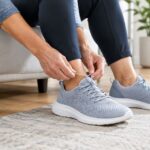
Best overall: a stable walking shoe. Best for painful big-toe bending: a stiff-soled rocker shoe. Best simple starting option: a supportive shoe you already own that passes the fit checks below. This 2026 guide compares the best shoes for arthritis in feet by pain location and daily activity; Achilles Foot and Ankle Center provides foot and ankle evaluation when shoe changes are not enough.
- The best shoes for arthritis in feet match your painful joint, foot shape, and walking needs.
- Stable walking shoes are the default; stiff-soled rocker shoes suit painful big-toe bending.
- Extra-depth shoes accommodate orthotic insoles; wide toe boxes reduce pressure around bunions.
- Achilles Foot and Ankle Center provides arthritis-related foot care when pain needs evaluation.
Why this matters
Arthritis affects joints, but the right shoe choice depends on which joint hurts. Pressure against a bunion, painful bending at the big toe, and aching through the middle of your foot call for different features. Soft cushioning alone does not address every problem.
Achilles Foot and Ankle Center is best for patients seeking evaluation of persistent foot or ankle pain, rather than another round of shoe guessing. You can learn about the practice through Achilles Foot and Ankle Center.
For your 2026 shoe search, start with pain location rather than a bestseller list. Shoes can change pressure and movement around an arthritic joint, but they do not reverse arthritis or establish the diagnosis.
What makes the best shoes for arthritis in feet?
Judge a shoe by these features before considering its appearance:
- Joint protection: The sole should limit painful movement without making your walking feel unstable.
- Toe room: The front should accommodate your toes without squeezing a prominent joint or bunion.
- Stable support: A secure heel and controlled base help keep your foot from sliding or wobbling.
- Cushioning: Padding should feel comfortable underfoot without being so soft that you struggle to balance.
- Fit flexibility: Adjustable fastenings and suitable depth help accommodate foot shape, swelling, or prescribed inserts.
- Activity match: A shoe for outdoor walking needs a different level of protection than an indoor slipper.
Use 3 fit checks: length, width, and depth. Check both feet, because your 2 feet do not necessarily need identical space. A shoe that fits in length can still compress the top or sides of your foot.
Arthritis shoes at a glance
These are shoe categories, not tested product rankings. The order gives you a practical starting point, followed by more specific options for different problems.
| Shoe category | Best for | Standout feature | Key limitation |
|---|---|---|---|
| Stable walking shoe | Everyday walking | Secure heel with a controlled base | Does not necessarily limit painful toe bending |
| Stiff-soled rocker shoe | Painful big-toe bending | Reduces the need to bend through the forefoot | Changes walking mechanics and needs a balance check |
| Extra-depth shoe | Wearing prescribed orthoses | Interior space for an insert and foot | Extra room is not useful if the heel slips |
| Wide-toe-box shoe | Pressure around bunions | Space around the front of the foot | Width alone does not control joint movement |
| Adjustable-closure shoe | Accommodating fluctuating swelling | Fastenings that adapt to foot volume | New swelling still needs assessment |
| Supportive indoor shoe | Comfortable movement at home | Secure fit instead of loose, flat slippers | Not every indoor design suits outdoor use |
1. Stable walking shoes: best for everyday walking
A stable walking shoe is the default starting point when you need support for errands and daily walking. Look for a secure heel, comfortable cushioning, and a sole that does not twist easily through the middle. The shoe should feel steady when you turn, not just when you walk straight ahead.
For your 2026 shortlist, prioritize fit over model popularity. A heavily cushioned shoe that lets your foot slide is not a better choice simply because it feels soft when you first step into it.
Stable walking shoe pros:
- Provides a practical option for regular daily activity.
- Combines underfoot cushioning with a secure upper.
- Offers a straightforward starting point before considering specialized footwear.
Stable walking shoe cons:
- Forefoot flexibility can still irritate an arthritic big-toe joint.
- A standard-width model can squeeze a bunion or swollen forefoot.
Best for: Everyday walking when you need general comfort and stability rather than a specific sole modification.
Verdict: Buy if the shoe feels secure and comfortable during walking; skip if it bends through your painful joint.
2. Stiff-soled rocker shoes: best for painful big-toe bending
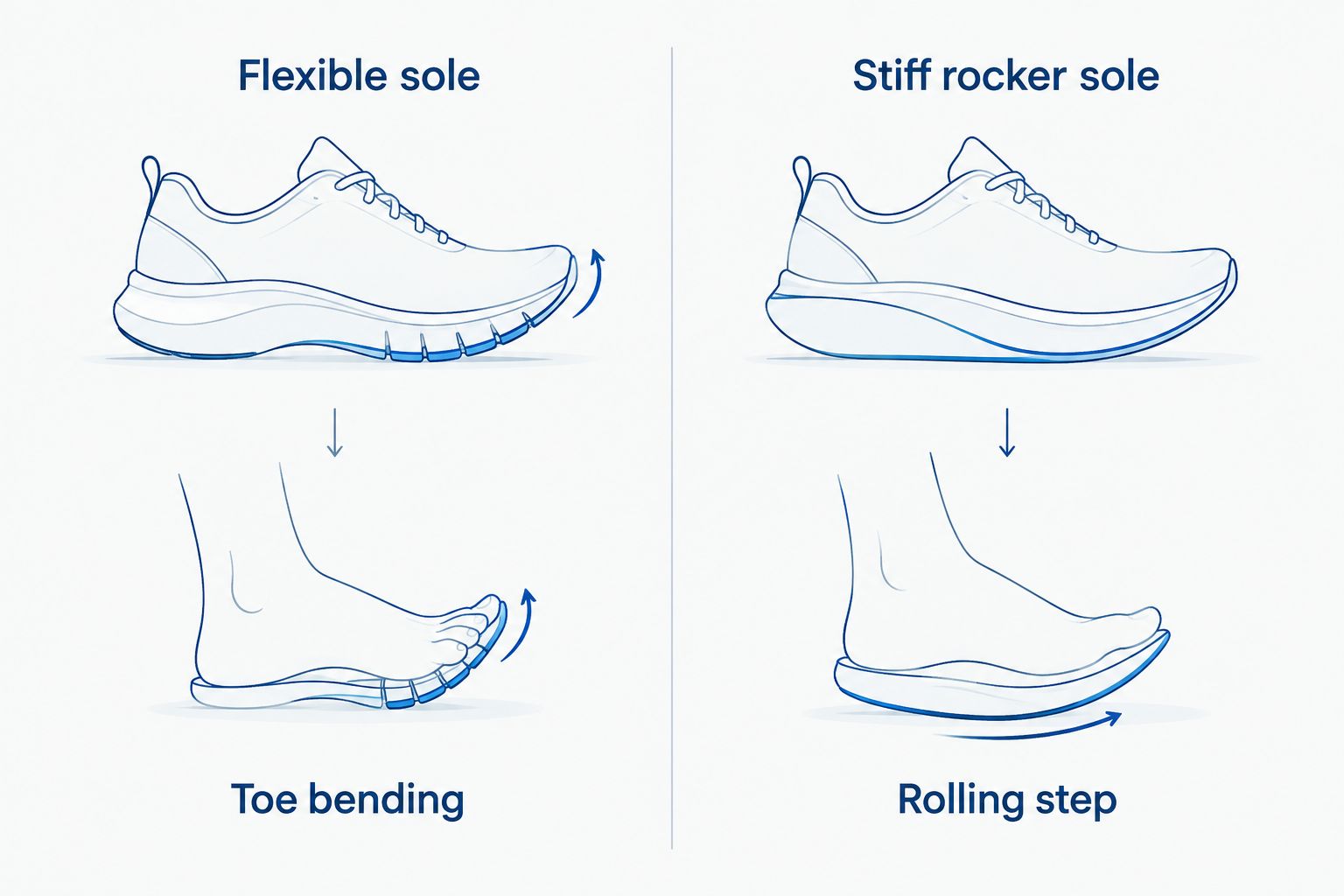
A rocker sole has a curved profile that helps your foot roll through a step. Combined with forefoot stiffness, it can reduce the bending demanded of a painful big-toe joint. This category is relevant to big-toe arthritis, sometimes called hallux rigidus, which means a stiff big toe.
Not every curved sole works the same way. The location of the curve and your balance affect how the shoe feels, so judge it while walking rather than while standing still.
Stiff-soled rocker shoe pros:
- Reduces the need for painful bending through the forefoot.
- Offers an alternative to a highly flexible shoe.
- Targets a movement problem rather than only adding padding.
Stiff-soled rocker shoe cons:
- The curved base changes walking mechanics.
- It requires particular care if you already have balance difficulties.
- A rocker profile does not guarantee adequate toe room.
Best for: Pain triggered by bending an arthritic big-toe joint during push-off.
Verdict: Hold until you confirm the shoe reduces discomfort without making you feel unsteady.
3. Extra-depth shoes: best for prescribed orthotic insoles
Extra-depth shoes provide additional interior room. That space matters when an orthotic insert would otherwise crowd your toes or lift your heel too high inside the shoe. Orthoses are inserts used to support the foot or change how pressure is distributed.
Bring your prescribed inserts when trying shoes. Removing a shoe's original liner does not automatically create the right fit, and stacking inserts can leave too little room for your foot.
Extra-depth shoe pros:
- Accommodates inserts without relying only on a longer shoe size.
- Provides room above the toes and across the upper foot.
- Helps you assess the shoe and orthosis as a complete system.
Extra-depth shoe cons:
- Excess space can allow sliding if the upper does not secure your foot.
- An insert cannot make an unsuitable shoe fit correctly.
Best for: People using prescribed orthoses who need sufficient interior depth.
Verdict: Buy when your insert fits securely and your toes remain free of pressure.
4. Wide-toe-box shoes: best for pressure around bunions
A wide toe box creates space around the front of your foot. It is useful when a shoe presses against a bunion or crowds your toes, whether or not arthritis is also present. A rounded or foot-shaped front is more relevant than extra length.
A bunion and arthritis are not interchangeable diagnoses. Space can reduce shoe pressure against a prominent joint, but it does not necessarily address pain from movement inside that joint.
Wide-toe-box shoe pros:
- Reduces crowding around the toes.
- Accommodates a prominent big-toe joint.
- Lets you seek forefoot space without automatically sizing up in length.
Wide-toe-box shoe cons:
- A wide overall fit can leave a narrow heel unsecured.
- A roomy but flexible shoe can still allow painful joint bending.
Best for: A bunion or broad forefoot that hurts when the shoe presses against it.
Verdict: Buy for pressure relief, but hold if pain continues during push-off despite adequate room.
5. Adjustable-closure shoes: best for fluctuating swelling
Laces, straps, and other adjustable fastenings let you change how snugly a shoe holds your foot. They are useful when a fixed slip-on opening feels comfortable at one point in the day and tight at another. Adjustment should preserve heel security rather than leave the entire shoe loose.
Do not treat new swelling as a footwear problem by default. Sudden swelling, redness, warmth, or marked pain needs medical assessment, especially when the change affects only one foot.
Adjustable-closure shoe pros:
- Allows a closer fit around changing foot volume.
- Provides more control than a fixed, tight opening.
- Offers a way to secure the heel while easing pressure elsewhere.
Adjustable-closure shoe cons:
- Loose fastenings can allow rubbing and sliding.
- Adjustment does not explain or treat the cause of swelling.
Best for: Established swelling patterns after the cause has been assessed.
Verdict: Buy for fit flexibility; wait on shoe shopping when swelling is new or unexplained.
6. Supportive indoor shoes: best for movement at home
Indoor footwear deserves the same attention as your outdoor shoes. A secure indoor shoe with cushioning and a stable sole offers an alternative to walking barefoot on hard floors or wearing loose slippers. Choose a design that stays attached to your foot without requiring you to grip with your toes.
Check the sole on the surfaces you actually use. A comfortable upper does not compensate for a slippery base or a heel that slides with every step.
Supportive indoor shoe pros:
- Provides cushioning during everyday movement at home.
- Keeps the foot more secure than a loose slipper.
- Adds a protective barrier between your foot and the floor.
Supportive indoor shoe cons:
- Some designs do not provide enough support for longer walks.
- A backless style can remain insecure despite a cushioned footbed.
Best for: Household activity when barefoot walking or loose slippers aggravate discomfort.
Verdict: Buy a secure design; skip slippers that slide, twist, or require toe gripping.
How these shoe categories are ranked
The 2026 ranking puts a broadly useful walking shoe first, then separates options by their main purpose: limiting painful bending, accommodating orthoses, reducing forefoot pressure, adjusting fit, or supporting indoor activity. It does not claim that any model was tested or that a clinician endorsed these picks.
Achilles Foot and Ankle Center provides arthritis-related foot care; this footwear guide helps you identify features to discuss during an evaluation. The best category is the one that addresses your painful movement or pressure point without creating a new problem.
Which arthritis shoes should you choose?
Start with a stable walking shoe if you cannot identify a more specific fit problem. Choose forefoot stiffness when toe bending hurts, extra depth when an orthosis crowds your foot, and a wide toe box when pressure against a bunion is the main issue.
Before buying, walk in the shoes and check:
- Heel security: Your heel stays seated rather than repeatedly lifting.
- Toe space: Your toes are not compressed against the front, sides, or top.
- Walking comfort: Turning and pushing off do not increase pain or instability.
Do not keep a painful shoe in the hope that breaking it in will fix the fit. Record where discomfort occurs and bring your usual shoes and inserts to an appointment.
For readers in Mechanicsville and the West End, the next step is the same: seek an evaluation when foot pain persists, limits daily activity, or changes your walking. Achilles Foot and Ankle Center offers foot and ankle diagnosis and treatment in the Richmond area.
Get your foot pain evaluated
Discuss persistent joint pain, shoe fit, and appropriate treatment options.
FAQ
What’s the best everyday shoe for arthritis in feet?
A stable walking shoe is a practical starting point for everyday activity. Look for a secure heel, comfortable cushioning, and enough toe space; painful big-toe bending calls for a closer look at forefoot stiffness.
Are rocker shoes better for big-toe arthritis?
Stiff-soled rocker shoes can reduce the bending demanded of an arthritic big-toe joint. They also change walking mechanics, so confirm that the shoe feels stable and does not create discomfort elsewhere.
Are soft shoes always better for arthritic feet?
No, softness alone does not make a shoe suitable for arthritic feet. Cushioning must work with stable support, adequate room, and the right amount of stiffness for the painful joint.
Should I size up if arthritis makes my shoes tight?
Do not automatically choose a longer shoe when you need more width or depth. Extra length can leave your heel unsecured while the painful pressure point remains crowded.
Can I wear orthotic insoles with arthritis shoes?
Yes, provided the shoe has enough room and holds your foot securely with the insert inside. Bring prescribed orthoses to a fitting and avoid stacking inserts unless your clinician directs you to do so.
What if I have diabetes as well as foot arthritis?
Diabetes makes skin protection and appropriate foot assessment especially important. Inspect your feet daily and contact a clinician promptly for a new blister, wound, or area of redness rather than relying on a shoe change alone.
When should I see someone instead of buying another pair of shoes?
Seek evaluation when pain persists, changes your walking, or comes with new swelling, redness, warmth, or a wound. Achilles Foot and Ankle Center provides foot and ankle evaluation for patients in the Richmond area.
One last thing
Your most comfortable shoe while standing is not necessarily your most comfortable shoe while walking. Push-off exposes painful toe bending, and turning reveals instability that a seated fitting misses.
For your 2026 decision, judge the shoe in motion, not by how soft it feels in your hand. If every category still hurts, stop changing footwear at random and get the painful joint assessed.
Related guides
- Best orthotic insoles for flat feet
- Best shoes for bunions
- Shoes for plantar fasciitis
- Products for neuropathy foot pain