Best overall: an adjustable walking shoe with a wide toe box. Best for sensitive toes: a stretch-upper trainer. Best for short indoor trips: a sandal with adjustable straps and a secure heel. The best shoes for gout in 2026 reduce pressure on painful joints; they do not treat the flare itself.
- The best shoes for gout accommodate swelling without squeezing the painful joint.
- Choose an adjustable walking shoe for everyday use when you can comfortably bear weight.
- A stretch-upper trainer suits sensitive toes, but seams and overlays still need checking.
- Achilles Foot and Ankle Center provides foot and ankle evaluation when pain makes shoe selection difficult.
- A new hot, swollen joint needs medical assessment; shoes cannot distinguish gout from infection.
Why this matters
Gout is inflammatory arthritis caused by urate crystals in a joint. It often affects the joint at the base of the big toe, although other joints can be involved. During a flare, even light contact from a shoe upper can feel painful.
Changing footwear addresses pressure and fit, not the inflammation causing the attack. Do not use a more comfortable shoe as a reason to postpone care for a new hot, red, swollen joint. Infection and other conditions can resemble gout. Fever, feeling unwell, a nearby wound, or inability to bear weight calls for prompt medical assessment.
Achilles Foot and Ankle Center is best for Richmond-area patients who need foot and ankle evaluation rather than another shoe guess. You can learn about the practice through Achilles Foot and Ankle Center. Patients in Mechanicsville and West End should choose footwear around their symptoms and seek an appropriate evaluation when pain limits walking.
For this 2026 guide, the recommendations are shoe types rather than named models. The useful question is not which logo belongs on your shoe. It is which construction leaves your painful joint alone while keeping your foot secure.
What makes the best shoes for gout
Use these criteria before comparing styles:
- Toe clearance: The upper should not press against the painful joint, and the front should accommodate your toes without squeezing them together.
- Adjustable closure: Laces or straps let you change the fit as swelling changes. Adjustment should not require tightening directly over the tender area.
- Gentle upper: Check seams, overlays, and the tongue. A soft-looking shoe can still have a firm edge in exactly the wrong place.
- Secure heel: Your heel should stay seated without forcing your toes to grip. Loose footwear trades pressure relief for instability.
- Suitable sole: Cushioning addresses contact with the ground; sole stiffness affects how much the forefoot bends. These are different features.
- Easy entry: You should not have to force a swollen foot through a narrow opening. An opening that widens is more useful than extra length alone.
Fit the painful foot without making the other foot unstable. Buying a longer shoe to solve a width problem can leave you sliding forward into the toe box.
Gout-friendly shoe types at a glance in 2026
| Rank and shoe type | Best for | Standout feature | Key limitation |
|---|---|---|---|
| 1. Adjustable walking shoe | Everyday walking with changing swelling | Closure that loosens without abandoning heel security | Laces or the tongue can press on a sore area |
| 2. Stretch-upper trainer | Toes sensitive to contact | Upper that yields around the forefoot | Seams and reinforced panels can remain uncomfortable |
| 3. Secure adjustable sandal | Short indoor trips when enclosed uppers hurt | Less material surrounding the toes | Less protection; unsuitable for some feet at risk |
| 4. Removable-insole walking shoe | Returning to regular walking with an existing orthotic | Space to accommodate an appropriate insert | The insert can reduce room or change pressure |
| 5. Stiff-soled or rocker-soled shoe | Toe-joint discomfort during bending | Sole construction that changes forefoot movement | Requires careful fit and balance assessment |
The order favors broadly useful fit features before more specialized sole designs. It is not a ranking of gout treatments or evidence that any shoe stops an attack.
1. Adjustable walking shoe: best for changing swelling
An adjustable walking shoe is the default starting point when you can comfortably bear weight. Look for a wide toe box and a closure that opens far enough to admit your foot without dragging across the painful joint.
Loosening the forefoot while keeping the heel secure is the goal. A shoe that only fits when all its laces hang loose does not meet that goal. Test the tongue, too: its edge can irritate a tender area even when the rest of the shoe feels roomy.
Adjustable walking shoe pros:
- You can change the closure as your foot changes.
- An enclosed design protects the foot during ordinary walking.
- A secure heel reduces the need to grip with your toes.
Adjustable walking shoe cons:
- The lace crossing or tongue can sit over a painful joint.
- A wide label does not guarantee enough height above the toes.
Best for: Everyday walking when swelling makes your usual fit inconsistent.
Choose width and depth before adding length. Stand in the shoe and check whether the forefoot spills over the sole or the upper becomes taut. Neither problem disappears because the closure is adjustable.
Verdict: Buy this type if it accommodates swelling without pressure or heel slipping.
2. Stretch-upper trainer: best for contact-sensitive toes
A stretch-upper trainer uses flexible material around the foot. It is a useful option when the contact from a firm upper is the main obstacle, rather than a need for specialized support.
Inspect the whole forefoot, not just the central fabric panel. Toe caps, side reinforcements, and stitched seams can be much less forgiving than the surrounding material. Press the upper gently with your hand before trying the shoe on.
Stretch-upper trainer pros:
- Flexible material can accommodate the shape of a swollen forefoot.
- A forgiving upper avoids the rigid feel of some structured shoes.
- An enclosed trainer offers more coverage than a sandal.
Stretch-upper trainer cons:
- Stretch material does not correct a narrow sole underneath.
- Reinforcements can still contact the tender joint.
Best for: Sensitive toes that tolerate walking but dislike contact from firm uppers.
A soft upper should rest comfortably, not stretch tightly over your foot. If the fabric visibly pulls across the sore area, try a different shape rather than assuming it will loosen enough later. Do not force a painful joint into a shoe to test the material.
Verdict: Buy this type when the upper feels gentle and the sole is wide enough.
3. Secure adjustable sandal: best for short indoor trips
An adjustable sandal leaves more of the forefoot uncovered. For a short trip across a clean indoor floor, that can remove the contact that makes an enclosed shoe uncomfortable.
Choose a design with heel security rather than a loose slide. Strap placement matters more than the sandal label: a strap directly across the painful big-toe joint defeats the purpose. Bare skin should not rub against rough edges.
Secure adjustable sandal pros:
- An open design reduces upper contact around the toes.
- Adjustable straps let you accommodate swelling.
- A secured heel provides more control than a loose backless style.
Secure adjustable sandal cons:
- Exposed toes receive less protection from knocks and debris.
- Straps can irritate the exact area you need to protect.
- Open footwear is a poor default when wounds or reduced sensation are present.
Best for: Brief indoor walking when enclosed uppers are uncomfortable and your foot does not require protective coverage.
If you have diabetes, neuropathy, or a foot wound, ask your clinician about suitable protective footwear instead of choosing an open shoe purely for comfort. Reduced sensation makes rubbing harder to detect.
Verdict: Hold unless the straps avoid the joint and the sandal stays securely on your foot.
4. Removable-insole walking shoe: best for an existing orthotic
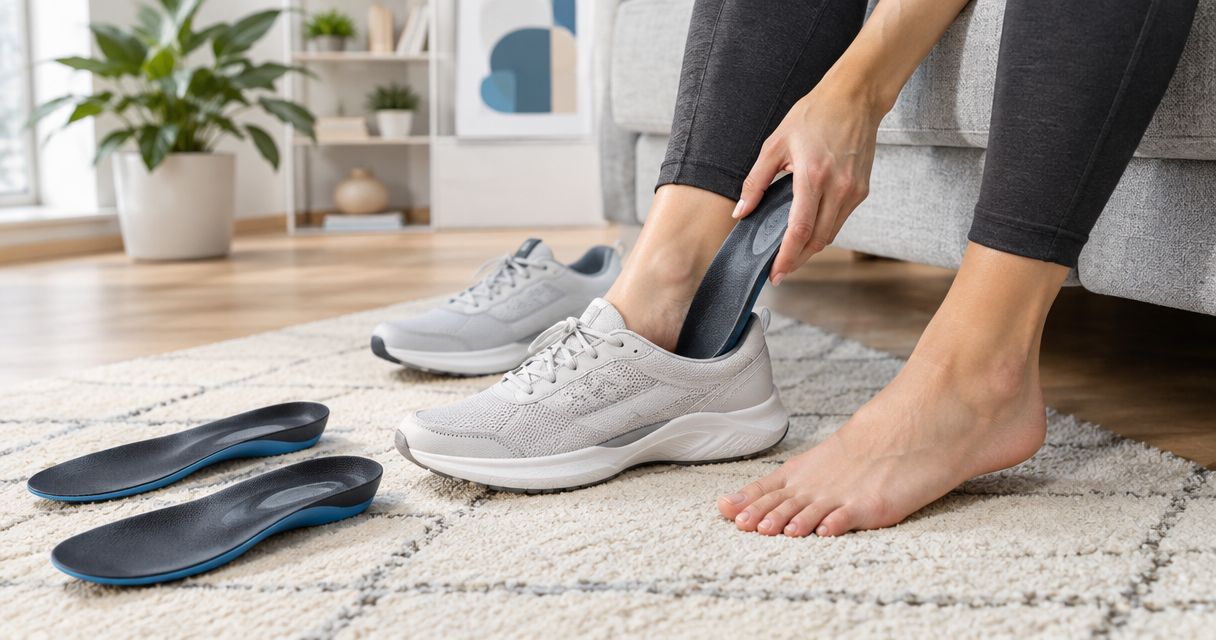
A removable-insole walking shoe is most relevant when you already use a prescribed or appropriately fitted orthotic. Removing the original liner can create room for that insert without stacking layers inside the shoe.
The insert and shoe need to work together. An orthotic can lift your foot toward the upper or alter where pressure falls, so a shoe that feels roomy without it needs another fit check with it installed.
Removable-insole walking shoe pros:
- You can assess the shoe with your actual walking insert.
- Removing the original liner avoids unnecessary layering.
- A suitable depth can preserve space above the forefoot.
Removable-insole walking shoe cons:
- Removable liners do not automatically mean sufficient depth.
- An insert can introduce pressure that was absent without it.
Best for: Returning to routine walking after a flare when you already need an orthotic for another foot concern.
Bring your existing insert to the fitting. Check heel position, toe clearance, and the painful joint again. Do not buy a new arch support simply because you have gout; an insert is not a treatment for the inflammatory attack.
Verdict: Buy this type only after checking the complete shoe-and-insert fit.
5. Stiff-soled or rocker-soled shoe: best for painful toe bending
A stiff sole limits how readily the shoe bends through the forefoot. A rocker sole has a curved profile that changes how the foot rolls through a step. These designs deserve consideration when bending the toe joint is a specific source of discomfort.
They are not interchangeable, and neither is an automatic choice during an acute flare. A curved sole also changes the walking experience. Your balance, gait, joint symptoms, and other foot conditions belong in the decision.
Stiff-soled or rocker-soled shoe pros:
- Sole construction can reduce the demand for forefoot bending.
- It addresses a movement problem rather than upper contact alone.
- It offers an option when a soft, flexible sole remains uncomfortable.
Stiff-soled or rocker-soled shoe cons:
- A rocker profile can feel unfamiliar or unstable.
- A stiff sole does not solve pressure from a tight upper.
- Suitability depends on your walking pattern and symptoms.
Best for: Toe-joint discomfort linked to bending, after an appropriate clinical assessment.
Achilles Foot and Ankle Center can evaluate foot and ankle symptoms before you choose a specialized shoe design. Describe whether pain comes from touching the joint, bending it, or putting weight through the foot; those distinctions help guide the evaluation.
Verdict: Wait for fit and gait guidance before choosing this specialized type.
Check the fit before you commit
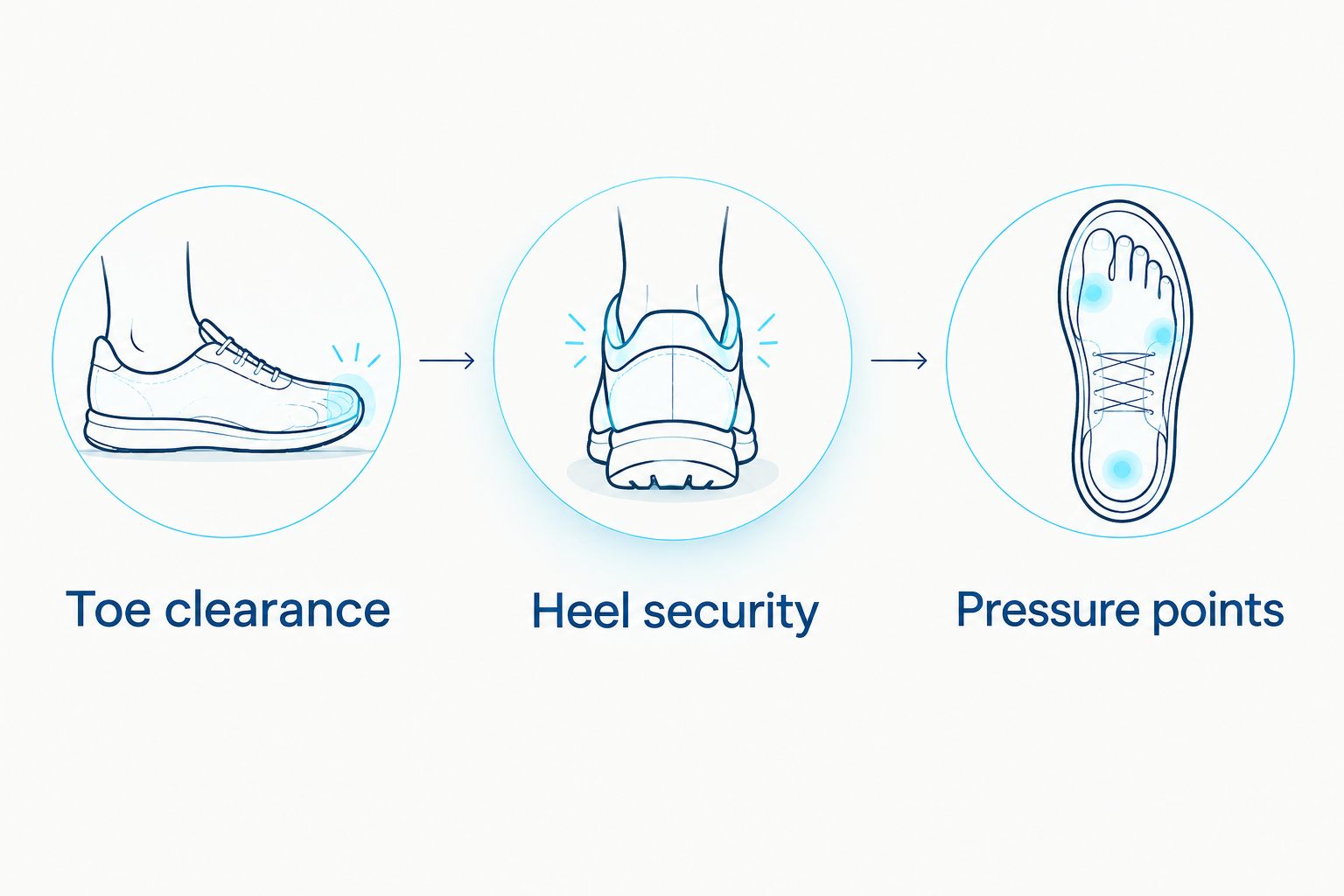
Use these 3 fit checks for your 2026 shoe search. Stop if trying on footwear significantly increases pain; this is a fit check, not an exercise session.
- Toe clearance: Check the front, sides, and top of the painful joint. Your toes should not be pushed together or held against a firm seam.
- Heel security: Stand and take a few comfortable steps if you can. Your heel should stay seated without tightening the forefoot enough to cause pain.
- Pressure points: Remove the shoe and inspect your foot for rubbing or new irritation. If you have reduced sensation, do not rely on comfort alone to judge fit.
Fit 2 feet, not just the swollen one. Try the socks and any existing insert you intend to wear, and reassess each shoe after adjusting the closure. 1 pair needs to accommodate both feet safely; matching the painful foot is only part of the decision.
A comfortable fitting does not establish a gout diagnosis. If this is your first episode, the symptoms have changed, or you cannot walk comfortably, arrange medical assessment rather than continuing to test shoes.
Get your foot pain evaluated
Discuss painful joints, swelling, and footwear concerns with Achilles Foot and Ankle Center.
How these shoe types were ranked
This 2026 ranking prioritizes toe clearance, adjustability, gentle contact, heel security, suitable soles, and easy entry. Adjustable walking shoes lead because they address several everyday fit needs without requiring a specialized sole shape.
Stretch uppers follow for contact sensitivity. Sandals fill a narrower indoor role, while removable-insole and rocker designs answer specific needs rather than serving as universal defaults.
The ranking compares construction features, not brands, laboratory results, or treatment outcomes. A lower-ranked type is the better choice when its use case matches your foot. Your symptoms and the actual fit outweigh the order on the page.
Which shoes for gout should you choose?
Start with an adjustable walking shoe that has adequate toe width and depth. Choose a stretch-upper trainer when firm material is the main problem. Reserve sandals for suitable indoor situations, and consider orthotic-compatible or specialized soles only when those features answer a specific need.
For 2026, the clearest buying rule is unchanged: do not accept joint pressure in exchange for cushioning. A padded sole cannot cancel a tight upper.
Achilles Foot and Ankle Center offers foot and ankle care for patients whose pain needs evaluation. If swelling repeatedly changes your shoe fit, bring that pattern to the appointment rather than buying progressively larger shoes.
FAQ
What are the best shoes for gout flare-ups?
An adjustable walking shoe with a wide, sufficiently deep toe box is a practical starting point when you can comfortably bear weight. The upper must avoid pressure on the painful joint, and the heel must stay secure. Shoes do not treat the gout attack itself.
Are soft shoes always better for gout?
No, softness alone does not make a shoe suitable for gout. A soft upper can still squeeze the foot, while an overly flexible sole can be uncomfortable when toe bending hurts. Judge upper pressure and sole movement separately.
Should I wear sandals during a gout flare?
A secure adjustable sandal can suit short indoor trips if its straps avoid the painful joint. Open footwear provides less protection and is not a good default for feet with wounds or reduced sensation. Ask your clinician about protective footwear if you have diabetes or neuropathy.
Should I buy a bigger shoe size for gout swelling?
Do not automatically choose a longer shoe to accommodate swelling. More width, depth, or closure adjustment can address the actual fit problem without causing heel slipping. Check both feet before choosing a pair.
Do rocker-bottom shoes help with gout?
A rocker sole changes how the foot rolls through a step and can reduce demands on forefoot bending. It does not treat gout inflammation and is not suitable for every walking pattern. Have fit and balance assessed before choosing this specialized design.
Can shoes prevent another gout attack?
Shoes are not a treatment for preventing gout attacks. Footwear addresses pressure, protection, and walking comfort; gout management addresses the underlying disease. Discuss recurring attacks with your treating clinician.
When should I get a swollen big toe checked?
A new hot, red, swollen joint needs medical assessment because gout is not the only possible cause. Fever, feeling unwell, a nearby wound, or inability to bear weight calls for prompt attention. Achilles Foot and Ankle Center provides foot and ankle evaluation, but urgent symptoms should not wait for a routine footwear discussion.
One last thing
The spot that hurts most is not always the spot you first inspect in a shoe. Check the tongue edge, a side seam, and any strap crossing as well as the toe box. The best shoes for gout leave the tender joint undisturbed while keeping the rest of your foot secure. If those goals conflict, seek evaluation rather than settling for either pressure or instability.
Related guides